
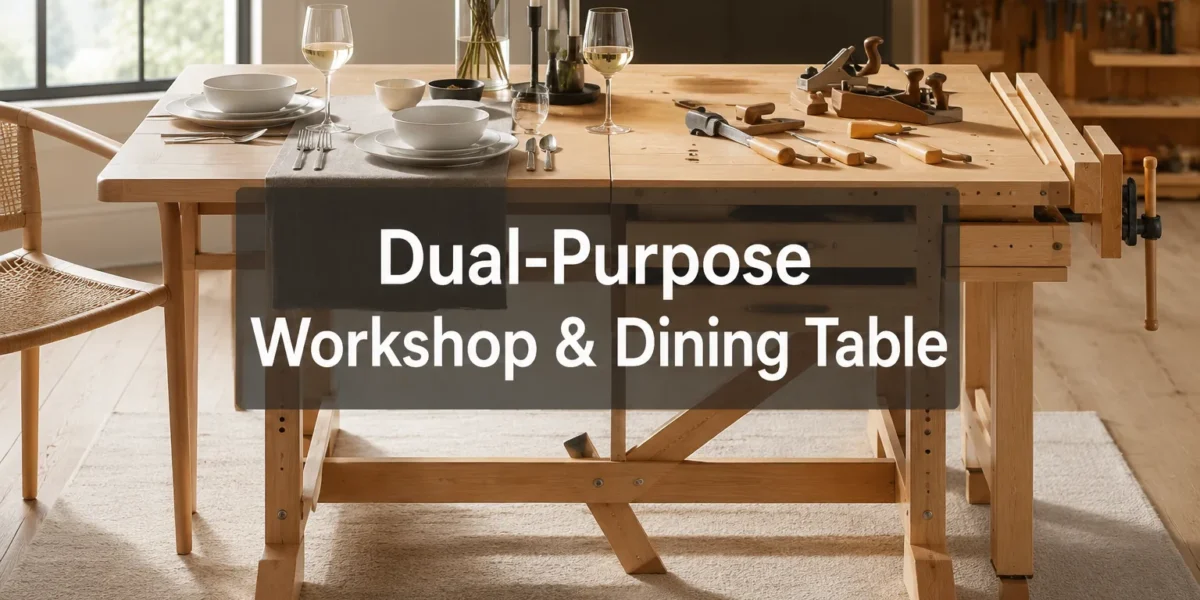
The average household in 2026 navigates increasingly smaller living spaces, prompting a surge in demand for adaptable furniture. This challenge is particularly acute for hobbyists and makers who require dedicated workshop areas but also need their homes to function as comfortable dining and living spaces. The solution often lies in versatile pieces that can transform their purpose. This article explores the nuanced differences between “Folding Tables vs. Folding Workbenches: How to Build a Dual‑Purpose Workshop and Dining Table,” guiding you through the process of creating a single piece of furniture that seamlessly transitions between serving a family meal and facilitating robust woodworking projects.
Key Takeaways
- Dual-purpose tables maximize space efficiency in smaller homes and workshops.
- Selecting the right materials and hardware is crucial for durability and functionality in both roles.
- A two-sided tabletop design allows for a refined dining surface and a rugged workbench surface.
- Proper load rating and stability are paramount for safety and effectiveness, especially for workbench applications.
- Thoughtful design integrates workshop features without compromising dining aesthetics.
Understanding Folding Tables vs. Folding Workbenches
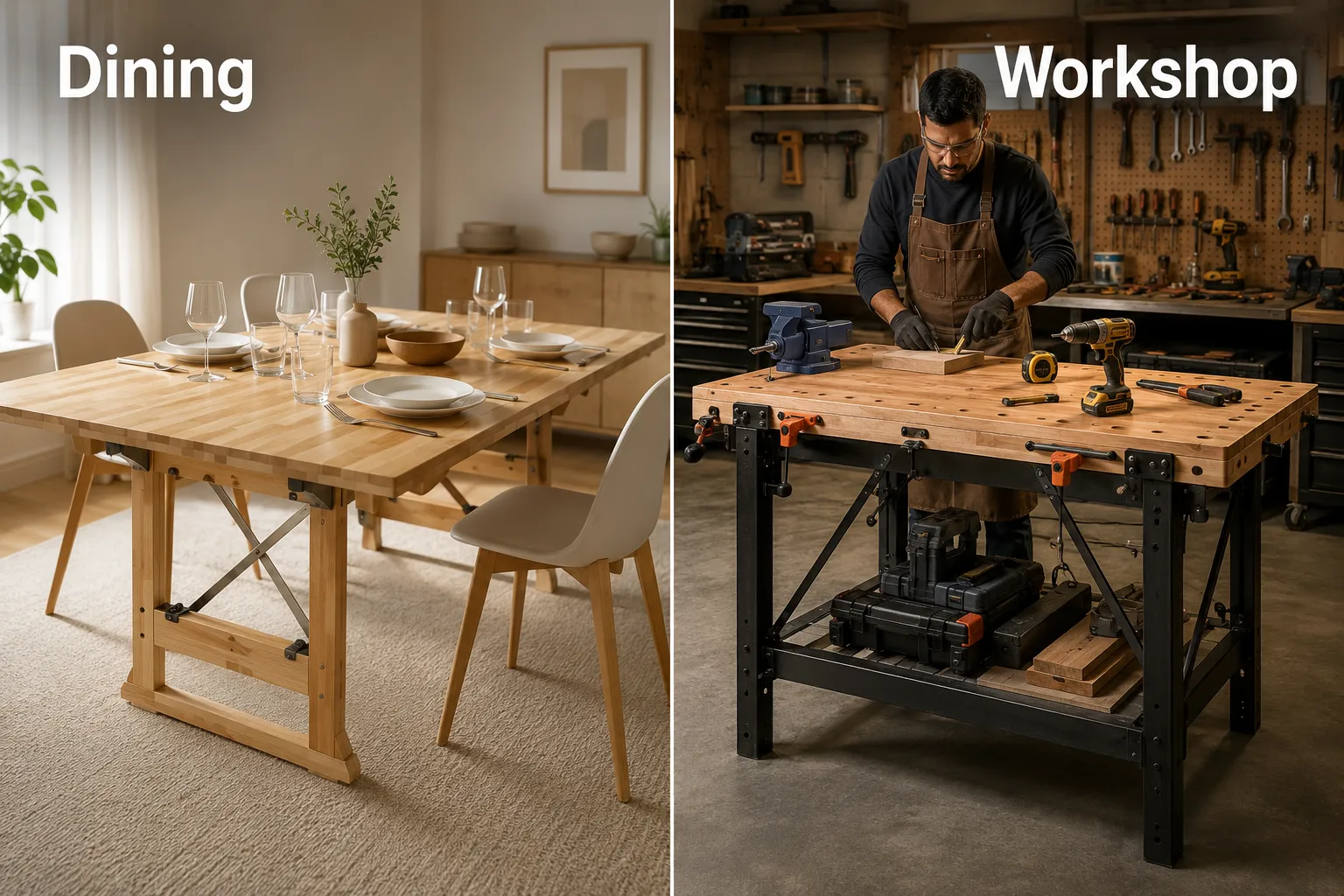
While both folding tables and folding workbenches share the fundamental characteristic of being collapsible for storage, their design, construction, and intended uses diverge significantly. Understanding these differences is the first step toward building a successful dual-purpose unit.
Folding Tables: Design and Function
Traditional folding tables are typically designed for light-duty use, such as dining, temporary events, or as supplementary surfaces. They prioritize portability, ease of setup, and often a smooth, easy-to-clean surface.
Key characteristics include:
- Lightweight Construction: Often made from thin plywood, MDF, or plastic tops with lightweight metal or aluminum legs.
- Aesthetic Focus: Surfaces are usually finished to be visually appealing for dining or social gatherings.
- Limited Load Capacity: Designed to hold food, dishes, and light items, not heavy tools or project materials.
- Basic Leg Mechanisms: Simple locking hinges that offer adequate stability for static, light loads.
For those interested in building their first dining table, understanding standard sizes, joinery options, and wood choices is a great starting point, even before considering the folding aspect.
Folding Workbenches: Design and Function
In contrast, folding workbenches are built for resilience and functionality in a workshop environment. They are designed to withstand heavy loads, clamping forces, and the wear and tear of various projects.
Key characteristics include:
- Heavy-Duty Construction: Thicker plywood, solid wood, or steel tops capable of enduring impacts and abrasion.
- Functional Focus: May include features like dog holes, T-tracks, integrated vises, or tool storage.
- High Load Capacity: Engineered to support heavy power tools, lumber, and significant downward pressure.
- Robust Leg Mechanisms: Sturdy, often reinforced legs with secure locking mechanisms to prevent wobble during active work.
- Resistance to Damage: Surfaces are typically less refined, designed to be durable and easily repairable from scratches or dents.
For inspiration on building a dedicated workbench, exploring guides like building a compact and ergonomic workbench for small workshops can provide valuable insights into structural integrity and space optimization.
The Dual-Purpose Challenge
Creating a piece that serves both roles effectively means integrating the best features of both categories. The primary challenge is to maintain the aesthetic appeal and smooth finish required for dining while ensuring the structural integrity and durability necessary for a workbench. This often involves a two-sided tabletop design and robust, yet unobtrusive, folding mechanisms.
Designing Your Dual-Purpose Workshop and Dining Table
The core of building a successful dual-purpose unit lies in a clever design that accommodates both functions without compromise. This section details the key design considerations for your Folding Tables vs. Folding Workbenches: How to Build a Dual‑Purpose Workshop and Dining Table project.
The Two-Sided Tabletop Strategy
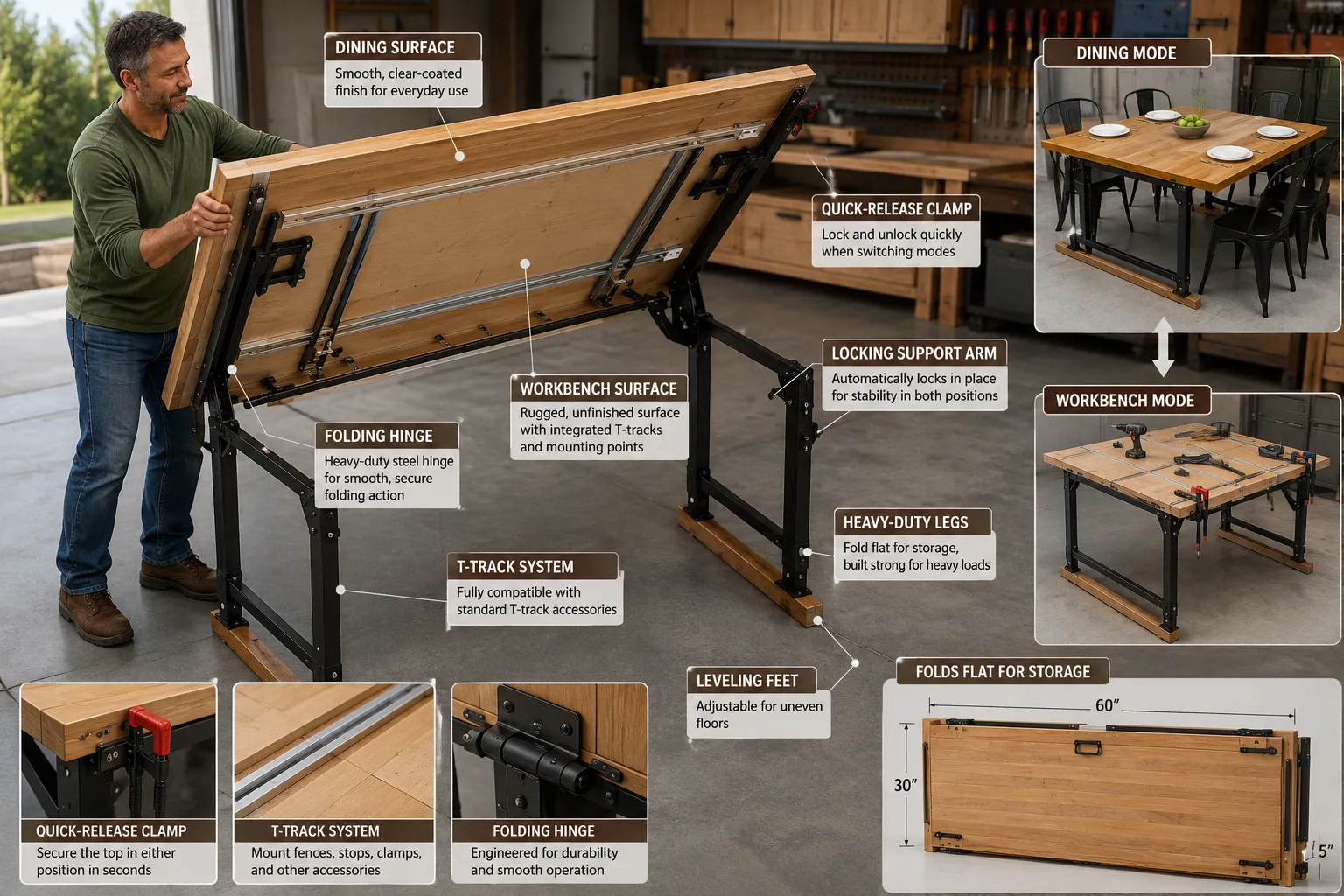
The most effective approach is to create a tabletop with two distinct surfaces:
- Dining Side: This surface should be meticulously sanded, stained, and finished to a high standard, suitable for food service. Consider durable, food-safe finishes that are easy to clean and resist spills. A smooth, flat surface is essential for comfortable dining. For inspiration on finishing, a matte hardwax oil finishing guide could be adapted for a dining surface.
- Workbench Side: The opposite surface should be designed for abuse. Use a material that can withstand clamping, drilling, and general workshop activities. Plywood, especially Baltic birch or construction-grade plywood, is an excellent choice. This side can include features like:
- Dog Holes: Strategically placed holes for bench dogs to aid in clamping and holding workpieces.
- T-tracks: Integrated aluminum tracks for quick and versatile clamping solutions.
- Sacrificial Surface: Consider a replaceable layer of MDF or hardboard that can be swapped out when heavily damaged.
When planning your table dimensions, remember to factor in dining area table placement: how much space you really need to ensure it functions well in its dining configuration.
Choosing Materials for Durability and Aesthetics
Selecting the right materials is paramount for a lasting dual-purpose table:
- Tabletop Core: A thick sheet of high-quality plywood (e.g., 3/4″ or 1″ Baltic birch) provides an excellent core that is stable, strong, and resistant to warping.
- Dining Surface Veneer/Top Layer: For the dining side, you could opt for a high-pressure laminate, a thin solid wood veneer, or even a solid wood top if budget and weight allow. The key is a smooth, durable, and aesthetically pleasing finish.
- Workbench Surface Treatment: The workbench side might simply be the bare, sanded plywood, or treated with a hard-wearing finish like polyurethane to offer some protection while remaining repairable.
- Legs and Frame: Steel or heavy-duty aluminum folding leg mechanisms are recommended for their strength and stability. If building wooden legs, they must be robust and feature secure locking mechanisms. Consider a design similar to a DIY folding work table for a sturdy foundation.
Hardware for Folding and Stability
The folding mechanism is critical. Look for:
- Heavy-Duty Folding Leg Brackets: These should be rated for significant weight and lateral stability. Ensure they lock securely in both the open and closed positions.
- Robust Hinges: If your tabletop folds in half, use sturdy piano hinges or multiple heavy-duty butt hinges.
- Leveling Feet: Adjustable feet can compensate for uneven floors, crucial for both dining stability and workbench accuracy.
- Casters (Optional): If the table needs to be easily moved, heavy-duty locking casters can be integrated into the leg design, allowing for portability when unfolded.
Load Rating and Stability Considerations
A dual-purpose table must meet the higher load requirements of a workbench. Aim for a static load capacity of at least 300-500 pounds to safely accommodate tools and project materials. Dynamic loads (e.g., hammering, planing) require even greater stability, so consider cross-bracing or thicker leg stock.
Always ensure that the folding mechanism is designed to handle this weight without flexing or collapsing. A wobbly workbench is not only ineffective but also dangerous.
Building Your Dual-Purpose Workshop and Dining Table
With the design principles in mind, the actual construction phase focuses on precision, durability, and careful finishing. This guide helps you build a versatile Folding Tables vs. Folding Workbenches: How to Build a Dual‑Purpose Workshop and Dining Table.
Step 1: Prepare the Tabletop Core
Start with a high-quality sheet of plywood. Cut it to your desired dimensions. A common dining table size for 4-6 people is roughly 36″x60″ to 42″x72″, keeping in mind round dining room tables offer different space dynamics.
- Square and Cut: Ensure all cuts are perfectly square to prevent issues later.
- Edge Banding (Optional but Recommended): Apply iron-on or solid wood edge banding to all exposed plywood edges. This improves aesthetics for the dining side and protects the core from damage.
Step 2: Create the Dining Surface
This is where the table takes on its refined appearance.
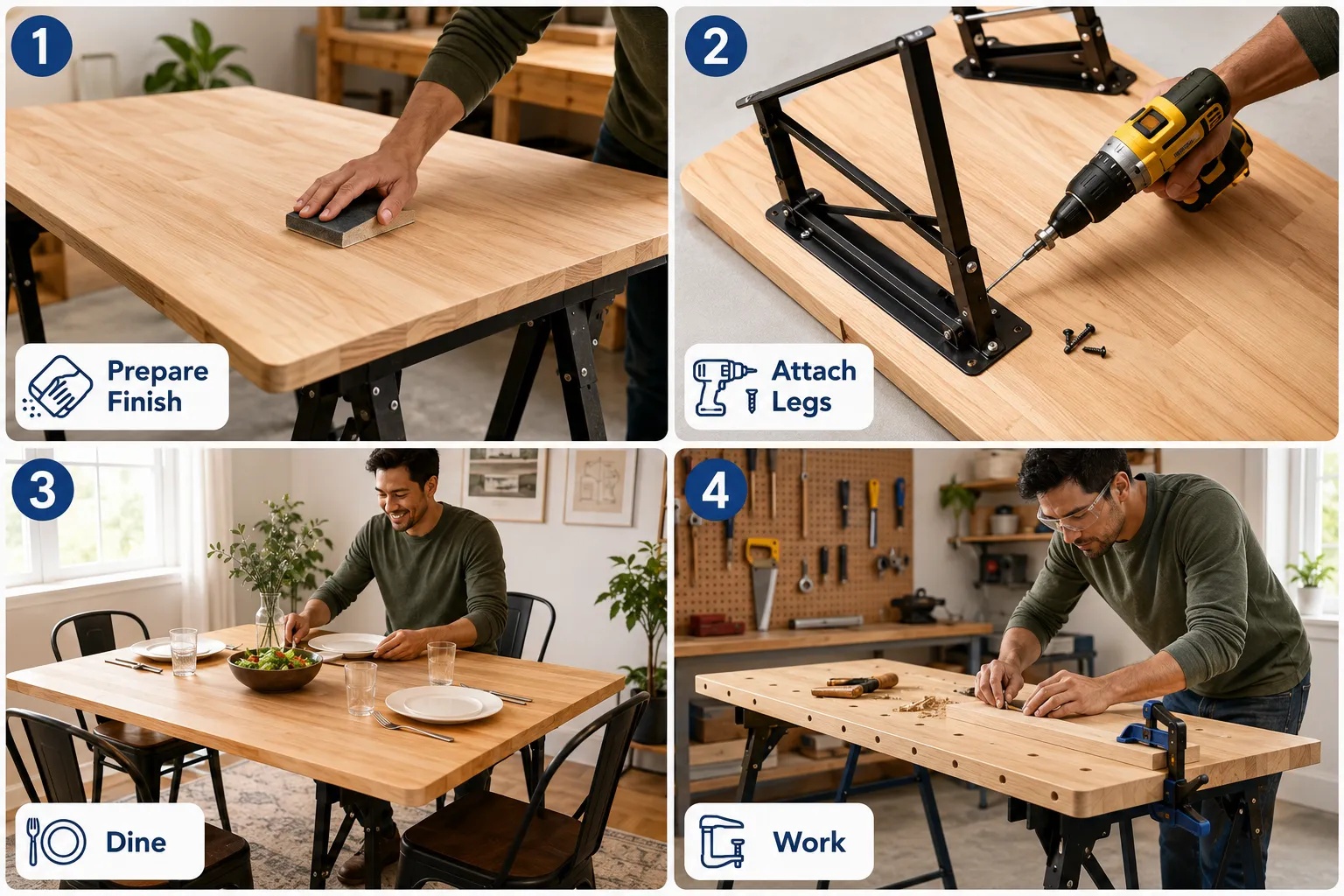
- Sanding: Sand the chosen dining side meticulously, progressively working through grits from 80 to 220, or even 320 for a super smooth finish.
- Staining/Finishing: Apply your chosen stain and multiple coats of a durable, food-safe finish. Polyurethane, spar varnish, or a hardwax oil are good choices. Follow product instructions carefully for drying times and recoating. Ensure the finish is fully cured before use.
Step 3: Configure the Workbench Surface
Flip the tabletop to prepare the workbench side.
- Workbench Features: Mark and drill any dog holes or rout channels for T-tracks. Ensure these are strategically placed for common project types.
- Protective Finish (Optional): A lighter, more repairable finish like a few coats of clear shellac or a water-based polyurethane can protect this side without being overly precious. Alternatively, leave it bare for maximum grip and repairability.
- Edge Protection: Consider adding a removable wood sacrificial edge around the perimeter of the workbench side, held in place with screws, to protect the core tabletop edges from clamps and impacts.
Step 4: Attach the Folding Legs and Frame
This is the most critical step for stability and longevity.
- Select Leg Hardware: Choose heavy-duty folding table legs designed for high load capacity. Examples include commercial-grade steel folding legs or robust wooden trestle-style legs with strong folding hinges.
- Secure Attachment: Use appropriate fasteners (e.g., lag screws, machine screws with T-nuts) that are long enough to penetrate deep into the tabletop core without going through to the dining side. Reinforce attachment points with additional blocking if needed.
- Test Stability: Once assembled, test the table’s stability extensively. Apply downward pressure, lean on it, and ensure there is no lateral wobble. Adjust hardware as necessary. For a completely custom approach, consider the principles from building a DIY woodworking bench for beginners for leg and frame design.
Step 5: Incorporating Workshop Accessories
To truly function as a workbench, consider these additions:
- Integrated Vise (Optional): A small, quick-release woodworking vise can be mounted on the workbench side, positioned so it does not interfere with the dining surface when flipped.
- Tool Storage: While the table is folded, consider DIY clamp rack and tool holder wall solutions nearby to keep your workshop organized.
- Clamping Solutions: Invest in a good set of F-clamps or C-clamps that can easily secure workpieces to the workbench surface or through dog holes.
Step 6: Final Adjustments and Refinements
- Leveling: Use adjustable feet to ensure the table is perfectly level in its open position, whether for dining or working.
- Smooth Operation: Ensure the folding mechanism operates smoothly without binding. Lubricate moving parts if necessary.
- Child Safety: If children are present, ensure the folding mechanism has a secure lock to prevent accidental collapse.
Conclusion
Building a dual-purpose workshop and dining table is an ingenious solution for maximizing space and functionality in any home or small workshop. By carefully considering the design differences between folding tables and folding workbenches, selecting appropriate materials and heavy-duty hardware, and executing a thoughtful construction plan, you can create a versatile piece of furniture that transitions seamlessly from a refined dining surface to a robust workstation. This project not only enhances your living and working environments but also stands as a testament to clever woodworking and efficient design in 2026. Embrace the challenge, and enjoy the satisfaction of a truly adaptable space.
SEO Meta Title: Build a Dual-Purpose Folding Workshop & Dining Table SEO Meta Description: Learn to build a versatile folding table for dining and woodworking in 2026. Maximize space with a dual-sided design and robust hardware.