
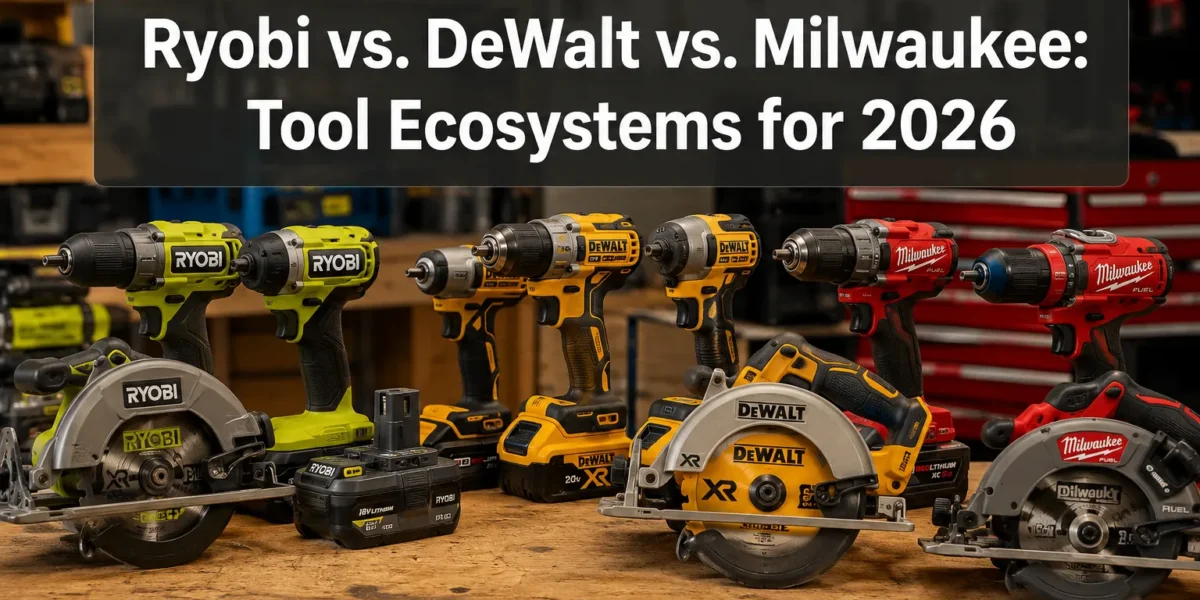
The average homeowner or professional tradesperson faces a significant decision when investing in power tools: not just which tool to buy, but which entire ecosystem to commit to. In 2026, with battery technology advancing and tool lineups expanding dramatically, this choice has evolved into a strategic long-term commitment. This article provides an Advanced Ryobi vs. DeWalt vs. Milwaukee Ecosystem Comparison: Building a Cohesive Tool Collection for 2026, guiding you through the nuances of each brand’s offerings to ensure your workshop is efficient, future-proof, and perfectly tailored to your needs.
Key Takeaways
- Ryobi offers unparalleled value and breadth for DIYers: With over 280 tools on its ONE+ 18V battery platform, Ryobi excels in variety and affordability, covering everything from power tools to outdoor equipment.
- DeWalt dominates professional job sites: Known for its rugged durability, high performance, and extensive FLEXVOLT system, DeWalt is the go-to for heavy-duty applications and trades.
- Milwaukee is the innovator for specialized trades: Milwaukee targets professional users with advanced technology like ONE-KEY, focusing on specialized tools, M12 compact solutions, and robust M18 FUEL performance.
- Battery compatibility is paramount: Committing to a single battery platform across a brand’s ecosystem simplifies workflow and reduces overall cost, making ecosystem choice a long-term investment.
- Consider future needs and specialized tools: Evaluate not just your current projects but also potential future endeavors, as each brand offers unique strengths in various tool categories.
Understanding the Ecosystem Approach for 2026
The concept of a tool “ecosystem” is more critical than ever in 2026. It’s no longer just about buying an individual drill; it’s about investing in a battery platform that powers dozens, or even hundreds, of compatible tools. This approach offers immense benefits: cost savings by reusing batteries and chargers, simplified storage, and consistent performance across your entire collection. The primary driver behind these ecosystems is the battery, as manufacturers strive for longer runtimes, faster charging, and more compact designs. Choosing an ecosystem means selecting a family of tools that will grow with your projects, from simple repairs to ambitious builds like a DIY coffee table or an intricate modular bar furniture system.
The Core Components of a Tool Ecosystem
A robust tool ecosystem typically includes:
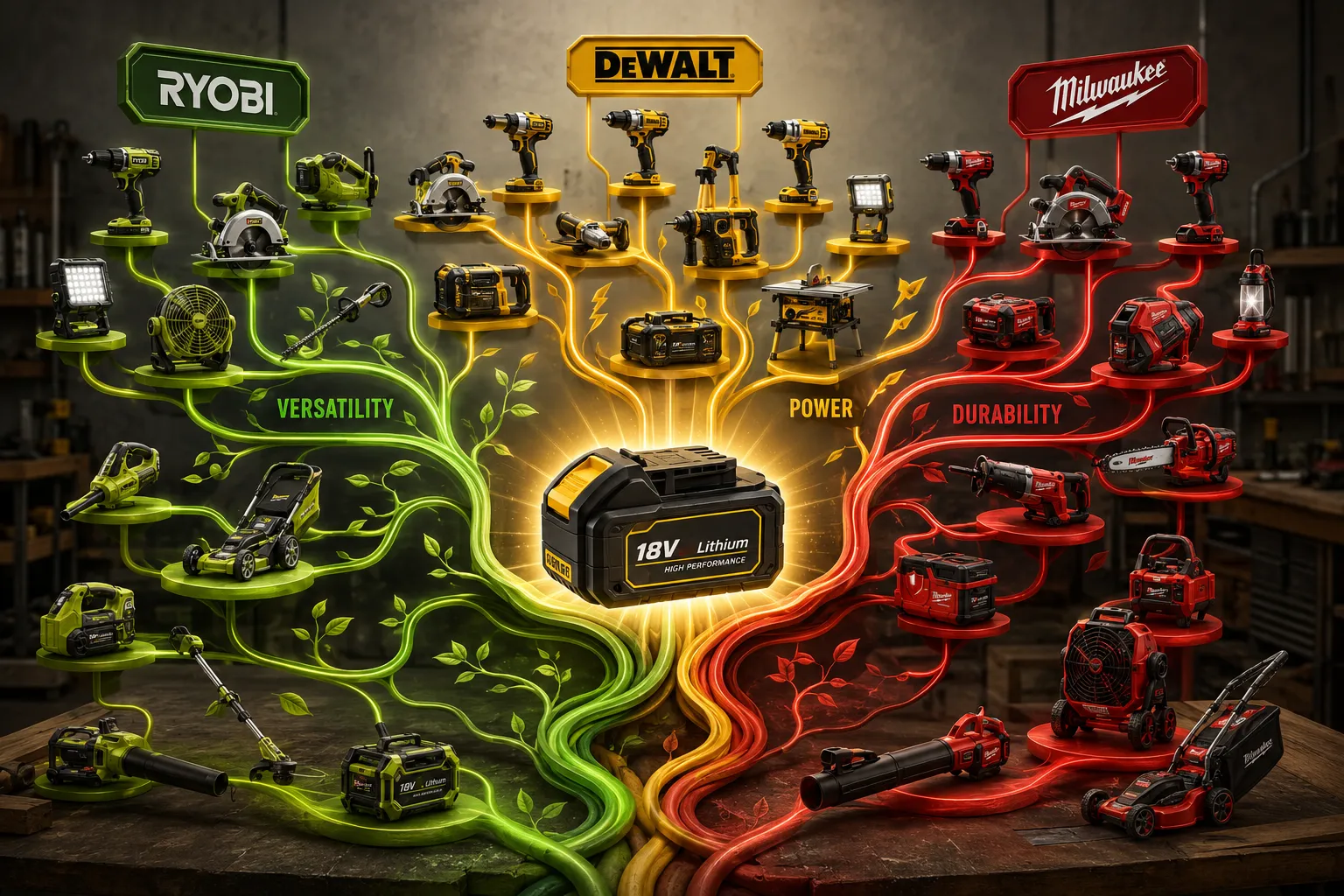
- Battery Platforms: The heart of the system. Most brands offer 18V/20V platforms (standard for general use) and higher voltage systems (like DeWalt’s FLEXVOLT or Milwaukee’s M18 FUEL) for heavier-duty applications.
- Chargers: Fast chargers, multi-port chargers, and smart chargers that optimize battery life.
- Tool Variety: The sheer number and type of tools available on a single battery platform. This ranges from common drills and saws to specialized tools like glue guns, vacuums, and even jobsite radios.
- Accessories: Compatible blades, bits, sanding pads, and other attachments that work seamlessly across tools.
- Storage Solutions: Integrated toolboxes, organizers, and rolling chests designed to securely house tools and batteries from the same brand.
- Technological Integration: Features like Bluetooth connectivity for tool tracking, performance customization, and diagnostics (e.g., Milwaukee’s ONE-KEY).
Making an informed decision today means looking beyond immediate needs and considering the long-term implications for your entire workshop and project aspirations. This advanced Ryobi vs. DeWalt vs. Milwaukee ecosystem comparison will help clarify those choices.
Advanced Ryobi vs. DeWalt vs. Milwaukee Ecosystem Comparison: Battery Platforms and Tool Breadth
The choice between Ryobi, DeWalt, and Milwaukee largely comes down to your primary use case: casual DIY, professional general construction, or specialized trade work. Each brand has meticulously sculpted its ecosystem to cater to these distinct segments.
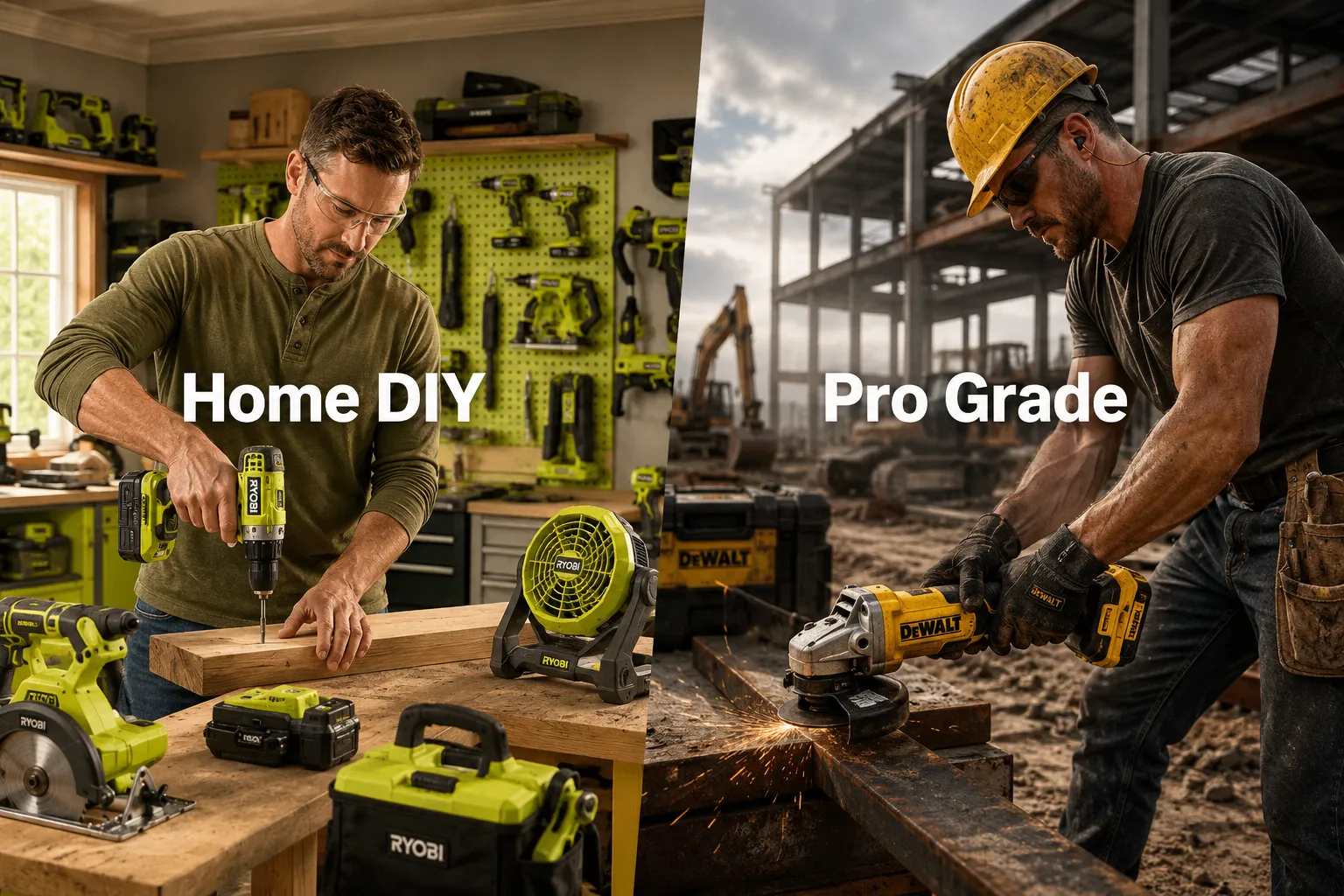
Ryobi: The DIY Champion with Unmatched Breadth
Ryobi’s strength lies in its ONE+ 18V battery platform, which, in 2026, boasts over 280 compatible tools. This extensive lineup is unparalleled, covering not just traditional power tools but also a vast array of outdoor power equipment, automotive tools, and lifestyle products.
- Battery System: Primarily 18V ONE+. Known for affordability and accessibility. While not typically lauded for extreme power, the latest HP (High Performance) brushless tools significantly boost performance.
- Tool Range: From basic drills and impact drivers to specialty items like misting fans, tire inflators, and caulk guns. Ryobi is the undisputed king of variety, offering a tool for almost every conceivable household task or hobby.
- Target User: Homeowners, DIY enthusiasts, hobbyists, and those who need a diverse but affordable tool collection for projects such as building a custom vertical garden or general home maintenance.
- Innovation: While traditionally seen as an entry-level brand, Ryobi consistently introduces innovative solutions within the DIY space, such as quiet garage door openers and versatile cordless vacuums.
- Value Proposition: Best bang for your buck. If you want to consolidate a wide variety of tools onto a single, affordable battery platform, Ryobi is the clear choice.
)
DeWalt: The Professional Workhorse
DeWalt is synonymous with professional-grade durability and power, particularly on job sites. Its ecosystem is designed for continuous, heavy-duty use.
- Battery Systems:
- 20V MAX: The core professional platform, offering a wide range of powerful tools suitable for construction, remodeling, and woodworking. Many DeWalt power tools for woodworkers leverage this platform.
- FLEXVOLT: A revolutionary battery system that automatically changes voltage when you switch tools, offering 20V MAX or 60V MAX power. This allows for high-power tools like miter saws and table saws to be cordless.
- FLEXVOLT ADVANTAGE: Tools designed to detect FLEXVOLT batteries and deliver up to 77% more power.
- Tool Range: Focuses on essential construction and woodworking tools, drills, impact drivers, circular saws, miter saws, grinders, and robust outdoor equipment. While not as broad as Ryobi, its tools are built for performance and longevity.
- Target User: Professional contractors, carpenters, electricians, plumbers, and serious DIYers who demand reliability and power for demanding tasks.
- Innovation: DeWalt continues to push boundaries in power and runtime, with innovations like PowerDetect and Tool Connect (Bluetooth tracking for tools).
- Value Proposition: Premium quality and performance for professionals. If your work involves constant heavy use and you need tools that won’t quit, DeWalt is a sound investment.
Milwaukee: The Innovative Specialist
Milwaukee has carved out a niche as the innovator for specialized trades, emphasizing advanced technology and ergonomic design. They offer two distinct, yet complementary, battery platforms.
- Battery Systems:
- M12: A compact 12V platform ideal for tight spaces and precision work. It powers a surprising array of tools, including sub-compact impact drivers, ratchets, and specialized plumbing/electrical tools.
- M18 FUEL: Milwaukee’s premium 18V platform, recognized for its advanced brushless motors (FUEL), superior power, and extended runtimes. These tools are often best-in-class for specific applications.
- Tool Range: While also offering core power tools, Milwaukee excels in specialized solutions. Their M12 line is unmatched for compact tools, and M18 FUEL boasts robust offerings in plumbing, electrical, HVAC, and automotive fields, alongside traditional construction tools.
- Target User: Professional tradespeople (electricians, plumbers, HVAC technicians), industrial maintenance, automotive technicians, and woodworkers seeking top-tier performance and innovative features for intricate or demanding tasks.
- Innovation: Milwaukee leads with ONE-KEY technology, offering tool tracking, inventory management, and performance customization directly from a smartphone. They also focus on highly application-specific tools.
- Value Proposition: High-tech, high-performance tools for professionals who value innovation, specialization, and robust power.
Deep Dive into Ecosystem Features and Future-Proofing for 2026
Beyond raw power and tool count, a comprehensive Ryobi vs. DeWalt vs. Milwaukee ecosystem comparison for 2026 must consider factors like technological integration, storage solutions, and how each brand positions itself for future advancements. Building a truly cohesive tool collection requires looking at the bigger picture.
Technology and Smart Integration
The tool industry is increasingly embracing smart technology, and each brand approaches this differently.
- Ryobi: Focuses on practical smart integrations for the home, such as smart garage door openers compatible with their ONE+ platform and app-enabled inspection cameras. Their emphasis is on convenience and ease of use for the DIYer.
- DeWalt: With Tool Connect, DeWalt offers Bluetooth tracking for tools, inventory management, and the ability to remotely disable tools to prevent theft. This is particularly valuable for professionals managing multiple tools across job sites.
- Milwaukee: ONE-KEY is arguably the most advanced smart tool technology on the market. It allows for tool tracking, inventory management, security lockout, and unparalleled customization of tool performance parameters (e.g., speed, torque, LED light duration). This level of control can significantly enhance efficiency and precision for specialized tasks. Considering a DIY smart workshop security system could further integrate with these smart tool features.
)
Storage and Organization Systems
A cohesive tool collection also means effective storage and organization.
- Ryobi: Offers a range of Link modular storage solutions, designed to integrate with their tools and accessories. These are generally affordable and cater to the home workshop or garage.
- DeWalt: The ToughSystem and TOUGHSYSTEM 2.0 lines are rugged, interlocking storage solutions built for job site durability. They are IP65 rated for dust and water resistance and are designed for portability and stacking.
- Milwaukee: PACKOUT is a highly regarded, comprehensive modular storage system that integrates with a wide variety of Milwaukee tools and accessories. It’s known for its robust construction, versatile configurations, and compatibility with numerous PACKOUT-specific tool bags and organizers. For those interested in optimizing workshop space, integrating a system like PACKOUT alongside a DIY modular storage system for power tool accessories can be highly effective.
Future-Proofing Your Collection
In 2026, investing in an ecosystem means considering its longevity and adaptability.
- Ryobi: Their consistent commitment to the 18V ONE+ platform means that even older batteries often remain compatible with new tools, offering excellent backward and forward compatibility. The sheer volume of tools ensures a steady stream of new additions.
- DeWalt: The FLEXVOLT system offers a degree of future-proofing by providing higher voltage for future power-hungry tools while maintaining compatibility with the 20V MAX lineup. Their focus on heavy-duty applications ensures continued development in that segment.
- Milwaukee: With ONE-KEY and continuous innovation in brushless motor technology, Milwaukee consistently pushes the envelope in tool performance and smart features. Their M12 and M18 platforms are well-established, with a clear roadmap for new, specialized tools.
Ultimately, the best ecosystem is the one that aligns with your specific needs, budget, and project aspirations for 2026 and beyond.
Making Your Decision: Ryobi vs. DeWalt vs. Milwaukee in 2026
Choosing the right tool ecosystem is a personalized decision, but by evaluating the Advanced Ryobi vs. DeWalt vs. Milwaukee Ecosystem Comparison, you can make an informed choice that will serve you for years.
Choose Ryobi if:
- You are a homeowner, DIY enthusiast, or hobbyist.
- Your projects are diverse, ranging from woodworking to gardening and automotive tasks.
- Budget is a significant concern, and you value a vast selection of tools on one affordable battery platform.
- You appreciate simple, practical innovations for home use.
Choose DeWalt if:
- You are a professional contractor, carpenter, or tradesperson on a job site.
- You require robust, durable tools for continuous, heavy-duty applications.
- Power and extended runtime for demanding tasks are paramount.
- You value a strong professional reputation and job site security features. For specific woodworking projects, you might explore tools from our guide on power tool mastery for console tables.
Choose Milwaukee if:
- You are a specialized tradesperson (electrician, plumber, HVAC, automotive) or a serious woodworker.
- You require cutting-edge technology, specialized tool solutions, and advanced customization options (ONE-KEY).
- You value compact power (M12) for precision work or uncompromising performance (M18 FUEL) for heavy-duty tasks.
- You are willing to invest in premium tools for top-tier performance and innovation.
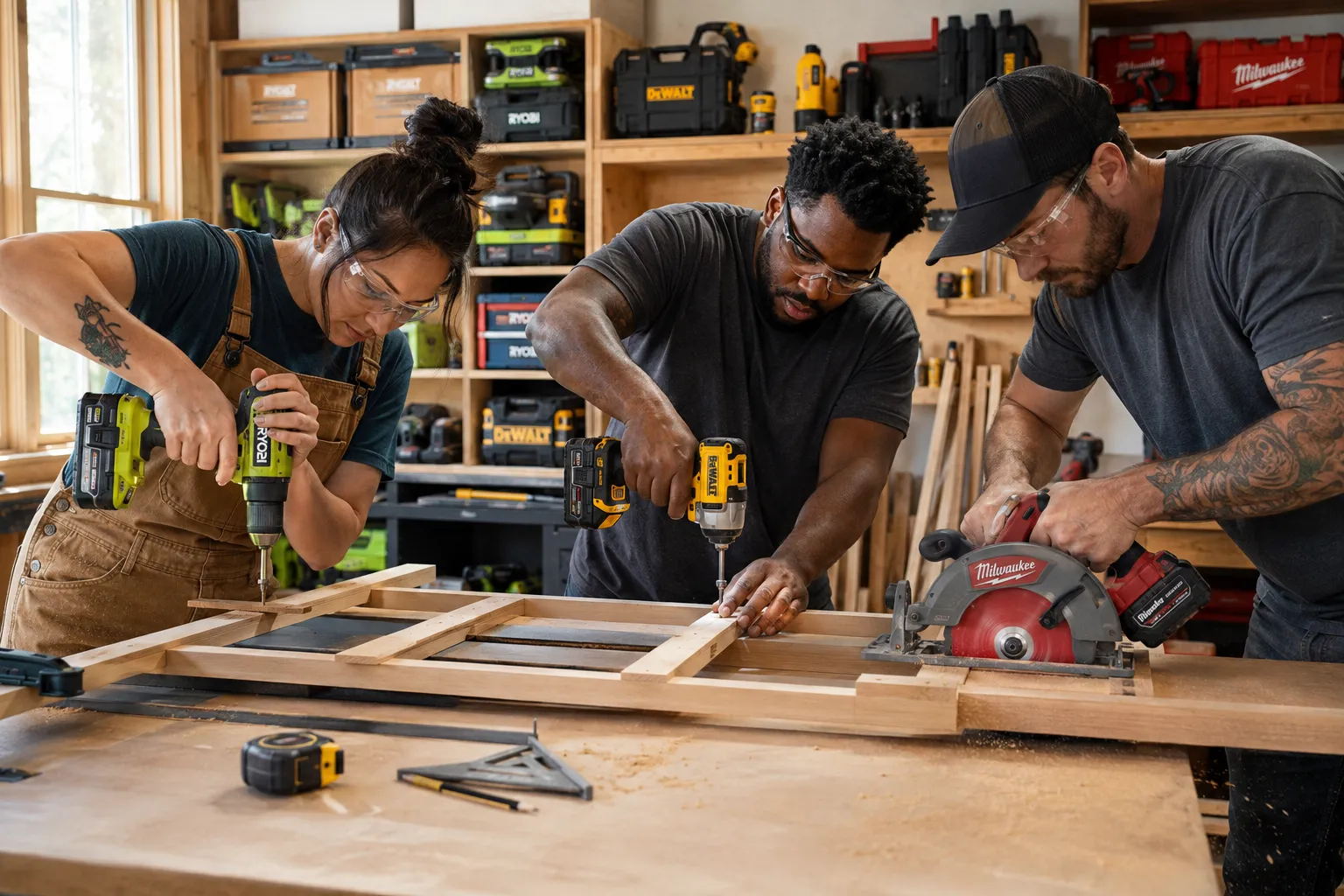)
Consider your long-term goals. Are you planning to expand into more complex woodworking projects, needing precision and power, or are you focused on general home improvement? The brand you select today will dictate your tool purchases for the foreseeable future, so choose wisely to build a cohesive and effective workshop in 2026. This foundational decision affects everything from your daily workflow to the organization of your workshop, particularly for advanced setups like those found in efficient small workshop layouts for 2026.
Conclusion
The selection of a power tool ecosystem, Ryobi, DeWalt, or Milwaukee, is more than a simple purchase; it is a strategic investment in your productivity, efficiency, and project success for 2026 and beyond. By thoroughly considering your needs, budget, and the specific strengths of each brand’s battery platforms, tool breadth, technological innovations, and storage solutions, you can build a cohesive and future-proof tool collection. Ryobi offers unmatched variety and value for the DIYer, DeWalt provides rugged power and reliability for the professional general contractor, and Milwaukee delivers innovative, specialized performance for tradespeople demanding cutting-edge technology. Make your choice with confidence, knowing that a well-matched ecosystem will streamline your work and empower you to tackle any project with the right tools at your fingertips.
References
- DeWalt. (n.d.). Official Website. Retrieved from https://www.dewalt.com/
- Milwaukee Tool. (n.d.). Official Website. Retrieved from https://www.milwaukeetool.com/
- Ryobi Tools. (n.d.). Official Website. Retrieved from https://www.ryobitools.com/
SEO Meta Title: Ryobi vs. DeWalt vs. Milwaukee: Advanced 2026 Tool Ecosystems SEO Meta Description: Compare Ryobi, DeWalt, & Milwaukee tool ecosystems for 2026. Build a cohesive, future-proof collection with our advanced guide on battery, power, & tech.