
The average household in 2026 is brimming with mass-produced decor, often lacking personality and durability. Many aspiring crafters begin with readily available materials, creating items that are charming but ultimately fragile. What if those simple craft ideas, like a decorative box or a picture frame, could be elevated into sturdy, functional home pieces designed to last for years? This Beginner’s Guide to Craft: How Basic Woodworking Skills Turn Simple Crafts into Functional Home Pieces explores the pivotal transition from casual crafting to fundamental woodworking, transforming your creative projects from ephemeral decorations into enduring, useful household items.
Key Takeaways
- Elevate Crafting: Basic woodworking skills provide the foundational knowledge to transform simple craft ideas into durable, functional home pieces.
- Essential Skills: Focus on mastering measuring, cutting, joining, and finishing techniques as the core woodworking abilities for beginners.
- Tool Accessibility: A small, carefully chosen set of hand tools and entry-level power tools is sufficient to begin, with safety being paramount.
- Project Potential: Start with achievable projects like small shelves, picture frames, or storage boxes to build confidence and practical experience.
- Durability and Functionality: Woodworking enhances projects with greater strength, longevity, and practical utility, making them true home assets.
The Evolution from Simple Craft to Woodworking: A Beginner’s Guide to Craft: How Basic Woodworking Skills Turn Simple Crafts into Functional Home Pieces
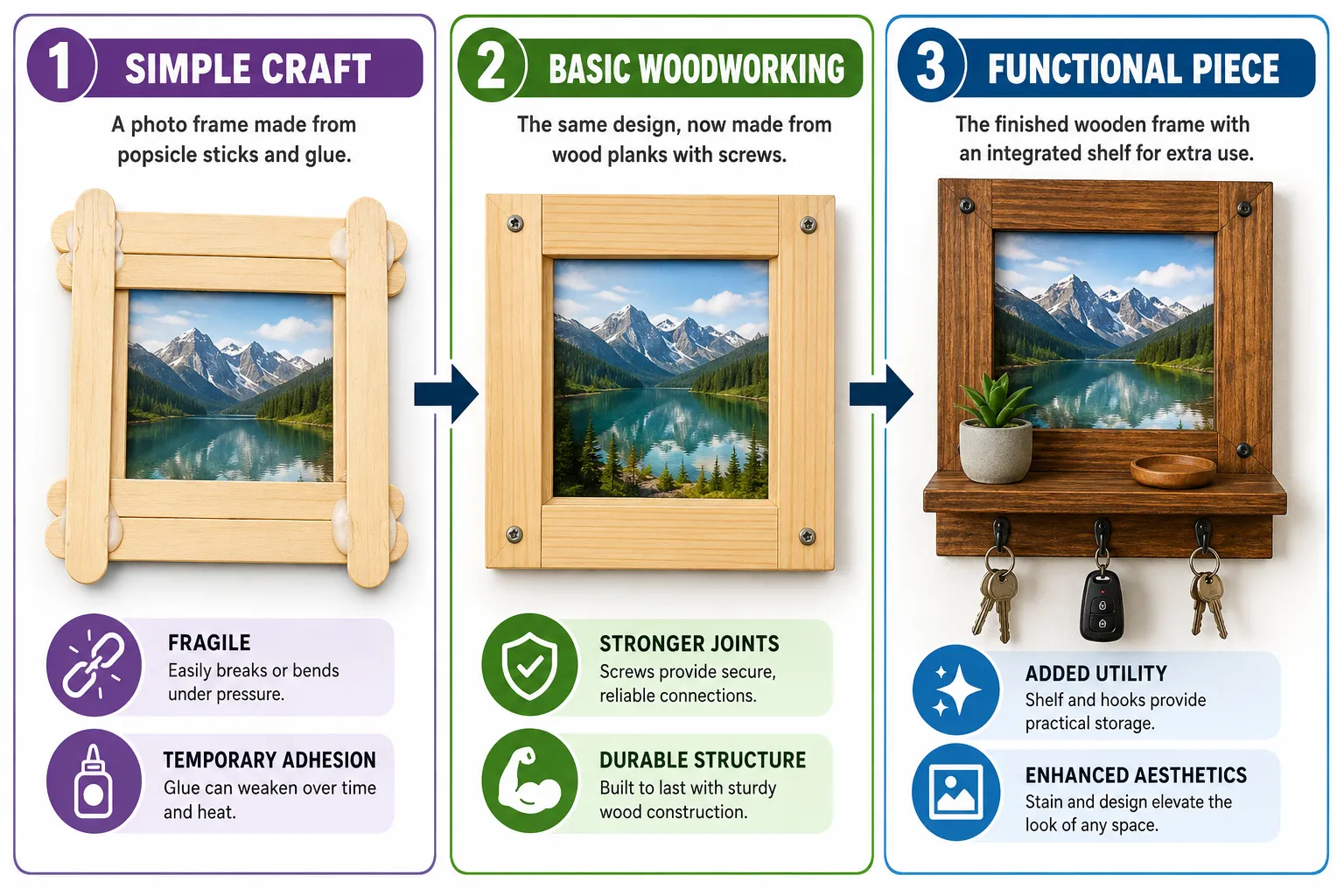
Many individuals discover their creative spark through general crafting, paper projects, fabric art, or decorative assemblage. These pursuits offer immense satisfaction, but often the resulting pieces are more ornamental than functional, and their lifespan can be limited. The leap to woodworking, even with just a few basic techniques, can fundamentally change this dynamic. Woodworking introduces principles of structural integrity, precision, and durability, turning a whimsical craft into a lasting, practical item for the home.
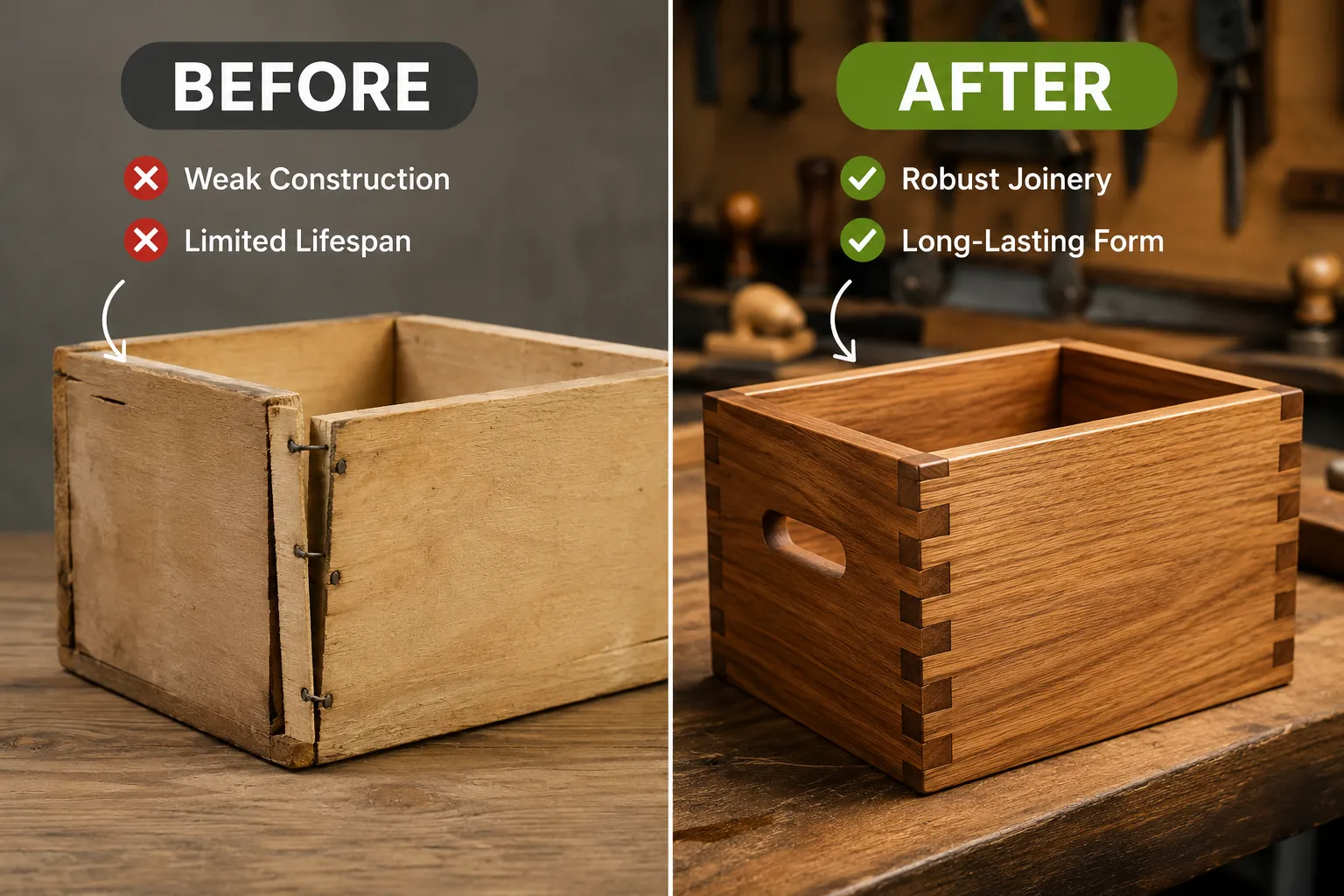
Consider a simple craft project like a decorative storage box. Made from cardboard or thin craft wood sheets, it might be charming but prone to damage. Introduce basic woodworking skills, such as precise cuts, secure joints, and proper sanding, and that same decorative box becomes a robust container capable of holding weight, withstanding daily use, and even becoming an heirloom. This is the essence of how this Beginner’s Guide to Craft: How Basic Woodworking Skills Turn Simple Crafts into Functional Home Pieces aims to empower you.
What Basic Woodworking Entails
Woodworking might seem intimidating at first, conjuring images of complex machinery and intricate joinery. However, the foundational skills are surprisingly accessible. They primarily involve:
- Measuring and Marking: Accurate measurement is the bedrock of all woodworking. Learning to use a tape measure, ruler, and marking knife/pencil correctly ensures pieces fit together perfectly.
- Cutting: From straight cuts to angled cuts, mastering a hand saw or a simple circular saw for basic operations is crucial. Understanding grain direction is also part of smart cutting.
- Joining: This is where the magic happens. Basic joints like butt joints (reinforced with screws or dowels), simple dadoes, or even rudimentary half-laps create strong, stable connections. Wood glue is an indispensable partner in almost all joinery.
- Shaping and Smoothing: Sanding is vital for both aesthetics and safety. Learning different grits and sanding techniques transforms rough wood into smooth, touchable surfaces. Files and rasps can assist in basic shaping.
- Finishing: Applying stains, paints, oils, or varnishes protects the wood and enhances its appearance. Proper finishing seals the wood, making it more resilient to moisture and wear. For various wood types, like mahogany, exploring mahogany wood finishing techniques can be highly beneficial.
These skills, when applied thoughtfully, elevate everyday crafts. A small wooden sign, typically glued together, becomes significantly more stable and long-lasting when panels are joined with simple pocket screws or biscuit joints.
Essential Tools for the Beginner Woodworker: Building Your Foundation
Starting a new craft often involves acquiring new tools. For woodworking, it’s easy to feel overwhelmed by the sheer variety available. However, a beginner does not need a fully equipped professional workshop. A minimal, carefully selected set of tools can get you started on your journey to transforming simple crafts into functional home pieces.
Hand Tools: The Cornerstone
Hand tools are an excellent starting point because they are generally less expensive, require less space, and help develop a tactile understanding of wood.
- Measuring & Marking:
- Tape Measure: A good quality, durable tape measure (16-25 feet) is essential.
- Combination Square: For accurate 90 and 45-degree angles, and for marking lines parallel to an edge.
- Pencil or Marking Knife: For precise layout.
- Cutting:
- Hand Saw: A Japanese pull saw or a panel saw for general cross-cutting and ripping. For specific cuts, learning how to rip 2×4 into 1×4 can be a good early skill to master.
- Coping Saw: For intricate curves and internal cuts.
- Shaping & Smoothing:
- Wood Files and Rasps: For shaping edges and removing material quickly.
- Sandpaper: A variety of grits (80, 120, 180, 220) for progressive smoothing. Sanding blocks or a random orbital sander (entry-level power tool) can also be highly beneficial.
- Joining & Assembly:
- Clamps: A collection of F-clamps, C-clamps, and bar clamps (at least 4-6) is critical for holding pieces together while glue dries.
- Wood Glue: High-quality PVA wood glue. Our guide on the best glue for mirror to wood offers insights into adhesive choices.
- Hammer: For tapping joints together and driving small nails.
- Screwdrivers/Drill: A basic set of screwdrivers or a cordless drill/driver for screws.
Entry-Level Power Tools: Boosting Efficiency
As your skills grow, a few entry-level power tools can significantly increase efficiency and precision without breaking the bank.
- Cordless Drill/Driver: Indispensable for pre-drilling holes and driving screws quickly.
- Random Orbital Sander: Speeds up sanding and achieves a smoother finish more consistently than hand-sanding alone.
- Jigsaw: Excellent for cutting curves and irregular shapes.
- Circular Saw: For making straight cuts on larger panels or boards more efficiently than a hand saw.
- Miter Saw: While a larger investment, a miter saw is excellent for accurate crosscuts and angles, significantly streamlining projects like picture frames or small box construction. Understanding miter saw table height importance can enhance safety and precision.
Remember, safety should always be your top priority. Always wear safety glasses, hearing protection (when using power tools), and ensure your workspace is clear and well-lit. Learn how to use each tool correctly before beginning a project.
Beginner Projects: Turning Simple Crafts into Functional Home Pieces
The best way to develop woodworking skills is through practical application. Starting with simple, achievable projects allows you to practice fundamental techniques and gain confidence. The goal is to create functional pieces that you can use and display in your home in 2026.
1. Simple Picture Frames
- Skills Practiced: Measuring, straight cutting (45-degree miter cuts for corners), gluing, clamping, sanding, and finishing.
- Why it’s great: A classic craft item transformed. Instead of flimsy cardboard, create a sturdy wooden frame that showcases your photos with elegance and durability. You can even experiment with unique wood finishing techniques to personalize your frames.
- Functionality: Protects and displays cherished memories.
2. Basic Storage Boxes or Trays
- Skills Practiced: Precise straight cuts, butt joints, basic joinery (screws, dowels, or reinforced butt joints), sanding, and finishing.
- Why it’s great: Essential for organizing clutter. From a desk organizer to a small trinket box, these projects teach you how to create volume and secure connections.
- Functionality: Holds small items, enhances organization, and adds aesthetic value to any room.
3. Small Wall Shelves or Floating Shelves
- Skills Practiced: Accurate measuring, level mounting, sturdy joinery (dadoes or pocket screws), finishing.
- Why it’s great: Offers practical storage and display space. A simple shelf instantly adds utility to a bare wall. You can even combine these with your crafting skills to create custom wooden planters and vertical gardens.
- Functionality: Displays books, plants, decor, or serves as practical storage in entryways or bathrooms.
4. Wooden Coasters or Trivets
- Skills Practiced: Precise cutting, sanding, finishing, understanding wood grain.
- Why it’s great: Quick, satisfying projects that are excellent for practicing finishing techniques and testing different wood types.
- Functionality: Protects surfaces from heat and moisture, adds a touch of natural beauty.
5. Simple Plant Stands
- Skills Practiced: Measuring, cutting repetitive pieces, simple joinery (lap joints or dowel joints), stability considerations, finishing.
- Why it’s great: A functional piece that enhances home decor and allows you to practice making multiple identical components.
- Functionality: Elevates plants, improves air circulation, and protects floors.
Consider sourcing materials sustainably. Upcycling old pallets can provide affordable wood, while sourcing reclaimed and salvaged wood can add character and reduce waste.
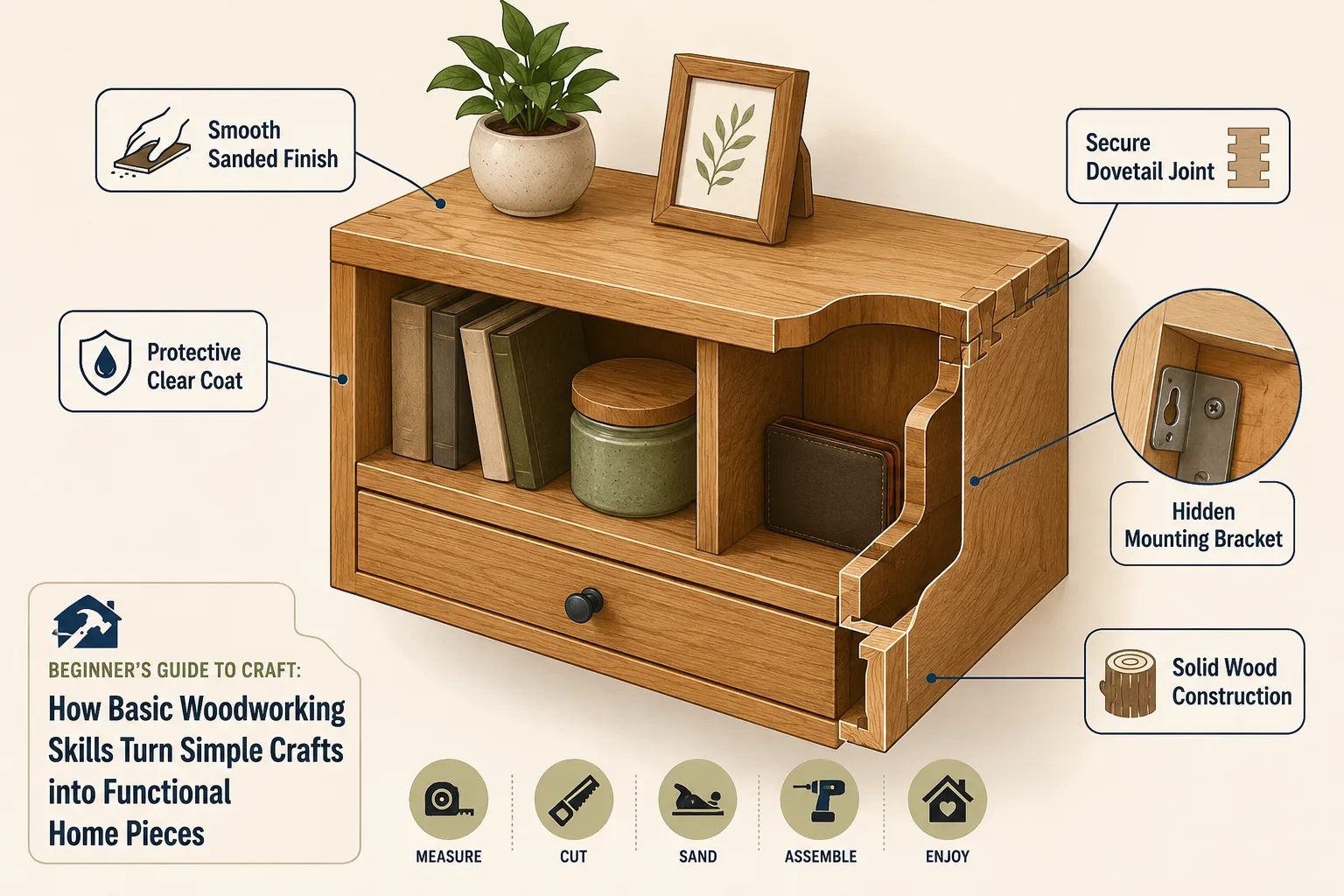
By focusing on these types of projects, you will gradually build a repertoire of skills that allow you to tackle more complex pieces, ultimately transforming your crafting hobby into a powerful means of creating beautiful, functional items for your home. You’ll move beyond simply decorating with wood to truly building with it, enjoying the satisfaction of creating durable pieces that reflect your personal touch.
Conclusion
Transitioning from general crafts to woodworking is a rewarding journey that empowers you to create not just beautiful objects, but truly functional and durable pieces for your home. This Beginner’s Guide to Craft: How Basic Woodworking Skills Turn Simple Crafts into Functional Home Pieces has highlighted how fundamental techniques, measuring, cutting, joining, and finishing, can dramatically elevate your projects. With a modest investment in essential hand tools and perhaps a couple of entry-level power tools, coupled with a commitment to safety and practice, you can begin transforming simple ideas into lasting assets.
Start small, embrace the learning process, and enjoy the profound satisfaction of crafting items that are not only aesthetically pleasing but also inherently useful and built to endure. The skills you gain will not only enhance your home but will also open up a new dimension of creative expression.
Actionable Next Steps:
- Acquire Basic Tools: Invest in a quality tape measure, combination square, a good hand saw, a set of clamps, wood glue, and a variety of sandpaper.
- Safety First: Purchase safety glasses and ensure you understand the safe operation of any tool before use.
- Start Simple: Choose one of the beginner projects mentioned, such as a picture frame or a small storage box, and find a detailed plan or tutorial online.
- Practice Consistently: Dedicate regular time to practice your measuring, cutting, and joining techniques.
- Expand Your Knowledge: Explore resources for different types of wood, joinery methods, and finishing options to continually grow your skills.
About the Author
This article was written by a content specialist deeply passionate about DIY projects and sustainable craftsmanship. With years of experience transforming raw materials into functional home pieces, the author aims to demystify woodworking for beginners, encouraging more people to discover the joy and utility of building with their own hands.
SEO Meta Title: Beginner Woodworking: Turn Crafts Into Functional Home Pieces SEO Meta Description: Master basic woodworking skills to transform simple crafts into durable, functional home pieces. Our 2026 guide covers tools, techniques, and projects for beginners.