
The notion that woodworking demands a sprawling workshop filled with expensive power tools often deters aspiring craftspeople. However, a significant percentage of historical woodworking masterpieces were created with nothing more than a few essential hand tools and a keen eye. This article, “Woodworking for Absolute Beginners: Hand Tool-Only Starter Projects Without a Full Workshop,” challenges the modern myth of necessity, demonstrating that the rewarding world of woodworking is entirely accessible to anyone, regardless of space or budget. It’s about ‘minicraft’, focusing on small, simple creative projects that yield immense satisfaction with minimal investment.
Key Takeaways
- Woodworking is accessible without a dedicated workshop, requiring only essential hand tools and a small space.
- Focus on fundamental skills like measuring, marking, sawing, chiseling, and planing.
- Begin with simple projects like cutting boards, phone stands, or small shelves to build confidence.
- Prioritize safety by understanding tool usage and maintaining a clean workspace.
- Embrace patience and practice; mastery comes through consistent effort with basic techniques.
Why Hand Tool Woodworking for Absolute Beginners?
For many, the dream of crafting with wood is overshadowed by perceived barriers: the cost of machinery, the need for a dedicated workshop, and the steep learning curve of complex power tools. “Woodworking for Absolute Beginners: Hand Tool-Only Starter Projects Without a Full Workshop” offers a refreshing alternative. Hand tool woodworking is not only cost-effective but also provides a deeper connection to the material and the creative process. It eliminates the noise and dust associated with power tools, making it ideal for apartments, garages, or even a sturdy kitchen table.
The benefits extend beyond practicality. Working with hand tools fosters patience, precision, and an intimate understanding of wood grain and resistance. You develop a tactile feel for the material, learning to read the wood and adjust your technique accordingly. This approach builds a strong foundation in fundamental woodworking principles before any consideration of machinery. Moreover, the sense of accomplishment from creating something beautiful and functional with your own hands, using simple tools, is profoundly rewarding.
Essential Hand Tools for Your Starter Kit
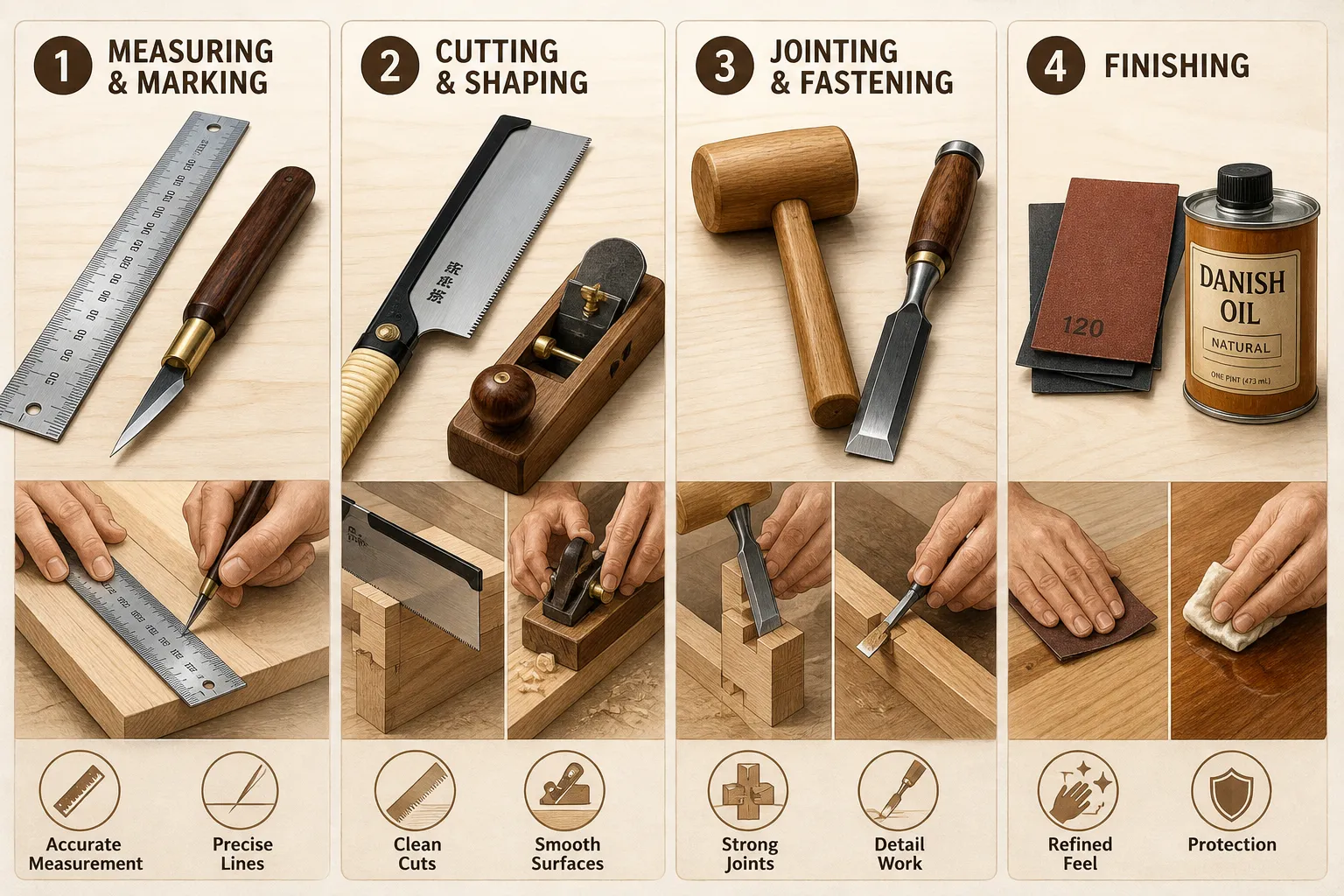
Starting your woodworking journey requires a thoughtful selection of tools. Focus on quality over quantity. A few well-maintained, sharp hand tools will serve you better than a drawer full of mediocre ones. Here’s a foundational list for Woodworking for Absolute Beginners: Hand Tool-Only Starter Projects Without a Full Workshop:
Measuring and Marking Tools:
- Steel Rule or Tape Measure: For accurate dimensioning.
- Pencil: For general marking.
- Marking Knife: Essential for precise, sharp lines that guide your cuts.
- Square (Combination or Try Square): For ensuring 90-degree angles and checking flatness.
- Marking Gauge: For consistently marking lines parallel to an edge.
Cutting Tools:
- Handsaw (Japanese Pull Saw recommended for beginners): Easier to use and provides cleaner cuts on the pull stroke. A crosscut saw and a rip saw are excellent additions later.
- Coping Saw: For cutting curves and intricate shapes.
Shaping and Smoothing Tools:
- Chisels (set of 3-4 common sizes like 1/4″, 1/2″, 3/4″, 1″): For removing waste, shaping joints, and cleaning up areas.
- Block Plane: A small, versatile plane for chamfering, trimming end grain, and small smoothing tasks.
- Mallet: For striking chisels safely and effectively.
Clamping and Holding:
- F-Clamps or C-Clamps (4-6): Indispensable for holding workpieces while cutting, gluing, or planing.
- Bench Vise (optional but highly recommended): Provides a secure holding mechanism, transforming any sturdy table into a functional workbench.
Finishing:
- Sandpaper (various grits): For smoothing surfaces before finishing.
- Wood Glue: For strong, lasting joints. Our guide on choosing the right adhesive for every woodworking joint can provide more details.
- Danish Oil or Tung Oil: Simple, durable finishes that enhance wood’s natural beauty.
Remember, the most crucial aspect of hand tools is sharpness. A dull tool is dangerous and inefficient. Invest in a sharpening system early on, a simple wet stone setup or diamond plates will suffice. Learn The Ultimate Guide To Sharpening Woodworking Chisels And Planes for razor-sharp edges.
Setting Up Your “Workshop” and Staying Safe
You don’t need a dedicated room to start woodworking. A corner of a garage, a sturdy kitchen table, a balcony, or even a portable workbench in a spare room can serve as your initial workspace. The key is to have a stable surface where you can clamp your work securely and enough light to see what you’re doing. Good lighting is critical for accurate marking and safe tool use.
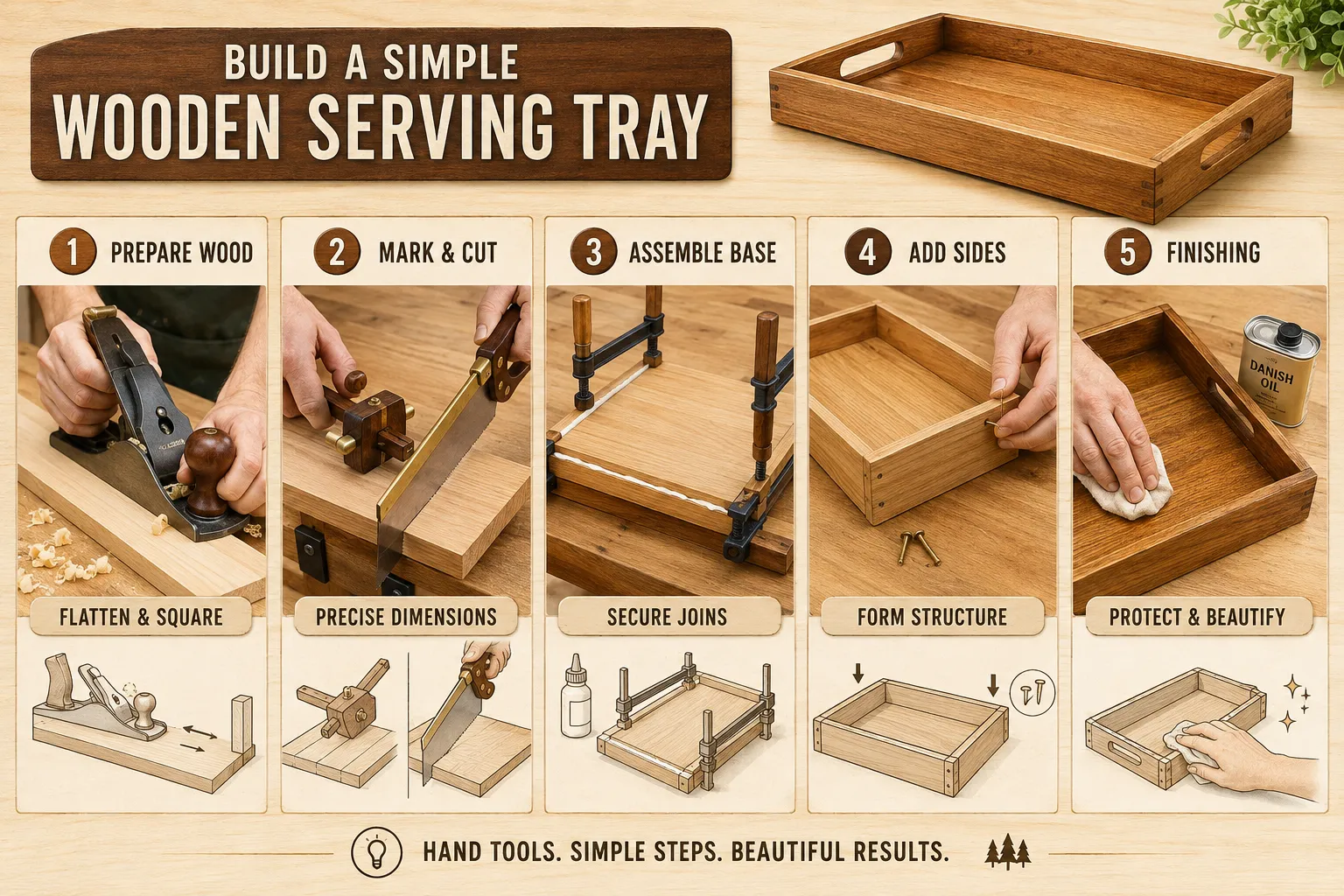
Consider a portable workbench or a collapsible table if space is at a premium. These can be set up when you need them and stowed away when not in use. Ensure your chosen surface is robust enough to withstand hammering, planing, and clamping. You might also want to invest in a bench hook, a simple wooden jig that holds your workpiece securely for sawing and chiseling. This is an easy first project in itself! For ideas on maximizing small spaces, explore [smart workshop storage solutions](https://woodcraftwiz.com/smart-workshop-storage-solutions-maximizing-small-spaces- Con modular-systems-and-diy-organizers/).
Safety First
Even with hand tools, safety is paramount.
- Secure Your Workpiece: Always clamp your wood firmly to prevent it from shifting. Unsecured work is a recipe for accidents.
- Sharp Tools: As mentioned, sharp tools are safer. They cut efficiently with less force, reducing the chance of slips.
- Proper Stance: Maintain a balanced stance and keep your hands clear of the cutting path.
- Personal Protective Equipment (PPE): Safety glasses are a must to protect against flying chips. Gloves can be useful for handling rough timber but should be avoided when operating rotating machinery (not an issue with hand tools).
- Clean Workspace: Keep your work area tidy. Clutter can lead to trips or snagged tools.
- Read Instructions: Understand how each tool is designed to be used.
First Projects for Woodworking for Absolute Beginners: Hand Tool-Only Starter Projects Without a Full Workshop
The best way to learn is by doing. Start with simple projects that allow you to practice fundamental techniques without being overly complex. These projects require minimal wood, common cuts, and basic joinery. The satisfaction of completing your first handmade item will be a powerful motivator.
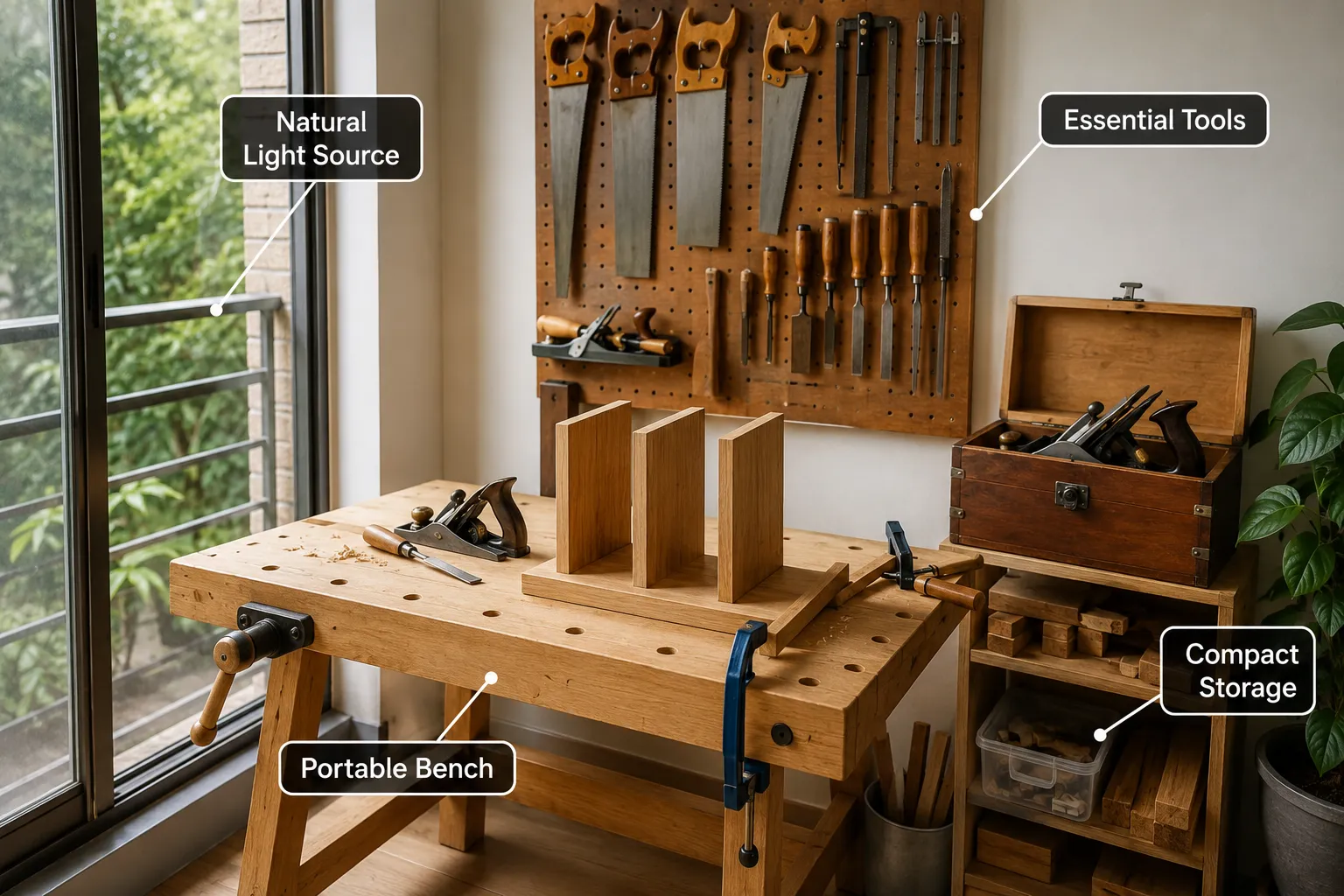
Here are some ideal starter projects for “Woodworking for Absolute Beginners: Hand Tool-Only Starter Projects Without a Full Workshop”:
1. Simple Cutting Board or Trivet
This classic beginner project teaches you:
- Squaring and Dimensioning: Using a plane and saw to get flat, square edges and accurate dimensions.
- Smoothing: Planing and sanding surfaces.
- Finishing: Applying a food-safe oil finish.
Materials: A single piece of hardwood (e.g., maple, cherry, walnut), about 1 inch thick. Process:
- Cut the board to your desired length and width using a handsaw.
- Use a block plane to flatten one face, then square up one edge.
- Use the marking gauge to mark the opposite face and edge, then plane them square and parallel.
- Sand all surfaces smooth, starting with coarse grit and progressing to fine.
- Apply several coats of food-safe mineral oil or beeswax finish.
2. Wooden Phone Stand
A small project that introduces angled cuts and simple joinery.
Materials: Two small pieces of hardwood or softwood. Process:
- Cut two pieces of wood. One will be the base, and the other the upright support.
- Cut a slot in the base piece to hold the upright support. This can be a simple dado joint or a through mortise.
- Cut an angle on the upright piece to lean your phone back.
- Glue the two pieces together. Use clamps to hold them firmly while the glue dries.
- Sand and finish.
3. Small Storage Crate or Box
This project introduces basic box construction and encourages precise measuring for good fits.
Materials: Thin boards of pine or plywood. Process:
- Cut four side pieces and one bottom piece.
- Practice simple butt joints or rabbet joints for the corners. Use glue and small nails or screws for strength.
- Assemble the sides, ensuring they are square.
- Attach the bottom piece.
- Sand and finish. This could also be a great opportunity to explore crafting small woodworking gifts for the holidays.
4. Simple Bookshelf or Display Shelf
Ideal for understanding basic structural integrity and repetitive cuts.
Materials: Two side pieces, two or more shelf pieces. Process:
- Accurately measure and cut all your pieces.
- Mark the shelf locations on the side pieces.
- You can use simple dados (slots cut into the side pieces) or cleats (small strips of wood screwed to the side pieces) to support the shelves.
- Assemble with glue and screws/nails.
- Sand and apply your chosen finish. When selecting wood, consider selecting the right wood for outdoor projects if you intend it for exterior use.
5. Picture Frame or Small Mirror Frame
This project refines your measuring and angle cutting skills, particularly for mitered corners. For a deeper dive, consider reflecting your craft: a comprehensive guide to woodworking mirrors.
Materials: Four strips of wood, backing board. Process:
- Cut four pieces of wood with 45-degree miters at each end to form a rectangle.
- Use a miter box and a handsaw for accurate cuts.
- Assemble the frame using glue and clamps. For extra strength, you can add small splines to the corners.
- Once dry, cut a rabbet (groove) on the back inner edge to hold the picture/mirror and backing. This can be done with a chisel.
- Sand and finish.
Advancing Your Hand Tool Skills in 2026
As you gain confidence with these beginner projects, you can gradually introduce more complex techniques and joinery methods. Learning to cut traditional joints like half-laps, mortise and tenons, and dovetails will significantly expand your capabilities. Mastering dovetail joints with hand tools is a rite of passage for many hand tool woodworkers.
Consider experimenting with different wood species. Softwoods like pine are forgiving for practice, while hardwoods like oak, maple, or cherry offer beautiful grain patterns and greater durability for finished pieces.
Maintaining Your Tools
Tool maintenance is a continuous process. Regular sharpening, cleaning, and oiling your tools will ensure they perform optimally and last a lifetime. Store them properly to prevent rust and damage. This commitment to tool care is as much a part of the craft as the building itself.
Join online communities, watch instructional videos, and consider local woodworking classes if available. The hand tool woodworking community is often very supportive and eager to share knowledge.
Conclusion
Embarking on “Woodworking for Absolute Beginners: Hand Tool-Only Starter Projects Without a Full Workshop” is not just about building objects; it’s about building skills, patience, and a deeper connection to craftsmanship. You don’t need extensive space or expensive machinery to begin this incredibly rewarding journey. With a modest set of hand tools, a stable workspace, and a willingness to learn, you can create beautiful, functional pieces with your own hands. Start with simple projects, focus on mastering fundamental techniques, prioritize safety, and embrace the process. The satisfaction of turning raw wood into something tangible and meaningful is a profound experience that awaits you in 2026.
Actionable Next Steps
- Acquire Your Starter Tools: Invest in a basic set of quality hand tools, prioritizing sharpness and functionality.
- Set Up Your Space: Designate a stable, well-lit area in your home for woodworking.
- Learn Sharpening: Practice sharpening your chisels and plane blades until you achieve a razor edge.
- Start Your First Project: Choose a simple project like a cutting board or phone stand and follow a step-by-step guide.
- Practice Consistently: Dedicate regular time to working with your tools and refining your techniques.
SEO Meta Title: Hand Tool Woodworking for Beginners: No Workshop Needed SEO Meta Description: Start woodworking in 2026 with essential hand tools & simple projects. Learn beginner skills without a full workshop for rewarding creations.