
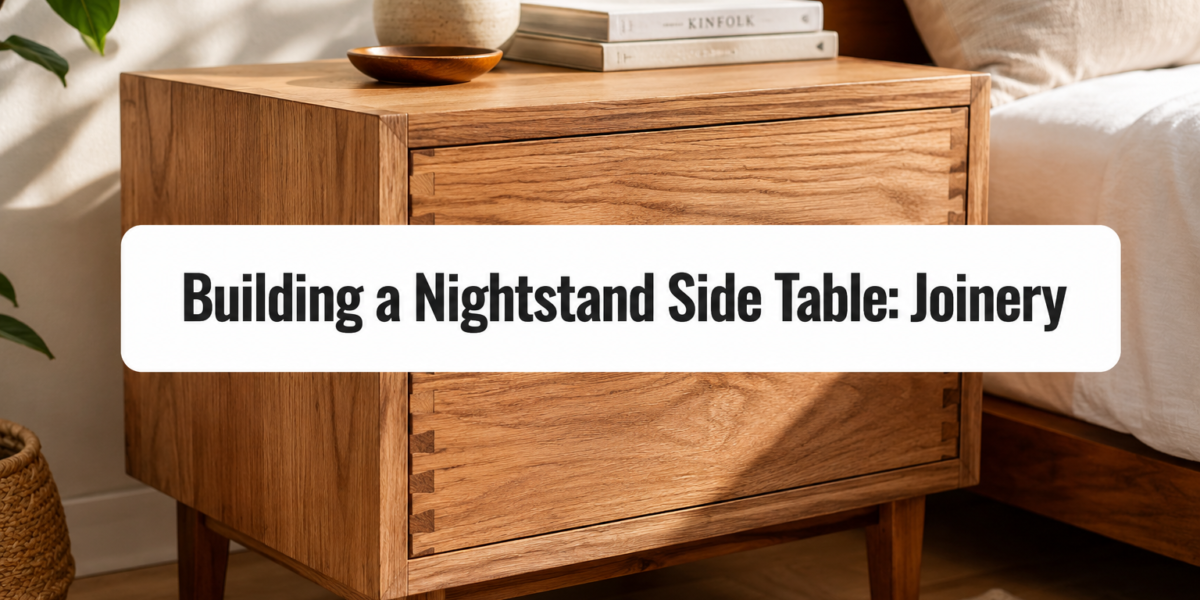
The subtle creak of a poorly constructed drawer, or a wobbly surface, can diminish the comfort and utility of even the most beautiful bedroom furniture. For woodworkers, the challenge and reward lie in mastering the techniques that ensure both durability and elegance. This article, “Building a Nightstand Side Table: Joinery and Drawer Techniques for Bedroom Furniture,” explores the essential skills required to craft a functional and aesthetically pleasing nightstand, focusing on robust joinery and smooth drawer operation. By understanding the principles of wood movement and precision joinery, artisans in 2026 can create heirloom-quality pieces that stand the test of time.
Key Takeaways
- Foundation First: Solid carcass construction using appropriate joinery is crucial for stability and longevity.
- Drawer Mechanics: The success of a nightstand often hinges on well-fitted and smoothly operating drawers.
- Joinery Choices: Different joinery techniques offer varying strengths, aesthetics, and levels of difficulty, suitable for different parts of the nightstand.
- Material Selection: Choosing the right wood and hardware profoundly impacts both the building process and the final product’s quality.
- Finishing Touches: Proper finishing protects the wood and enhances the nightstand’s beauty, making it a focal point in any bedroom.
Understanding Carcass Construction and Fundamental Joinery
The foundation of any sturdy piece of furniture, including a nightstand, is its carcass. This structural frame dictates the overall strength, stability, and longevity of the piece. When embarking on building a nightstand side table, selecting the right joinery for the carcass components is paramount. This initial phase involves joining the legs, rails, and panels to form the main body of the table.
Essential Joinery for Carcass Strength
Several joinery techniques are suitable for nightstand carcass construction, each offering unique benefits in terms of strength, appearance, and complexity.
- Mortise and Tenon: This traditional joint is a cornerstone of fine furniture making, renowned for its incredible strength and resistance to racking. It involves cutting a rectangular hole (mortise) into one piece of wood and a corresponding projecting tongue (tenon) on another, which fits snugly into the mortise. For nightstand legs and rails, a mortise and tenon joint provides exceptional rigidity. Variations like through mortise and tenon or blind mortise and tenon can be chosen based on aesthetic preference and desired strength.
- Dowel Joints: Dowels offer a simpler, yet effective, way to join pieces, especially where exposed joinery is undesirable. This method involves drilling holes into mating pieces and inserting fluted dowel pins with glue. While not as strong as mortise and tenon for resisting racking, they are excellent for reinforcing butt joints and adding alignment.
- Pocket Hole Joinery: A popular choice for its speed and ease, pocket hole joinery uses a specialized jig to drill angled holes into one piece of wood, through which screws are driven into the mating piece. While quick, its strength relies heavily on the screws and is generally considered less robust than traditional joinery for high-stress applications. However, for less structural components or for quick assembly, it can be quite effective.
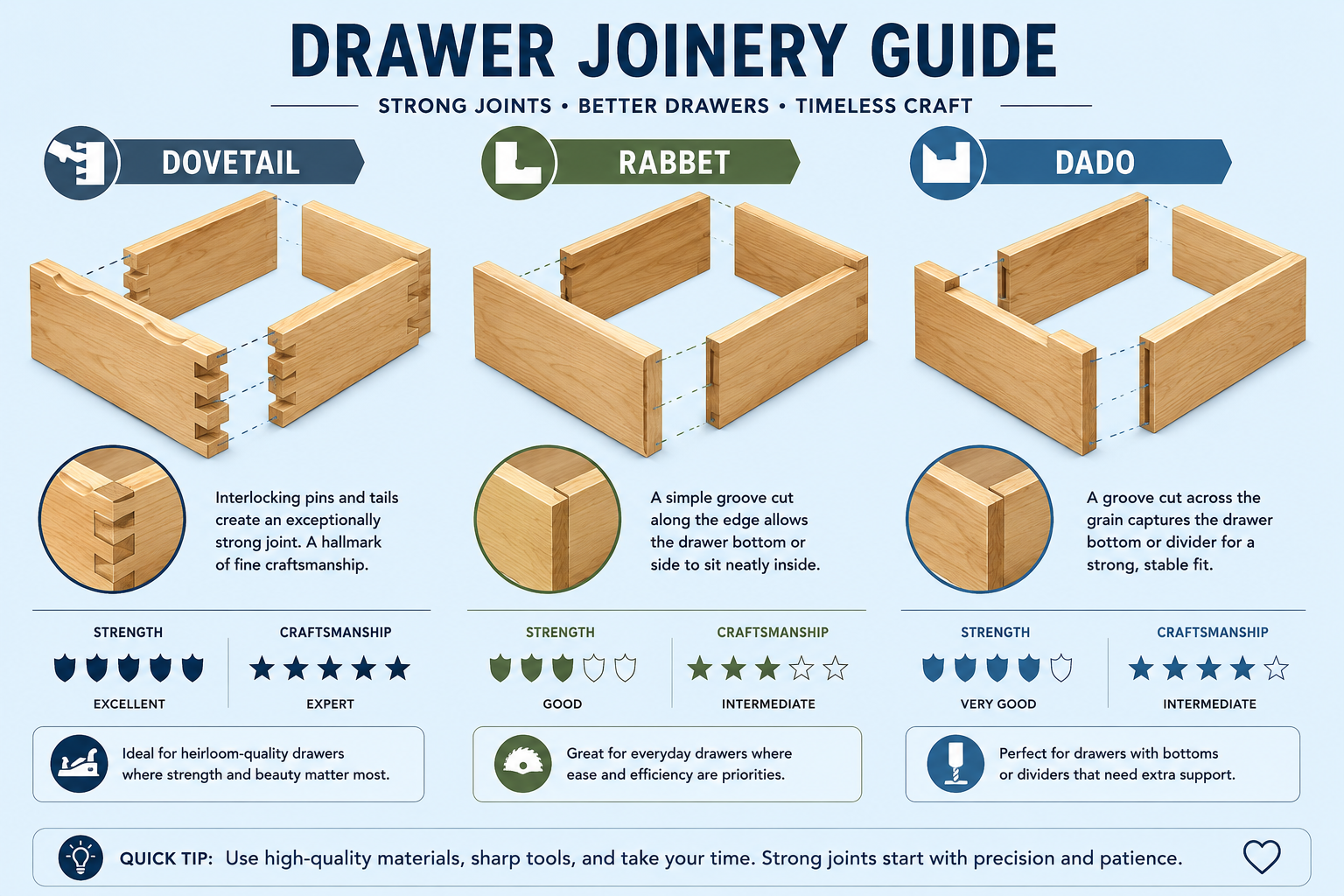
- Rabbet and Dado Joints: These joints are frequently used for joining panels to frames, or for creating shelves and dividers within the nightstand. A rabbet is a channel cut along the edge of a board, while a dado is a channel cut across the grain. They provide mechanical strength and a larger gluing surface, making them excellent for integrating the top, bottom, and side panels of the nightstand.
| Joinery Type | Strength | Complexity | Best Use Cases |
|---|---|---|---|
| Mortise and Tenon | Excellent | High | Legs to rails, critical structural connections |
| Dowel Joints | Good | Medium | Reinforcing butt joints, non-exposed connections |
| Pocket Hole Joinery | Moderate | Low | Non-structural elements, quick assembly |
| Rabbet and Dado Joints | Good to Very Good | Medium | Shelves, back panels, drawer dividers |
When selecting your joinery, consider not only the structural requirements but also the aesthetics. Exposed through-tenons or dovetails can be beautiful design elements, showcasing your craftsmanship. For those interested in mastering advanced joinery, resources like “Mastering Dovetail Joints with Hand Tools: A Step-by-Step Guide for Flawless Wood Joinery” can provide invaluable guidance. Mastering Dovetail Joints with Hand Tools: A Step-by-Step Guide for Flawless Wood Joinery
Designing for Wood Movement
A critical aspect of furniture building, especially for pieces like a nightstand that will experience changes in humidity and temperature, is understanding wood movement. Wood naturally expands and contracts across its grain. Failure to account for this movement can lead to cracked panels, warped tops, and failed joints.
Key considerations:
- Solid Wood Panels: When using solid wood for tops or side panels, allow for movement. Fastenings like Z-clips, tabletop fasteners, or elongated screw holes in cleats will secure the panel while allowing it to expand and contract freely.
- Plywood and MDF: These engineered wood products are much more stable and exhibit minimal movement, making them suitable for back panels or drawer bottoms where stability is crucial.
- Grain Direction: Always orient the grain of mating pieces thoughtfully. For example, the top of a nightstand should typically have its grain running from side to side (width), allowing it to expand and contract across the width of the table.

Crafting Functional Drawers: Joinery and Techniques
The drawer is often the most used component of a nightstand. Its functionality directly impacts user satisfaction. Building a nightstand side table with well-crafted drawers requires attention to detail in joinery, sizing, and hardware.
Drawer Box Joinery
The joints used for constructing the drawer box itself are crucial for its strength and durability. The front joint is usually the strongest, as it resists the pulling force when opening the drawer.
- Dovetail Joints: Widely considered the gold standard for drawer construction, dovetails offer unparalleled strength, especially in resisting the pulling force from the drawer front. They are visually appealing and a hallmark of quality craftsmanship. Both hand-cut and machine-cut dovetails are effective.
- Rabbet and Dado Joints: For simpler drawer construction, a rabbet joint at the front corners (where the drawer front wraps around the sides) and dado joints for the back panel can be used. These offer good strength and are relatively easy to cut with a table saw or router.
- Box Joints: Similar to dovetails but with square pins and tails, box joints also provide excellent mechanical strength and a distinct aesthetic. They are often easier to cut than dovetails, especially with a jig.
Drawer Bottoms and Backs
Drawer bottoms typically float in a groove cut into the drawer box sides, front, and back. This allows the bottom panel to expand and contract without stressing the drawer box. Plywood or thin solid wood panels are commonly used. The drawer back is often attached with rabbet or dado joints, ensuring stability.
Drawer Slides and Runners
The mechanism by which the drawer opens and closes is critical.
- Wooden Runners: Traditional nightstands often use wooden runners and kickers. These require precise fitting, often incorporating wax or graphite for smooth operation. They are durable but can be prone to sticking if not perfectly aligned or if humidity changes cause significant wood movement.
- Metal Drawer Slides: Modern nightstands frequently use metal drawer slides, which offer consistently smooth operation. These come in various types:
- Side-Mount Slides: Most common, available in varying extensions (e.g., 3/4 extension, full extension, overtravel). They require specific clearances between the drawer box and the cabinet opening.
- Under-Mount Slides: Concealed beneath the drawer box, providing a clean aesthetic. Often feature soft-close mechanisms for a premium feel.
- Center-Mount Slides: A single slide mounted underneath the drawer, suitable for lighter drawers or a more minimalist look.
Regardless of the slide type, accurate measurement and installation are paramount for smooth operation. Proper installation ensures that the drawer opens fully and closes quietly without binding or sagging.
Finishing Touches and Design Considerations
Beyond the joinery and construction, the finishing touches and overall design elevate a nightstand from a mere functional object to a beautiful piece of bedroom furniture.
Surface Preparation and Finishing
A flawless finish begins with meticulous surface preparation.
- Sanding: Start with a coarser grit (e.g., 80 or 100) to remove milling marks, then progress through finer grits (e.g., 120, 150, 180, 220). Ensure all scratches from previous grits are removed before moving to the next.
- Dust Removal: Thoroughly clean the surface between sanding steps and before applying any finish. Compressed air, tack cloths, or a damp rag (if compatible with your chosen finish) are effective.
- Staining (Optional): If desired, apply a wood stain to enhance the grain or change the wood’s color. Always test stain on scrap wood first.
- Protective Finish: A durable topcoat is essential for protecting the wood from moisture, scratches, and everyday wear.
- Polyurethane: Highly durable and water-resistant, available in oil-based and water-based formulas. Offers excellent protection for high-use surfaces. For tips on application, see Applying Polyurethane in High Humidity: Tips and Techniques.
- Oil Finishes (e.g., Danish Oil, Tung Oil): Penetrate the wood, enhancing its natural luster and providing a more “natural” feel. Offer good protection but may require more frequent reapplication. Danish Oil vs Linseed: The Ultimate Wood Finishing Guide provides an excellent comparison.
- Lacquer: Dries quickly and builds a smooth, durable finish. Often applied with a spray gun for best results.
- Shellac: A natural finish that provides a beautiful, warm glow. Can be used as a sealer or a topcoat.
Proper finishing not only protects the wood but also accentuates the beauty of the chosen species and the craftsmanship of the joinery.
Ergonomics and Aesthetic Design for Bedroom Furniture
When building a nightstand side table, consider its intended use and integration into the bedroom.
- Height: A nightstand should ideally be level with the top of the mattress or slightly higher, making it easy to reach items.
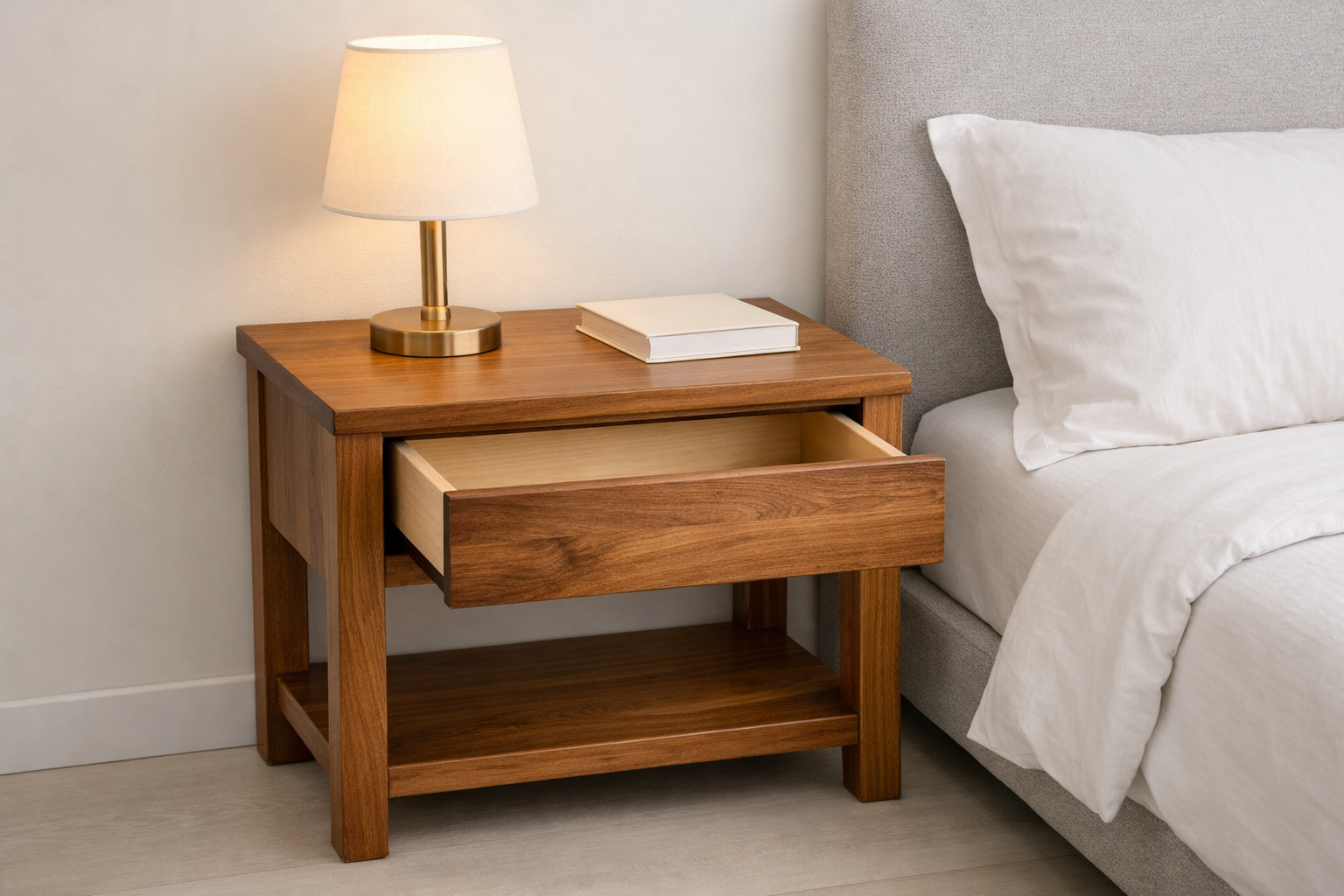
- Storage: Evaluate the need for drawer space, open shelving, or a combination. A single large drawer or multiple smaller ones can serve different purposes.
- Footprint: Ensure the nightstand’s dimensions fit comfortably in the available space without overwhelming the room or impeding movement.
- Style Integration: Design the nightstand to complement the existing bedroom decor. Whether rustic, modern, mid-century, or traditional, the choice of wood, hardware, and overall lines should align with the room’s aesthetic. For example, a sleek design with minimalist hardware suits modern aesthetics, while a design with visible dovetails and turned legs might be perfect for a traditional setting.
- Hardware: Drawer pulls and knobs are the “jewelry” of your nightstand. Select hardware that is both functional and aesthetically pleasing, complementing the chosen style and finish.
Crafting a nightstand is an excellent project for honing your woodworking skills, especially in joinery and drawer construction. By paying close attention to these details, you can create a piece that is not only beautiful but also built to last for generations. Further inspiration for similar projects can be found in resources such as “Ultimate DIY End Tables: Versatile Designs from Nightstands to Side Tables with Dovetail Drawers.” Ultimate DIY End Tables: Versatile Designs from Nightstands to Side Tables with Dovetail Drawers
Conclusion
Building a nightstand side table is a rewarding woodworking project that significantly enhances bedroom functionality and aesthetics. The journey from raw lumber to a finished piece involves thoughtful design, meticulous joinery, and careful finishing. Emphasizing strong carcass construction through techniques like mortise and tenon joints, coupled with precisely crafted drawers utilizing methods such as dovetails, ensures a durable and elegant outcome. Accounting for wood movement and applying a high-quality finish are the final steps in creating a piece that will serve its purpose beautifully for years to come.
As you embark on your next woodworking endeavor in 2026, remember that patience and precision are your most valuable tools. Each joint, every sanded surface, and the selection of appropriate drawer slides contribute to the overall quality and longevity of your furniture. Take the time to master these fundamental techniques, and you will not only build a nightstand but also develop skills that will benefit countless future projects.
Actionable Next Steps:
- Plan Your Design: Sketch out your nightstand, considering dimensions, drawer configuration, and desired aesthetic.
- Select Your Wood and Hardware: Choose a wood species appropriate for your skill level and design, and source quality drawer slides and pulls.
- Practice Joinery: If new to specific joints, practice on scrap wood before cutting your final pieces.
- Work Methodically: Take your time with each step, from milling lumber to applying the final finish, ensuring accuracy throughout.
- Focus on Detail: Pay attention to small details, such as chamfered edges or perfectly flush joints, as they significantly impact the final quality.