
Despite the perception that all outdoor furniture eventually succumbs to the elements, it is entirely possible to craft an outdoor dining table that not only withstands the rigors of weather but becomes a lasting centerpiece for generations. The secret lies not in fleeting trends, but in a meticulous approach to material selection, joinery, and finishing techniques. This guide delves into the essential principles for [Building a Robust Outdoor Dining Table: Wood Selection, Weatherproofing, and Joinery for Longevity], ensuring your creation endures sun, rain, and everything in between in 2026 and beyond.
Key Takeaways
- Wood Selection is Paramount: Choose naturally durable, rot-resistant woods like Teak, Ipe, or Cedar for the foundation of your outdoor dining table.
- Proper Joinery Ensures Strength: Employ traditional woodworking joints such as mortise and tenon, or half-lap joints, designed to accommodate wood movement and provide structural integrity.
- Effective Weatherproofing is Non-Negotiable: Apply high-quality penetrating oils, marine-grade varnishes, or spar urethane to protect against moisture, UV radiation, and mildew.
- Design for Durability: Incorporate design elements that promote water run-off and minimize standing water, reducing the risk of rot.
- Maintenance Extends Lifespan: Regular cleaning and reapplication of finishes are crucial for preserving your outdoor dining table’s beauty and structural soundness.
Wood Selection for Longevity and Resilience
The foundation of any robust outdoor dining table begins with the right wood. Not all woods are created equal when it comes to battling moisture, UV radiation, insects, and temperature fluctuations. Selecting a species known for its natural durability and resistance to decay is the first, most critical step in [Building a Robust Outdoor Dining Table: Wood Selection, Weatherproofing, and Joinery for Longevity].
Premium Hardwoods for Outdoor Use
Certain hardwoods stand out for their exceptional performance in outdoor environments. These woods possess natural oils or densities that make them inherently resistant to rot, insects, and fungal decay.
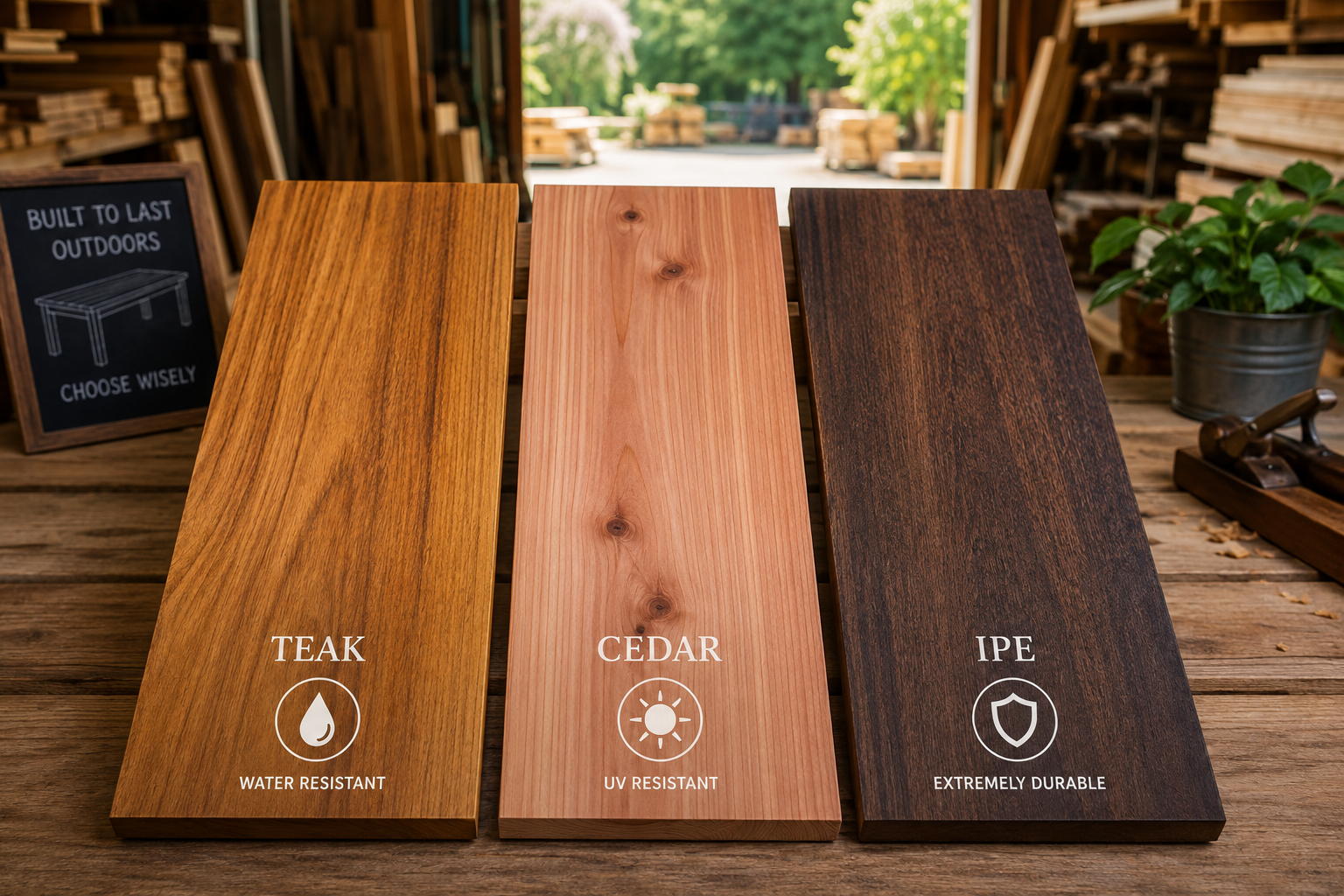
- Teak (Tectona grandis): Widely regarded as the gold standard for outdoor furniture, Teak is incredibly durable, highly resistant to rot, pests, and moisture. Its high oil content gives it a natural defense against the elements and helps it age gracefully to a beautiful silvery-gray patina if left untreated. While expensive, its longevity often justifies the investment.
- Ipe (Handroanthus spp. or Tabebuia spp.): Also known as Brazilian Walnut, Ipe is an incredibly dense and hard wood, making it supremely resistant to rot, insects, and abrasion. It’s often used for decking and boardwalks due to its extreme durability. Ipe’s rich, dark brown color can be maintained with oil or allowed to weather to a similar silver-gray as Teak.
- Mahogany (various species, often Swietenia macrophylla or Khaya spp.): Certain species of mahogany, particularly African and Honduran mahogany, offer good natural resistance to decay. They are stable, work well, and take finishes beautifully. When properly sealed, mahogany can be an excellent choice for outdoor dining tables, offering a classic aesthetic. For guidance on finishing this wood for outdoor conditions, see our article on how to finish mahogany for outdoor use.
Sustainable and More Accessible Options
While premium hardwoods offer superior performance, more sustainable and often more affordable options can still yield a robust outdoor dining table with proper treatment.
- Cedar (Thuja plicata – Western Red Cedar, or Juniperus virginiana – Eastern Red Cedar): Cedar is a lightweight, aromatic wood with natural oils that repel insects and resist decay. Western Red Cedar is particularly popular for outdoor projects due to its stability and attractive grain. It’s easier to work with than Teak or Ipe but requires more diligent weatherproofing.
- Redwood (Sequoia sempervirens): Similar to cedar, redwood is naturally resistant to insects and rot, thanks to its unique chemical compounds. It’s a stable wood that holds finishes well and has a beautiful reddish hue. Availability can be regional, and sustainable sourcing is important.
- Cypress (Taxodium distichum): Commonly found in the southeastern U.S., cypress heartwood is highly resistant to rot and insect infestation due to its natural preservative, cypressene. It’s a durable and relatively stable wood, often more affordable than tropical hardwoods.
- Treated Lumber: Pressure-treated lumber, typically pine or fir, has chemicals forced into its fibers to resist decay and insects. While very durable and cost-effective, it’s generally not recommended for dining surfaces due to potential chemical leaching and less refined aesthetics. If used for structural components, ensure it is rated for ground contact and covered with non-toxic finishes.
Sourcing and Preparation
When selecting your wood, prioritize kiln-dried lumber to ensure stability and reduce the likelihood of warping or checking. Look for clear, straight grain patterns and avoid pieces with large knots, cracks, or excessive sapwood, which is less resistant to decay. Consider sustainable wood sourcing by looking for FSC (Forest Stewardship Council) certified lumber. For more on responsible material acquisition, explore sustainable wood sourcing for the modern woodworker.
| Wood Type | Durability (Outdoor) | Cost | Maintenance | Aesthetic |
|---|---|---|---|---|
| Teak | Excellent | High | Low | Golden-brown, ages to silver-gray |
| Ipe | Excellent | High | Low | Dark brown, ages to silver-gray |
| Mahogany | Good to Excellent | Medium-High | Medium | Reddish-brown, rich grain |
| Cedar | Good | Medium | Medium-High | Light reddish-brown |
| Redwood | Good | Medium | Medium-High | Reddish hue |
| Cypress | Good | Medium | Medium-High | Pale yellow to light brown |
Essential Joinery Techniques for Outdoor Durability
The construction of an outdoor dining table demands joinery that can withstand environmental stress. Wood naturally expands and contracts with changes in humidity and temperature. Poor joinery will fail, leading to loose connections, wobbles, and structural compromises. Therefore, [Building a Robust Outdoor Dining Table: Wood Selection, Weatherproofing, and Joinery for Longevity] requires thoughtful application of joints designed for movement and strength.
Joints That Endure
Traditional woodworking joints, when properly executed, offer superior strength and longevity compared to relying solely on screws or nails. They create interlocking mechanical connections that distribute stress more effectively.
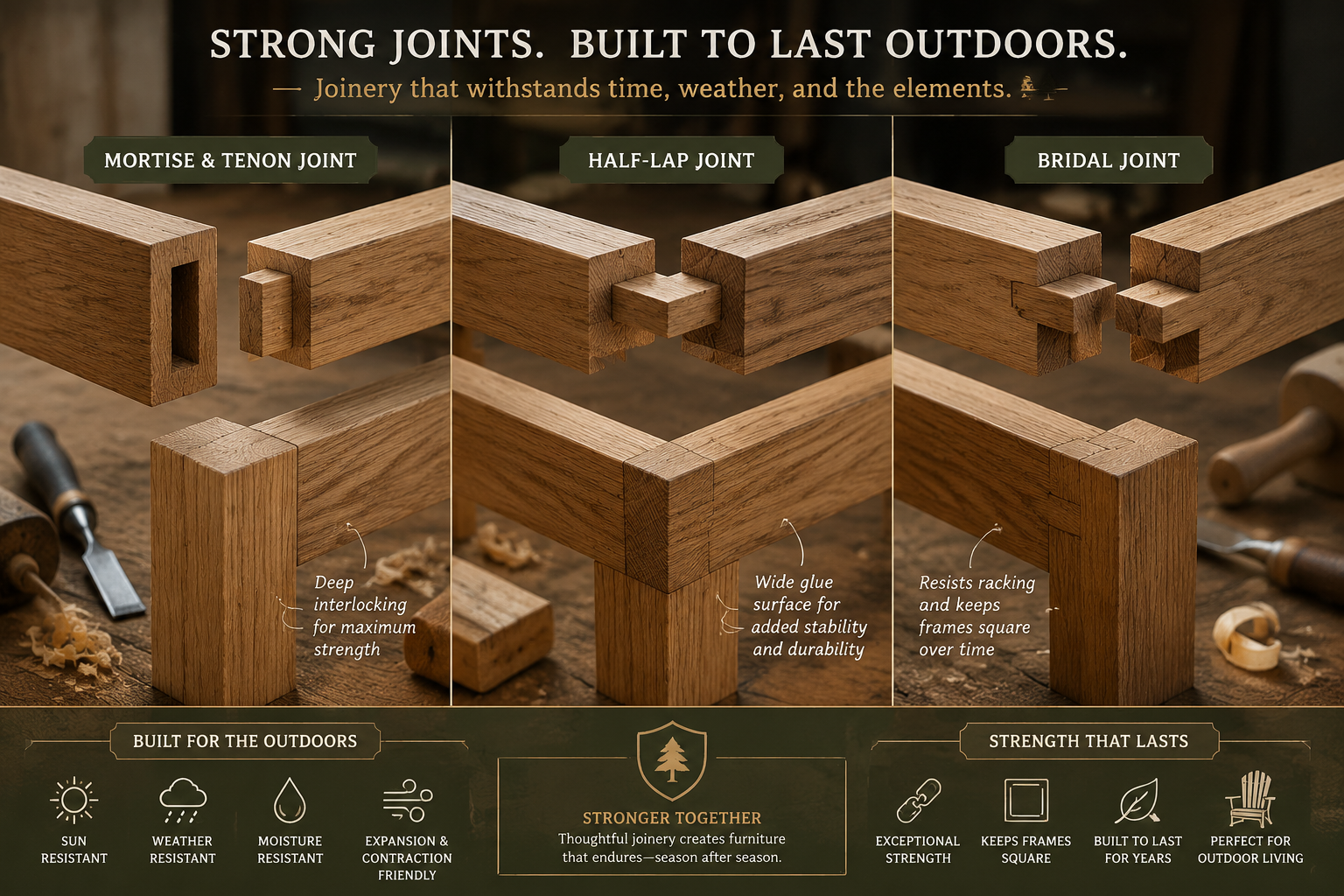
- Mortise and Tenon Joints: This is perhaps the most fundamental and robust joint in woodworking. A “tenon” (a projecting piece) fits snugly into a “mortise” (a corresponding hole or slot). For outdoor furniture, through-mortise and tenon joints (where the tenon passes entirely through the mortise) secured with wedges or pins are exceptionally strong and aesthetically pleasing, indicating craftsmanship. They provide significant resistance to racking and pulling forces.
- Half-Lap Joints: Ideal for frames and intersecting pieces where a flush surface is desired. In a half-lap, half the thickness of each piece is removed where they overlap, resulting in a joint that is the same thickness as the original material. This joint offers good strength in tension and compression, especially when combined with waterproof adhesive and fasteners.
- Bridle Joints (Open Mortise and Tenon): Similar to a mortise and tenon but open on one side, a bridle joint is excellent for connecting rails to legs. It provides a large glue surface and strong mechanical interlock, making it very resistant to twisting.
- Dovetail Joints: While more commonly associated with drawers and case construction, half-blind or through dovetails can be used for very strong connections on tabletop aprons or certain leg designs, especially when maximum mechanical strength is needed against pulling forces. Our guide to mastering modern hand-cut joinery offers more insights into these techniques.
Fasteners and Adhesives
Even with strong joinery, proper fasteners and adhesives are crucial for outdoor applications.
- Waterproof Wood Glue: Use exterior-grade, waterproof wood glue (e.g., Titebond III, Gorilla Wood Glue Ultimate) for all joints. These glues are designed to withstand moisture and temperature fluctuations without degrading.
- Stainless Steel Fasteners: Avoid galvanized or zinc-plated screws for critical structural components, as they can corrode or leave unsightly stains on certain woods. Opt for stainless steel screws, bolts, and hardware. They resist rust and provide lasting strength. When working with screws, our comprehensive guide on mastering woodworking screws can be very helpful.
- Hidden Fasteners: Where possible, design to hide fasteners, not just for aesthetics but also to protect them from direct exposure to the elements. Wood plugs can be used to cover screw heads effectively.
Accommodating Wood Movement
A critical aspect of joinery for outdoor furniture is understanding and accommodating wood movement. Wood expands across its grain and contracts as humidity changes.
- Floating Tabletops: Do not rigidly attach a solid wood tabletop to the frame. Use Z-clips, tabletop fasteners, or elongated screw holes (slotted holes) in the aprons to allow the tabletop to expand and contract without cracking or warping.
- Breadboard Ends: For larger tabletops, breadboard ends can prevent cupping and warping by holding the main panel flat. These are typically attached with mortise and tenon joints that allow for cross-grain movement in the main panel.
- Component Sizing: Design components to be thick enough to resist minor warping but not so thick as to exacerbate internal stresses.
Weatherproofing for Maximum Longevity
Once your robust outdoor dining table is built with durable wood and strong joinery, the final, crucial step is weatherproofing. A high-quality finish protects the wood from UV degradation, moisture ingress, mildew, and general wear and tear, ensuring its beauty and structural integrity for years to come. This is especially vital when [Building a Robust Outdoor Dining Table: Wood Selection, Weatherproofing, and Joinery for Longevity].
Understanding Outdoor Finishes
Outdoor finishes fall into several categories, each offering different levels of protection and aesthetic qualities.
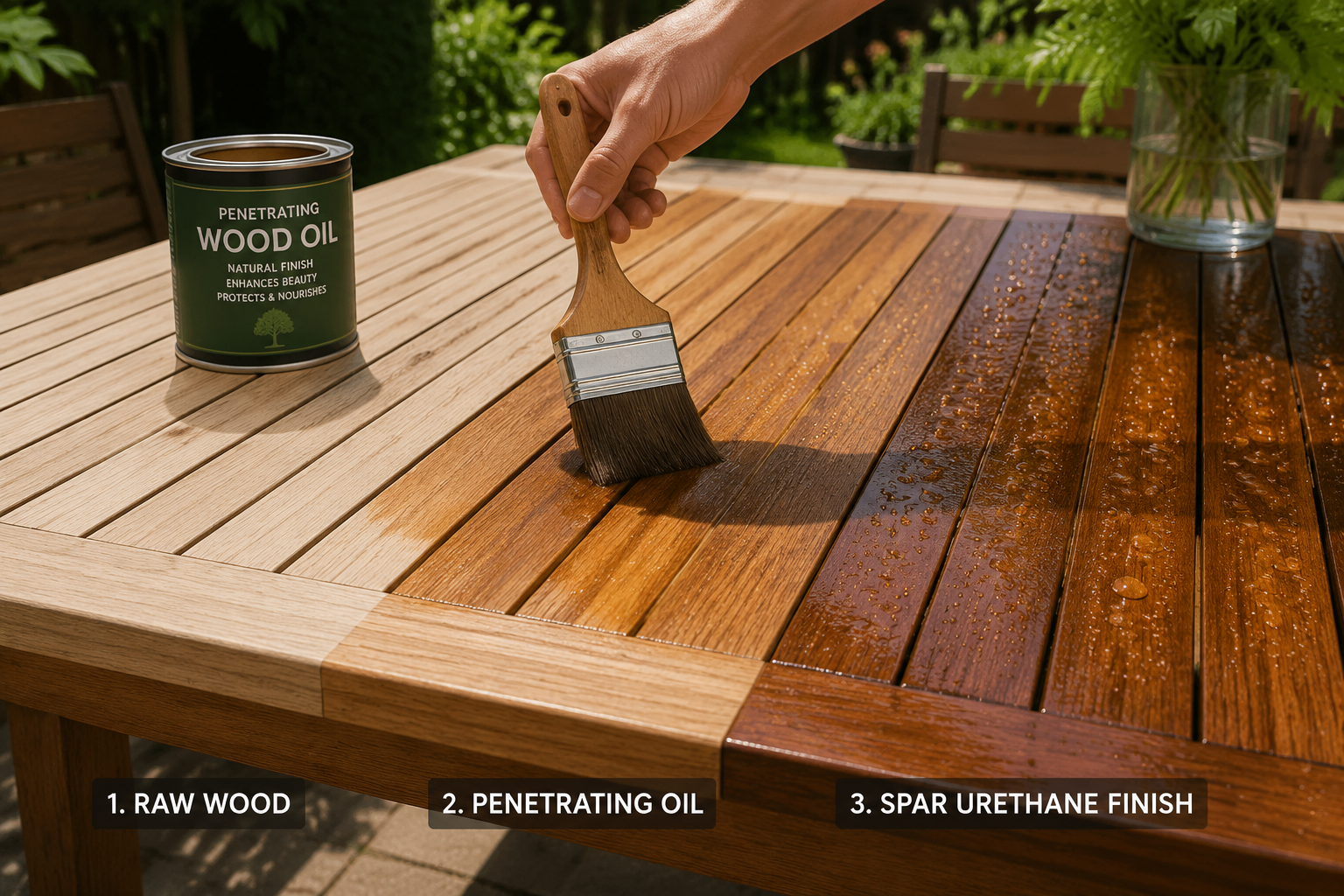
- Penetrating Oils: These oils (e.g., Teak oil, tung oil, linseed oil blends) soak into the wood fibers, enhancing the natural color and providing a degree of water repellency. They offer a natural, matte finish that is easy to reapply as needed. However, they require more frequent reapplication than film-forming finishes, typically once or twice a year. They are excellent for woods like Teak and Ipe that have high natural oil content.
- Film-Forming Finishes (Varnishes, Polyurethanes, Epoxies): These finishes create a protective layer on the surface of the wood.
- Spar Urethane/Varnish: Designed for marine applications, spar urethane and spar varnish are highly flexible and contain UV inhibitors, allowing them to expand and contract with the wood without cracking. They offer excellent water and UV resistance. They typically provide a glossy or satin finish and require less frequent reapplication than oils (every 2-5 years, depending on exposure). For specific types and applications, consider our guide on aerosol polyurethane and how to use it.
- Marine-Grade Epoxies: While often used as a base coat for extreme durability, epoxies can yellow with UV exposure and are typically overcoated with a UV-resistant varnish. They provide an incredibly hard and waterproof barrier.
Application Techniques for Optimal Protection
Proper application is as important as choosing the right finish.
- Surface Preparation: Ensure the wood surface is clean, dry, and sanded smooth. Start with coarser grits (e.g., 80-120) to remove mill marks and then progress to finer grits (e.g., 180-220) for a smooth finish that allows for better absorption or adhesion of the coating. Remove all sanding dust thoroughly.
- First Coat: Apply the first coat generously, allowing it to penetrate or adhere fully. For oils, wipe off any excess after the recommended open time. For varnishes, ensure even coverage without drips or runs.
- Multiple Coats: Most outdoor finishes require multiple thin coats for maximum protection. Lightly sand between coats with a fine-grit sandpaper (e.g., 320-400) to ensure good adhesion and a smooth final finish. Always follow the manufacturer’s specific instructions for drying times and recoating.
- Edge and End Grain Sealing: End grain absorbs significantly more moisture than face grain. Pay extra attention to sealing all end grain surfaces (e.g., leg bottoms, tabletop edges) with several extra coats of your chosen finish to prevent water ingress and swelling.
Design Considerations for Weatherproofing
Beyond the finish, certain design choices can enhance your table’s resistance to the elements.
- Water Run-off: Design the tabletop with a slight slope or incorporate gaps between boards to allow water to drain quickly, preventing standing water that can lead to rot and mildew.
- Leg Protection: Consider adding adjustable feet or a protective cap to the bottom of the legs to elevate them slightly off the ground, preventing constant contact with damp surfaces.
- Covering: While a well-finished table should withstand exposure, using a breathable outdoor cover during extended periods of disuse or harsh weather will significantly extend its lifespan and reduce maintenance needs.
Conclusion
Creating a robust outdoor dining table is a deeply rewarding woodworking project that yields a functional heirloom for your outdoor living space. By making informed choices in wood selection, employing tried-and-true joinery techniques, and meticulously applying appropriate weatherproofing, you can craft a table that not only withstands the elements but truly thrives outdoors for many years. Remember, the investment in quality materials and careful craftsmanship today translates into countless enjoyable meals and memories around your durable outdoor dining table in 2026 and beyond. Start planning your project, gather your materials, and embark on the journey of building a piece that will serve you faithfully, season after season.