
Woodworking, a craft often perceived as intricate and daunting, is in reality an accessible journey of skill development. Over a year, a beginner can progress from rudimentary cuts to constructing complex, functional pieces. This article provides a comprehensive guide to Woodworking Project Plans for Beginners: 12-Month Skill-Building Roadmap from Simple to Complex, outlining a structured approach that fosters confidence and mastery. By following a progressive series of projects, aspiring woodworkers in 2026 can systematically acquire the techniques and understanding needed to transform raw timber into lasting creations.
Key Takeaways
- Structured Progression: A 12-month roadmap helps beginners build skills incrementally, starting with basic cuts and advancing to complex joinery.
- Essential Tool Introduction: Each stage introduces relevant hand and power tools, ensuring safe and effective learning.
- Skill-Specific Projects: Projects are carefully selected to teach core woodworking concepts like measuring, cutting, joining, and finishing.
- Confidence Building: Gradual complexity allows learners to build confidence with each successful project, reducing frustration.
- Practical Applications: The roadmap emphasizes creating useful and attractive items, providing tangible results for effort.
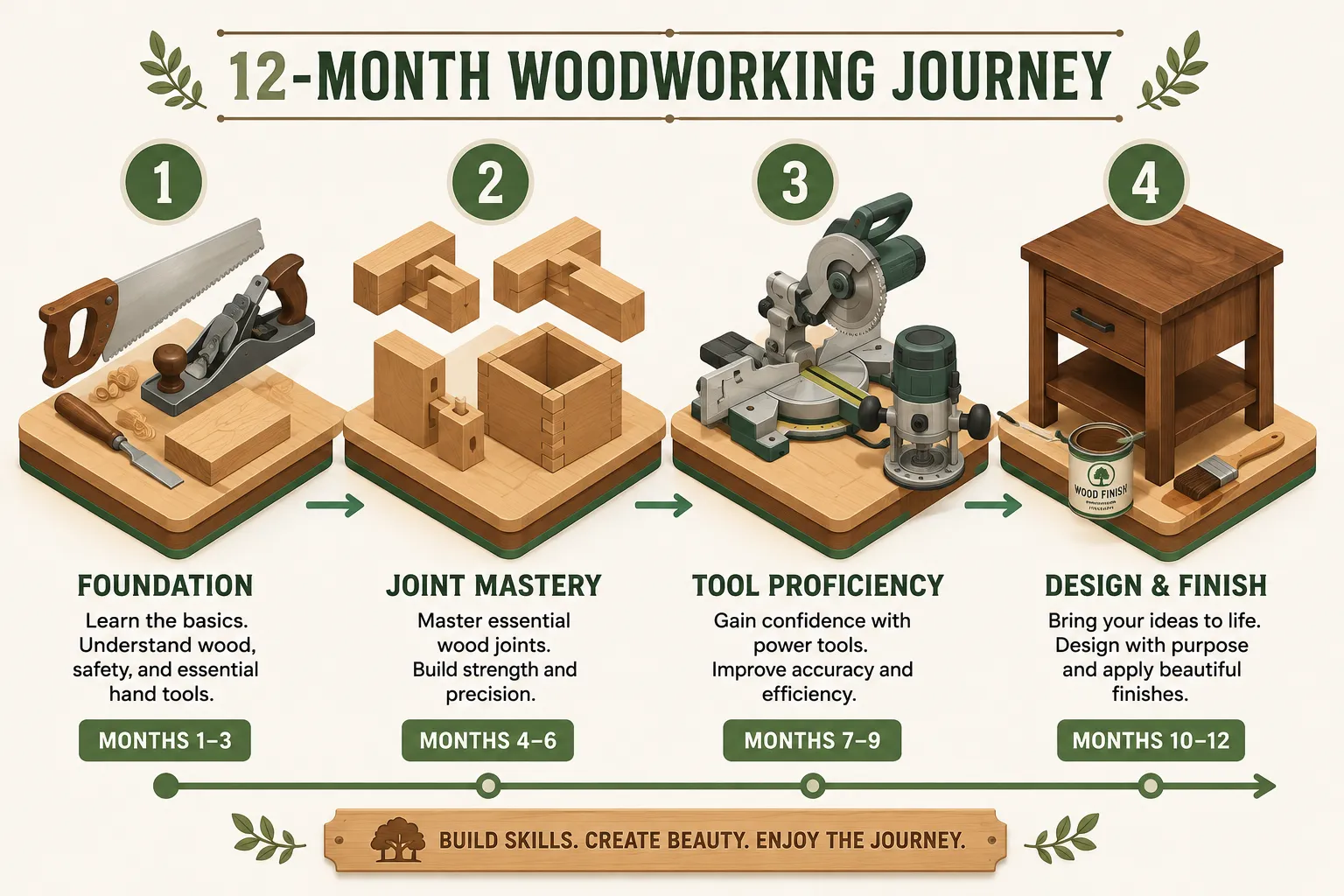
The Foundation: Months 1-3 (Basic Cuts, Measurement, and Assembly)
The initial phase of your woodworking journey focuses on mastering fundamental operations. These first three months are crucial for building a solid foundation in safety, accurate measurement, and basic cutting techniques. The projects are designed to be forgiving, allowing for learning through practice without requiring significant material investment.
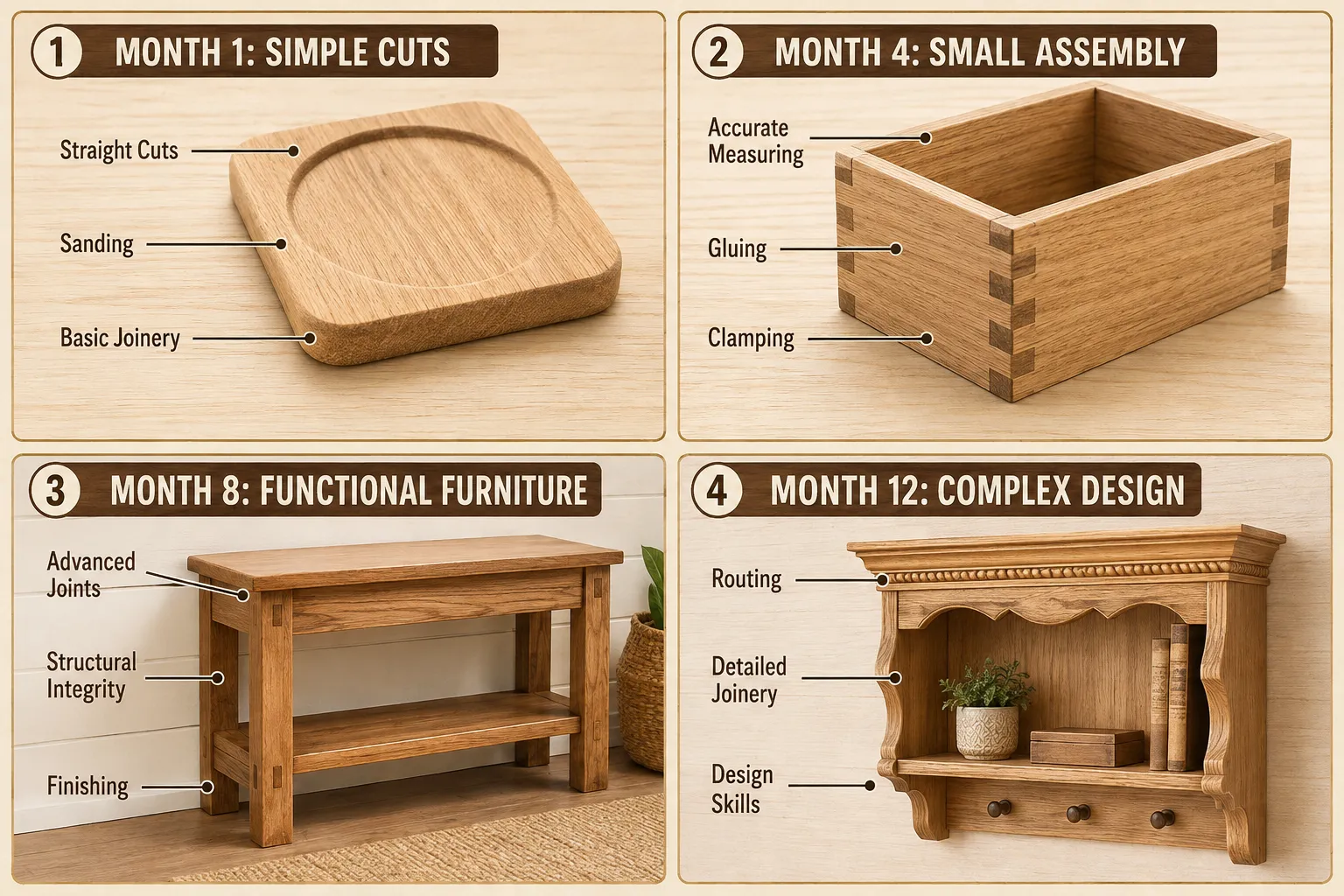
Month 1: Simple Cuts and Sanding
Your first month should concentrate on becoming comfortable with essential hand tools and basic power tools like a miter saw or circular saw for straight cuts. Project Idea: Wooden Coasters or Trivets. Skills to Learn:
- Accurate Measuring: Using a tape measure and combination square.
- Straight Cuts: Practicing with a handsaw, miter saw, or circular saw.
- Sanding Techniques: Understanding grits, achieving smooth surfaces.
- Wood Selection: Identifying common softwoods like pine or spruce, which are inexpensive and easy to work with.
Month 2: Basic Joinery and Gluing
Building on the previous month, you’ll introduce simple ways to connect pieces of wood. Project Idea: Small Rectangular Storage Box or Pencil Holder. Skills to Learn:
- Butt Joints: Simple end-to-end connections, reinforced with screws or dowels.
- Gluing and Clamping: Proper application of wood glue and effective clamping techniques. Consider reading our guide on The Ultimate Guide To Wood Glue Choosing The Right Adhesive For Every Woodworking Joint And Project for more insights.
- Squaring Up: Ensuring projects are perfectly square for stable construction.
Month 3: Introduction to Finishing
Now that you can cut and join, it’s time to learn how to protect and enhance your creations. Project Idea: Small Picture Frames or a Basic Shelf. Skills to Learn:
- Basic Joinery Reinforcement: Using fasteners like screws or nails effectively.
- Applying Finishes: Understanding stains, varnishes, and oils for protection and aesthetics.
- Safety Practices: Reinforcing proper tool handling and workshop safety.
This initial period provides the essential groundwork. By the end of Month 3, you should feel comfortable with basic tools, precise measurements, simple joinery, and the art of finishing.
Expanding Your Repertoire: Months 4-8 (Intermediate Techniques and Functional Projects)
With the basics under your belt, the next phase focuses on developing intermediate skills, introducing more complex joints, and building larger, more functional items. This is where your Woodworking Project Plans for Beginners: 12-Month Skill-Building Roadmap from Simple to Complex really starts to take shape, moving beyond small decorative items to pieces with practical utility.
Month 4: Introduction to Joinery and Dovetails (Simplified)
This month delves into slightly more sophisticated ways to join wood, increasing the strength and aesthetic appeal of your projects. Project Idea: Simple Wooden Tray with Handles or a Small Keepsake Box. Skills to Learn:
- Lap Joints: Understanding half-lap or cross-lap joints for stronger, cleaner connections.
- Beginner Dovetails (Jig Assisted): Learning the basics of dovetail joinery, possibly with the aid of a jig for consistency.
- Router Fundamentals: Safe operation of a router for decorative edges or simple dados.
- Dado and Rabbet Joints: Creating grooves and recesses for shelving or back panels.
Month 5: Building a Workbench Component
Every woodworker needs a solid foundation. This month, you’ll start building a piece of essential workshop furniture. Project Idea: A sturdy shelving unit or a basic modular storage cabinet for tools. Skills to Learn:
- Pocket Hole Joinery: Efficient and strong joinery using a pocket hole jig.
- Panel Glue-Ups: Joining multiple boards to create wider panels for tabletops or shelves.
- Accuracy in Larger Projects: Maintaining squareness and precise measurements over greater distances. A related article on Building A Diy Modular Storage System For Power Tool Accessories Keeping Your Workshop Organized might provide additional inspiration.
Month 6: Small Furniture Construction
Now you’re ready to tackle your first piece of functional furniture. Project Idea: A simple entryway bench or a small side table. Skills to Learn:
- Structural Integrity: Designing and building for strength and stability.
- Leg-to-Apron Joinery: Common methods for attaching legs to tabletops or bench seats.
- Table Saw Basics: Safe and accurate use of a table saw for ripping and crosscutting (if available and with proper instruction). Our guide on Building A Simple Entryway Bench With Shoe Storage Organize Your Home With Style offers a great project idea here.
Month 7: Drawer Construction
Adding drawers introduces a new level of complexity and utility to your projects. Project Idea: A small nightstand with one simple drawer. Skills to Learn:
- Drawer Box Construction: Building basic drawer boxes with various joinery methods.
- Drawer Slides: Installing full-extension or partial-extension drawer slides.
- Precise Fitting: Ensuring drawers slide smoothly and fit snugly.
Month 8: Advanced Joint Practice
This month is dedicated to refining your joinery skills with more traditional and robust techniques. Project Idea: A small cabinet door with mortise and tenon joints, or a small decorative shelf using through dovetails. Skills to Learn:
- Mortise and Tenon Joints (Hand Cut or Jig Assisted): Understanding this foundational joint for strong furniture construction. A deep dive into Beginners Guide To Hand Cut Mortise And Tenon Joints Mastering The Fundamentals For Strong Furniture can be highly beneficial.
- Refining Dovetails: Improving precision and aesthetics in your dovetail joints.
- Panel Raising (Simple): Creating a decorative edge around a panel for cabinet doors.
By the end of Month 8, you will have a significantly expanded skill set, capable of creating robust, functional pieces of furniture with increasing confidence and precision.
Mastering the Craft: Months 9-12 (Complex Projects and Personal Style)
The final phase of your 12-month journey focuses on integrating all learned skills into more ambitious projects, encouraging design thinking, and developing your personal woodworking style. This culmination of Woodworking Project Plans for Beginners: 12-Month Skill-Building Roadmap from Simple to Complex prepares you to tackle almost any domestic woodworking challenge.
Month 9: Advanced Workstation & Jig Building
At this stage, you’ve likely identified areas where custom jigs or workstation improvements could enhance your efficiency and accuracy. Project Idea: Building a small, dedicated router table or a specialized cutting jig for repetitive tasks. Skills to Learn:
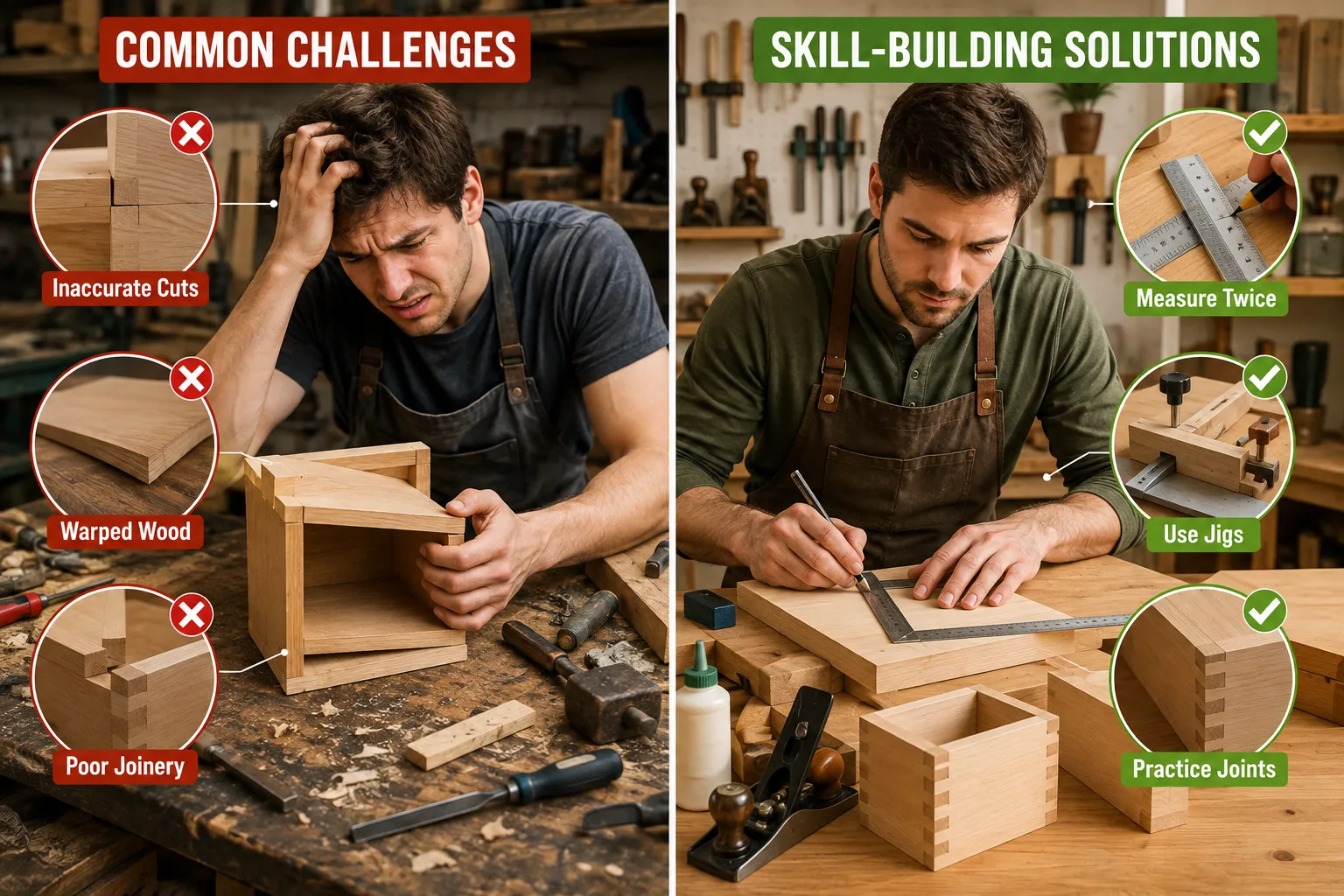
- Jig Design and Construction: Creating custom aids for precision and safety. An article like Beginners Guide To Essential Woodworking Jigs Improving Accuracy And Safety On Table Saws And Routers can guide you.
- Optimizing Workflow: Arranging your workspace for maximum efficiency.
- Material Selection for Specific Needs: Choosing appropriate wood or plywood for jigs and fixtures.
Month 10: Decorative and Intricate Details
This month focuses on adding aesthetic value and more complex shapes to your projects. Project Idea: A decorative wall shelf with carved edges or a small jewelry box with a hinged lid. Skills to Learn:
- Router Bit Applications: Exploring various router bits for decorative profiles, dados, and rabbets.
- Hinge Installation: Precisely fitting and installing different types of hinges.
- Small Project Joinery: Working with miniature joinery for delicate pieces.
- Introduction to Wood Burning (Optional): Adding custom designs. If interested, “Mastering The Art Of Wood Burning Pyrography Tools Techniques And Project Ideas For Beginners” could be a valuable resource.
Month 11: Multi-Component Furniture
Now you’re ready to combine several techniques into a larger, more complex piece of furniture. Project Idea: A coffee table with a small drawer or a modular bookcase. Skills to Learn:
- Project Planning and Design: From concept to detailed drawings and cut lists.
- Complex Assembly Sequences: Understanding the order of operations for multi-part projects.
- Problem-Solving: Addressing challenges that arise in larger constructions. For inspiration, consider looking at High Demand Woodworking Projects For 2026 Coffee Tables Wine Racks And Clocks.
Month 12: The Capstone Project and Personalization
Your final month is dedicated to a project that showcases all the skills you’ve acquired and reflects your personal style. Project Idea: A custom-designed end table, a small storage chest, or a unique console table. Skills to Learn:
- Independent Design: Conceiving and executing a project from start to finish.
- Refined Finishing Techniques: Achieving a professional-grade finish.
- Incorporating Personal Style: Adding unique elements that make the piece truly yours. Building a DIY Modern Nightstands with Integrated Wireless Charging: A woodworking project for tech-savvy makers could be an ambitious and rewarding capstone.
By the completion of this 12-month roadmap, you will have moved far beyond the realm of a beginner. You will possess a diverse skill set, a deeper understanding of wood and tools, and the confidence to tackle a wide array of woodworking projects, transforming your ideas into tangible, beautiful wooden objects.
Essential Tools and Safety for Your Woodworking Journey
Embarking on Woodworking Project Plans for Beginners: 12-Month Skill-Building Roadmap from Simple to Complex requires not just projects but also the right tools and, crucially, a commitment to safety.
Recommended Starter Tool Kit
Beginning woodworking doesn’t require an enormous investment. Focus on acquiring versatile tools that can be used across multiple projects.
| Tool Category | Essential Starter Tools | Purpose |
|---|---|---|
| Measuring & Marking | Tape measure, Combination square, Pencil, Marking gauge | Accurate layout and transfer of dimensions |
| Cutting | Hand saw (crosscut and rip), Miter saw (or circular saw with guide), Japanese pull saw | Initial cuts, dimensioning lumber, precise joinery |
| Shaping & Smoothing | Block plane, Chisels (set of 3-4), Sanding block, Orbital sander | Refining surfaces, cleaning joints, preparing for finish |
| Joining & Fastening | Wood glue, Clamps (bar and quick-grip), Screwdrivers/Drill driver, Mallet | Securing joints, assembly, driving fasteners |
| Safety | Safety glasses, Hearing protection, Dust mask | Protecting eyes, ears, and lungs |
As you progress, you may invest in power tools such as a router, table saw, or jointer, but always prioritize learning their safe operation thoroughly before use.
Prioritizing Workshop Safety
Safety is paramount in any woodworking endeavor. Adhering to strict safety protocols protects you and ensures a positive learning experience.
- Always Wear Personal Protective Equipment (PPE): Safety glasses are non-negotiable. Hearing protection is essential when using power tools, and a dust mask prevents inhalation of fine particles.
- Understand Your Tools: Before using any tool, read its manual. Learn how it operates, its safety features, and its limitations.
- Keep Your Workspace Clean: A cluttered workshop is a dangerous one. Clear sawdust, scraps, and put away tools when not in use.
- Secure Your Workpiece: Always clamp your wood securely before cutting, drilling, or routing. This prevents movement and kickback.
- Focus and Avoid Distractions: Woodworking requires your full attention. Do not work when tired or under the influence of anything that impairs judgment.
- Maintain Your Tools: Sharp tools are safer and more effective than dull ones. Keep blades clean and sharp.
- Know Emergency Procedures: Familiarize yourself with the location of your first-aid kit and fire extinguisher.
By diligently following these safety guidelines and building your tool collection thoughtfully, you will create a safe and productive environment for your woodworking journey.
Conclusion
Embarking on a structured 12-month woodworking journey offers a rewarding path for beginners to develop their skills progressively. By following a clear roadmap from simple cuts and basic assembly to intricate joinery and complex furniture construction, you can systematically build confidence and expertise. This Woodworking Project Plans for Beginners: 12-Month Skill-Building Roadmap from Simple to Complex is more than just a sequence of projects; it’s a guide to understanding materials, mastering tools, and fostering a deep appreciation for the craft.
As you conclude your first year, you’ll not only have a collection of handcrafted items but also the foundational knowledge to tackle new challenges and personalize your creations. Remember to prioritize safety, practice patience, and enjoy the process of bringing wood to life. The world of woodworking is vast and continuous, and this roadmap is merely the beginning of a lifelong journey of learning and creation. Continue to explore, experiment, and refine your techniques, and you will find endless possibilities within this timeless craft.
References
- Fine Woodworking. (2024). Fine Woodworking Magazine. Taunton Press.
- Kunz, J. (2018). The Woodworker’s Handbook: The Essential, Practical Guide to the Art of Woodworking. Quarto Publishing Group USA Inc.
- Tolpin, J. (2016). The New Traditional Woodworker: From Hand-Tool Fundamentals to Essential Joinery. Popular Woodworking Books.
SEO Meta Title: Woodworking Project Plans: 12-Month Beginner Roadmap SEO Meta Description: Master woodworking in 12 months with our beginner project plans. Build skills from simple cuts to complex furniture with this structured 2026 roadmap.