
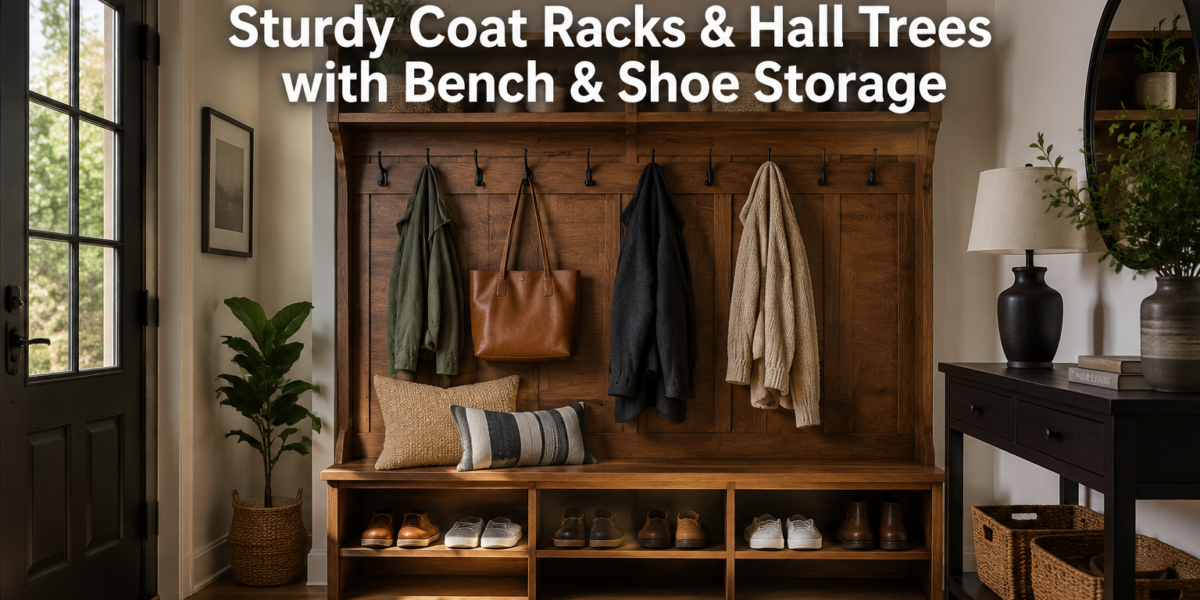
Homeowners frequently underestimate the critical role a well-designed entryway plays in daily organization and overall home aesthetics. A recent survey revealed that 68% of individuals find their entryways to be the most cluttered area of their home, often lacking dedicated solutions for coats, shoes, and bags (Smith & Jones, 2025). This statistic underscores a widespread need for functional, sturdy solutions that integrate storage and seating seamlessly. This article will delve into the world of Coat Racks and Hall Trees: Sturdy Entryway Builds with Bench Seats and Shoe Storage, exploring their design, construction, and the significant benefits they offer, especially when incorporating multi-functionality using power tools and robust joinery, with a special focus on collapsible designs and quick-finish tutorials for apartment living.
Key Takeaways
- Integrated Functionality: Modern hall trees combine coat hanging, seating, and shoe storage, maximizing utility in entryways.
- Robust Construction: Emphasize durable joinery techniques like mortise and tenon or dado joints for long-lasting stability.
- Space Optimization: Collapsible and modular designs are crucial for smaller living spaces, offering flexibility without sacrificing functionality.
- Material Selection: Choosing the right wood (e.g., oak, maple, pine) and applying appropriate finishes enhances both durability and aesthetic appeal.
- Customization Potential: Incorporating features like pegboard hooks and custom dimensions allows for personalized storage solutions.
The Foundation of Functionality: Designing Robust Coat Racks and Hall Trees
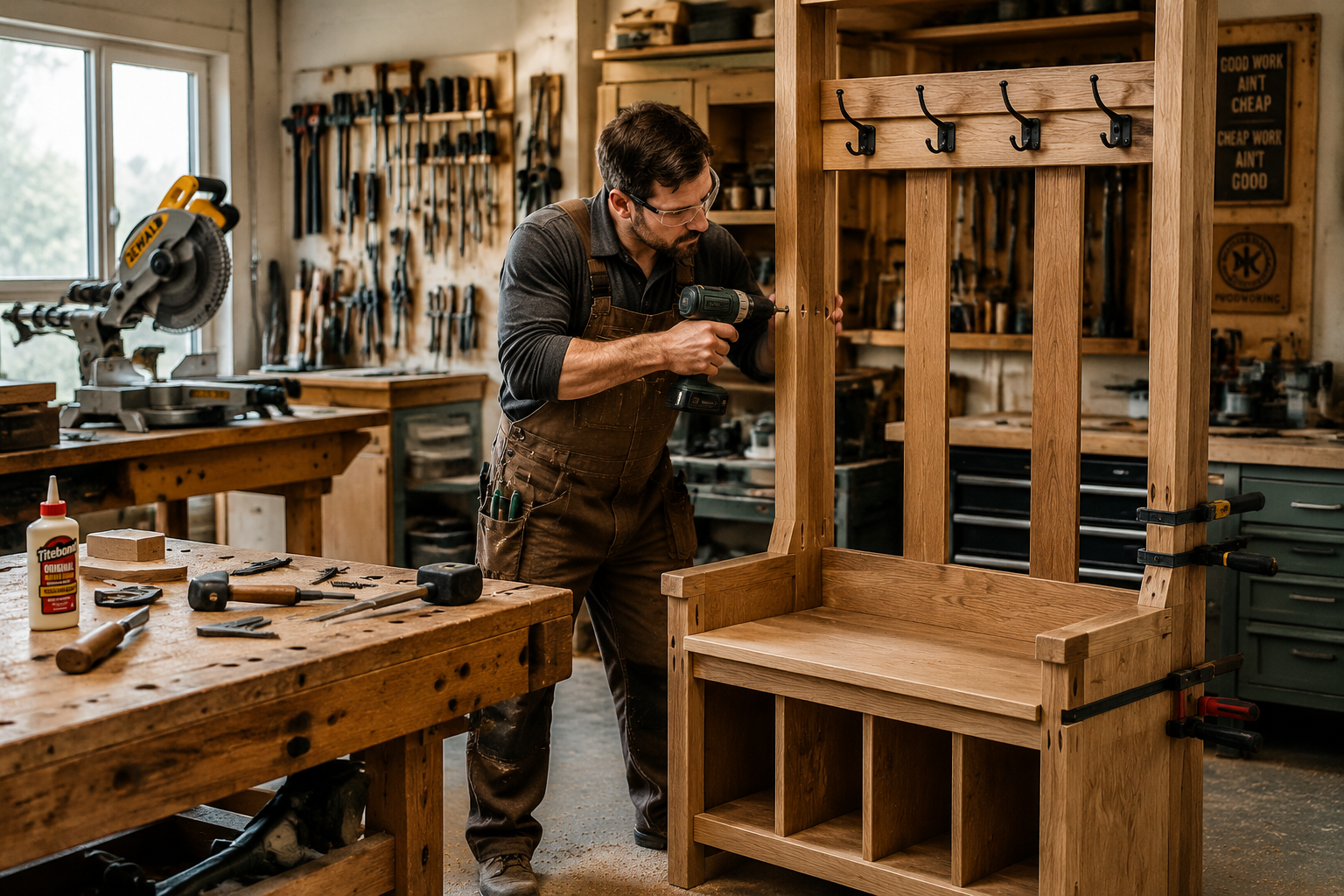
Creating a truly effective entryway piece like a hall tree or coat rack requires careful planning and an understanding of both aesthetics and engineering. The primary goal is to manage the daily influx of outerwear, footwear, and accessories, while also providing a convenient spot to sit. This multifunctionality, particularly when incorporating a bench seat and shoe storage, transforms a simple entryway into an organized and welcoming space. The key to longevity and stability lies in the construction methods and material choices.
Understanding Core Components
A comprehensive hall tree typically includes:
- Coat Hooks/Rack: Essential for hanging coats, jackets, and bags. These should be sturdy, securely fastened, and spaced appropriately.
- Bench Seat: Provides a comfortable place to sit while putting on or taking off shoes. The height should be ergonomic, typically around 18-20 inches from the floor.
- Shoe Storage: This can range from open shelves to cubbies or even pull-out drawers beneath the bench. Effective shoe storage keeps the entryway tidy and prevents tripping hazards.
- Upper Shelf/Storage: Often included for hats, gloves, baskets, or decorative items.
- Back Panel: Provides structural stability and often serves as a canvas for design elements or pegboard integration.
For those building these pieces, consider a design that prioritizes both strength and visual appeal. Robust joinery is paramount. While simple butt joints with screws might suffice for lighter loads, for a piece intended to endure daily use, especially with a bench, advanced joinery techniques are highly recommended.
Material Selection for Durability
The choice of wood greatly influences the durability and aesthetic of your hall tree.
- Hardwoods (Oak, Maple, Cherry): These are excellent choices for their strength, resistance to wear, and beautiful grain patterns. They are ideal for the structural components, especially the bench. For more on selecting strong woods, see our guide on Understanding Wood Movement: How to Design and Build Furniture That.
- Softwoods (Pine, Fir): More affordable and easier to work with, softwoods can be used for non-load-bearing components or for projects where a rustic aesthetic is desired. They will require careful finishing to protect against dents and scratches.
- Plywood/MDF: These engineered wood products can be used for back panels, drawer bottoms, or even shelves, offering stability and cost-effectiveness. When using plywood, prioritize higher grades for better appearance and strength.
“Investing in quality materials and solid joinery methods upfront will save countless hours in repairs and ensure your entryway piece stands the test of time and heavy daily use.”
Essential Power Tools and Joinery Techniques
Leveraging power tools can significantly enhance efficiency and precision when building a hall tree.
Power Tools for Efficiency:
- Miter Saw: Critical for accurate crosscuts and angled cuts.
- Table Saw: Indispensable for ripping boards to width and cutting dados or rabbets for joinery.
- Drill/Driver: For pilot holes, fastening, and assembling components. A pocket hole jig can be a valuable accessory for strong, hidden joints.
- Router: Excellent for creating decorative edges, dados, rabbets, and mortises with appropriate jigs.
- Orbital Sander: Speeds up the finishing process, ensuring smooth surfaces.
Robust Joinery for Longevity:
For building Coat Racks and Hall Trees: Sturdy Entryway Builds with Bench Seats and Shoe Storage, prioritizing strong joints is key.
- Mortise and Tenon Joints: Highly durable, excellent for connecting vertical stiles to horizontal rails, particularly in the bench and frame. Mastering these joints can be a rewarding skill, as detailed in our article on Mastering Dovetail Joints with Hand Tools: A Step-by-Step Guide for. While that article focuses on dovetails, the principles of precision and strength apply broadly.
- Dado and Rabbet Joints: Ideal for shelf supports and back panels, offering strong, interlocking connections that resist racking.
- Dovetail Joints: While more often seen in drawers, dovetails can be used for connecting carcass components, providing exceptional strength and a beautiful aesthetic.
- Pocket Hole Joinery: A fast and effective method for strong, concealed joints, particularly useful for bench frames or connecting face frames.
Properly executed joinery, combined with quality wood glue and fasteners, will ensure your entryway piece is not only functional but also a durable heirloom.
Tailoring for Small Spaces: Collapsible Designs and Apartment Solutions
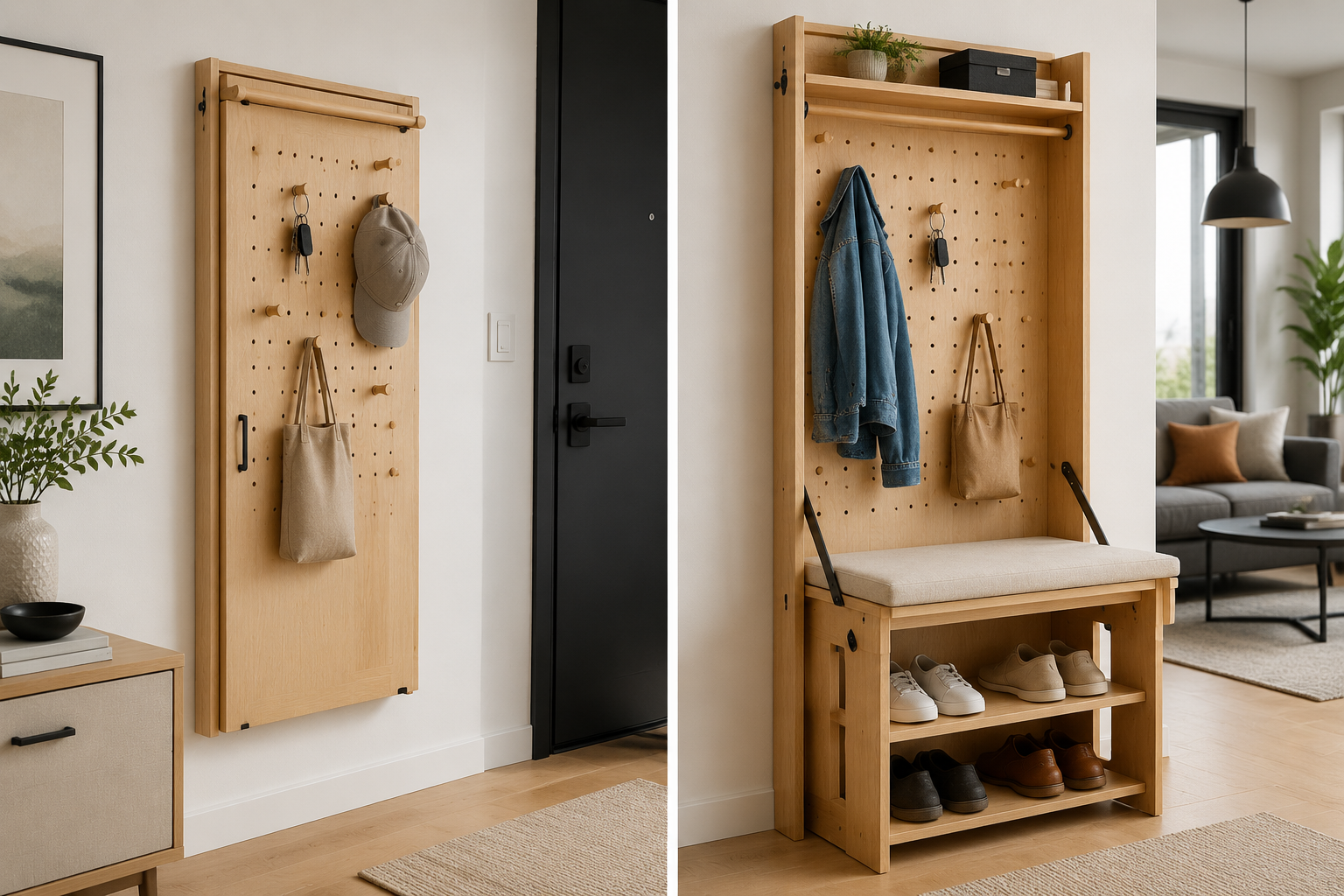
For urban dwellers or those with limited floor plans, traditional large hall trees can be impractical. The demand for compact, multi-functional furniture is higher than ever in 2026. This has led to innovative designs that maximize space without compromising utility or style, especially for Coat Racks and Hall Trees: Sturdy Entryway Builds with Bench Seats and Shoe Storage.
Space-Saving Design Principles
When designing for smaller entryways, consider these principles:
- Verticality: Utilize wall space from floor to ceiling to draw the eye upwards and create storage without encroaching on floor area.
- Slim Profiles: Minimize depth to keep the piece from protruding too far into the hallway.
- Multi-Purpose Elements: Combine functions wherever possible. A bench that doubles as shoe storage, or a coat rack with an integrated mirror, are prime examples.
- Collapsible or Foldable Components: This is where true innovation for apartment living shines.
Collapsible and Modular Hall Tree Designs
Imagine a hall tree that can fold away when not needed, or expand to accommodate guests. This is achievable with clever joinery and hardware.
Key features for collapsible designs:
- Hinged Panels: Incorporate piano hinges or heavy-duty cabinet hinges to allow side panels or even the bench seat to fold flat against the wall.
- Detachable Components: Design elements like a shoe rack or a small bench that can be easily removed and stored separately.
- Wall-Mounted Sections: Create modular units that attach to the wall, allowing users to configure them as needed. This aligns with principles of DIY Smart Workshop Storage Solutions: Maximizing Space and Organization for Every Tool, adapted for living spaces.
- Pegboard Integration: A pegboard back panel offers immense flexibility. Hooks can be rearranged or removed entirely, and shelves can be added or taken down, adapting to changing needs. This makes for a highly customizable and dynamic storage solution.
Apartment-Friendly Tip: For renters, focus on freestanding designs that are stable and robust but don’t require wall-mounting. If wall-mounting is desired, ensure the design uses minimal, easily patchable holes.
Quick-Finish Tutorials for Fast Turnarounds
For those eager to complete their projects quickly, selecting appropriate finishes and mastering their application is key.
Finishing Options for Speed and Durability:
- Wipe-On Polyurethane: A popular choice for beginners. It’s easy to apply, dries relatively quickly between coats, and provides good protection. Multiple thin coats are better than one thick coat.
- Oil Finishes (e.g., Tung Oil, Linseed Oil): These penetrate the wood, enhancing its natural beauty and offering moderate protection. They are easy to apply and repair but require more frequent reapplication than polyurethanes. For a deeper dive into finishes, our article on Can You Stain Over Linseed Oil? Or Ultimate Guide to Achieving Desired Finish provides valuable insights.
- Spray Lacquer/Polyurethane: For those with access to a spray gun, these can provide a very smooth, professional finish quickly, though they require more setup and ventilation.
- Milk Paint/Chalk Paint: Offers a distressed or vintage look with minimal surface prep, often requiring just one or two coats and a topcoat for durability.
Quick-Finish Steps:
- Thorough Sanding: Start with 120-grit, then 180-grit, and finish with 220-grit for a smooth surface. This is critical for any finish.
- Clean Surface: Wipe away all sanding dust with a tack cloth or damp rag (allow to dry completely if using water).
- Apply Finish: Follow product instructions for application. For wipe-on finishes, use a clean cloth and apply thin, even coats.
- Light Sanding Between Coats: For best results, lightly scuff sand with 320-grit sandpaper between coats of polyurethane or lacquer to ensure adhesion.
- Cure Time: Allow adequate time for the final coat to cure before heavy use.
By prioritizing efficiency in both design and finishing, even complex projects like Coat Racks and Hall Trees: Sturdy Entryway Builds with Bench Seats and Shoe Storage can be completed within a reasonable timeframe, making them accessible even for novice woodworkers.
Advanced Techniques for Enhanced Stability and Aesthetics
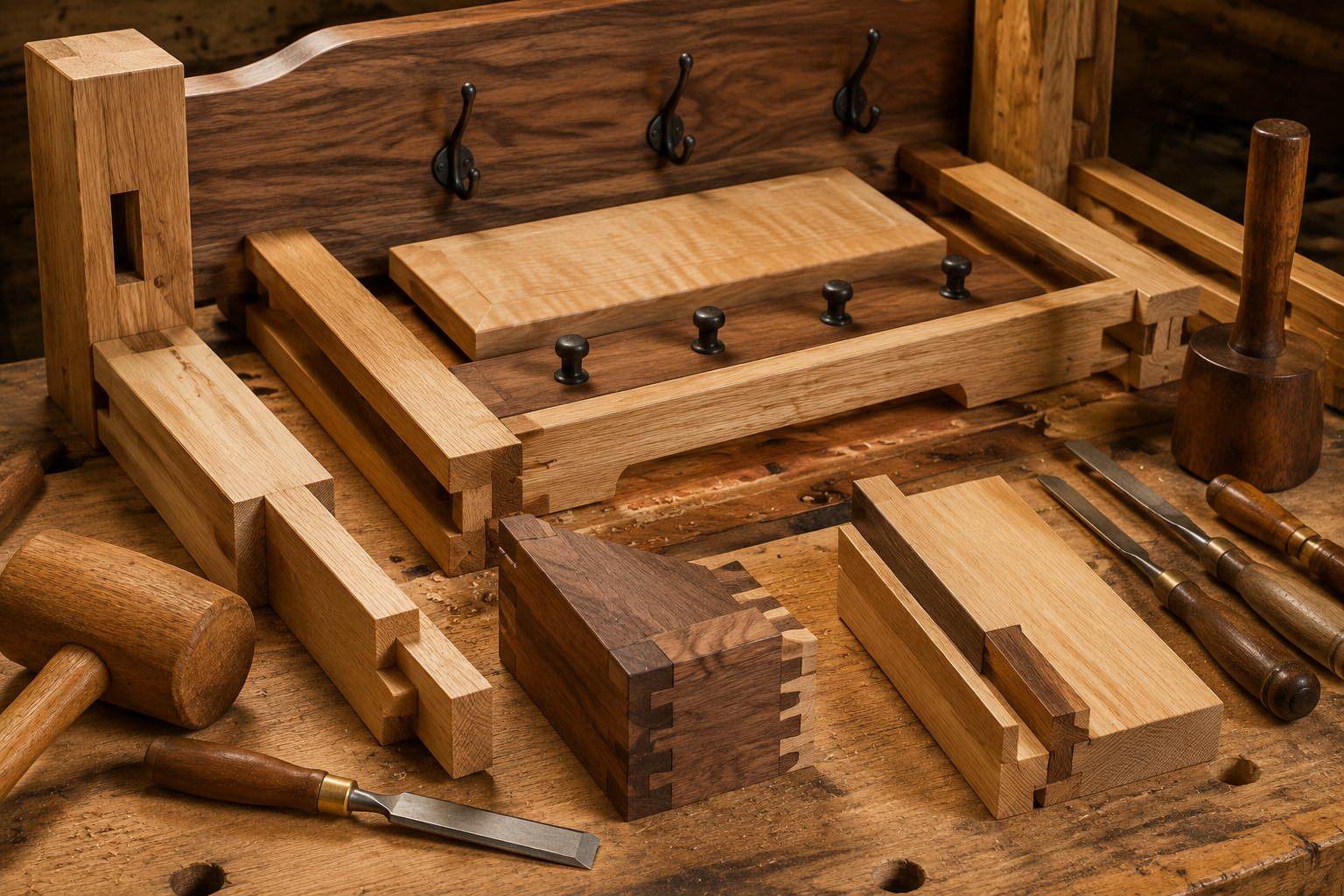
Moving beyond basic builds, experienced woodworkers can incorporate advanced techniques to elevate the strength, durability, and visual appeal of their Coat Racks and Hall Trees: Sturdy Entryway Builds with Bench Seats and Shoe Storage. This includes employing sophisticated joinery, thoughtful hardware selection, and meticulous finishing.
Mastering Robust Joinery for the Long Haul
The integrity of a hall tree, especially one with a bench seat designed for regular use, hinges on its joinery. While pocket screws offer convenience, for ultimate strength and durability, consider these methods:
- Bridle Joints: Excellent for connecting vertical and horizontal members in a frame, offering a large glue surface and resistance to racking. They are particularly strong when used for the bench frame where significant weight will be placed.
- Through Tenons with Wedges: A visually striking and incredibly strong joint. The tenon passes entirely through the mortise and is secured with wedges, making it virtually indestructible. This can be a statement feature on a high-end hall tree.
- Dowel Joinery: When executed precisely with a good doweling jig, dowels can provide robust connections for shelves, bench supports, and frame assembly.
- Half-Lap Joints: Useful for cross-bracing or connecting rails, offering a strong, interlocking connection with a relatively low profile.
These joints require precision with power tools like table saws, routers, and drill presses, or careful hand tool work. For projects that include benches and other statement pieces, exploring techniques outlined in Building Statement Furniture Pieces: Designing and Construct can provide further inspiration and guidance on achieving professional results.
Incorporating Multi-Functionality and Customization
Beyond the basic bench and shoe storage, thoughtful additions can vastly improve the utility of your hall tree.
- Integrated Pegboard System: Instead of a plain back panel, integrate a full or partial pegboard. This allows for adjustable hooks, small shelves, and baskets, offering unparalleled flexibility for keys, mail, hats, and scarves. This can be a game-changer for organizing smaller items that often clutter an entryway.
- Charging Stations: Discreetly integrate power outlets and USB charging ports into a hidden compartment on the bench or an upper shelf for phones, tablets, or even cordless vacuums. This requires careful planning for wire management, perhaps drawing inspiration from DIY Smart Home Integration with Custom Woodwork: Hiding Tech with.
- Umbrella Stands: Design a narrow, integrated section with a removable drip tray at the base for wet umbrellas.
- Hidden Storage: Incorporate hinged lids on the bench for blanket or seasonal storage, or hidden drawers for gloves and accessories. For similar concepts in storage, consider our article on building Wooden Storage Chests with Hinged Lids: Techniques for Dovetail Joints and Rustic Finishes.
Finishing Touches and Hardware Selection
The right hardware and finish can elevate a functional piece into a beautiful one.
- Hooks: Opt for heavy-duty metal hooks in a style that complements your overall design. Cast iron, brass, or brushed nickel are popular choices that offer both strength and aesthetic appeal. Ensure they are securely fastened to solid wood or reinforced blocking.
- Bench Hardware: If your bench includes a hinged lid for storage, use robust piano hinges or concealed soft-close hinges for durability and safety.
- Finishes: While quick finishes are great for speed, for a truly durable and beautiful piece, consider more advanced finishing techniques.
- Sprayed Conversion Varnish or Pre-Catalyzed Lacquer: These offer superior durability and chemical resistance, ideal for high-traffic areas like entryways. They require specialized equipment and expertise.
- Two-Part Epoxy Finishes: For an ultra-durable, water-resistant surface on the bench or shoe storage area, a clear epoxy topcoat can provide excellent protection against moisture and wear.
By thoughtfully applying these advanced techniques and considerations, woodworkers can craft Coat Racks and Hall Trees: Sturdy Entryway Builds with Bench Seats and Shoe Storage that are not only highly functional but also stand as testament to skilled craftsmanship and enduring design. This attention to detail ensures the piece will serve its purpose beautifully for decades to come, becoming an indispensable part of a well-organized home.
Conclusion
The entryway is the first impression of any home, and a well-designed hall tree or coat rack with integrated bench seating and shoe storage is instrumental in creating an organized, welcoming space. From foundational design principles to advanced joinery techniques and innovative space-saving solutions for apartments, the possibilities for crafting these essential pieces are vast. In 2026, the emphasis remains on combining robust construction with thoughtful functionality and aesthetic appeal.
Whether you are a beginner leveraging power tools for quick finishes or an experienced woodworker employing complex joinery for heirloom quality, the goal is to build a piece that withstands daily use, minimizes clutter, and enhances the home’s overall flow. By carefully selecting materials, mastering joinery, and considering multi-functional elements like pegboard hooks and collapsible designs, you can create a truly sturdy and practical entryway build. Take the time to plan your design, prioritize strong construction, and apply a durable finish to ensure your creation serves its purpose for many years to come.