
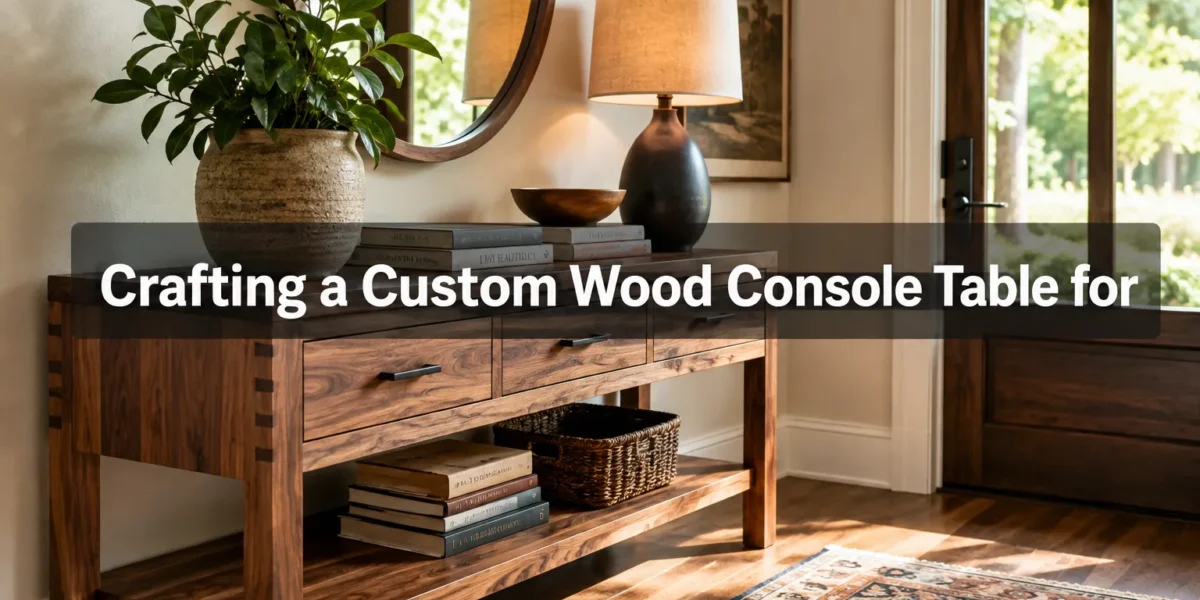
The average homeowner spends approximately 15 minutes each day searching for misplaced items, with keys and wallets often topping the list. This daily frustration highlights a common, yet often overlooked, design opportunity: the entryway. A well-designed entryway, centered around a functional piece like a console table, can dramatically reduce this wasted time and improve home organization. This article delves into the art of Crafting a Custom Wood Console Table for ‘Consoles and Tables’: Entryway Design with Integrated Storage, exploring how bespoke furniture can transform a chaotic entry point into a welcoming, highly organized space.
Key Takeaways
- Custom console tables offer tailored solutions for unique entryway dimensions and storage needs.
- Selecting the right wood species and leg style is crucial for both aesthetics and structural integrity.
- Integrated storage, such as drawers, shelves, and cubbies, maximizes functionality in busy entryways.
- Careful planning of joinery techniques ensures durability and contributes to the table’s overall design.
- Finishing choices protect the wood and enhance the table’s appearance, making it a lasting piece.
Why Choose a Custom Console Table for Your Entryway?
Off-the-shelf furniture often falls short when it comes to specific dimensions, aesthetic preferences, and unique storage requirements of a home’s entryway. Crafting a Custom Wood Console Table for ‘Consoles and Tables’: Entryway Design with Integrated Storage allows for a piece that perfectly complements your space, fulfilling both form and function. This personalized approach ensures every inch is utilized, transforming an often-neglected area into a focal point of design and utility.
A custom table can seamlessly integrate with existing decor, or act as a statement piece, setting the tone for the entire home. Beyond aesthetics, the primary advantage lies in its ability to address specific storage challenges, whether it’s corralling keys, mail, shoes, or accessories.
Designing for Functionality and Aesthetics
When embarking on the design of your custom console table, consider the primary activities that occur in your entryway. Do you need a place for mail, keys, and charging phones? Or do you require more substantial storage for shoes, bags, or seasonal accessories? The answers to these questions will guide your design choices, from the overall dimensions to the types of integrated storage.
Dimensions and Placement:
- Height: Standard console table height typically ranges from 30 to 34 inches, aligning with common countertop heights. This allows for comfortable use as a drop zone or display surface.
- Depth: Keep the depth proportionate to your entryway width to ensure easy passage. A common depth is between 12 and 18 inches, preventing it from feeling bulky.
- Width: This will be dictated by your wall space. Measure carefully, leaving a few inches of clearance on either side if placing it between two walls or near a doorway.
Wood Species Selection:
The choice of wood greatly influences the table’s durability, appearance, and workability.
| Wood Type | Characteristics | Best Uses for Console Tables |
|---|---|---|
| Oak | Durable, pronounced grain, strong | Rustic, traditional, farmhouse styles |
| Maple | Hard, fine grain, takes stain well | Modern, contemporary, sleek designs |
| Walnut | Rich, dark color, strong, elegant | High-end, sophisticated pieces |
| Pine | Soft, inexpensive, visible knots | Budget-friendly, rustic, painted finishes |
| Cherry | Smooth grain, deepens with age | Classic, elegant, formal settings |
For a durable piece that will withstand daily use, hardwoods like oak, maple, or walnut are excellent choices. They offer resistance to dents and scratches and possess beautiful natural grains that can be enhanced with various finishes. Learn more about wood types in our Beginner’s Guide to Wood Species: Hardwoods vs. Softwoods.
Crafting a Custom Wood Console Table for ‘Consoles and Tables’: Structural Elements and Joinery
The structural integrity of your console table is paramount, especially given its role as a busy entryway hub. This section focuses on selecting appropriate leg styles and mastering the joinery techniques that will ensure a lasting, beautiful piece.
Leg Styles and Stability
The legs of your console table are not just functional supports; they are significant design elements that contribute to the table’s overall aesthetic.
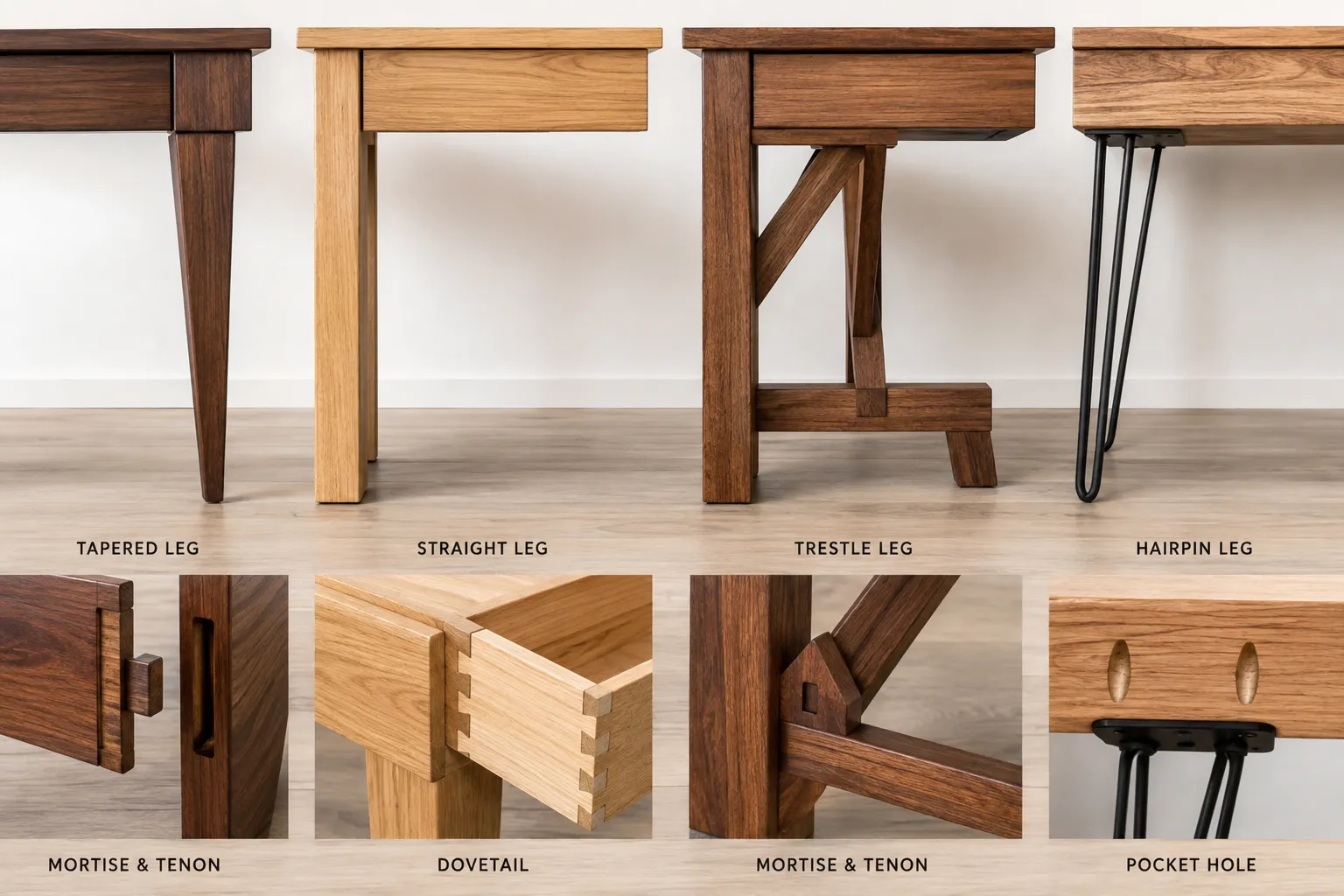
- Tapered Legs: Offer a sleek, modern look, gradually narrowing towards the floor.
- Straight Legs: A classic, simple design that provides robust support.
- Turned Legs: Feature decorative profiles, ideal for traditional or farmhouse styles.
- Hairpin Legs: A contemporary, industrial choice, typically made from metal but can inspire minimalist wood designs.
- Trestle Base: Provides excellent stability with two end supports connected by a stretcher, often seen in larger console tables or those with significant weight.
Consider the visual weight of the legs in relation to the tabletop. Thicker legs can support heavier tops and offer a more robust look, while thinner, tapered legs suggest lightness and elegance.
Essential Joinery Techniques
The strength and longevity of your console table depend heavily on the joinery used. While advanced techniques exist, several fundamental methods are suitable for a sturdy and aesthetically pleasing build. For beginners, pocket hole joinery offers simplicity and strength. However, for a truly custom, high-end piece, traditional joinery provides superior strength and a refined look.
Common Joinery Methods:
- Mortise and Tenon: This classic joint involves fitting a projecting tenon (from one piece of wood) into a mortise (a hole or recess in another). It’s incredibly strong and durable, ideal for connecting legs to aprons or rails.
- Dovetail Joints: Known for their exceptional resistance to being pulled apart, dovetails are a hallmark of fine woodworking, perfect for drawer construction.
- Dado and Rabbet Joints: Used for shelves and back panels, these cuts create strong, interlocking connections.
- Pocket Hole Joinery: A popular method for DIYers, using a specialized jig to drill angled holes that allow screws to create strong, hidden joints. This is a versatile and relatively fast method.
“Mastering a few key joinery techniques elevates a woodworking project from basic assembly to a piece of lasting craftsmanship. The right joint doesn’t just hold pieces together; it enhances the overall beauty and integrity of the furniture.”
When choosing joinery, consider your skill level and available tools. For those looking to refine their skills, exploring Introduction To Traditional Hand Tool Joinery Exploring Mortise And Tenon With Chisels And Saws can be highly beneficial.
Integrating Storage and Finishing Touches
A console table truly shines in an entryway when it offers thoughtful, integrated storage solutions. Beyond a flat surface, drawers, shelves, and hidden compartments elevate its functionality, helping maintain an organized and clutter-free space. The final finishing steps protect the wood and bring out its inherent beauty, completing the project.
Designing Integrated Storage
The key to effective entryway storage is designing compartments specifically for the items they will hold. This means thinking about everything from keys and wallets to mail, gloves, and even charging devices.
Storage Options:
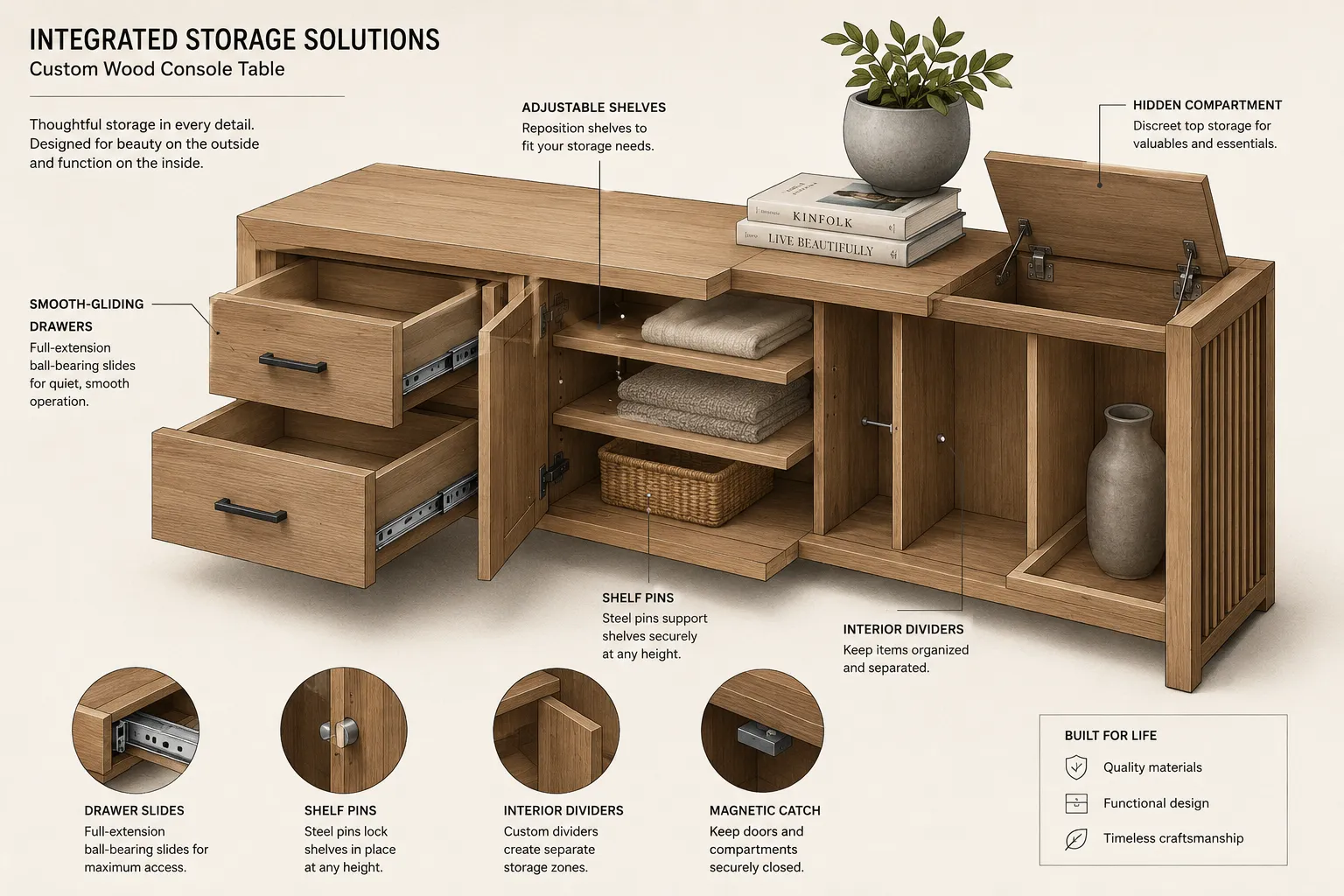
- Drawers: Essential for small items like keys, sunglasses, and pens. Consider various sizes, a shallow, wide drawer for mail, or smaller, deeper drawers for charging cables.
- Drawer slides: Opt for full-extension drawer slides for easy access to the entire drawer contents. Soft-close slides add a touch of luxury and prevent slamming.
- Shelves: Open shelves are great for displaying decorative items, baskets for larger items like hats or scarves, or even a neatly folded throw blanket. Adjustable shelves offer flexibility.
- Cubby Holes: Perfect for individual shoe storage, small bags, or compartmentalizing items.
- Hidden Compartments: A sliding top or a false back panel can conceal valuable items or charging stations.
Think about the flow of your entryway. A small, built-in charging station within a drawer can keep electronics out of sight, while a bottom shelf for shoes can reduce floor clutter. For more ideas on maximizing space, explore Integrating Smart Storage And Organization With Bespoke Wooden Solutions For Modern Garages And Workshops.
Finishing Your Custom Wood Console Table for ‘Consoles and Tables’: Entryway Design
The finish not only protects your wood console table but also profoundly impacts its aesthetic appeal. The choice of finish can enhance the wood’s natural grain, change its color, or provide a durable, protective layer against daily wear and tear.
Finishing Steps:
- Sanding: Begin with coarse sandpaper (e.g., 80 or 100 grit) and gradually move to finer grits (e.g., 180 or 220 grit) for a smooth surface. This is critical for an even finish application.
- Staining (Optional): If you wish to alter the wood’s color, apply a wood stain. Test on a scrap piece first to ensure you achieve the desired hue. Allow it to dry completely. A Beginner’s Guide to Wood Staining can provide detailed instructions.
- Sealing/Topcoat: This is the protective layer. Options include:
- Polyurethane: Highly durable, resistant to water and scratches, available in various sheens (matte, satin, gloss). Ideal for high-traffic areas like an entryway.
- Oil Finish (e.g., Tung Oil, Linseed Oil): Penetrates the wood, offering a natural, hand-rubbed look. Less durable than poly, but easy to repair.
- Varnish: Offers excellent protection and durability, similar to polyurethane, but often with a more traditional feel.
- Lacquer: Dries quickly to a hard, clear finish. Often sprayed for professional results.
- Paint: For a solid color, use wood primer followed by high-quality furniture paint.
Remember to apply finishes in a well-ventilated area, following manufacturer instructions for application and drying times. Multiple thin coats are generally better than one thick coat. The goal is a smooth, durable surface that highlights the craftsmanship of your custom piece.
Conclusion
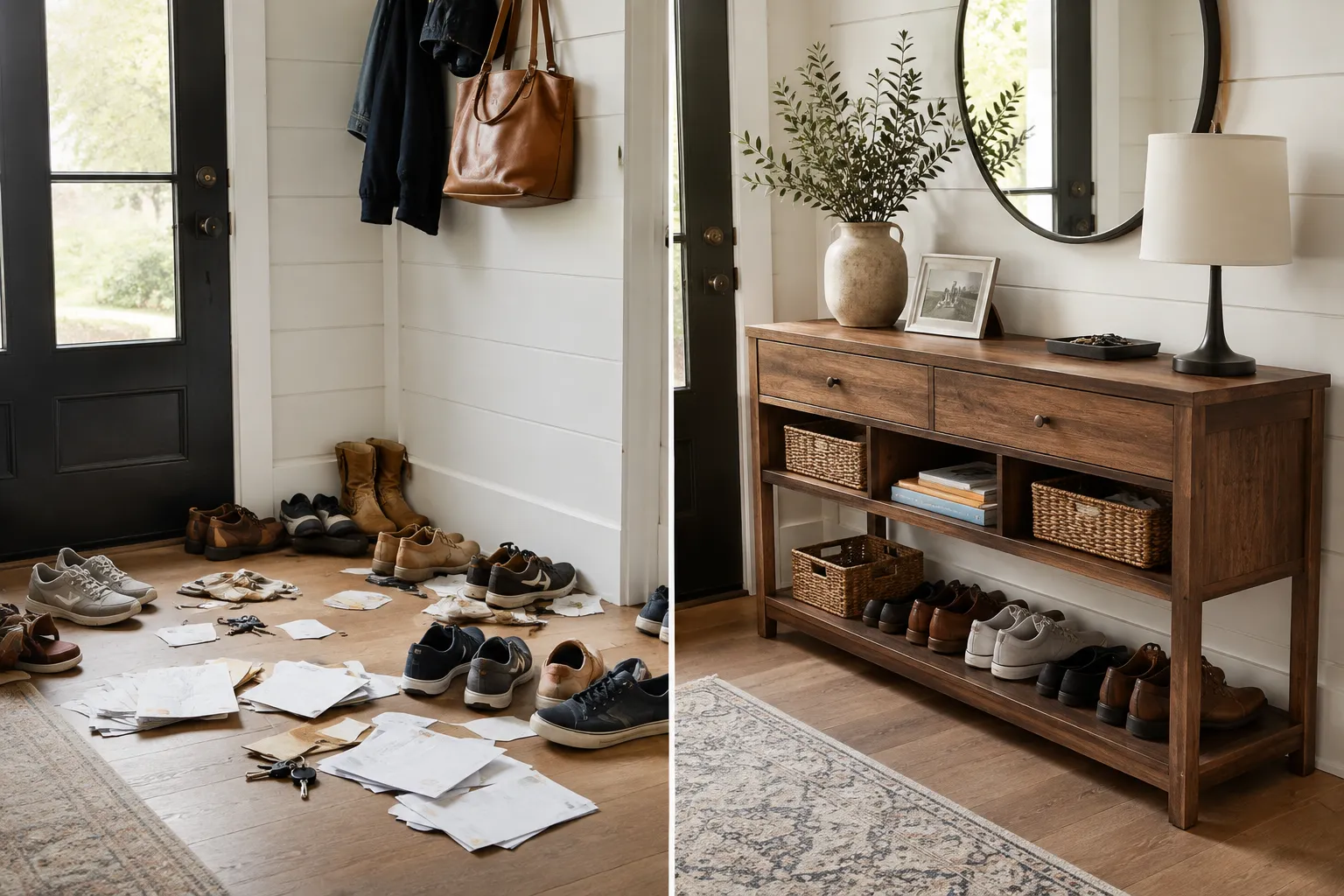
Crafting a Custom Wood Console Table for ‘Consoles and Tables’: Entryway Design with Integrated Storage is more than just a woodworking project; it’s an opportunity to create a functional art piece that enhances the first impression of your home. By carefully considering dimensions, wood species, joinery, and integrated storage, you can design a table that not only perfectly fits your space but also addresses your unique organizational needs. The process allows for creative expression, yielding a durable and beautiful piece that will serve your home for years to come.
Begin by sketching your ideal design, measuring your entryway precisely, and exploring different wood types. Don’t be afraid to experiment with joinery techniques or consult with experienced woodworkers for guidance. The satisfaction of building a bespoke furniture piece that seamlessly integrates into your daily life and solves practical challenges is immensely rewarding. Your entryway, often a forgotten space, can become a beacon of order and style, thanks to your custom-crafted console table.