
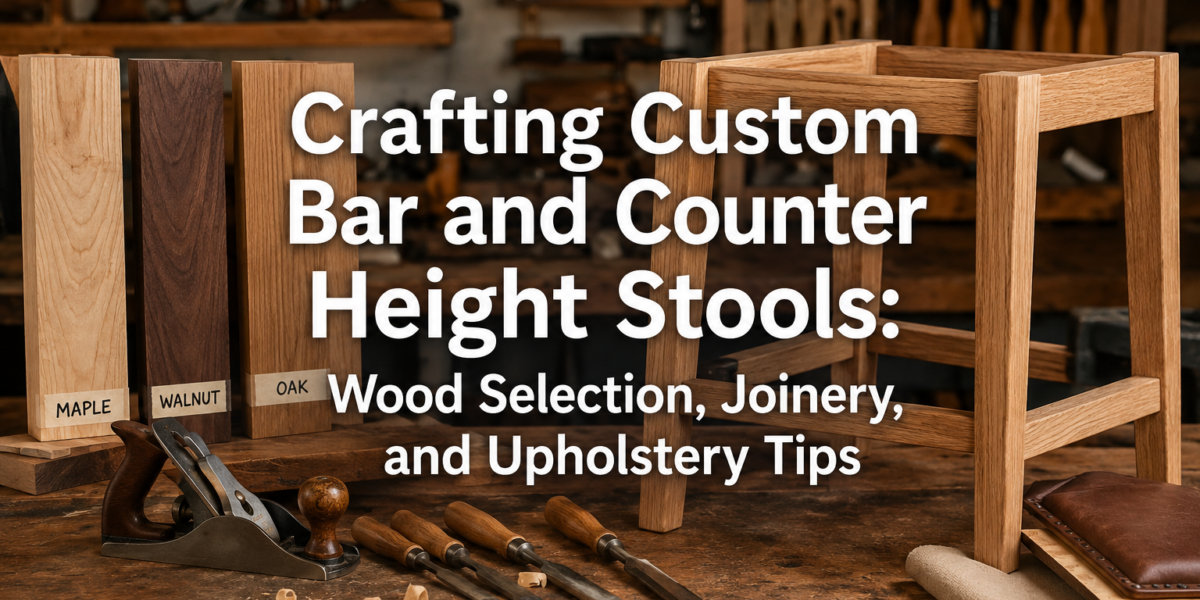
The average lifespan of mass-produced bar stools can be surprisingly short, often succumbing to loose joints and worn upholstery within a few years. This stark reality underscores the value of custom craftsmanship, where deliberate choices in materials and construction yield furniture built to last. For those looking to create enduring pieces, understanding the nuances of Crafting Custom Bar and Counter Height Stools: Wood Selection, Joinery, and Upholstery Tips is paramount. This guide delves into the core principles that elevate a simple seating solution into a durable, aesthetically pleasing, and comfortable fixture for any home or commercial space.
Key Takeaways
- Wood Selection is Foundational: Choosing the right wood based on hardness, grain, and aesthetic significantly impacts a stool’s durability and appearance.
- Superior Joinery Ensures Longevity: Traditional and modern joinery techniques, especially mortise and tenon, are crucial for structural integrity and preventing wobble.
- Comfort and Style through Upholstery: Thoughtful selection of foam density, fabric type, and attachment methods dictates the stool’s comfort and contributes to its overall design.
- Accurate Measurements are Critical: Precisely measuring bar or counter height is essential for designing stools that are ergonomically appropriate.
- Finishing Protects and Enhances: Proper finishing not only beautifies the wood but also provides critical protection against wear and moisture.
Understanding Bar and Counter Height Standards
Before embarking on Crafting Custom Bar and Counter Height Stools: Wood Selection, Joinery, and Upholstery Tips, a crucial first step is to establish the correct dimensions. While “bar height” and “counter height” are commonly used, their exact measurements can vary slightly. Standard kitchen counters typically stand around 36 inches (91 cm) high, requiring stools with a seat height of approximately 24-26 inches (61-66 cm). Bar tops, on the other hand, are usually taller, ranging from 40-42 inches (102-107 cm), which necessitates stools with seat heights of 28-30 inches (71-76 cm).
It is always advisable to measure your specific counter or bar to ensure the custom stools fit perfectly. Aim for a comfortable gap of about 10-12 inches (25-30 cm) between the top of the stool seat and the underside of the counter or bar. This allows ample legroom and ease of movement. Considering the overall footprint and stability is also important, especially for taller bar height stools, which benefit from a wider base or splayed legs for enhanced balance.
Wood Selection for Durable and Beautiful Stools
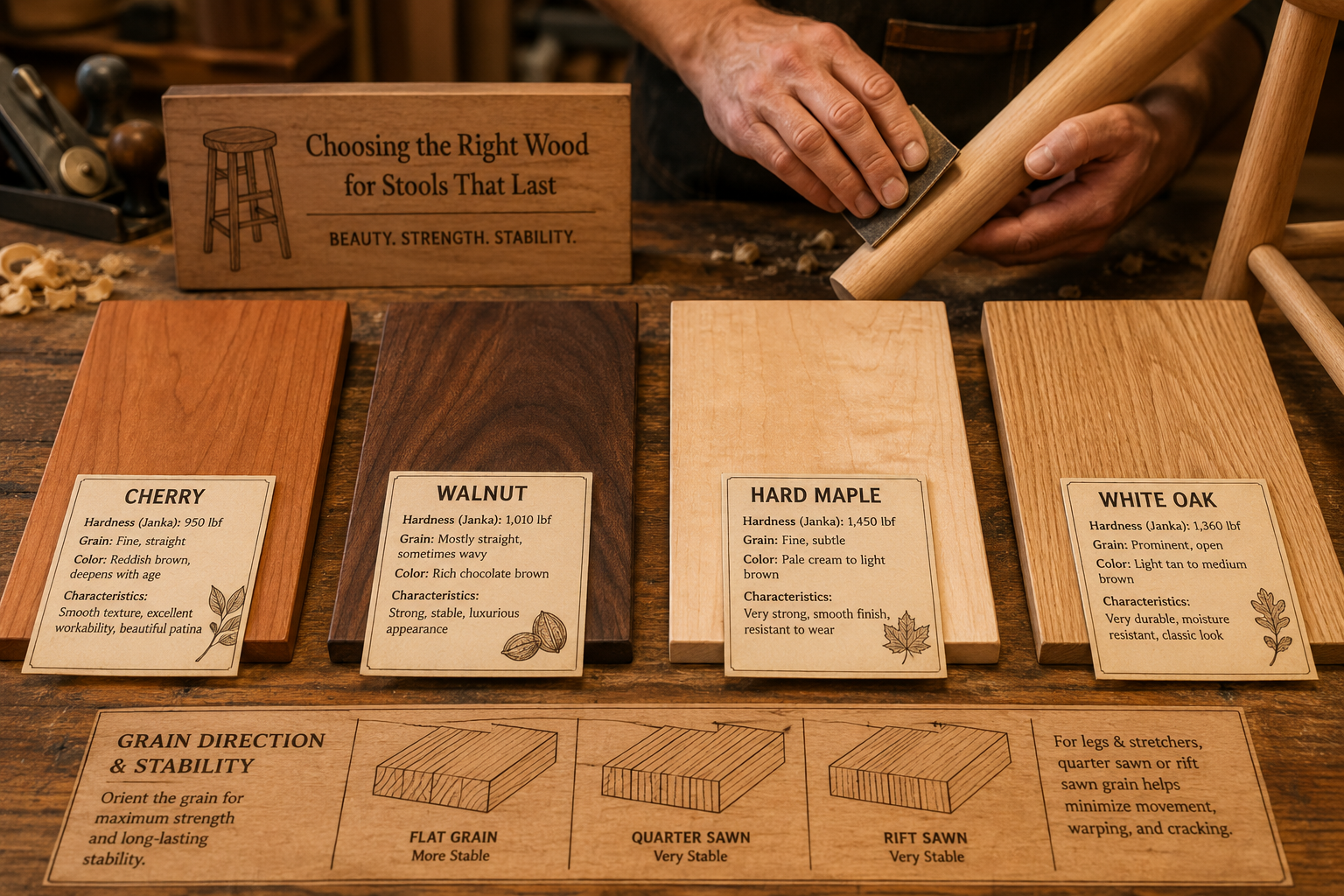
The choice of wood profoundly influences both the structural integrity and the aesthetic appeal of your custom stools. When Crafting Custom Bar and Counter Height Stools: Wood Selection, Joinery, and Upholstery Tips, prioritize hardwoods for their density, durability, and resistance to dents and scratches.
Hardwoods: The Go-To for Stool Construction
Hardwoods are ideal due to their strength and ability to hold joinery securely. Here are some top contenders:
- Oak (Red and White): A classic choice, known for its distinct open grain pattern and excellent durability. White oak is particularly resistant to moisture, making it suitable for areas prone to spills.
- Maple (Hard Maple): Extremely dense and fine-grained, maple offers exceptional strength and a smooth finish. It’s less prone to dents and takes stain evenly, though it can sometimes be challenging to work with hand tools due to its hardness.
- Walnut: A premium hardwood with a rich, dark color and beautiful grain. Walnut is highly stable, easy to work with, and takes a finish wonderfully, often without much staining needed. Its cost is typically higher than oak or maple.
- Cherry: Features a fine, straight grain and a beautiful reddish-brown hue that deepens with age. Cherry is moderately hard, stable, and takes a finish well, making it a favorite for elegant furniture pieces.
- Ash: Similar in appearance to oak but often lighter in color and with a more pronounced grain. Ash is strong, flexible, and shock-resistant, often used in tool handles and sports equipment, making it excellent for furniture that endures daily use.
Softwoods: Considerations and Limitations
While softwoods like pine and cedar are more affordable and easier to work with, they generally lack the durability required for frequently used bar and counter height stools. They are softer, more prone to dents, and may not hold joinery as securely over time, potentially leading to wobbly stools. If aesthetics dictate a specific softwood, consider using it only for decorative elements or in combination with a robust hardwood frame.
Sourcing and Preparation
Regardless of your chosen wood, ensure it is properly kiln-dried to prevent warping, shrinking, or checking after construction. Source your lumber from reputable suppliers. For unique character, explore sourcing and selecting reclaimed urban lumber. Once acquired, allow the wood to acclimate to your workshop’s environment for several days before beginning any cuts. This minimizes movement and ensures dimensional stability.
Essential Joinery Techniques for Stability
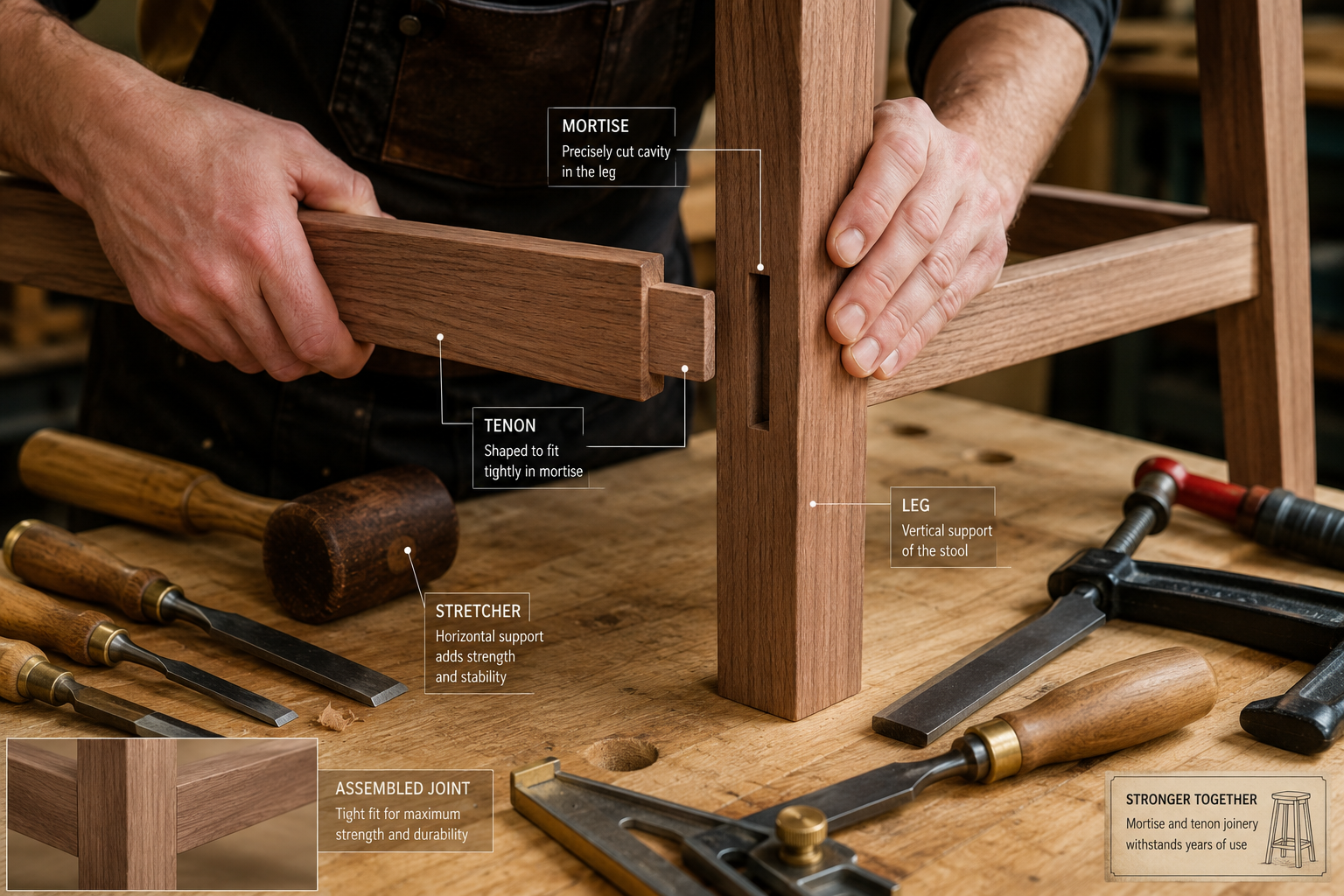
The longevity and stability of your custom stools hinge almost entirely on the quality of their joinery. Simple butt joints fastened with screws or nails are insufficient for furniture that will bear weight and endure frequent movement. When Crafting Custom Bar and Counter Height Stools: Wood Selection, Joinery, and Upholstery Tips, focus on robust joinery methods.
Mortise and Tenon Joints
The mortise and tenon joint is a cornerstone of fine furniture construction and is indispensable for custom stools. It involves creating a rectangular hole (mortise) in one piece of wood and a corresponding projection (tenon) on another piece, which fits snugly into the mortise. This interlocking design provides incredible strength and resistance to racking forces (sideways movement).
- Through Mortise and Tenon: The tenon passes completely through the mortise and is often wedged or pegged for added strength and visual appeal.
- Blind Mortise and Tenon: The tenon does not pass all the way through, creating a clean look on the exterior.
- Haunched Mortise and Tenon: Features a shoulder on the tenon that fills the entire width of the mortise, providing additional resistance to twisting.
For those interested in mastering hand tool joinery, detailed guides on techniques like mortise and tenon can be incredibly beneficial. Learning to create hand tool joinery for visible wood joints will elevate your craftsmanship.
Dovetail Joints
While often seen in drawers and carcass construction, dovetail joints can be used in stool design, particularly for apron-to-leg connections where maximum strength and a distinctive aesthetic are desired. Their interlocking “tail” and “pin” shapes resist pulling forces remarkably well. For drawer construction, specifically, mastering dovetail joinery for drawers offers valuable insights.
Dowel Joints
Dowels are cylindrical wooden pins used to reinforce butt joints or to align and strengthen panel joints. While simpler than mortise and tenon, a well-executed dowel joint with sufficient dowel length and quantity can provide adequate strength for many stool components, especially for stretchers or less stressed parts. Precision in drilling matching holes is paramount for a strong dowel joint.
Biscuit Joints and Pocket Screws (Use with Caution)
Biscuit joints, created with a plate joiner, and pocket screws offer faster assembly but are generally less robust than traditional joinery for high-stress furniture like stools. Biscuits rely on glue to expand and fill the joint, while pocket screws are strong in tension but can be weaker against racking. If used, supplement them with other joinery or design elements that distribute stress effectively.
Glue Selection
For all joints, use a high-quality wood glue (e.g., Titebond III for moisture resistance or Titebond II for interior projects). Apply glue generously to both mating surfaces, ensuring full coverage, and clamp the joints securely until the glue is fully cured. The strength of a well-made glued wood joint can often exceed the strength of the wood fibers themselves. For more on adhesives, see our guide on adhesive for mirrors on wood.
Upholstery Tips for Comfort and Aesthetics
Adding upholstery transforms a simple wooden frame into a comfortable and inviting piece. When Crafting Custom Bar and Counter Height Stools: Wood Selection, Joinery, and Upholstery Tips, consider how the upholstery integrates with the overall design and intended use.
Seat Construction
- Substrate: A sturdy wooden seat base (e.g., 3/4-inch plywood or solid wood) is essential. Ensure it is smoothly sanded to avoid snagging fabric.
- Foam: The type and density of foam are critical for comfort. High-density foam (HR foam, 2.0-2.5 lb density) is recommended for stool seats as it resists compression and lasts longer. For a softer feel, you can add a layer of lower-density foam or Dacron batting on top. The thickness will depend on desired comfort and aesthetic, usually 2-4 inches.
- Batting: A layer of Dacron or polyester batting wrapped around the foam smooths out any irregularities, protects the foam, and helps the fabric slide on smoothly. It also provides a slight doming effect.
Fabric Selection
The fabric choice impacts durability, cleanability, and style.
- Durability: For frequently used stools, select upholstery fabrics with a high double-rub count (indicating resistance to wear). Commercial-grade fabrics are often ideal.
- Material:
- Leather/Faux Leather: Durable, easy to clean, and offers a luxurious look.
- Vinyl: Very durable, water-resistant, and comes in many colors and textures, making it practical for kitchens or high-traffic areas.
- Woven Synthetics (Polyester, Olefin): Offer good stain resistance and durability. Available in a wide range of patterns and textures.
- Natural Fibers (Cotton, Linen, Wool): Provide a soft, natural feel but may be more prone to staining and wear without protective treatments.
- Velvet/Chenille: Adds a touch of luxury and softness, but can be higher maintenance.
Upholstery Techniques
- Cut Foam and Batting: Cut the foam to the exact shape of your seat base. Cut the batting slightly larger (1-2 inches overlap) to wrap around the foam and seat base.
- Attach Foam and Batting: Secure the foam to the seat base with spray adhesive. Wrap the batting around the foam and seat, stapling it to the underside of the seat base, pulling taut but not compressing the foam excessively.
- Cut Fabric: Place the seat assembly (base, foam, batting) on your chosen fabric and cut the fabric, allowing for several inches of overhang on all sides for pulling and stapling (typically 3-4 inches larger than the seat circumference).
- Stapling:
- Start by stapling the fabric to the underside of the seat base in the center of each side, pulling taut.
- Work your way around, pulling the fabric evenly and stapling every 1-2 inches.
- Pay special attention to corners, folding and trimming the fabric neatly to create clean, sharp edges. For round seats, consistent tension is key to avoid wrinkles.
- Use an upholstery stapler (electric or pneumatic recommended) with 1/4-inch to 1/2-inch staples.
- Finishing Touches: For a polished look, you can add a piece of black cambric fabric to cover the stapled underside of the seat. This also helps prevent dust accumulation and provides a clean finish. Alternatively, decorative tacks or cording can be used along the bottom edge for a more custom, traditional feel.
Finishing Your Custom Stools
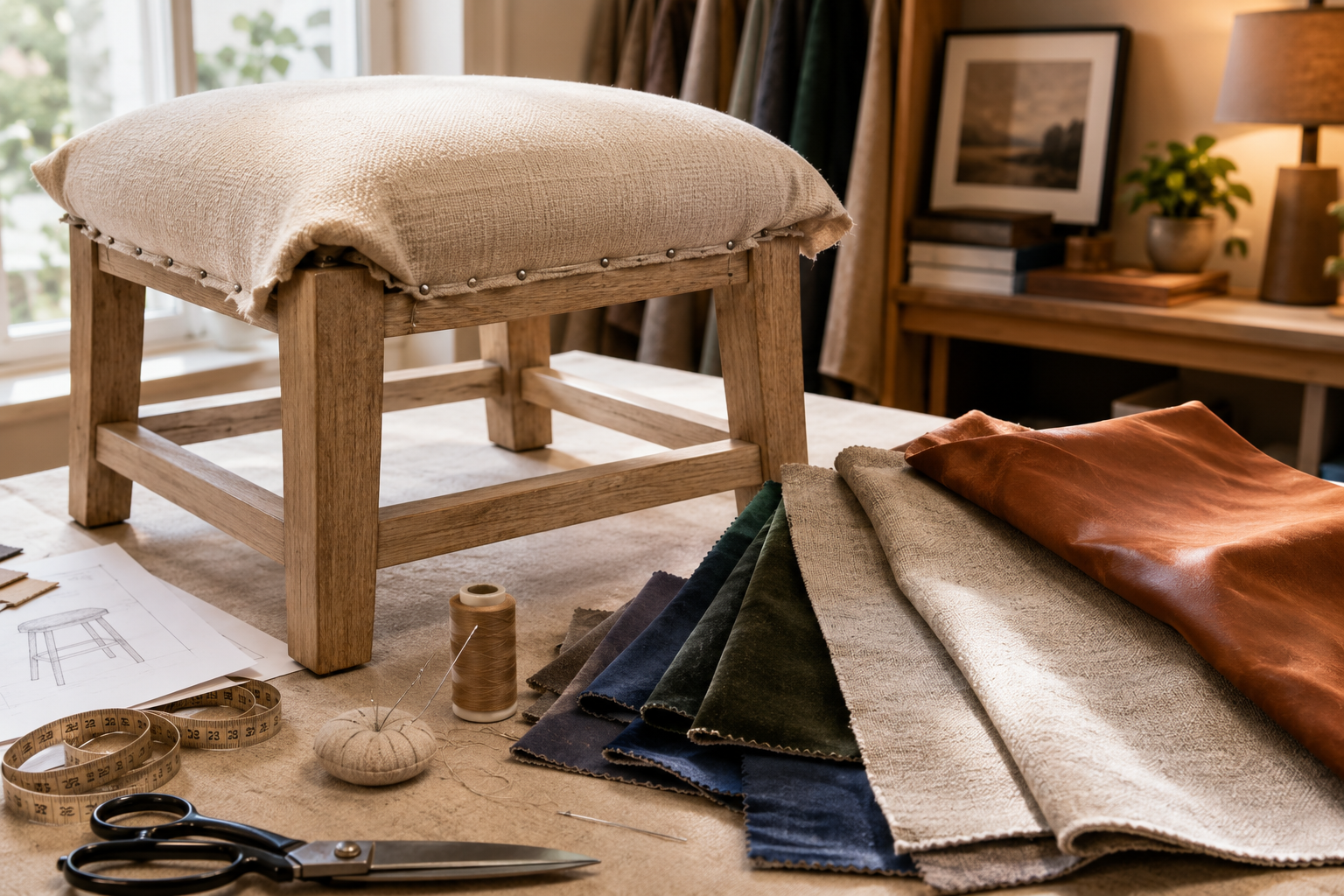
Finishing your custom stools is the final step that protects the wood, enhances its beauty, and ties together the entire project. The right finish can highlight the chosen wood grain and complement your home’s interior.
Surface Preparation
Before applying any finish, thoroughly sand all wood surfaces. Start with a coarser grit (e.g., 100-120 grit) to remove any tool marks or imperfections, then progressively move to finer grits (150, 180, 220 grit) for a smooth, even surface. Remove all sanding dust with a tack cloth or vacuum before applying stain or finish. For projects requiring precision and smooth finishes, understanding power tool techniques can be invaluable. Consider how similar principles apply to building a modular home office desk system where smooth, durable surfaces are crucial.
Stain and Dye
If you desire to change or enhance the wood’s color, apply a stain or dye. Test your chosen stain on a scrap piece of the same wood to ensure the desired color is achieved. Apply evenly, wipe off excess, and allow to dry completely according to the manufacturer’s instructions.
Protective Topcoats
A durable topcoat is essential for furniture that will see frequent use.
- Polyurethane: A highly durable and protective finish available in oil-based or water-based formulas. Oil-based polyurethane offers excellent protection and a warm amber hue that deepens over time. Water-based polyurethane dries faster, has less odor, and remains clear, making it good for lighter woods. Apply multiple thin coats, sanding lightly between coats with 320-400 grit sandpaper. For more detailed information on polyurethanes, explore resources like aerosol polyurethane: benefits, application, and types.
- Varnish: Offers excellent protection and can be more durable and water-resistant than polyurethane, especially marine varnish. It is often used for outdoor furniture but provides superior protection indoors as well.
- Oil Finishes (Tung Oil, Linseed Oil): These penetrate the wood fibers, enhancing the natural grain and providing a soft, natural look. They offer less surface protection than film-forming finishes and require reapplication over time, but are easy to repair and maintain.
- Lacquer: Dries very quickly and provides a hard, durable finish. It is often sprayed on for a smooth, factory-like appearance.
Glides and Feet
To protect your floors and the stool’s legs, always add glides or felt pads to the bottom of the stool feet. These come in various materials (felt, plastic, rubber) and can be self-adhesive or nail-in.
Conclusion
Crafting Custom Bar and Counter Height Stools: Wood Selection, Joinery, and Upholstery Tips is a rewarding endeavor that combines artistry with practical woodworking skills. By meticulously selecting the right wood, employing robust joinery techniques, and thoughtfully choosing upholstery, you can create pieces that are not only beautiful and comfortable but also built to withstand the test of time. The durability and personalized aesthetic of a custom-made stool far surpass the capabilities of most mass-produced alternatives, offering a lasting addition to your living space in 2026 and beyond. Embrace the process, pay attention to detail, and enjoy the satisfaction of creating truly unique furniture.
SEO Meta Title: Crafting Custom Bar & Counter Stools: Wood, Joinery & Upholstery SEO Meta Description: Master crafting custom bar and counter height stools. Learn wood selection, essential joinery techniques, and upholstery tips for durable, beautiful furniture in 2026.