

The average person spends over 90,000 hours of their life at work, often surrounded by environments that lack warmth, purpose, or a connection to nature. This statistic highlights a growing desire for spaces that foster calm, productivity, and aesthetic pleasure, driving a significant interest in design philosophies that blend functionality with tranquility. For woodworkers in 2026, this presents a unique opportunity to explore Japandi woodworking, a design aesthetic that masterfully combines Japanese minimalism with Scandinavian functionality. This article will guide you through building minimalist slatted furniture with clean lines and natural finishes, a core expression of the Japandi style.
Key Takeaways
- Japandi woodworking merges Japanese minimalism and Scandinavian functionality, focusing on simplicity, natural materials, and craftsmanship.
- Slatted furniture is a hallmark of the Japandi style, offering visual lightness, practical ventilation, and sophisticated design.
- Selecting appropriate woods like oak, ash, or birch and employing traditional joinery techniques are crucial for authentic Japandi pieces.
- Embracing natural finishes such as oils, waxes, and clear lacquers enhances the wood’s inherent beauty and contributes to the minimalist aesthetic.
- Precision in design, cutting, and assembly is paramount to achieve the clean lines and subtle elegance characteristic of Japandi furniture.
Understanding the Essence of Japandi Woodworking
Japandi woodworking, as a design philosophy, isn’t merely about aesthetics; it’s a profound approach to living that values peace, order, and connection to nature. The term “Japandi” itself is a portmanteau of “Japanese” and “Scandi” (Scandinavian), perfectly capturing the fusion of these two distinct yet complementary styles. From Japanese design, it adopts the principles of wabi-sabi,finding beauty in imperfection and impermanence, and shibui, which emphasizes understated elegance. From Scandinavian design, it draws functionality, coziness (hygge), and a deep appreciation for natural materials and craftsmanship.

When applied to woodworking, this translates into furniture that is not only visually appealing but also incredibly thoughtful in its construction and purpose. Japandi pieces are typically characterized by:
- Clean Lines: Sharp, uncluttered silhouettes that prioritize form and function.
- Minimalist Design: Absence of excessive ornamentation, focusing on the inherent beauty of the materials.
- Natural Finishes: Highlighting the wood’s grain, texture, and color through subtle, non-toxic finishes.
- Functionality: Each piece serves a clear purpose, often incorporating clever storage or adaptable features.
- Durability and Craftsmanship: Built to last, with an emphasis on quality joinery and meticulous construction.
The trending focus for 2026 in interior design continues to be on creating sanctuaries within the home, and Japandi woodworking offers an ideal pathway to achieve this.
Designing Minimalist Slatted Furniture
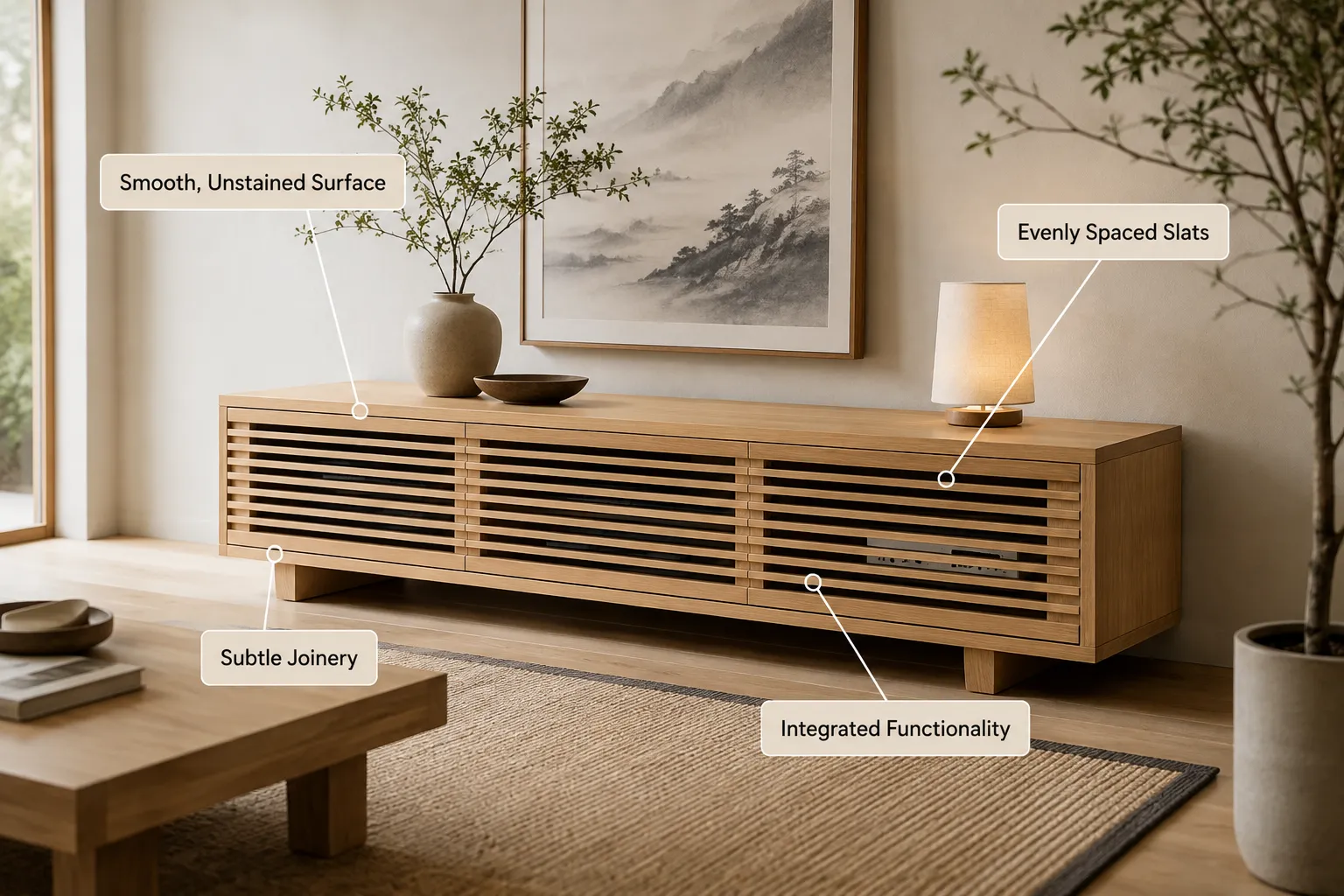
Slatted furniture is a quintessential element of the Japandi aesthetic, offering a unique blend of visual lightness, structural integrity, and practical benefits. The rhythmic repetition of wooden slats creates a sense of calm and order, allowing light and air to pass through, reducing visual bulk.
Key Design Principles for Slatted Furniture
When approaching Japandi woodworking: Building Minimalist Slatted Furniture with Clean Lines and Natural Finishes, consider these principles:
Proportion and Scale: Japandi furniture often sits lower to the ground, creating a grounded, serene atmosphere. The width, thickness, and spacing of slats are critical. Too thin, and they might look flimsy; too thick, and they lose their lightness. A common ratio for slat thickness to spacing might be 1:1 or 1:1.5, though this can vary depending on the overall scale of the piece.
Wood Selection: The choice of wood is paramount. Light-colored woods with subtle grain patterns are preferred.
- Oak: Durable, with a prominent but appealing grain. White oak is particularly popular for its light tone.
- Ash: Similar to oak in strength, often lighter in color with a more linear grain.
- Birch: Very light, fine-grained, offering a very clean, minimalist look.
- Walnut: While darker, it can be used sparingly for contrast or in specific pieces, always with a natural finish.
- Bamboo: Environmentally friendly, strong, and visually distinctive, perfect for a subtle Asian influence.
Joinery: Traditional, strong joinery methods are favored, often exposed as subtle design features rather than hidden.
- Mortise and Tenon: Excellent for creating strong, durable frames.
- Dovetails: Can be used for drawer boxes or carcase construction, adding a touch of visible craftsmanship.
- Half-lap joints: Simple yet effective for connecting slats or frame components.
- Dadoes and Rabbets: Useful for integrating panels or shelves within a slatted frame.
The goal is to achieve structural integrity without visible fasteners, letting the wood and joinery speak for themselves. Mastering modern hand-cut joinery can significantly elevate the quality and authenticity of your Japandi pieces.
Functionality First: Design your slatted furniture with its primary purpose in mind. A slatted bench might also offer under-seat storage; a slatted room divider could incorporate shelving. This practicality is a cornerstone of both Japanese and Scandinavian design. For example, building a DIY coffee table in a Japandi style would focus on clean lines, a natural finish, and potentially integrated storage beneath the slatted top.
Project Ideas
- Slatted Benches and Seating: Ideal for entryways, dining areas, or as minimalist coffee tables.
- Room Dividers: Create visual separation while maintaining an open feel.
- Storage Units/Cabinets: Slatted doors allow for ventilation and soften the look of storage.
- Bed Frames: A slatted headboard or entire bed frame embodies Japandi tranquility.
- Side Tables: Simple, elegant pieces that complement any minimalist space.
Building Techniques and Natural Finishes
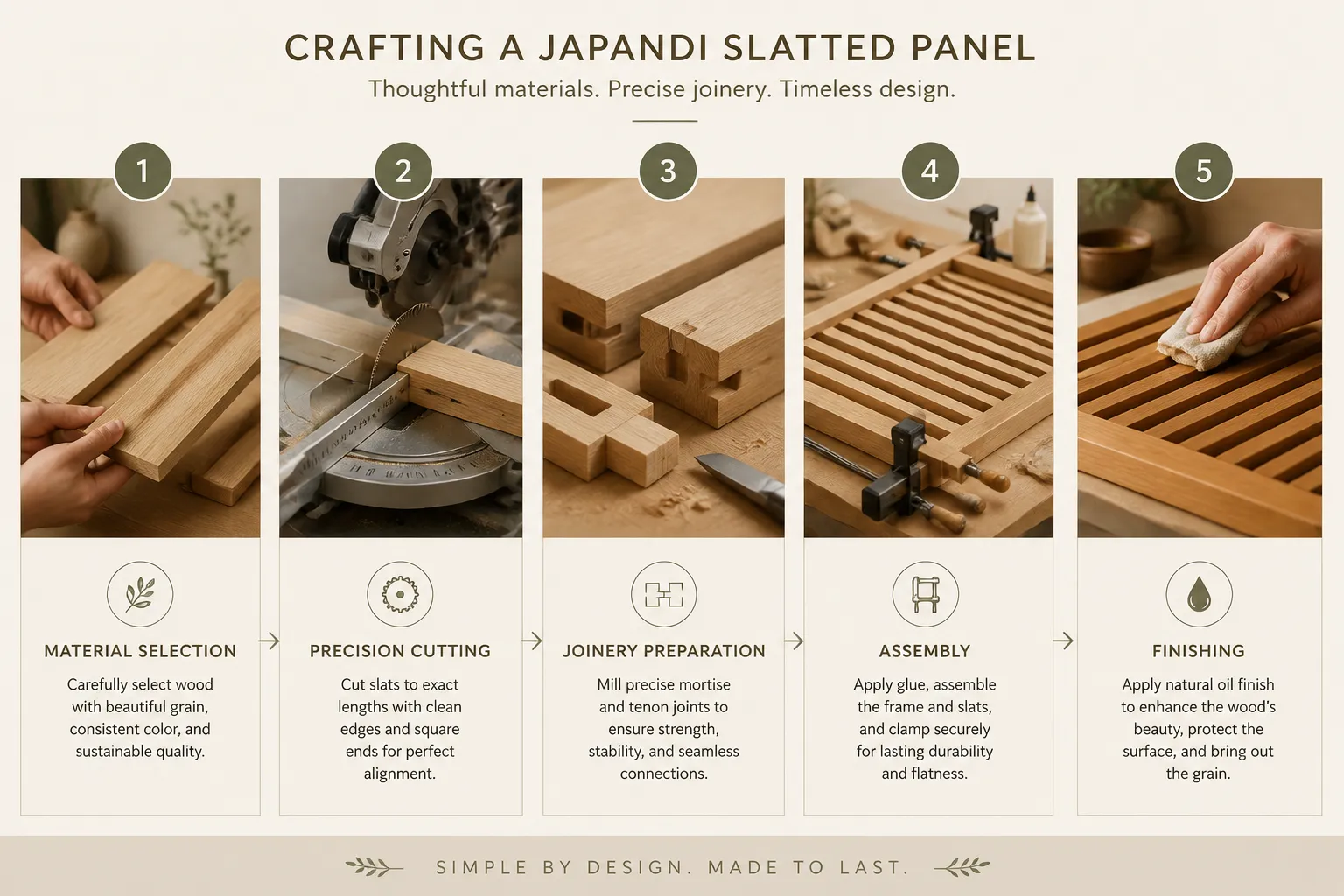
Precision is key in Japandi woodworking. Any imperfections in cuts, joints, or alignment will be highly visible due to the minimalist nature of the design.
Essential Tools and Techniques
Accurate Measuring and Marking: Use high-quality measuring tapes, squares, and marking gauges. Precision is non-negotiable for straight lines and consistent slat spacing.
Precise Cutting:
- Table Saw: Indispensable for ripping boards to exact widths for slats and frame components. A good sled can ensure perfectly square crosscuts.
- Miter Saw: For accurate crosscuts, especially for repeatable slat lengths.
- Router: For cutting dadoes, rabbets, or shaping edges, though Japandi design often favors sharp, unfacetted edges.
- Hand Tools: Chisels, planes, and hand saws are excellent for refining joints and adding a handmade touch. Utilizing traditional hand tool joinery can enhance the authenticity of your work.
Joinery Execution: Practice makes perfect. Whether using power tools for joinery (e.g., a router for mortises and tenons) or hand tools, ensure a snug fit. Strong glues (like Titebond III for interior use) are crucial, and clamping pressure should be even and firm. Consider using jigs to ensure consistent angles and cuts, especially for repetitive elements like slats.
Sanding and Preparation: A smooth, blemish-free surface is essential for natural finishes. Work through grits from 80 or 100 up to 220 or even 320 for a silky feel. Dust removal between grits is critical.
Embracing Natural Finishes
The integrity of Japandi woodworking lies in allowing the wood’s natural beauty to shine through. This means avoiding heavy stains or opaque paints. The focus is on protection and subtle enhancement.
- Oils (Tung Oil, Linseed Oil, Danish Oil): These penetrate the wood fibers, enhancing the grain and providing a natural, matte, or satin finish. They are easy to apply and repair, and develop a beautiful patina over time. Multiple thin coats are usually best.
- Waxes (Hardwax Oils): A blend of natural oils and waxes, offering durability and a smooth, low-sheen finish. They provide good protection against moisture and wear.
- Clear Lacquers or Varnishes: For higher durability or a slightly glossier finish, a clear, water-based lacquer or varnish can protect the wood without altering its natural color significantly. Choose products with low VOCs (Volatile Organic Compounds) for a healthier environment.
- Soap Finish: A traditional Scandinavian finish, particularly suitable for light woods. It provides a very pale, matte, and protective surface that can be easily refreshed.
When applying finishes, always test on a scrap piece of the same wood. Apply thinly and evenly, following the manufacturer’s instructions. The goal is to feel the wood, not a thick layer of plastic. Exploring budget-friendly wood finishing techniques can help achieve professional results without significant investment.
Integrating Japandi Furniture into Modern Spaces
The true beauty of Japandi woodworking lies not just in the individual pieces, but in how they integrate into and enhance a living space. The philosophy emphasizes creating harmonious, uncluttered environments.
Principles of Integration
- Mindful Placement: Each piece of furniture should have a purpose and a designated place. Avoid overcrowding.
- Cohesive Palette: Japandi interiors typically feature muted, earthy tones, think whites, grays, beiges, soft greens, and blues, complemented by the natural hues of wood. Your furniture will contribute to this calming color scheme.
- Natural Elements: Combine your wooden furniture with other natural textures like linen, wool, ceramic, and subtle greenery. A simple plant in a handmade ceramic pot can complete a Japandi vignette.
- Balance of Form and Void: The slatted design inherently creates visual space, preventing the furniture from feeling heavy. This plays into the Japanese concept of ma, the appreciation of empty space.
- Functionality: Ensure your Japandi pieces truly serve their function. For instance, a slatted console table should offer practical surface area or display space without being overly ornate. Creating ergonomic workshop furniture in the Japandi style would mean focusing on minimalist, functional designs that support comfort and efficiency, even for your workspace.
The Impact of Japandi Design
The appeal of Japandi woodworking extends beyond mere aesthetics. In a world increasingly filled with digital noise and consumerism, the serene and purposeful nature of Japandi design offers a refuge. It encourages a slower pace, an appreciation for craftsmanship, and a deeper connection to natural materials. Building furniture in this style allows you to create lasting, meaningful pieces that bring peace and beauty into your home in 2026 and beyond.
Conclusion
Japandi woodworking offers a rewarding path for those seeking to blend timeless design with skilled craftsmanship. By focusing on minimalist slatted furniture with clean lines and natural finishes, woodworkers can create pieces that are not only beautiful but also deeply functional and imbued with a sense of calm. The fusion of Japanese tranquility and Scandinavian utility encourages thoughtful design, precise execution, and an appreciation for the inherent beauty of wood. As you embark on your own Japandi projects in 2026, remember that simplicity, quality materials, and meticulous attention to detail are your guiding principles. Embrace the natural variations in wood, perfect your joinery, and choose finishes that allow the material to shine. The result will be furniture that elevates any space, bringing balance and serenity into the home.
Next Steps for Your Japandi Woodworking Journey:
- Start Small: Begin with a simpler project like a slatted side table or a small bench to hone your skills in cutting and joinery.
- Source Quality Materials: Invest in good quality, sustainably sourced wood that matches the Japandi aesthetic.
- Experiment with Finishes: Try different natural oil or wax finishes on scrap pieces to understand their effects on your chosen wood.
- Study Japandi Inspiration: Explore existing Japandi designs for ideas on proportion, spacing, and overall composition.
- Focus on Precision: Dedicate time to ensure every cut is accurate and every joint is tight; these details define the Japandi look.
References
- Danish Design Centre. (n.d.). Danish Design. Retrieved from https://danishdesigncentre.dk/
- Japan Society. (n.d.). Wabi-sabi: The Aesthetic of Imperfection. Retrieved from https://www.japansociety.org/
- Petersen, L. (2020). Woodworking: The Complete Guide to Joinery, Design & Construction. Storey Publishing.