
The seemingly simple choice between a nightstand and a side table can profoundly impact a room’s functionality and aesthetic. Many beginners in home furnishing mistakenly use these terms interchangeably, leading to suboptimal design choices that compromise comfort, convenience, and visual harmony. Understanding the nuances of Nightstands vs. Side Tables: Design Standards, Heights, and Storage Options for Bedroom Furniture is crucial for crafting a cohesive and purposeful living space. This article clarifies the distinctions, providing expert guidance on selecting the right piece for your bedroom or living area in 2026.
Key Takeaways
- Distinct Functions: Nightstands are primarily for bedrooms, supporting bedtime essentials, while side tables serve as versatile companions for seating areas in various rooms.
- Height is Paramount: Optimal nightstand height aligns with the top of the mattress; side table height aligns with the armrest of adjacent seating.
- Storage Focus: Nightstands prioritize enclosed storage (drawers, cabinets) for personal items, whereas side tables often feature open shelving or minimalist designs.
- Design Considerations: Nightstands integrate with bedroom decor; side tables complement broader living space aesthetics and can be more decorative.
- Ergonomics and Flow: Choosing the correct piece enhances user comfort and maintains visual balance within a room.
Decoding Nightstands vs. Side Tables: Design Standards for Bedroom Furniture
The fundamental difference between a nightstand and a side table lies in their intended use and placement within the home. While both are small, auxiliary tables, their design standards, typical heights, and storage options are specifically tailored to their environment.
What is a Nightstand?
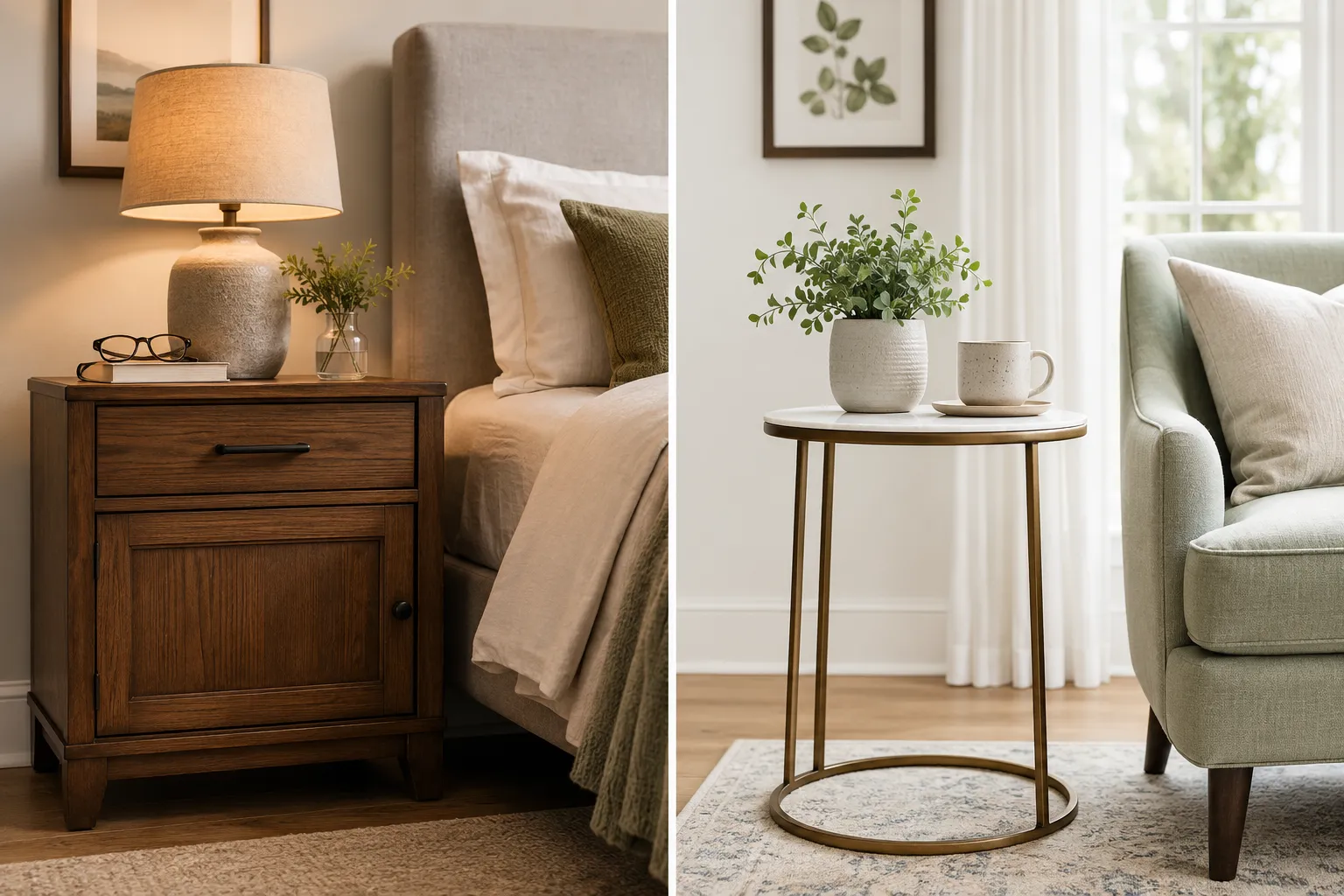
A nightstand, sometimes called a bedside table, is a piece of bedroom furniture designed to sit immediately adjacent to a bed. Its primary purpose is to hold items commonly used before sleep, during the night, or upon waking. These items typically include a lamp, alarm clock, eyeglasses, a book, a glass of water, or personal electronic devices.
Key Design Standards for Nightstands:
- Proximity to Bed: Nightstands are inherently linked to the bed. Their design should complement the bed frame and overall bedroom aesthetic.
- Ergonomic Access: The surface should be easily reachable from a lying or seated position in bed, making height a critical factor.
- Integrated Storage: Practicality often dictates built-in storage. Drawers or enclosed cabinets are common, allowing for the discreet storage of personal items, medications, or sleep accessories. This helps maintain a clutter-free environment crucial for a restful bedroom.
- Material and Style: Nightstands are frequently made from wood, metal, or a combination, mirroring the style of other bedroom furniture like dressers or headboards. Popular styles range from traditional and rustic to modern and minimalist. For those who enjoy woodworking, crafting a custom nightstand can be a rewarding project, allowing for personalized dimensions and storage solutions. Explore our guide on crafting your perfect woodworking nightstand for detailed instructions.
What is a Side Table?
A side table, also known as an end table, is a more versatile piece of furniture typically found in living rooms, dens, or even hallways. It is designed to be placed next to a sofa, armchair, or occasionally in an empty corner. Its function is to provide a convenient surface for items like drinks, snacks, remote controls, magazines, or decorative accents.
Key Design Standards for Side Tables:
- Versatile Placement: Unlike nightstands, side tables are not tethered to a specific piece of furniture like a bed. Their design often allows for greater flexibility in placement and use throughout a room.
- Surface-Oriented: While some side tables offer storage, their primary role is often to provide an accessible surface. Open shelving or minimalist designs are common, showcasing decorative items or keeping frequently accessed items within reach.
- Aesthetic Contribution: Side tables contribute significantly to the overall decor of a living space. They can introduce different materials (glass, marble, acrylic), shapes (round, square, abstract), and textures to add visual interest.
- Varied Heights: Side tables can vary widely in height to accommodate different seating arrangements, from low lounge chairs to standard sofas.
The choice in Nightstands vs. Side Tables: Design Standards, Heights, and Storage Options for Bedroom Furniture comes down to understanding the specific needs of each room and the ergonomic requirements of the primary furniture it accompanies.
Optimal Heights for Nightstands vs. Side Tables: Design Standards, Heights, and Storage Options for Bedroom Furniture
Achieving the correct height for your nightstand or side table is paramount for both functionality and aesthetic balance. An incorrectly sized table can be inconvenient, uncomfortable, and disrupt the visual harmony of a room.
Nightstand Height Standards
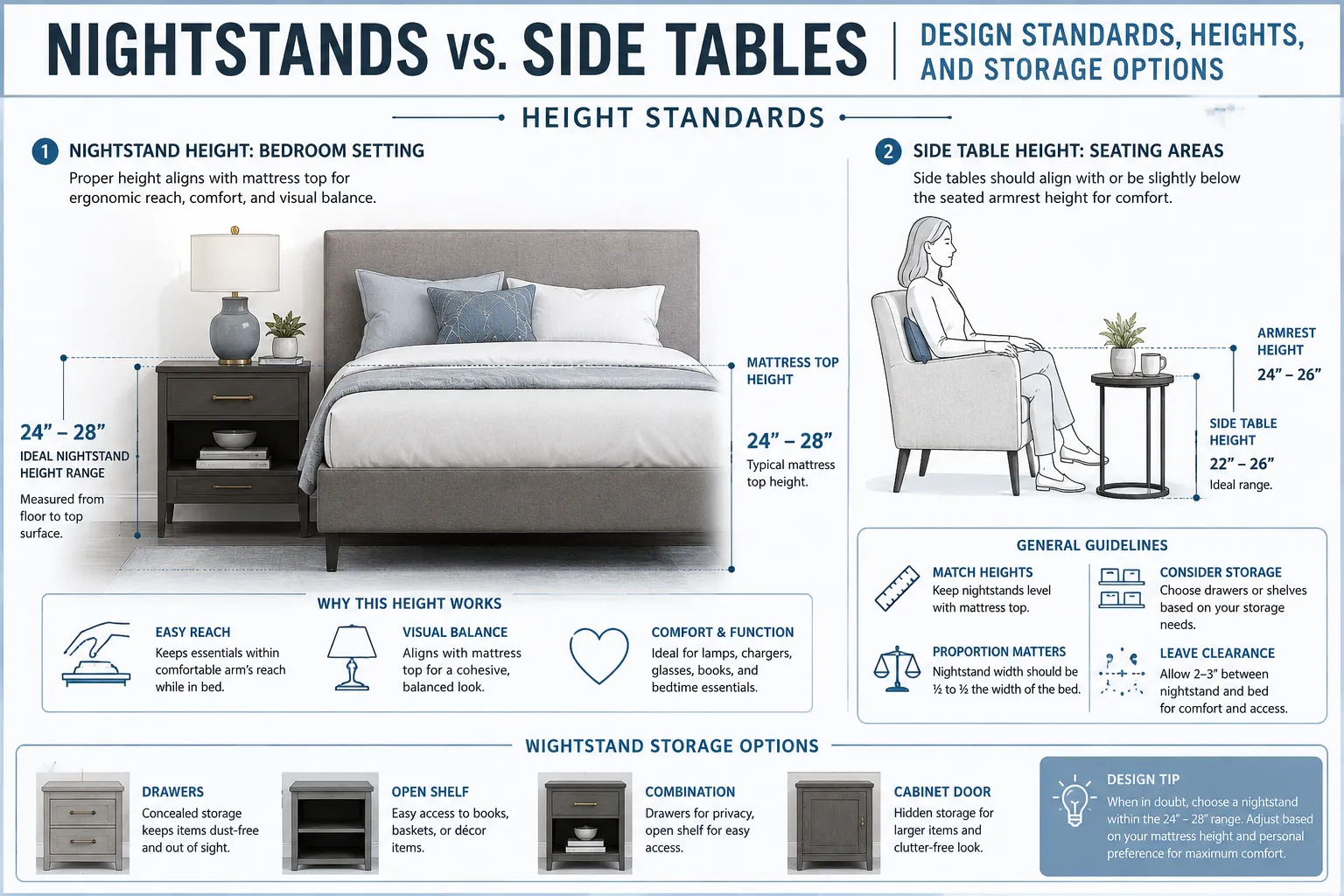
The ideal height for a nightstand is generally considered to be level with the top of your mattress, or within 2-4 inches above or below it. This standard ensures that items on the nightstand are easily accessible without having to strain or reach excessively.
Why Mattress Height Matters:
- Ergonomics: When lying in bed, you should be able to comfortably reach for a glass of water, your phone, or a book without sitting up fully or straining your back.
- Visual Balance: A nightstand that is too tall or too short can make the bed look disproportionate and disrupt the room’s visual flow. A nightstand much taller than the mattress can appear imposing, while one that is significantly shorter might look lost or difficult to reach.
- Lamp Placement: Lamps on a nightstand should ideally have their shade at eye level when you are seated in bed, preventing glare and providing optimal reading light. The overall height of the lamp and nightstand should be considered together.
Measuring for Your Nightstand:
- Measure the height from the floor to the top of your mattress.
- Select a nightstand that matches this measurement as closely as possible.
- Consider the height of any lamp you plan to use to ensure comfortable reading light.
Side Table Height Standards
Side tables, in contrast to nightstands, are primarily designed to accompany seating furniture such as sofas and armchairs. Their optimal height is generally level with the armrest of the adjacent seating, or within a few inches above or below it.
Why Armrest Height Matters:
- Functionality: When sitting on a sofa or armchair, you should be able to comfortably set down or pick up a drink, remote control, or book without excessive bending or reaching.
- Comfort: A table that is too low requires you to lean significantly, while one that is too high can feel awkward and intrusive.
- Aesthetic Integration: Aligning with the armrest creates a cohesive and intentional look, making the side table feel like a natural extension of the seating.
Measuring for Your Side Table:
- Measure the height from the floor to the top of the armrest of your sofa or armchair.
- Choose a side table that closely matches this height.
- Consider the depth and width of the table in relation to the seating. A table that is too large can overwhelm a space, while one too small may not be functional.
General Guidelines for Height:
| Furniture Type | Ideal Height Guideline | Primary Measurement Reference |
|---|---|---|
| Nightstand | Level with mattress top, or 2-4 inches +/- | Mattress Height |
| Side Table | Level with armrest of seating, or 2-4 inches +/- | Armrest Height |
By adhering to these height standards, you ensure that your nightstands and side tables not only look good but also serve their practical purposes effectively, enhancing the comfort and utility of your living spaces.
Storage Options and Design Flexibility: Nightstands vs. Side Tables
Beyond height and basic function, the crucial differentiating factor when considering Nightstands vs. Side Tables: Design Standards, Heights, and Storage Options for Bedroom Furniture is the type and amount of storage they offer, along with their inherent design flexibility. These elements dictate how well each piece integrates into its respective environment and serves its user.
Storage Focus: Nightstands
Nightstands are typically designed with a strong emphasis on practical, often concealed, storage. The bedroom is a private space, and the items kept beside the bed are often personal or require discretion.
Common Nightstand Storage Features:
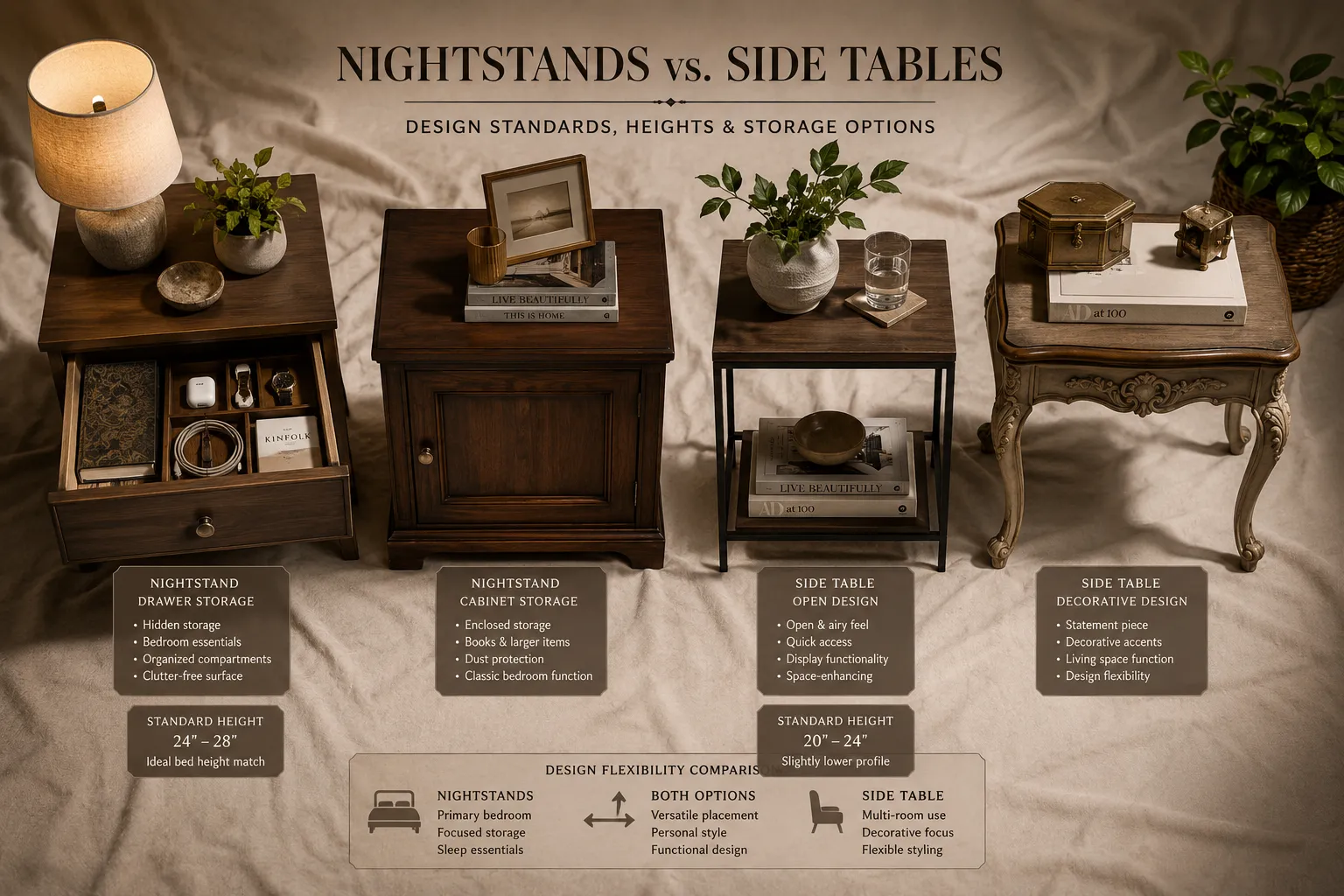
- Drawers: Multi-drawer configurations are exceedingly common. These allow for organizing smaller items such as reading glasses, medications, journals, remotes, or personal care products. Drawers help maintain a tidy and serene bedroom environment by keeping clutter out of sight.
- Cabinets with Doors: Some nightstands feature a small cabinet section, ideal for larger items like books, tablets, or even a small humidifier. This enclosed storage offers more capacity than drawers while still maintaining a clean look.
- Open Shelving: While less common for primary storage, some nightstands include a single open shelf. This can be used for displaying a decorative item, storing a stack of books, or holding items that require quick, easy access.
- Hidden Compartments: Custom-built nightstands might even incorporate hidden compartments for valuables, reflecting a tailored approach to personal security. For those interested in advanced woodworking, incorporating such features can be a rewarding challenge. Considerations for building modular wood storage systems for small workshops can inspire similar creative solutions for furniture.
Design Implications of Nightstand Storage:
The storage-rich nature of nightstands often leads to more substantial, furniture-like designs. They are typically solid, sturdy pieces that contribute to the overall gravitas of bedroom furniture. Their design frequently aligns with the bed frame, dresser, and other pieces, contributing to a cohesive bedroom suite. Materials often match, such as solid wood or veneers, ensuring durability and timeless appeal.
Storage Focus: Side Tables
Side tables, by contrast, often feature more flexible and sometimes minimal storage. Their role in a living space is frequently about providing an accessible surface and contributing to the room’s aesthetic rather than concealing numerous personal items.
Common Side Table Storage Features:
- Open Shelving: A single open shelf is a popular option, allowing for the display of decorative objects, books, or magazines. This promotes an airy, open feel and easy access.
- Minimal Drawers: Some side tables might include one small drawer, suitable for storing a remote control, coasters, or reading glasses. This offers a touch of concealed storage without overpowering the table’s design.
- No Storage: Many side tables are designed purely as a surface, consisting of just a top and legs. These minimalist designs are chosen for their sculptural quality, ability to fit into tight spaces, or to avoid adding visual bulk to a room.
- Magazine Racks or Baskets: Some side tables integrate a magazine rack or a basket beneath the surface, offering a semi-open storage solution that keeps periodicals tidy but visible.
Design Flexibility of Side Tables:
The less prescriptive storage requirements grant side tables immense design flexibility. They can be found in an extraordinary range of materials, shapes, and styles, allowing them to serve as accent pieces that introduce texture, color, or an unexpected form into a living area.
- Materials: Glass, metal, marble, acrylic, ceramic, and various types of wood are all common. This diversity allows them to seamlessly integrate into eclectic decor or serve as a striking contrast in a monochromatic room.
- Shapes: Round, square, rectangular, oval, and organic shapes are all prevalent, offering different visual weights and functional footprints. Round tables can soften a room full of angular furniture, while square tables maximize usable surface area in corners.
- Portability: Many side tables are lighter and more portable than nightstands, making it easy to rearrange a living space or move them for temporary uses.
When deciding between a nightstand and a side table, consider the primary function: is it to meticulously organize and hide personal items beside a bed, or to offer a convenient surface and enhance the aesthetic of a seating area? Understanding these distinctions ensures you select the perfect piece for your needs. For those who appreciate custom furniture, building pieces like DIY compact entryway organizers or even small console tables (https://woodcraftwiz.com/power-tool-mastery-for-building-console-tables-modern-entryway-furniture-for-small-spaces-2/) can offer personalized storage and design solutions throughout the home.
Conclusion
The distinction between nightstands and side tables is more than mere semantics; it’s about optimizing functionality, comfort, and aesthetic harmony within different areas of your home. While both serve as auxiliary surfaces, their design standards, ideal heights, and typical storage options are meticulously tailored to their intended environments. Nightstands are purpose-built for the bedroom, prioritizing discreet, accessible storage for personal items and aligning ergonomically with mattress height. Side tables, conversely, are versatile accents for living spaces, offering flexible surface areas and design freedom to complement various seating arrangements, with their height often dictated by armrests.
In 2026, as home design continues to emphasize both utility and personalized aesthetics, making informed furniture choices is more important than ever. By understanding the core differences outlined in this guide, you can confidently select pieces that not only look good but also enhance your daily living experience. Pay close attention to the specifics: measure your mattress height for nightstands, and your armrest height for side tables. Consider the amount and type of storage you truly need for each context. This deliberate approach will lead to a more organized, comfortable, and visually pleasing home.
SEO Meta Title: Nightstands vs. Side Tables: Design, Height & Storage Guide SEO Meta Description: Explore nightstands vs. side tables for bedrooms in 2026. Learn design standards, optimal heights, and storage options for perfect furniture placement.