
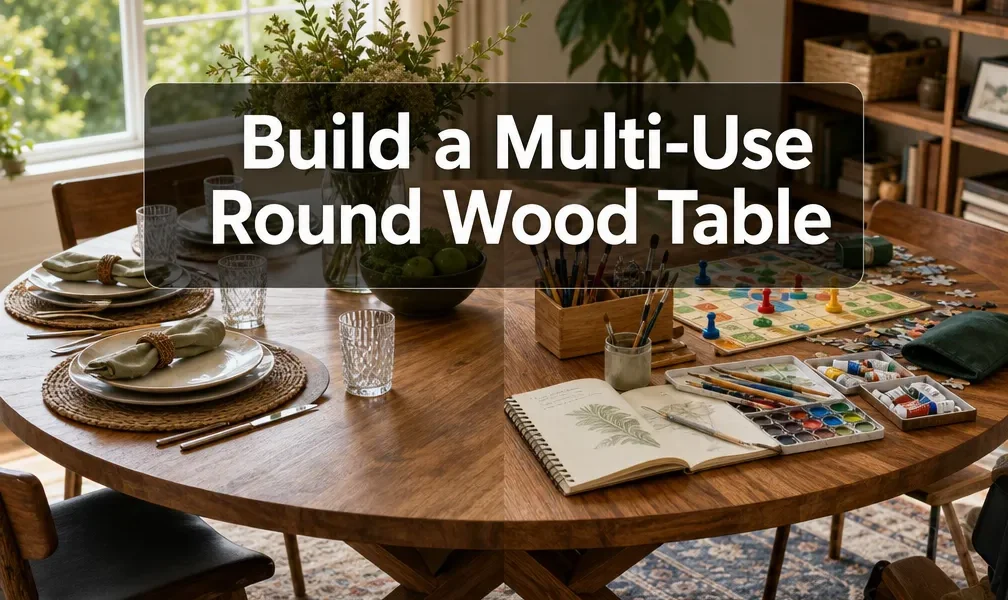
The average household in 2026 seeks furniture that adapts, not just occupies space. With living areas often serving multiple purposes, the traditional demarcation between a dedicated “dining table” and a specialized “crafting table” is blurring. Homeowners and DIY enthusiasts are increasingly looking to build a single piece that gracefully transitions between roles. This article delves into the considerations for designing and constructing a round wooden table capable of serving as both an elegant dining centerpiece and a functional station for crafting and games, demonstrating how to build a multi-use wood table with lasting appeal and versatility.
Key Takeaways
- A multi-use round wood table requires careful design to balance aesthetic appeal for dining with the durability and functionality needed for crafting and games.
- Wood selection is paramount; hardwoods like oak, maple, or walnut offer superior resistance to dents and scratches compared to softer woods.
- Robust joinery, such as mortise and tenon or sturdy through-bolts, is essential for structural integrity, especially for a table that will endure varied uses.
- Consider a removable leaf system to adjust the table size for different activities, making it adaptable for intimate dinners or larger craft projects.
- A durable finish is crucial for protecting the surface from spills, tools, and general wear and tear, ensuring longevity across all functions.
Designing the Ultimate Multi-Use Wood Table: Round Dining Room Table vs. Round Table for Crafting and Games
When embarking on the journey to build a multi-use wood table, the initial design phase is critical. A round table inherently fosters conversation and communal interaction, making it ideal for both dining and group activities like board games. However, transitioning from a delicate dining setting to a robust crafting station requires thoughtful planning for material selection, size, and structural integrity.
The diameter of the table is a primary consideration. For dining, a 48-inch round table comfortably seats four to six people, while a 60-inch table can accommodate six to eight. For crafting or games, a larger surface provides more elbow room and space for materials or game boards. One innovative approach is to design a round dining room table with removable leaves, allowing it to expand for larger gatherings or extensive craft projects. This modularity means the table can be adapted to specific needs, effectively tackling the challenge of a round dining room table vs. round table for crafting and games. For those considering smaller spaces, exploring designs for round dining tables for small spaces can offer valuable insights.
Material selection is equally important. Hardwoods are generally preferred for their durability. Options like oak, maple, cherry, or walnut offer excellent resistance to scratches, dents, and dings, crucial for a table that will see tools, paints, and enthusiastic game play. Softwoods, such as pine or cedar, might be more budget-friendly but are prone to damage and may not stand up to the rigors of a multi-use environment without significant protection. For a deeper understanding of wood choices, refer to our beginner’s guide to wood species.
A table designed for both dining and crafting also needs a stable base. Pedestal bases can offer more legroom, which is advantageous for chairs, but must be exceptionally sturdy to prevent wobbling under pressure, especially if heavy crafting equipment is used. Four-leg designs provide excellent stability and can be reinforced with aprons. The choice between these often comes down to aesthetic preference and the table’s intended primary use.
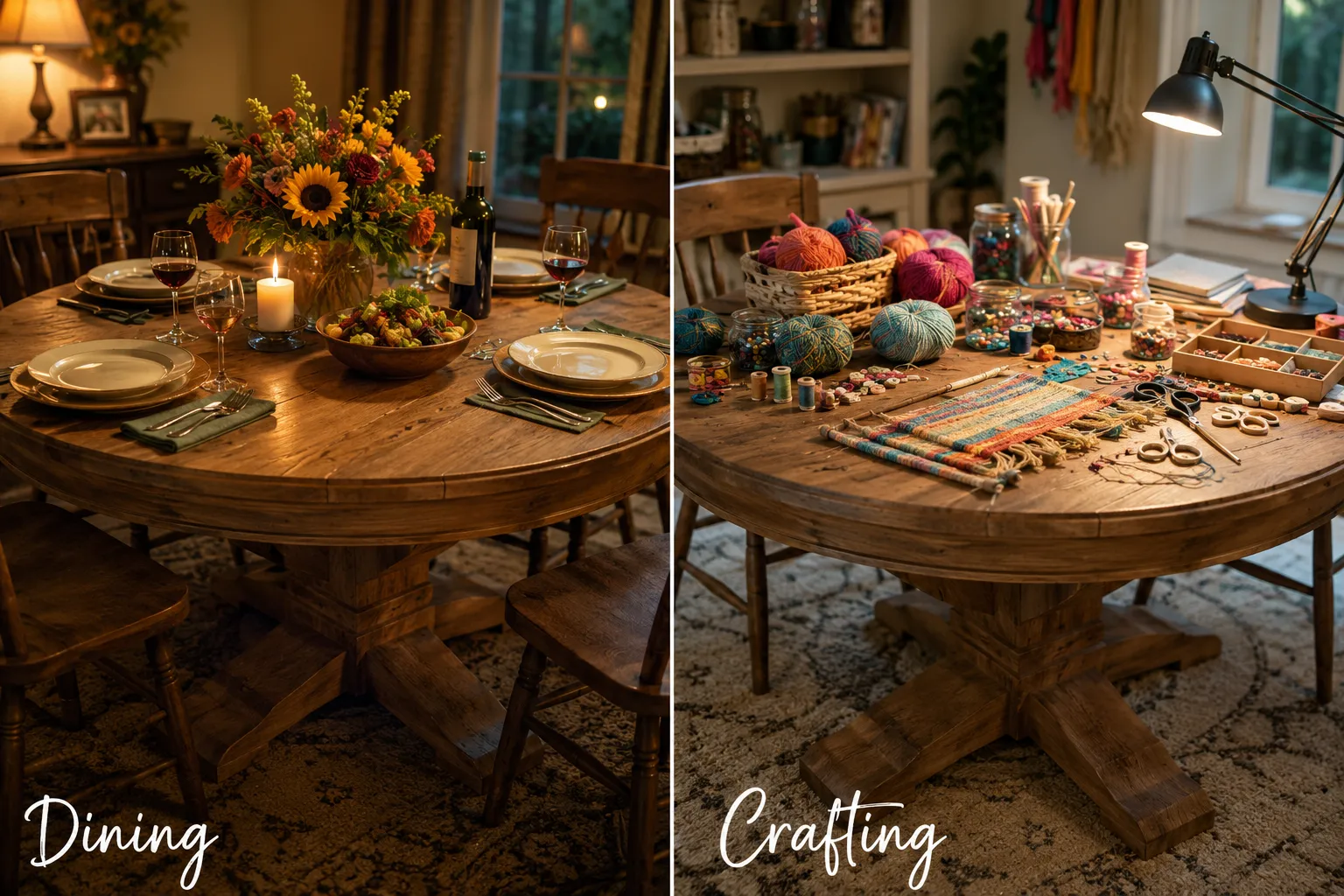
Key Design Considerations for Your Multi-Use Round Wood Table:
- Size & Expandability: A fixed 48-60 inch diameter is a good starting point. Incorporating a butterfly or drop-leaf mechanism can offer flexibility.
- Wood Type: Prioritize hardwoods (oak, maple, walnut) for durability.
- Base Stability: Pedestal or four-leg designs, reinforced for heavy loads.
- Surface Protection: A highly durable finish that can withstand heat, moisture, and abrasions.
Essential Woodworking Techniques to Build a Multi-Use Wood Table
Building a multi-use round wood table requires a blend of precision and robust joinery. The table’s ability to seamlessly transition from a dining surface to a crafting hub hinges on its construction quality.
Tabletop Construction
Creating a perfectly round tabletop often involves laminating several narrower boards together to achieve the desired width and then cutting the circle. This minimizes wood movement and ensures a stable surface. Edge-gluing techniques using biscuits, dowels, or splines will strengthen these joints. Once the boards are glued and clamped, a trammel or router jig can be used to cut the perfect circle. Sanding is a crucial, multi-stage process to achieve a smooth, even surface suitable for dining and easy to clean after crafting.
For tables with removable leaves, the design becomes more complex. The leaf mechanism needs to be sturdy yet easy to operate. Tongue-and-groove joinery or specialized table slides can be integrated to ensure the leaves fit snugly and securely, preventing gaps or misalignment. This is paramount for maintaining a flat, continuous surface, whether for rolling out dough or laying out intricate puzzle pieces.
Base and Leg Joinery
The foundation of your multi-use table must be unyielding. For a pedestal base, constructing a central column with substantial feet or a cross-base is essential. Mortise and tenon joints are the gold standard for connecting structural elements due to their strength and resistance to racking. If opting for a four-leg design, strong apron-to-leg joinery is critical. Through-tenons, wedged through-tenons, or robust floating tenons are excellent choices, often complemented by corner blocks for added rigidity. These techniques are far superior to simple screws or weaker joints that can loosen over time with varied use. Understanding hand tool joinery for visible wood joints can elevate the craftsmanship of your piece.
Consider the stresses a multi-use table will endure. A dining table might primarily hold plates and food, but a crafting table could support heavy sewing machines, vice clamps, or stacks of materials. Therefore, every joint must be meticulously cut and assembled. Investing in good quality tools, such as a reliable table saw and router, will significantly aid in achieving precision and strength. For those looking to optimize their workshop, learning about building your first router table can be highly beneficial.
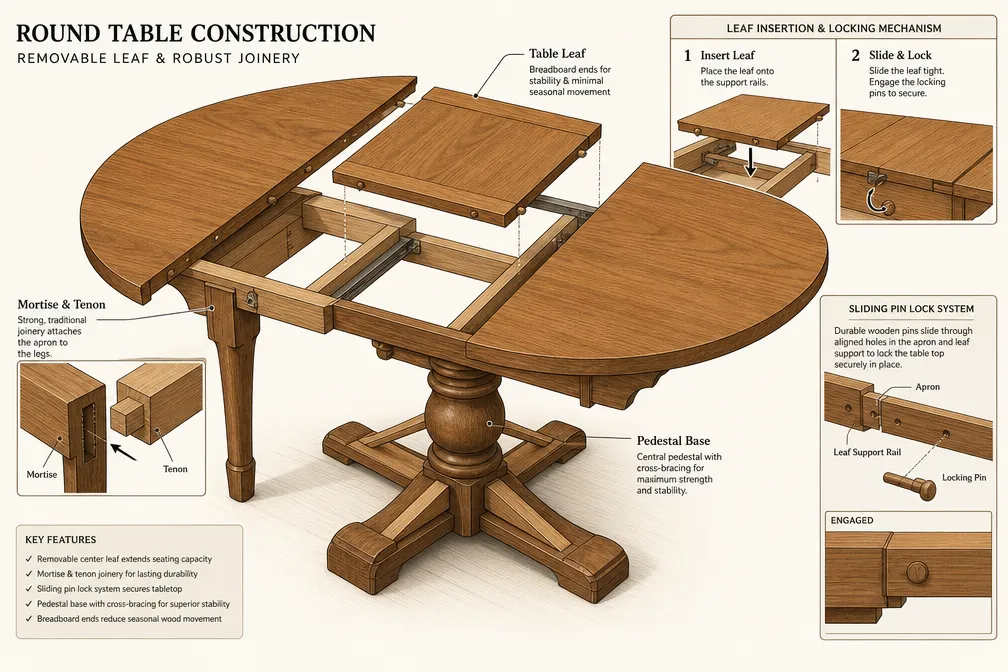
Step-by-Step Construction Overview:
- Prepare Wood: Mill boards flat and square, glue up for tabletop and leaves.
- Cut Circle: Use a router with a trammel jig to cut the perfect round tabletop and leaf sections.
- Construct Base/Legs: Cut and assemble all base components using strong joinery (mortise and tenon recommended).
- Attach Apron (if applicable): Secure aprons to legs, ensuring squareness and stability.
- Install Leaf Mechanism: Integrate table slides or a custom system for expandable leaves.
- Attach Top to Base: Use table fasteners (like Z-clips or figure-eight fasteners) that allow for wood movement.
- Sanding: Progress through grits from coarse to very fine for a smooth finish.
- Finishing: Apply chosen finish, allowing adequate cure time.
Finishing and Protecting Your Multi-Use Wood Table
The finishing stage is where your multi-use wood table truly gains its versatility and resilience. A well-applied, durable finish protects the wood from the inevitable spills and abrasions that come with dining, crafting, and gaming. The choice of finish directly impacts the table’s longevity and ease of maintenance.
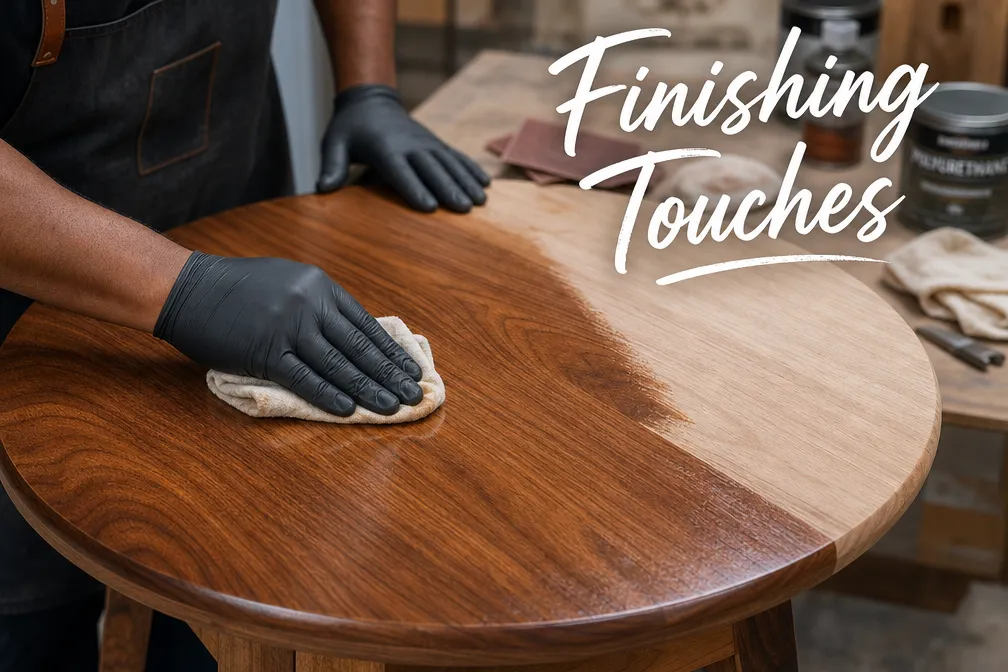
For a table that will see heavy use, a hard-wearing finish is essential. Polyurethane, whether oil-based or water-based, is a popular choice due to its excellent durability, resistance to moisture, and ease of application. Oil-based polyurethanes tend to offer a warmer, amber tone, while water-based options remain clearer. Several coats, applied according to the manufacturer’s instructions with light sanding between coats, will build up a robust protective layer.
Another excellent option is an epoxy finish, particularly for a crafting or game table. Epoxy creates an incredibly hard, clear, and waterproof surface that can withstand almost anything. It’s ideal for protecting against paint spills, glue, and general wear from tools. However, epoxy can be more challenging to apply and may not be the aesthetic choice for a more traditional dining table.
For a natural feel with good protection, an oil-wax blend can be considered. These finishes penetrate the wood, enhancing its natural beauty, and offer reasonable protection against moisture. They are generally easier to repair if scratched but may not be as hard-wearing as polyurethane or epoxy for heavy-duty crafting. Regardless of the finish chosen, proper surface preparation, including thorough sanding, is critical for optimal adhesion and a smooth result. Learning about beginner’s guide to wood staining can further enhance the final appearance.
Beyond the finish, consider practical features that enhance the table’s multi-use functionality. For instance, creating custom-fit, reversible mats for the tabletop could provide a soft surface for delicate crafts on one side and a cutting mat for fabric or paper on the other. Storage solutions, such as built-in drawers or shelves beneath the tabletop, could keep crafting supplies or game pieces organized and out of sight when the table is used for dining.
Comparative Durability of Finishes for Multi-Use Tables
| Finish Type | Durability Rating | Application Difficulty | Aesthetic | Notes |
|---|---|---|---|---|
| Oil-Based Polyurethane | High | Medium | Warm Amber | Excellent moisture and abrasion resistance. |
| Water-Based Polyurethane | High | Medium | Clear/Slightly Milky | Good moisture and abrasion resistance, faster drying. |
| Epoxy Resin | Very High | High | Ultra-Clear/Glossy | Superior chemical and scratch resistance, thick build. |
| Oil-Wax Blend | Medium | Low | Natural/Matte | Easy to repair, requires reapplication, lower scratch resistance. |
Remember that a table built to be a round dining room table vs. round table for crafting and games will likely see a wide range of activities. Choosing a finish that can withstand these diverse demands is just as important as the structural integrity of the build itself. With proper care and maintenance, your custom-built, multi-use wood table will serve your household for many years, adapting effortlessly to every meal, project, and game night.
Conclusion
Building a multi-use round wood table is an ambitious yet rewarding project that addresses the modern need for adaptable furniture. By carefully considering design elements like size, expandability with removable leaves, and robust wood selection, you lay the foundation for a versatile piece. Employing strong joinery techniques, such as mortise and tenon, ensures the table’s structural integrity, allowing it to withstand the varied demands of dining, crafting, and games. Finally, selecting a durable finish, like polyurethane or epoxy, protects your investment, ensuring longevity and ease of maintenance.
The journey to create a piece that seamlessly transitions from a round dining room table to a round table for crafting and games is a testament to thoughtful woodworking. With the right planning and execution, you can build a table that not only serves multiple functions but also becomes a cherished centerpiece in your home, embodying both utility and craftsmanship.
Ready to embark on your next woodworking challenge? Gather your tools, select your wood, and start planning your multi-use round table today. For more inspiration on building functional and beautiful pieces, explore our guides on breakfast room tables and beginners guide to dining tables.
woodworking, DIY table, round table, dining table, craft table, game table, wood project, custom furniture, multi-use furniture, wood joinery, furniture design, finishing wood