

The average small workshop owner wastes 30% of their working time searching for tools, clearing workspaces, or dealing with sawdust. In 2026, efficiency is no longer a luxury but a necessity for hobbyists and professionals alike. Optimizing a compact space demands a strategic approach, where every inch counts, and workflow is paramount. This article delves into “Small Workshop Layout Optimization: Mobile Tool Stations, Dust Collection, and Space Efficiency for 2026,” offering practical, high-authority solutions to transform cramped quarters into productive powerhouses.
Key Takeaways
- Mobile Tool Stations are essential for flexibility: Equip benches and tools with heavy-duty casters to create a dynamic, reconfigurable workspace.
- Integrated Dust Collection is critical for health and safety: Implement centralized or point-of-source dust collection to maintain air quality and minimize cleanup.
- Vertical storage and modularity maximize space: Utilize walls and stackable units to store tools and materials, keeping floors clear.
- Workflow planning reduces wasted time: Design your layout based on logical project flow, minimizing movement between workstations.
- Embrace technology for smart organization: Leverage digital tools and smart storage solutions for inventory and quick access.
Designing for Flexibility: Mobile Tool Stations in 2026
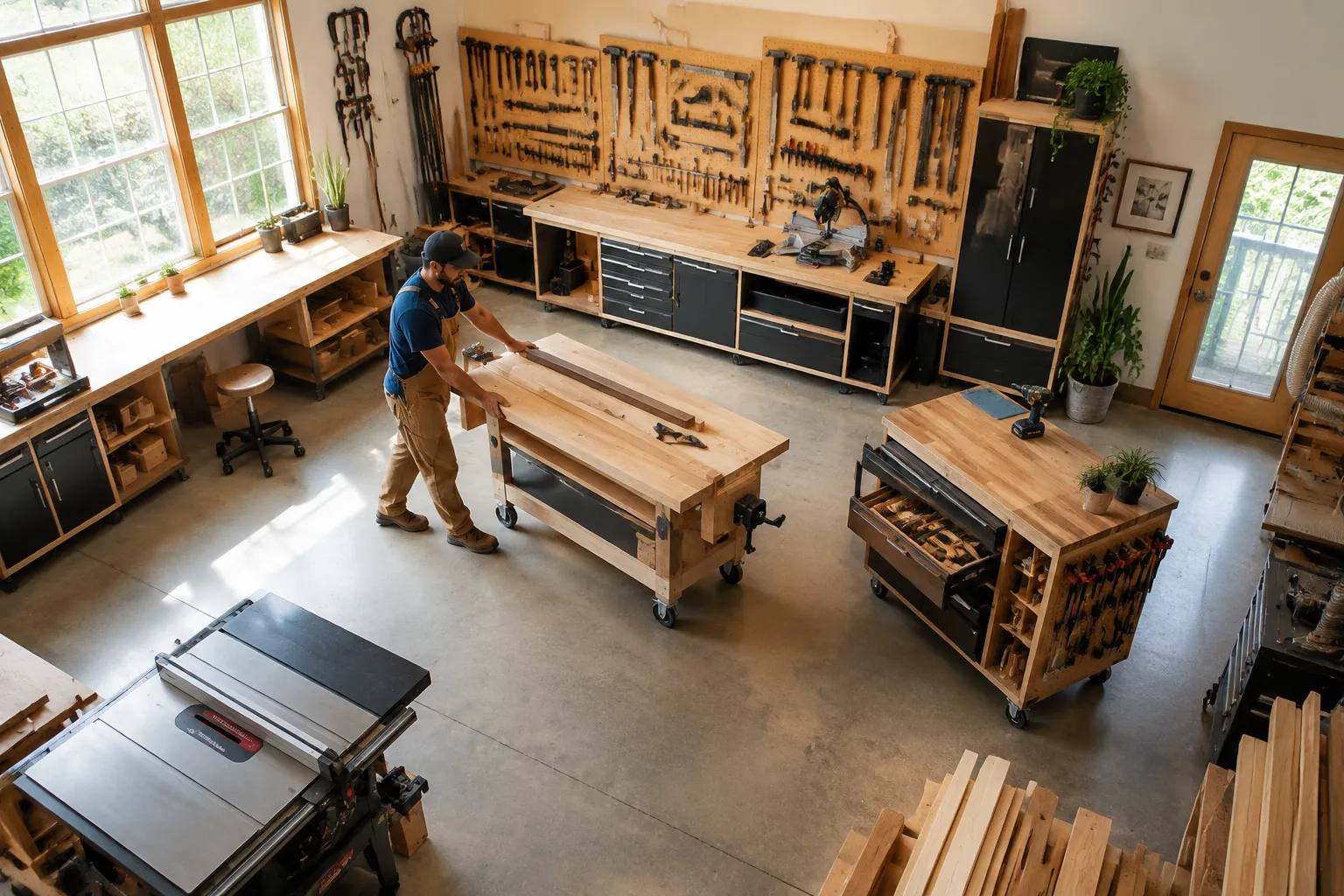
The cornerstone of efficient small workshop layout optimization in 2026 is flexibility, and nothing embodies this more than mobile tool stations. In a limited space, the ability to reconfigure your workshop on demand allows you to tackle diverse projects without feeling constrained. Static setups often lead to bottlenecks, forcing awkward movements or inefficient tool access.
Mobile tool stations transform your workshop into a dynamic environment. Consider your workbench: if it’s stationary, you’re constantly walking around it. Equipping it with sturdy locking casters immediately grants you the freedom to move it against a wall for open floor space, or pull it into the center for 360-degree access when needed. The same principle applies to large power tools like planers, jointers, and table saws. Custom mobile bases are readily available or can be built for almost any machine, allowing you to roll a tool out for use and then tuck it away when finished.
This approach significantly enhances efficient small workshop layouts for 2026 mobile tool stations and dust collection upgrades. It’s not just about the big machines; even smaller tools and storage units benefit from mobility. For instance, a rolling cabinet for hand tools or a portable miter saw stand with integrated outfeed support can dramatically improve workflow and safety.
Strategies for Effective Mobile Tool Integration
- Heavy-Duty Locking Casters: Invest in quality casters that can handle the weight of your tools and workbenches. Locking mechanisms are crucial to prevent unwanted movement during operation.
- Standardized Heights: Where possible, design mobile bases and work surfaces to be at a consistent height. This allows various units to double as outfeed supports or extended work areas, maximizing their utility.
- Modular Design: Think in terms of modularity. Can your rolling storage cabinet fit beneath your workbench when not in use? Can two smaller mobile units combine to form a larger assembly table? Building modular and expandable workshop cabinets maximizing vertical space and reconfigurability is a core principle here.
- Dedicated Parking Spots: Even with mobility, establishing “home” positions for each mobile station ensures that your workshop doesn’t devolve into disarray. Mark these spots on the floor if necessary.
By embracing mobile tool stations, you create a workshop that adapts to your project, rather than forcing your project to adapt to a rigid layout. This adaptability is key to maximizing productivity and enjoyment in a compact space.
Advanced Dust Collection and Air Quality Management for 2026
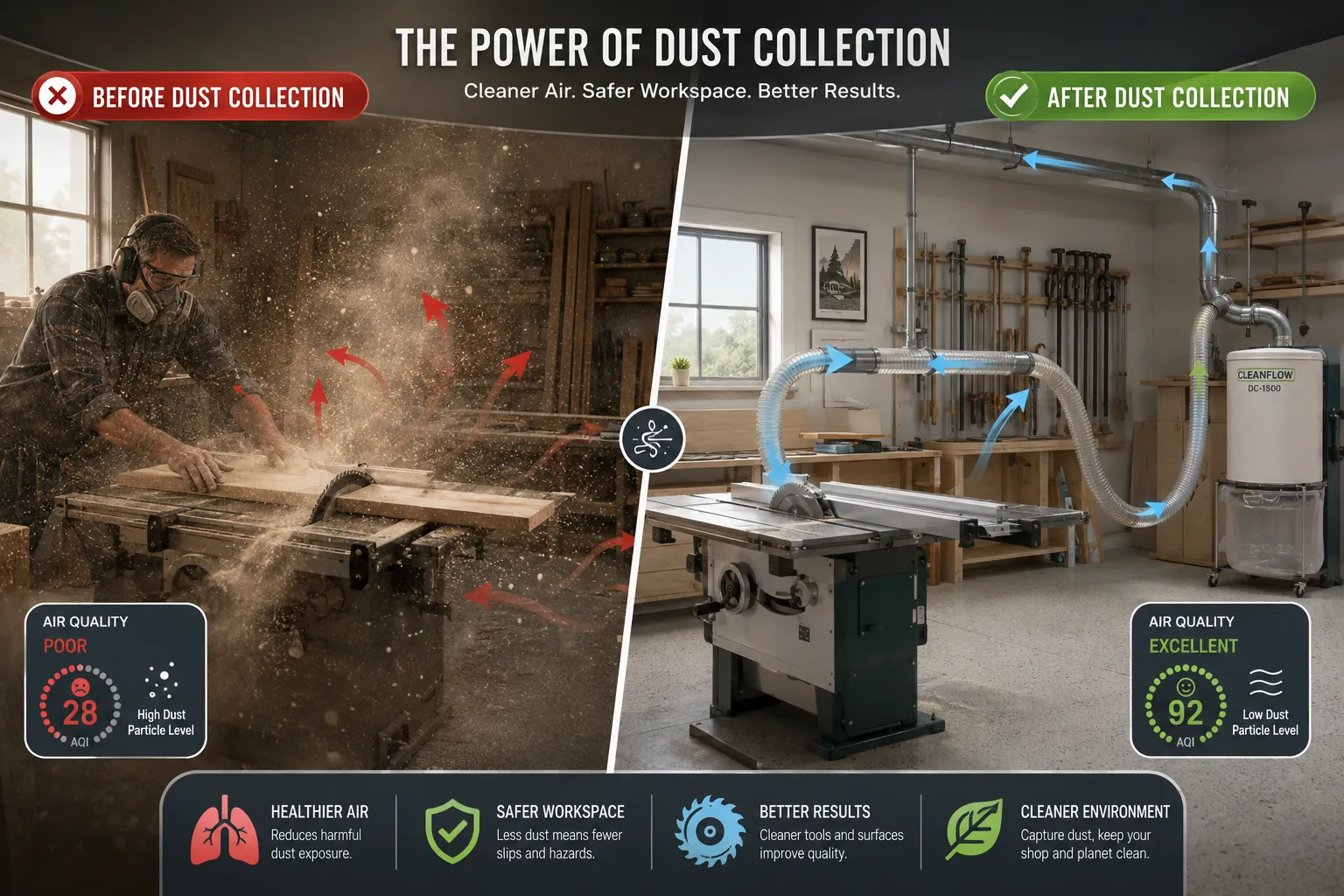
No discussion of small workshop layout optimization would be complete without a strong focus on dust collection. Fine sawdust poses serious health risks, from respiratory problems to increased fire hazards. In 2026, advancements in dust collection technology and a greater understanding of air quality make it imperative to integrate a robust system into your workshop design.
A poorly managed dusty environment reduces visibility, covers tools, and creates a constant cleanup chore. Effective dust collection addresses these issues at their source, contributing directly to a cleaner, safer, and more pleasant working environment. This is especially true in smaller spaces where dust concentrations can quickly become very high.
Implementing an Integrated Dust Collection System
The ideal dust collection system for a small workshop is a combination of central collection for larger tools and localized solutions for smaller ones.
- Central Dust Collector: For stationary power tools like table saws, planers, and jointers, a central dust collector with a network of ducts is highly effective. Modern systems often feature two-stage separation (cyclone separators) to efficiently capture fine particles before they reach the main filter, extending filter life and maintaining suction. Consider how the ducting will run: overhead ducts keep floor space clear, but flexible hoses may be necessary for mobile tools.
- Point-of-Source Extraction: Even with a central system, handheld tools like sanders, routers, and random orbit sanders require dedicated dust extraction. This often means connecting them directly to a shop vacuum or a smaller dust extractor. Many modern tools come with excellent dust ports.
- Ambient Air Filtration: An ambient air filter is a crucial component, especially in smaller shops. These units continuously filter the air, removing the fine dust particles that escape even the best point-of-source collection. Mount them overhead to save space.
- Smart Integration: In 2026, smart technologies offer enhanced control. Systems like those detailed in building a DIY smart workshop dust collection system integrating IoT sensors for automated air quality and tool activation can automatically turn on your dust collector when a tool is activated, or when air quality sensors detect excessive particulate matter.
Tips for Optimizing Dust Collection in a Small Space
- Short, Straight Duct Runs: Minimize bends and keep duct runs as short as possible to maintain maximum suction power.
- Blast Gates: Use blast gates to direct suction only to the tool currently in use, improving efficiency.
- Mobile Dust Collection: For mobile tools, consider a dedicated mobile dust extractor or a system with long, flexible hoses that can reach various stations.
- Regular Maintenance: Empty dust bins frequently and clean filters according to manufacturer recommendations to ensure optimal performance.
By prioritizing and integrating effective dust collection, you not only protect your health but also maintain a cleaner, more organized workspace, directly contributing to overall space efficiency and productivity.
Maximizing Space Efficiency and Workflow for 2026
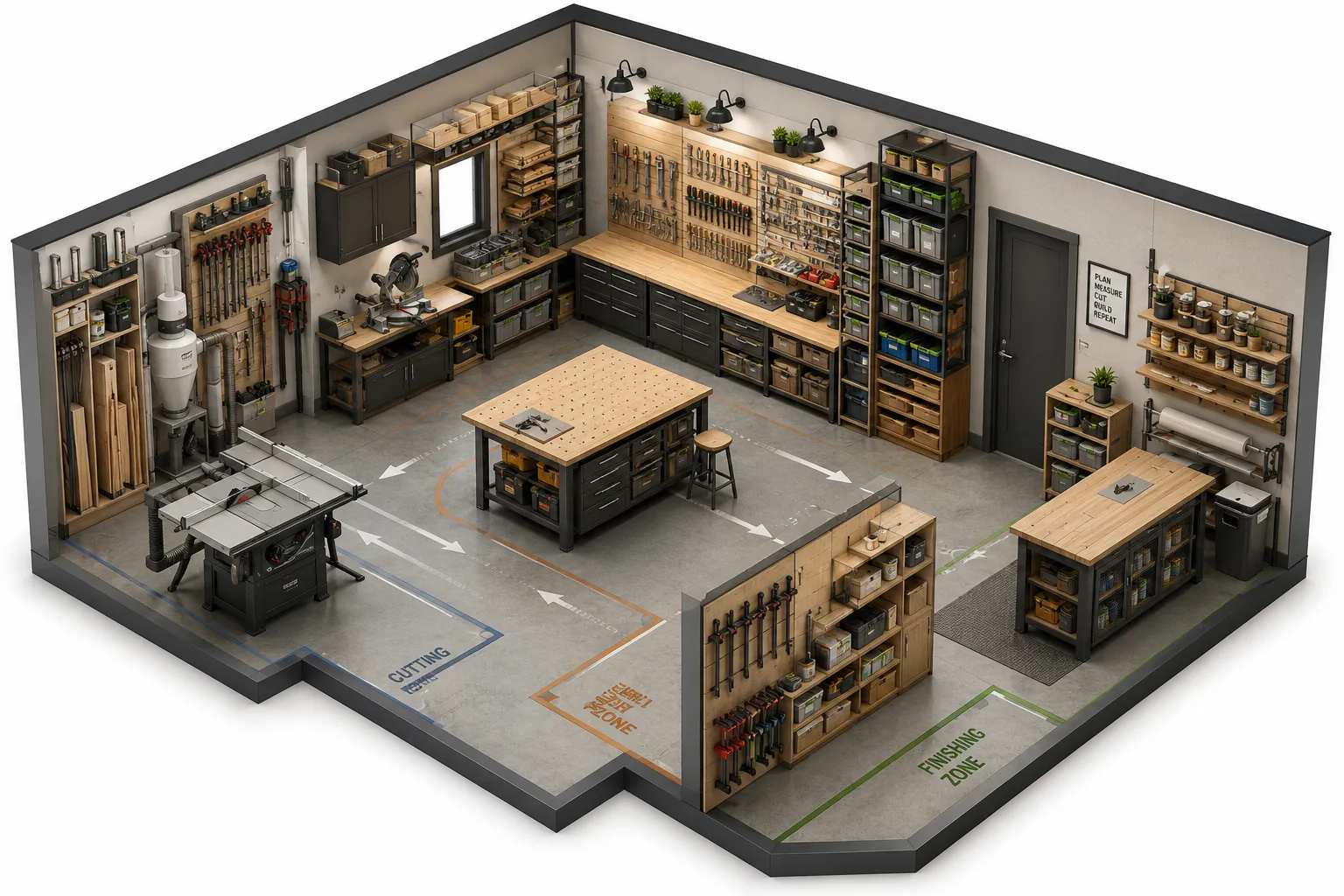
Space efficiency in a small workshop is about more than just fitting everything in; it’s about making everything accessible and streamlining your workflow. A well-optimized small workshop layout for 2026 considers the entire process of woodworking, from raw material storage to finished product assembly, minimizing unnecessary movement and clutter.
The core principle is to think vertically and to design multi-purpose solutions. Walls are invaluable real estate in a small workshop. Instead of stacking items on the floor, utilize every available vertical inch for storage.
Strategies for Ultimate Space Efficiency
Vertical Storage Systems:
- Shelving: Install sturdy shelves from floor to ceiling for lumber, finished projects, and bulky items.
- Pegboards and French Cleats: These systems are incredibly versatile for hand tools, clamps, and frequently used items. They allow for easy rearrangement as your tool collection or project needs change. Consider crafting custom magnetic tool holders and organizers maximizing vertical storage in a small workshop for an even smarter approach.
- Wall Cabinets: Enclosed cabinets keep dust off tools and provide a cleaner aesthetic. Building modular and expandable workshop cabinets maximizing vertical space and reconfigurability can provide excellent solutions.
Multi-Purpose Work Surfaces:
- Folding Workbenches/Outfeed Tables: If space is extremely tight, a workbench that folds flat against the wall or an outfeed table that retracts can be a game-changer.
- Tools as Surfaces: Design mobile tool bases so that the tops of machines (like a planer or jointer when not in use) can serve as temporary work surfaces or storage for smaller items.
- Assembly Table with Storage: Build an assembly table with drawers or shelves underneath for storing clamps, hardware, or project parts.
Optimizing Workflow:
- Zoning: Divide your workshop into distinct zones:
- Preparation/Milling: Where raw materials are cut to size (e.g., near a miter saw and table saw).
- Assembly: A clear workbench area.
- Finishing: A separate, dust-free area if possible, or a designated corner that can be easily cleared.
- Storage: Centralized for ease of access.
- Tool Grouping: Store tools used together in close proximity. For example, all sanding supplies near your sanding station, or all joinery hand tools in one drawer. This includes DIY wooden pencil holders and tool organizers workshop essentials for beginners for small items.
- Clear Pathways: Ensure there’s a clear, unobstructed path around your primary workstations. This not only improves workflow but is a critical safety consideration.
- Zoning: Divide your workshop into distinct zones:
Lighting: Often overlooked, good lighting is crucial for both efficiency and safety. Bright, even lighting throughout the shop, supplemented by task lighting at specific workstations, reduces eye strain and helps prevent errors. Consider DIY smart workshop lighting integrating LED strips and motion sensors for optimal visibility and efficiency.
By integrating these strategies, your small workshop will not only feel larger but will function with a fluidity that maximizes every moment you spend crafting.
Conclusion
Optimizing a small workshop in 2026 is an ongoing journey, but by focusing on three core pillars, mobile tool stations, integrated dust collection, and intelligent space efficiency, you can transform a challenging space into a highly functional and enjoyable environment. The goal is to create a dynamic workspace that adapts to your projects, protects your health, and streamlines your workflow, allowing you to focus on the craft rather than wrestling with your layout.
Start by assessing your current workflow and identifying bottlenecks. Then, prioritize mobility for your most frequently used tools and work surfaces. Next, invest in a robust dust collection system tailored to your specific tools and space. Finally, implement vertical storage and multi-purpose solutions to reclaim valuable floor space. Small adjustments can lead to significant improvements in productivity, safety, and overall satisfaction. Embrace the challenge, and build the efficient workshop you deserve in 2026.
SEO Meta Title: Small Workshop Layout Optimization: Mobile Tools & Dust Collection for 2026 SEO Meta Description: Optimize your small workshop in 2026 with mobile tool stations, efficient dust collection, and smart space-saving layouts for maximum productivity and safety.