
Ultimate Guide to Woodworking Tools & Machines (Beginner to Pro)
Quick Answer: Starting a woodworking journey or upgrading your existing setup requires understanding the vast array of tools and machines available. This ultimate guide will walk you through essential hand tools for precision and control, foundational power tools for efficiency, and advanced machinery for professional-level output, helping you select the right equipment for your skill level and project goals in 2026.
Key Takeaways:
- Woodworking involves both hand tools for traditional craftsmanship and power tools for speed and modern efficiency.
- Beginners should prioritize a core set of essential hand and power tools to safely learn fundamental techniques.
- Advanced woodworkers and professionals will invest in specialized machinery for high-volume, precision, or unique fabrication tasks.
- Tool selection should align with your project scope, available workspace, and budget, balancing cost with quality and durability.
- Regular maintenance, including cleaning and sharpening, is crucial for tool longevity, safety, and consistent performance.
- Safety gear is non-negotiable, regardless of skill level or the type of tool being used.
- Understanding the proper use of each tool prevents mistakes and improves the quality of your finished work.
What Are the Fundamental Woodworking Tools & Machines Needed?
The fundamental woodworking tools and machines needed encompass a range from basic hand tools for precise, quiet work to robust power tools that make quick work of larger projects. For beginners, a tape measure, hand saw, chisels, hammer, drill, and clamps form a solid starting point, while professionals expand to include table saws, jointers, planers, and specialized routing equipment.
The Essential Distinction: Hand Tools vs. Power Tools
Woodworking tools are broadly categorized into hand tools and power tools, each serving distinct purposes and offering unique advantages in a workshop.
- Hand Tools: These are manually operated tools that rely on the user’s physical effort for their function. They offer unparalleled control, precision, and a tactile connection to the material. Hand tools are excellent for fine detail work, delicate joinery, and situations where noise or dust must be minimized. They are generally more portable and require less setup than power tools. Examples include chisels, hand planes, hand saws, mallets, and marking gauges. For intricate work like traditional joinery, mastering hand tools is indispensable. You can find out more about various hand tools in our Essential Hand Tools for Every Woodworker: A Comprehensive Guide to Selection, Sharpening, and Maintenance.
- Power Tools: These tools use electricity, batteries, or compressed air to operate, significantly increasing efficiency and reducing physical exertion. Power tools excel at repetitive tasks, cutting large pieces of wood, and achieving consistent results across multiple pieces. They are crucial for production work and projects requiring speed. However, they typically generate more noise, dust, and can be less precise than hand tools for very fine adjustments. Common power tools include table saws, drills, routers, sanders, and planers.

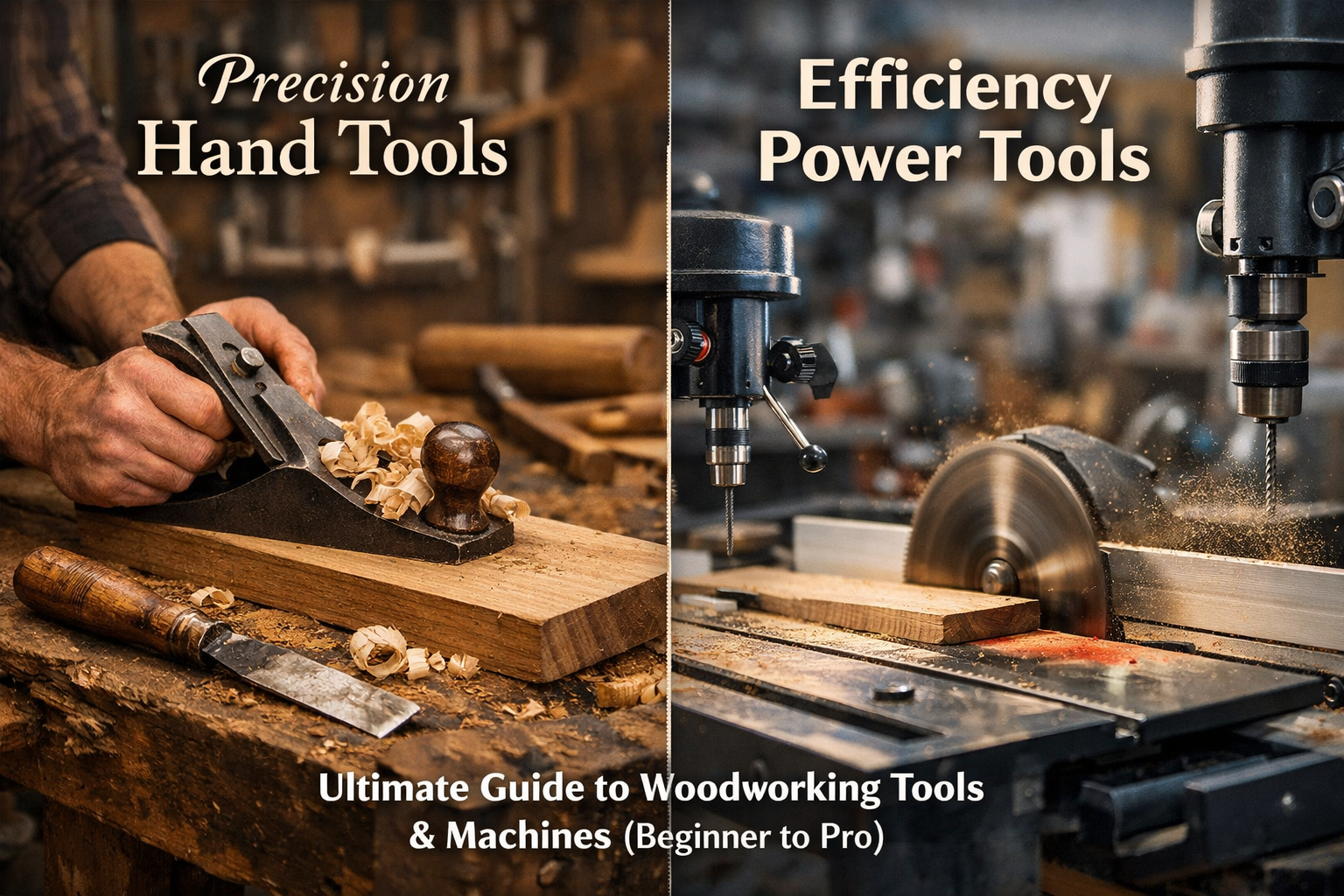
Choose Hand Tools if: You prioritize precision, enjoy a slower, more deliberate process, work in a small space, or need to minimize noise and dust. They are also excellent for learning fundamental woodworking principles.
Choose Power Tools if: You need speed, efficiency, are working with large stock, or require consistent, repeatable cuts for production. They are ideal for breaking down rough lumber and shaping components quickly.
Essential Woodworking Tools for Beginners: Building Your Foundation
For aspiring woodworkers, selecting the right beginner tools is crucial for safety, learning proper techniques, and avoiding frustration. Start with versatile tools that can accomplish multiple tasks and grow with your skills.
Key Hand Tools for Novices
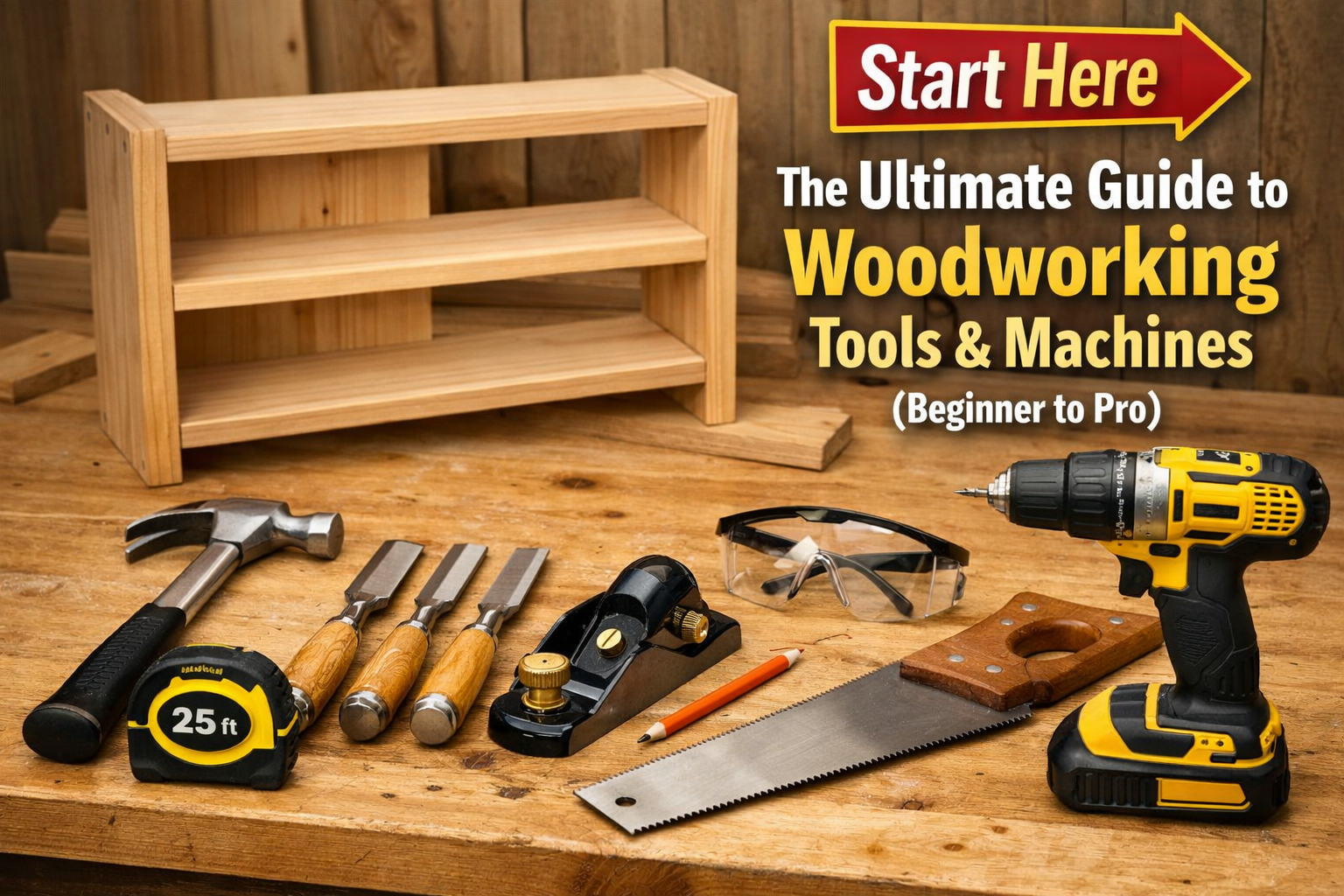
A core set of hand tools will allow you to perform basic measuring, marking, cutting, and shaping operations.
- Measuring & Marking:
- Tape Measure: An indispensable tool for accurate linear measurements. Choose one with clear markings and a sturdy hook.
- Combination Square: Used for marking square lines, measuring depth, and checking angles. Look for a metal body for durability.
- Marking Gauge: Essential for marking lines parallel to an edge, particularly useful for joinery layout.
- Pencil: A good old carpenter’s pencil for visible marks.
- Cutting & Shaping:
- Hand Saw: A quality crosscut hand saw for general purpose cutting of boards to length. For more precise cuts, consider a Japanese pull saw, which cuts on the pull stroke, offering excellent control for beginners. Learn more in our Beginner’s Guide to Japanese Hand Saws.
- Chisels: A basic set of sharp chisels (e.g., 1/4″, 1/2″, 3/4″, 1″) is vital for cleaning out joints, paring, and shaping. Sharpening your chisels is paramount for effective use.
- Block Plane: A small, versatile hand plane excellent for chamfering edges, trimming end grain, and small cleanup tasks.
- Assembly & Fastening:
- Clamps: A variety of clamps (bar clamps, F-clamps, spring clamps) are non-negotiable for holding workpieces together during glue-ups and while cutting. Aim for at least 4-6 clamps of varying sizes.
- Claw Hammer: For driving nails, if you’re not solely focused on joinery, and for prying.
- Screwdrivers: Both Phillips and flathead screwdrivers for various fastening needs. Consider a multi-bit driver.
- Safety:
- Safety Glasses: Protect your eyes from flying debris. Always wear them.
- Hearing Protection: Muffs or earplugs are essential when using any power tools.
- Dust Mask/Respirator: Crucial for protecting your lungs from wood dust.

Foundational Power Tools for Beginners
Once comfortable with hand tools, adding a few power tools will greatly expand your capabilities.
- Cordless Drill/Driver: This is arguably the most versatile power tool for a beginner. It’s used for drilling pilot holes, driving screws, and light sanding with attachments. Choose a reputable brand with at least two batteries.
- Orbital Sander: Essential for achieving smooth surfaces. A random orbital sander is ideal as it minimizes swirl marks.
- Jigsaw: A versatile tool for cutting curves, intricate shapes, and internal cuts. It’s a great entry-level tool for non-linear cuts.
Common Mistake for Beginners: Overspending on too many specialized tools too early. Focus on a few high-quality, versatile tools and master them before expanding your collection. Start with basic projects like a simple wooden bookshelf to determine which tools you genuinely need.
Advanced Woodworking Tools & Machines for Professionals
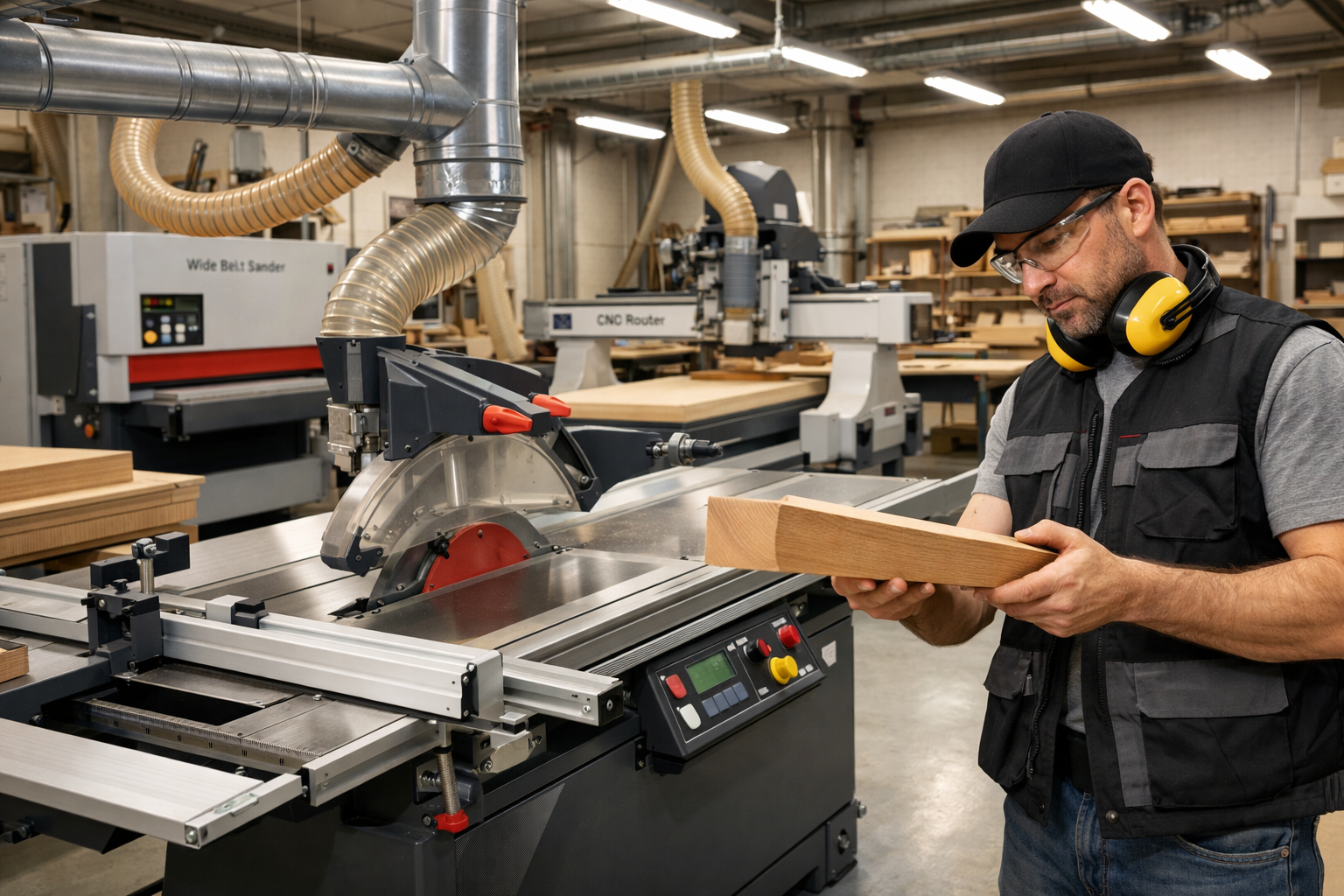
The professional workshop requires a significant investment in specialized, heavy-duty machinery to handle larger stock, achieve extreme precision, and increase production efficiency. This includes tools for milling, shaping, joining, and finishing. This Ultimate Guide to Woodworking Tools & Machines (Beginner to Pro) showcases the progression from basic to advanced.
Precision Cutting and Milling
- Table Saw: The cornerstone of most professional shops, used for ripping (cutting along the grain), crosscutting (cutting across the grain), dadoes, and rabbets. Invest in a high-quality cabinet saw for stability, power, and precision. We have several articles dedicated to table saws, including guides on specific models like the Harvey Table Saw Reviews.
- Jointer: Essential for creating one perfectly flat face and one perfectly square edge on rough lumber. This is the first step in dimensioning wood accurately.
- Planer (Thickness Planer): Used to mill the second face parallel to the first, and the second edge parallel to the first, bringing lumber to a consistent thickness.
- Bandsaw: Highly versatile for resawing lumber, cutting curves, and preparing irregular shapes. A large bandsaw can save significant time and material.
- Panel Saw: For shops dealing with large sheets of plywood or MDF, a panel saw offers precise, efficient cutting of full sheets.

Shaping, Routing, and Joinery
- Router Table: While a handheld router is versatile, mounting it in a router table transforms it into a precision shaping machine for edges, dados, rabbets, and raised panels. Understanding router bits is key.
- Stationary Belt/Disc Sander: For aggressive material removal and shaping, offering more power and stability than handheld sanders.
- Mortiser (Hollow Chisel Mortiser): Dedicated machine for cutting square or rectangular mortises, crucial for strong mortise and tenon joints in fine furniture.
- Domino Joiner (or similar system): A highly efficient tool for creating strong, fast, and repeatable mortise and tenon-style joints using loose tenons.
- CNC Router: For high-precision, repeatable cuts, intricate carvings, and rapid prototyping. A beginner’s guide to CNC routers can help you get started.
Finishing and Specialty Tools
- Dust Collection System: Crucial for maintaining a safe and clean professional shop environment, protecting both health and machinery. A mobile dust collection cart can be a good starting point.
- Wide Belt Sander: For efficiently sanding large panels and doors to a perfectly flat, smooth finish.
- Spray Finishing Equipment: For applying professional-grade finishes, such as lacquers, varnishes, or paints, quickly and evenly.
- Lathe: For turning spindles, bowls, and other round forms. Explore our Ultimate Guide to Wood Lathe Turning if you’re interested in this specialized craft.
Decision Rule: Invest in professional-grade machines when your projects consistently demand higher precision, greater volume, or specific capabilities that hand tools or entry-level power tools cannot reliably provide. Consider the long-term return on investment (ROI) in terms of time saved and quality improvement.
Buying Guide: Selecting Woodworking Tools (Budget vs. Premium)
Navigating the market for woodworking tools involves balancing your budget with the quality, durability, and features you need. This buying guide in our Ultimate Guide to Woodworking Tools & Machines (Beginner to Pro) helps you make informed decisions, whether you’re just starting or upgrading your workshop in 2026.
Understanding the Trade-offs
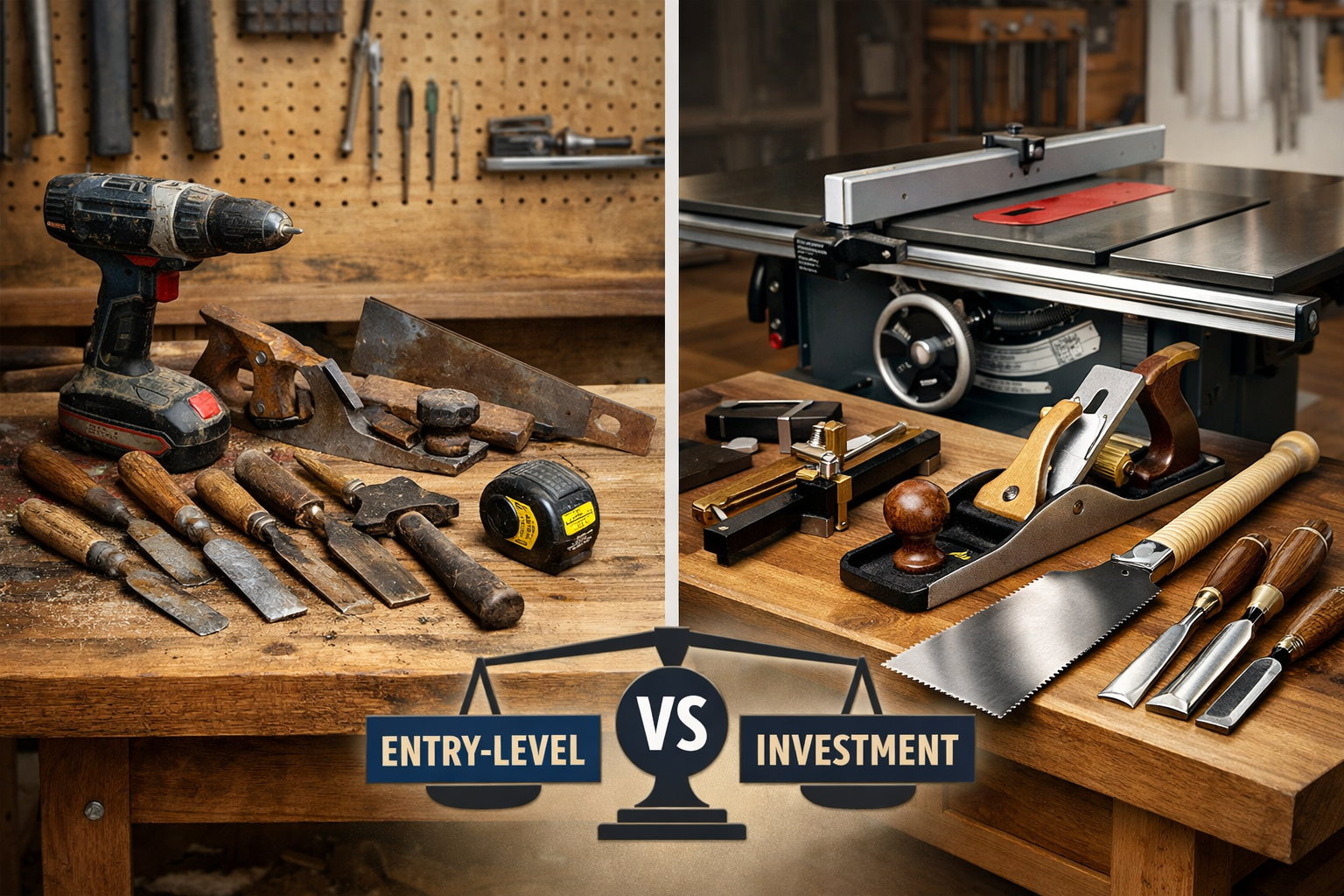
- Budget Tools:
- Pros: Lower initial cost, accessible for beginners, good for occasional use or to test interest in a new technique.
- Cons: Often less precise, shorter lifespan, may require more frequent maintenance or calibration, potentially less powerful motors, can lead to frustration with inconsistent results.
- When to choose: If you’re just starting out and unsure of your long-term commitment, for tools you’ll use very infrequently, or for specific tasks where extreme precision isn’t critical (e.g., rough breakdown).
- Mid-Range Tools:
- Pros: Good balance of quality and price, decent performance and durability, often include useful features found in premium models, suitable for serious hobbyists.
- Cons: Not always built for continuous heavy-duty use, may lack some advanced features or robustness of professional tools.
- When to choose: For hobbyists who use tools regularly, those looking for a step up from entry-level, or when you plan to keep a tool for many years.
- Premium Tools:
- Pros: Highest precision, superior durability and longevity, powerful motors, advanced features, ergonomic designs, often come with better warranties and customer support, built for continuous professional use.
- Cons: Significant initial investment.
- When to choose: For professional woodworkers, serious enthusiasts who demand the best performance and reliability, or for foundational machines like a table saw that see constant, critical use.

Key Factors to Consider When Buying
- Project Type and Frequency: If you build small projects once a month, your needs differ vastly from someone building custom furniture daily.
- Available Space: Large stationary machines require dedicated space. Consider smaller, portable versions or multi-function tools for compact workshops.
- Power Requirements: Ensure your workshop’s electrical system can handle the power demands of your machines. Some heavy-duty tools require 220V circuits.
- Dust Collection: Plan for how you will manage sawdust. Many machines offer dust ports, but a dedicated system is crucial for health and cleanliness.
- Safety Features: Look for robust guards, emergency stops, and clear operating instructions.
- Brand Reputation & Reviews: Research reputable brands known for quality and customer service. Read independent reviews to gauge real-world performance.
- Resale Value: Higher quality tools tend to retain their value better if you decide to upgrade or sell them later.
Common Mistake: Buying the cheapest option simply to save money. Often, a slightly higher investment in a mid-range tool provides significantly better performance, safety, and longevity, making it more cost-effective in the long run.
Maintenance Tips for Woodworking Tools & Machines (Beginner to Pro)
Proper maintenance is not just about extending the life of your tools; it’s about ensuring safety, maintaining precision, and achieving consistent results. Neglecting maintenance can lead to poor performance, inaccurate cuts, and even tool failure. This section of the Ultimate Guide to Woodworking Tools & Machines (Beginner to Pro) offers practical advice.
General Maintenance Practices
- Clean After Every Use:
- Dust Removal: Sawdust and resin buildup can hinder performance. Use a shop vac, compressed air (with caution), or a brush to remove debris from surfaces, motors, and moving parts.
- Resin Removal: For blades and bits, use a specialized resin cleaner. Build-up increases friction, dulls edges, and can burn wood.
- Sharpen Regularly:
- Dull blades and bits are dangerous and lead to poor cuts, tear-out, and overheating.
- Learn how to sharpen chisels, planes, and hand saws. For power tool blades, consider professional sharpening services or investing in a dedicated sharpening jig. Our guide on sharpening chisels and planes provides detailed steps.
- Lubricate Moving Parts:
- Apply appropriate lubricants (e.g., dry lubricant for sliding surfaces, light machine oil for bearings, grease for gears) to keep parts moving smoothly. Avoid over-lubricating, which can attract dust.
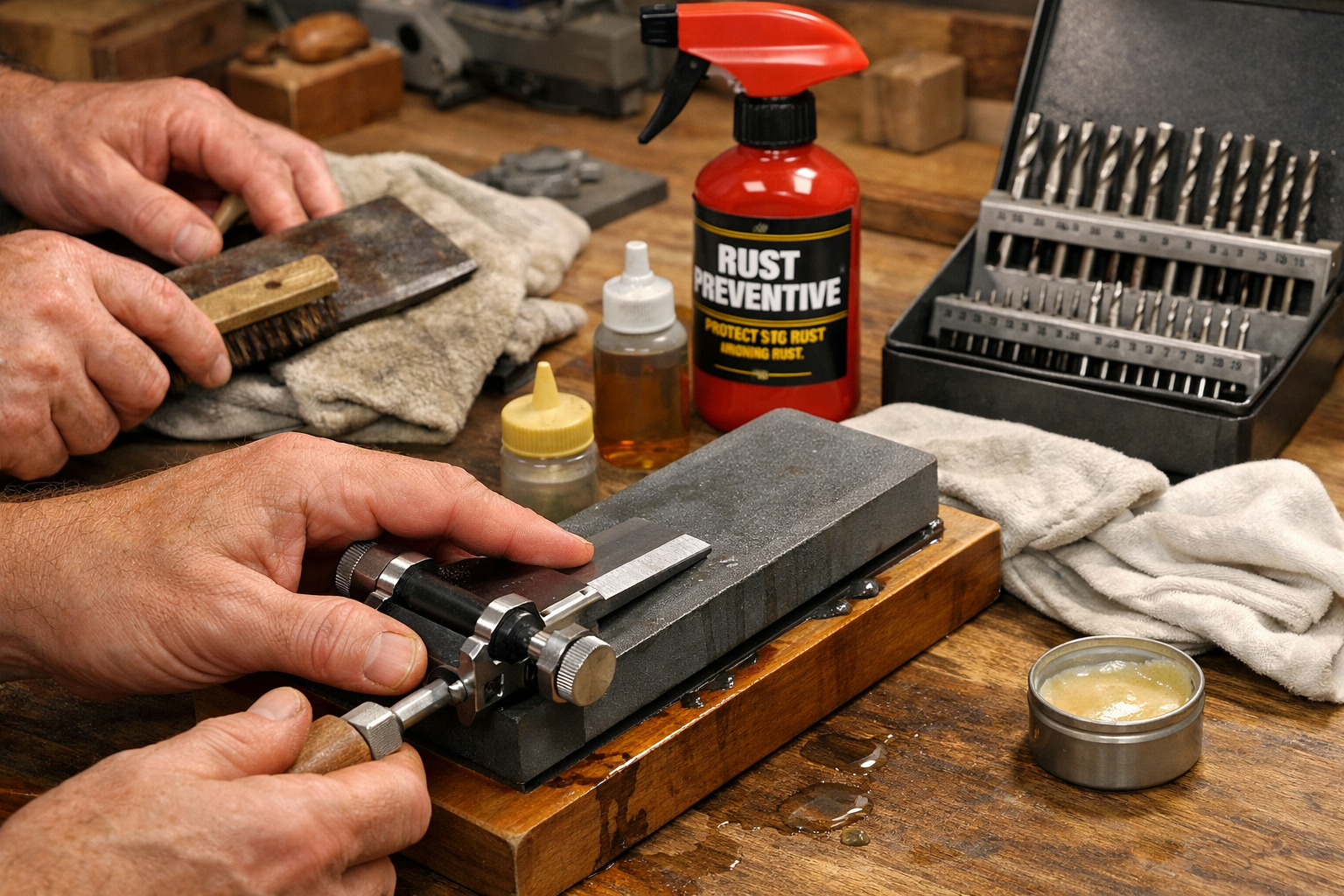
- Protect from Rust:
- Woodworking environments can be humid. Apply a rust preventative (e.g., paste wax, silicone-free rust inhibitor) to cast iron surfaces of table saws, jointers, and planers.
- Store hand tools in a dry environment, possibly with desiccants.
- If rust appears, address it promptly using fine abrasives or rust removers, as detailed in our guide on restoring vintage hand tools.

Specific Tool Maintenance
- Table Saw:
- Clean the table surface and apply paste wax for smooth gliding.
- Check blade alignment and fence squareness regularly.
- Inspect drive belts for wear.
- Router:
- Clean collets frequently to ensure a secure grip on bits.
- Inspect router bits for dullness or damage.
- Clean out the motor vents to prevent overheating.
- Drill Press:
- Keep the spindle clean and free of rust.
- Ensure the chuck grips bits securely and is free of wobble.
- Hand Planes:
- Keep the sole clean and flat.
- Sharpen the blade to a razor edge.
- Adjust the cap iron and frog for optimal performance.
Edge Case: If a tool is performing inconsistently or making unusual noises, stop using it immediately. Consult the owner’s manual for troubleshooting steps or seek professional repair. Continuing to operate a malfunctioning tool can lead to further damage or injury.
Conclusion
Embarking on the journey of woodworking, whether as a beginner or an aspiring professional, is incredibly rewarding. This Ultimate Guide to Woodworking Tools & Machines (Beginner to Pro) has laid out the landscape of essential equipment, from fundamental hand tools that foster precision and connection to the material, to powerful machinery that drives efficiency and expands creative possibilities.
Remember that woodworking is a skill that evolves with practice and the right tools. Start smart by investing in a core set of versatile, high-quality tools that align with your initial projects and budget. As your skills grow and your projects become more ambitious, you can gradually expand your arsenal, always prioritizing safety and consistent maintenance. The quality of your work, your enjoyment, and your longevity in this craft depend heavily on the tools you choose and how well you care for them. Embrace the learning process, build your confidence project by project, and let your tools be an extension of your creative vision. Happy woodworking in 2026!
FAQ
Q: What is the most important tool for a beginner woodworker?
A: A tape measure is arguably the most important, as accurate measurement is foundational to all woodworking projects. After that, a cordless drill/driver and a good quality hand saw are excellent first power and hand tools respectively.
Q: Should I buy hand tools or power tools first?
A: For beginners, a balanced approach is best. Start with essential hand tools to learn fundamental skills like marking, cutting, and joinery, then add versatile power tools like a drill/driver and orbital sander for efficiency.
Q: How do I know if I need a professional-grade machine?
A: You likely need a professional-grade machine if your projects require extreme precision, involve large material dimensions, or if you are running a business where speed, consistency, and heavy-duty use are daily requirements.
Q: What safety gear is absolutely essential?
A: At a minimum, always wear safety glasses and hearing protection when using power tools. A dust mask or respirator is also critical to protect against wood dust, especially with sanding or cutting operations.
Q: How often should I sharpen my woodworking chisels and plane blades?
A: Sharpen your chisels and plane blades whenever you notice them struggling to cut cleanly, tearing wood fibers, or requiring excessive force. For active users, this could be every few hours of use or before each new project.
Q: Can I get by with just hand tools for fine woodworking?
A: Absolutely. Many traditional and fine woodworkers prefer working exclusively with hand tools for their precision, control, and the satisfaction of craftsmanship. It often requires more skill and time but yields exquisite results.
Q: What is the benefit of a jointer and planer combo?
A: A jointer and planer combo allows you to efficiently mill rough lumber into perfectly flat, square, and uniformly thick pieces, which is essential for accurate joinery and stable furniture construction.
Q: Is a dust collection system truly necessary for a small home workshop?
A: Yes, even in a small home workshop, a dust collection system is highly recommended. Fine wood dust is a health hazard and can clog tools, reducing their lifespan and performance.
Q: What’s the best way to prevent rust on cast iron tool surfaces?
A: After cleaning the cast iron surface thoroughly, apply a thin coat of paste wax or a specialized rust preventative. Reapply periodically, especially in humid conditions.
Q: How can I decide which specific brand of tool to buy?
A: Research is key. Read reviews from reputable woodworking magazines or websites, watch comparison videos, and consult forums. Consider the brand’s reputation for quality, customer service, and warranty.