
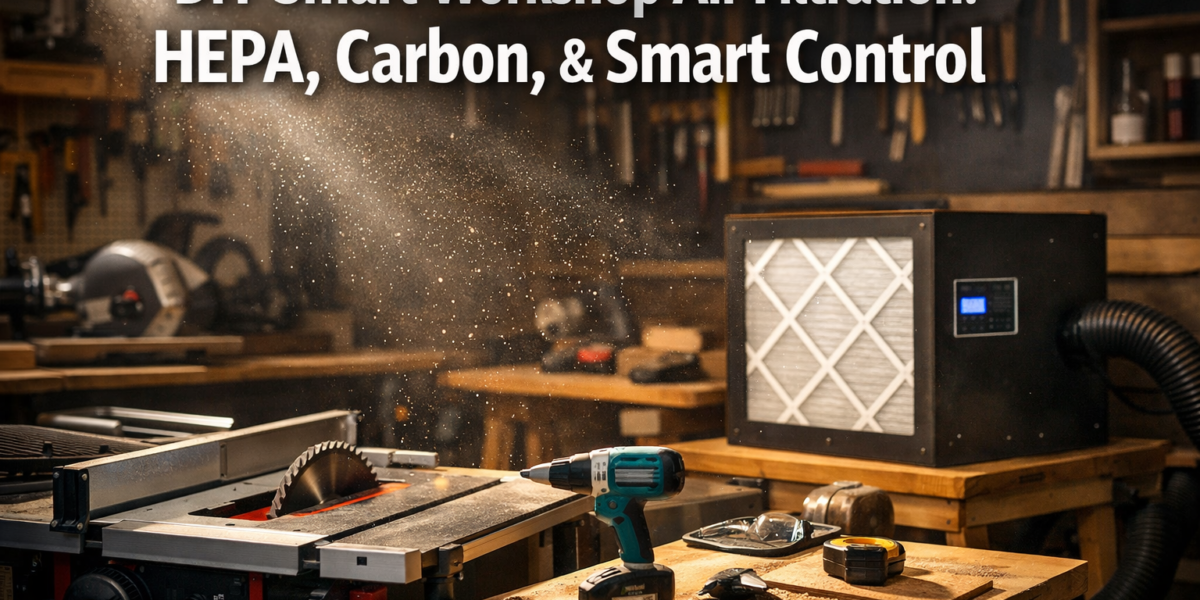
Woodworkers inhale an estimated 4.7 million particles per cubic foot of air during typical operations, a shocking figure that underscores the profound health risks lurking unseen in workshop dust and chemical fumes. Traditional dust collection often falls short, addressing only visible debris while microscopic particles and volatile organic compounds (VOCs) remain airborne, posing long-term respiratory and neurological threats. This article delves into building advanced DIY Smart Workshop Air Filtration Systems: Integrating HEPA and Activated Carbon for Superior Dust and VOC Removal, empowering makers to create a truly clean and safe environment for their craft.
Key Takeaways
- Standard dust collection systems are insufficient for ultra-fine dust (PM2.5) and VOCs.
- Integrating HEPA and activated carbon filters is crucial for comprehensive air purification.
- Smart features like air quality sensors and automated controls enhance efficiency and safety.
- Proper filter selection, airflow design, and system placement are vital for optimal performance.
- A DIY approach offers cost savings and customization for unique workshop needs in 2026.
The Unseen Threats: Why Basic Dust Collection Isn’t Enough for Workshop Air Quality
While a shop vac or a basic dust collector can handle wood chips and larger sawdust, they often fail to capture the truly dangerous particles – those measuring 2.5 micrometers (PM2.5) or less. These tiny particles, invisible to the naked eye, can penetrate deep into the lungs, leading to serious respiratory issues over time. Furthermore, woodworking processes involve various glues, finishes, solvents, and composite materials that release Volatile Organic Compounds (VOCs) into the air. These chemical fumes can cause headaches, dizziness, and have long-term health implications. Relying solely on a simple bag filter means you’re still breathing in a hazardous cocktail.
A truly effective workshop air purification strategy in 2026 must go beyond surface-level cleaning. It demands a multi-stage approach, combining mechanical filtration for particulates with chemical adsorption for gases and odors. This is where the synergy of HEPA (High-Efficiency Particulate Air) and activated carbon filters, integrated into a smart system, becomes indispensable. Think of it not just as cleaning the air, but purifying it, creating a sanctuary where you can focus on your craft without compromising your health.
Understanding the Dangers: Dust and VOCs
- Fine Dust (PM2.5 & PM10): These microscopic particles are generated from sanding, sawing, and routing. PM2.5 can enter the bloodstream, causing long-term cardiovascular and respiratory diseases. PM10 irritates the upper respiratory tract.
- Volatile Organic Compounds (VOCs): Emitted from paints, varnishes, glues, epoxies, and even certain types of wood. VOCs contribute to poor indoor air quality, causing symptoms from eye and throat irritation to fatigue and, in severe cases, neurological damage or cancer.
To adequately protect yourself, a multi-layered defense is required, and a DIY Smart Workshop Air Filtration System: Integrating HEPA and Activated Carbon for Superior Dust and VOC Removal is the cornerstone of such a defense.
The Power of Multi-Stage Filtration: HEPA and Activated Carbon
A basic workshop air filter might trap large dust, but it won’t touch VOCs or the smallest dust particles. This is where a strategic combination of filters comes into play:
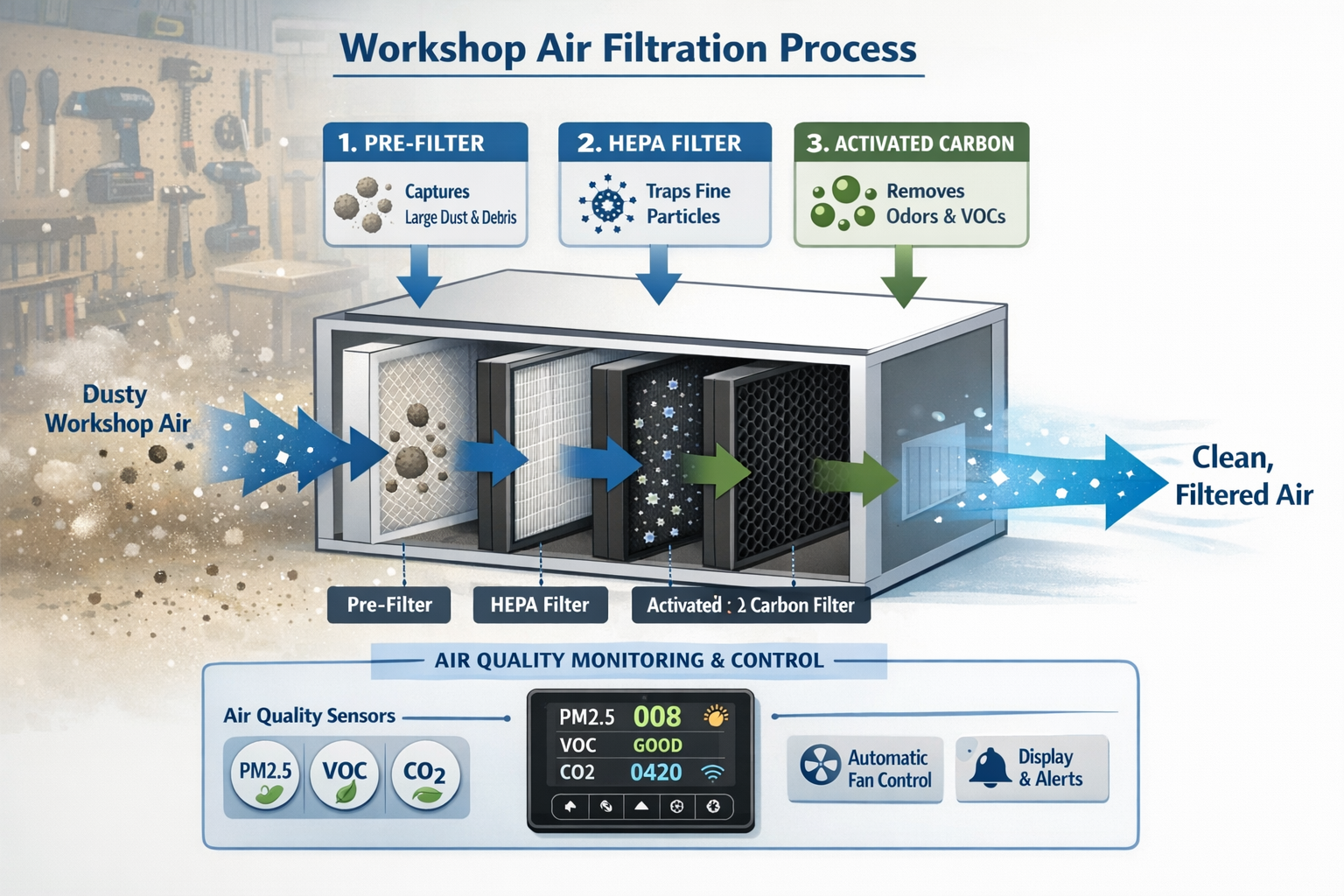
- Pre-Filters (MERV 8-13): The first line of defense, these filters capture larger particles (like visible sawdust and wood chips), protecting the more expensive HEPA and carbon filters from premature clogging. This extends the lifespan and efficiency of the subsequent stages.
- HEPA Filters: The gold standard for particulate removal, HEPA filters are designed to capture 99.97% of airborne particles 0.3 micrometers in diameter. This includes fine wood dust, pollen, mold spores, and other allergens. This is critical for any woodworker’s health.
- Activated Carbon Filters: These filters utilize a process called adsorption to trap gas molecules, odors, and VOCs. The porous structure of activated carbon provides an immense surface area for these contaminants to bind to, effectively removing chemical fumes from the air. This is especially important when working with finishes or composite materials.
By integrating these stages, your DIY Smart Workshop Air Filtration Systems: Integrating HEPA and Activated Carbon for Superior Dust and VOC Removal ensures both particulate and chemical hazards are addressed. For those looking to manage dust at the source, consider building a mobile dust collection cart to complement your ambient air filtration.
Designing Your DIY Smart Workshop Air Filtration Systems: Integrating HEPA and Activated Carbon for Superior Dust and VOC Removal
Building your own smart air filtration system allows for customization, cost savings, and the satisfaction of knowing your workspace is truly protected. The core principle involves housing a powerful fan, a series of filters, and smart controls within a robust enclosure.
Components of a DIY Smart Air Filtration System
Here’s a breakdown of the essential components:
- Enclosure: Typically a sturdy wooden box or cabinet, designed to hold the fan and filters securely while minimizing air leaks. It should allow for easy access for filter changes.
- Fan/Blower: The heart of the system. A powerful, quiet centrifugal fan (often referred to as an “inline duct fan” or “squirrel cage blower”) is ideal. The fan’s CFM (Cubic Feet per Minute) rating should be sufficient to exchange the air in your workshop several times per hour. A good rule of thumb is 6-8 air changes per hour (ACH). To calculate required CFM:
Workshop Volume (L x W x H in feet) x ACH / 60 minutes. - Pre-Filter Slots: Designed to accept standard furnace filters (e.g., 20×20 inches, MERV 8-13). Multiple slots can be used to increase surface area and airflow.
- HEPA Filter Housing: A secure, airtight section for the HEPA filter. These are often deep filters, so ensure adequate space.
- Activated Carbon Filter Housing: Similar to HEPA, but often uses granular carbon held in a reusable mesh tray or a replaceable pre-made carbon filter.
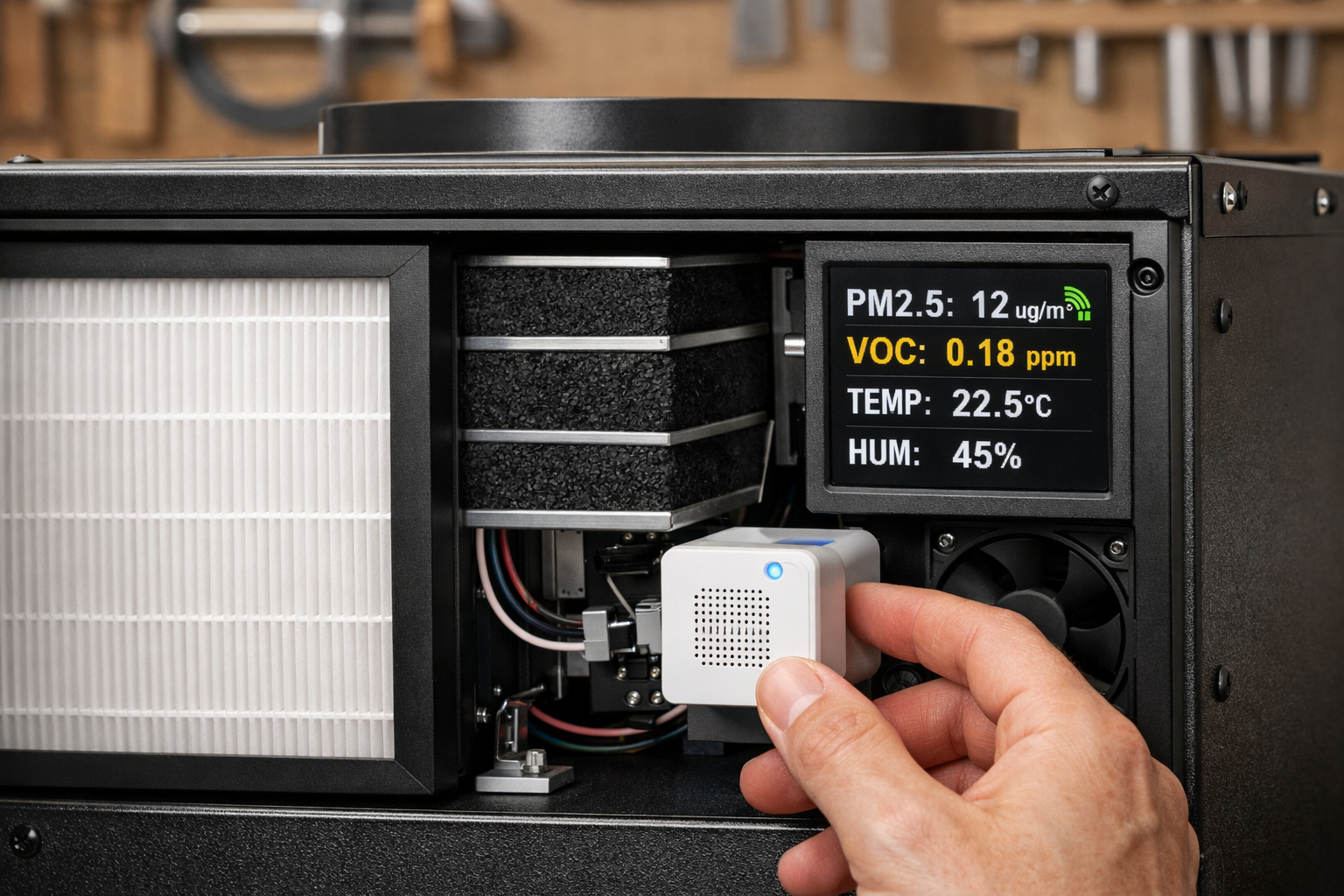
- Air Quality Sensors: The “smart” component. These typically measure PM2.5, PM10, and VOCs. Popular options include modules from Plantower or BME680, often integrated with a microcontroller.
- Microcontroller (e.g., ESP32, Raspberry Pi Zero): The brains of the operation. It reads data from the sensors, processes it, and controls the fan speed based on programmed thresholds. It can also connect to Wi-Fi for remote monitoring and control.
- Fan Speed Controller (e.g., Variable Frequency Drive or PWM fan controller): Allows the microcontroller to adjust the fan’s power output dynamically, saving energy and reducing noise when air quality is good.
- Display (Optional): A small LCD or OLED screen can show real-time air quality readings and system status.
- Power Supply and Wiring: Appropriate power supplies for the fan, microcontroller, and sensors, along with safe wiring practices.
| Component | Function | Key Considerations |
|---|---|---|
| Enclosure | Houses components, directs airflow | Airtight, durable, accessible for filter changes |
| Fan/Blower | Moves air through filters | CFM rating, noise level, energy efficiency |
| Pre-Filter | Captures large particles, protects other filters | MERV rating (8-13), size, ease of replacement |
| HEPA Filter | Removes fine particulates (0.3 microns and larger) | True HEPA (99.97% @ 0.3µm), size, replacement cost |
| Activated Carbon Filter | Adsorbs VOCs, odors, chemical fumes | Granular carbon vs. pleated, amount of carbon, lifespan |
| Air Quality Sensors | Detects PM2.5, VOCs | Accuracy, connectivity (I2C, UART) |
| Microcontroller | Processes data, controls fan, enables smart features | Processing power, Wi-Fi capability, ease of programming |
Building Considerations and Best Practices
- Airtightness is paramount: Any gaps in the enclosure will allow unfiltered air to bypass the system, severely reducing efficiency. Use gaskets and sealant liberally.
- Filter Gaps: Ensure filters fit snugly in their slots with no bypass. DIY gasket material can be effective.
- Airflow Path: Design the enclosure so air flows logically from the intake through the pre-filter, then HEPA, then activated carbon, and finally out through the fan. Order matters!
- Placement: Position your system to maximize its effectiveness. Often, placing it centrally or near dust-generating tools is best. Consider mounting it overhead or designing a mobile unit. Check out our guide on building a portable workbench which could incorporate a smaller filtration unit.
- Noise Reduction: Powerful fans can be noisy. Consider lining the enclosure with sound-dampening material or using a fan with a lower dBA rating.
- Safety: Always prioritize electrical safety. Use appropriately rated wiring, switches, and fuses. If you’re unsure, consult an electrician.
Smart Features and Advanced Integration
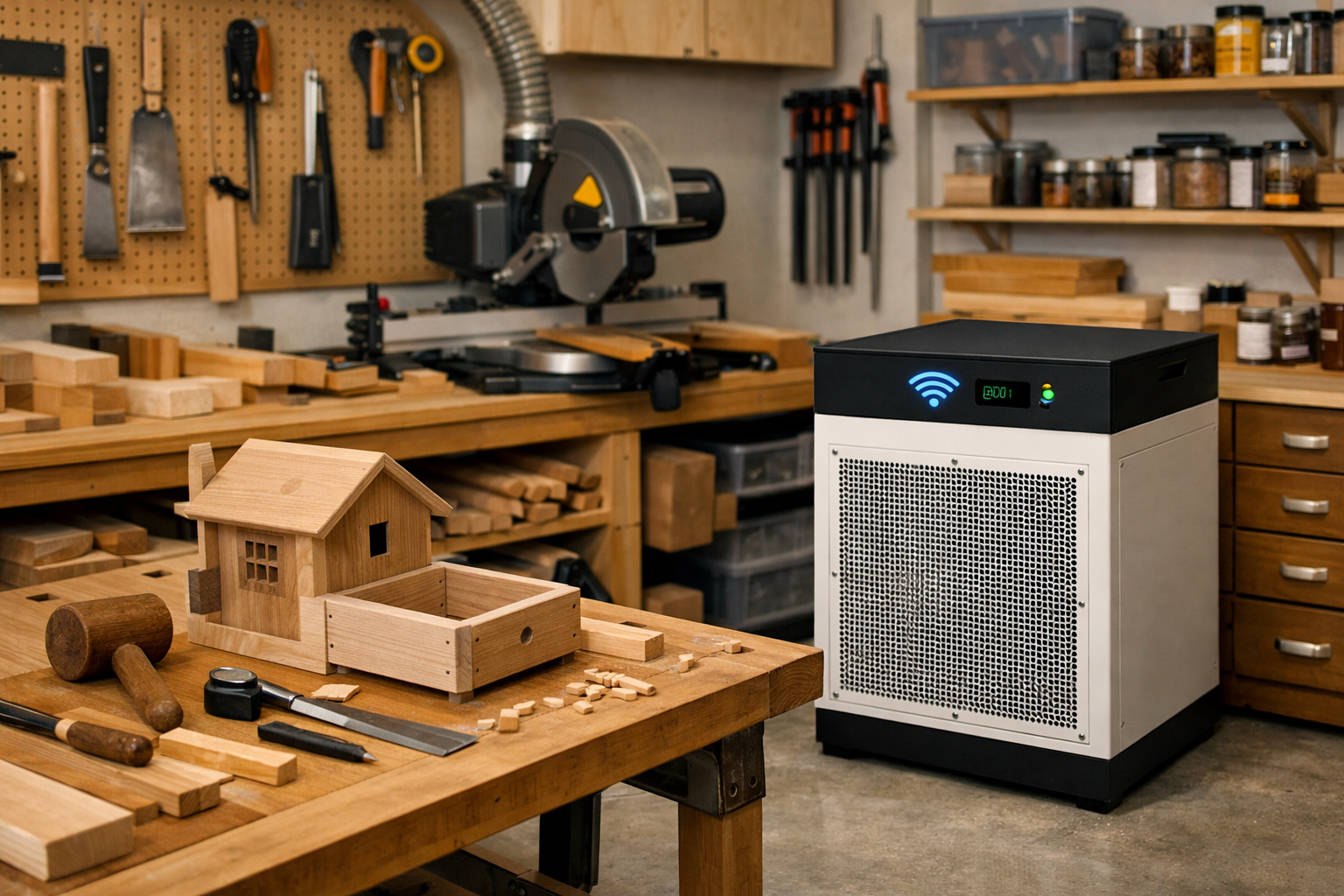
The “smart” aspect of your DIY Smart Workshop Air Filtration Systems: Integrating HEPA and Activated Carbon for Superior Dust and VOC Removal elevates it beyond a simple filter box. By leveraging sensors and automation, you create a system that intelligently responds to your workshop’s needs.
Implementing Air Quality Monitoring and Automation
- Real-time Feedback: Air quality sensors constantly monitor particulate matter (PM2.5, PM10) and VOC levels. This data can be displayed locally on an LCD screen or sent to your smartphone via Wi-Fi.
- Automated Fan Control: The microcontroller can be programmed to automatically increase fan speed when air quality deteriorates (e.g., when a certain PM2.5 or VOC threshold is exceeded) and decrease it when the air is clean. This saves energy and reduces noise.
- Scheduled Operation: Program the system to run at specific times, such as for an hour after you finish woodworking, to clear residual dust and fumes.
- Remote Monitoring and Control: With Wi-Fi integration (e.g., using ESPHome with Home Assistant or similar IoT platforms), you can check air quality from anywhere and control the fan remotely. This is particularly useful if you forget to turn it on or off.
- Filter Life Monitoring: While true filter life monitoring is complex, the system can track fan runtime and alert you when it’s time to check or replace filters based on estimated lifespan. You could also integrate a differential pressure sensor to measure filter loading, though this adds complexity.
Software and Connectivity
- Microcontroller Programming: Platforms like Arduino IDE (for ESP32/ESP8266) or Python (for Raspberry Pi) are commonly used. Libraries for specific sensors and Wi-Fi connectivity make programming manageable for DIY enthusiasts.
- IoT Integration: For advanced users, integrating with platforms like Home Assistant allows for seamless control alongside other smart home devices. This enables rich dashboards, historical data logging, and advanced automation rules.
- Alerts and Notifications: Configure your system to send push notifications to your phone if air quality reaches critical levels or if filters need attention.
Enhancing Existing Systems
Even if you have an existing air filtration unit, you can often add smart capabilities. A stand-alone air quality monitor communicating wirelessly with a smart plug that controls your existing unit’s power can be a simpler entry point into smart automation. For those already utilizing advanced tools, consider how this integrates with your overall workshop setup, perhaps alongside a Craftsman Home ‘n Shop Vac for localized cleanup.
The journey to superior air quality is an investment in your health and the longevity of your craft. By building a DIY Smart Workshop Air Filtration Systems: Integrating HEPA and Activated Carbon for Superior Dust and VOC Removal, you’re not just assembling components; you’re engineering a safer, smarter, and more enjoyable woodworking experience for 2026 and beyond.
Conclusion
The pursuit of craftsmanship in 2026 should never come at the expense of health. By understanding the limitations of basic dust collection and embracing the advanced capabilities of DIY Smart Workshop Air Filtration Systems: Integrating HEPA and Activated Carbon for Superior Dust and VOC Removal, woodworkers can create a truly healthy and productive environment. This guide has laid out the critical components, design considerations, and smart technologies necessary to build a comprehensive filtration system that tackles both invisible dust and harmful VOCs.
Taking control of your workshop’s air quality is an empowering step. It’s an investment in your well-being, allowing you to breathe easier and focus more on the joy of creation. Whether you’re a seasoned woodworker or just starting, the knowledge and tools exist today to build a sophisticated, custom air purification system tailored to your specific needs. Start planning your build, gather your components, and take the definitive step towards a cleaner, safer, and smarter workshop. Your lungs will thank you.
Actionable Next Steps
- Assess Your Workshop: Calculate your workshop’s volume to determine the required CFM for your filtration system.
- Research Components: Identify suitable fans, HEPA filters, activated carbon filters, and air quality sensors based on your budget and needs.
- Design Your Enclosure: Sketch out a design that accommodates your chosen components, ensures airtightness, and allows for easy filter maintenance.
- Plan Smart Integration: Decide on the microcontroller and IoT platform you’ll use for sensor integration and automated control.
- Build and Test: Carefully construct your system, paying close attention to electrical safety and filter sealing. Test its performance with your chosen air quality sensors.