

The subtle artistry of woodworking often lies not just in precise joinery or flawless finishing, but in the deliberate harmony of the raw materials themselves. Many woodworkers, even experienced ones, overlook the profound impact of Wood Grain Matching and Selection: Choosing Complementary Lumber for Visible Natural Finishes. It’s a skill that elevates a project from merely functional to genuinely artistic, transforming ordinary wood into a captivating visual narrative. In 2026, as appreciation for natural aesthetics continues to grow, mastering this aspect is more crucial than ever for creating pieces that truly resonate.
Key Takeaways
- Grain Direction is Paramount: Aligning grain direction for structural integrity and visual flow is fundamental for any project.
- Aesthetics Drive Selection: Prioritize visual characteristics like color, figure, and pattern consistency for visible natural finishes.
- Understand Wood Cuts: Different milling techniques (plain-sawn, quarter-sawn, rift-sawn) yield distinct grain patterns.
- Contrast vs. Harmony: Decide whether to achieve visual interest through contrasting grains or a seamless, harmonious blend.
- Finishing Enhances Grain: The chosen finish significantly impacts how the wood grain is perceived, from subtle enhancement to dramatic emphasis.
The Fundamentals of Wood Grain Matching and Selection: Choosing Complementary Lumber for Visible Natural Finishes
At its core, wood grain matching is the process of arranging individual pieces of lumber so their natural patterns create a visually pleasing, cohesive surface. This is particularly important when the wood’s natural beauty is intended to be the focal point, rather than being obscured by paint or opaque stains. The goal of Wood Grain Matching and Selection: Choosing Complementary Lumber for Visible Natural Finishes is to either blend the grain so seamlessly that it appears as one continuous piece or to intentionally contrast patterns to create compelling visual interest.
Understanding Wood Grain Types
Before diving into matching, it’s essential to understand what constitutes “grain” and how different factors influence its appearance.
- Growth Rings: These are the concentric circles visible on the end grain of a log, representing annual growth. Their prominence varies by species and growing conditions.
- Earlywood and Latewood: Within each growth ring, earlywood (springwood) is lighter and less dense, while latewood (summerwood) is darker and denser. This difference creates the visible grain pattern.
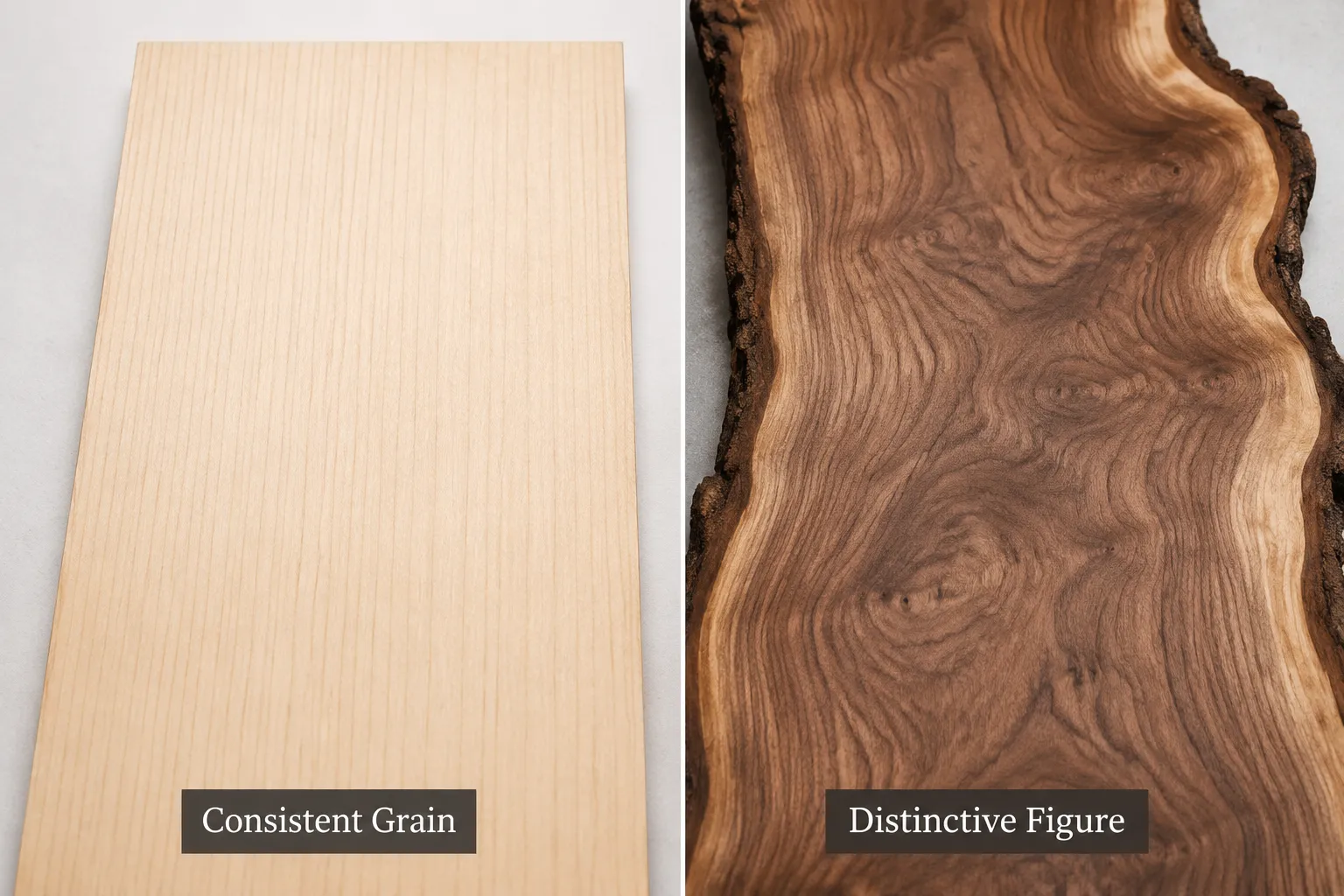
- Figure: This refers to the decorative patterns in the wood beyond the basic growth rings, such as curly, quilted, bird’s-eye, or crotch figure. These highly prized figures are often the result of unusual growth patterns.
- Grain Direction: This describes the alignment of the wood fibers relative to the length of the board. It’s critical for both aesthetics and structural stability.
Different cuts of lumber will present these features in distinct ways:
- Plain-sawn (or Flat-sawn): This is the most common and economical cut. It produces boards with a prominent cathedral or flame-like grain pattern on the face, as the cut is tangential to the growth rings. Plain-sawn boards are more prone to cupping and warping due to their cut.
- Quarter-sawn: Cut radially to the growth rings, quarter-sawn lumber exhibits a much straighter, more uniform grain pattern, often with prominent medullary rays (especially in oak), known as “ray fleck.” These boards are more stable and resist cupping, making them ideal for high-precision projects or when a subtle, linear grain is desired.
- Rift-sawn: A cut at an angle between 30 and 60 degrees to the growth rings, resulting in a very straight, linear grain pattern without the prominent ray fleck of quarter-sawn lumber. Rift-sawn is highly stable and expensive due to the waste produced.
When choosing lumber, consider how these cuts will interact. For instance, combining a plain-sawn panel with quarter-sawn rails might offer an interesting visual contrast, but requires careful thought about wood movement. You can learn more about selecting the right lumber for durability and aesthetics in our guide on Mastering the Art of Wood Selection: Choosing the Right Lumber for Your Projects, Durability, and Aesthetics.
Strategies for Effective Wood Grain Matching and Selection
Effective wood grain matching involves a systematic approach, whether you’re aiming for uniformity or intentional contrast. The objective of Wood Grain Matching and Selection: Choosing Complementary Lumber for Visible Natural Finishes is to enhance the overall aesthetic of your finished piece.
1. Plan Your Layout
Before making any cuts, lay out your rough lumber pieces exactly as they will appear in the final project. This allows you to visualize the grain flow and make adjustments.
- Consider Sequence: If using boards from the same tree or flitch (a portion of a log), keep them in sequence. Flipping adjacent boards end-for-end or edge-for-edge can create striking bookmatched or slipmatched patterns.
- Bookmatching: Two adjacent slices from the same log are opened up like a book, creating a symmetrical mirror image of the grain pattern. Ideal for tabletops, cabinet doors, and panels.
- Slipmatching: Boards are placed side-by-side in sequence without flipping, creating a repeating, but not mirrored, pattern. This creates a consistent visual flow.
- Assess the Whole Piece: Don’t just look at individual boards. Step back and view the entire assembly. Does the grain flow logically? Are there any jarring interruptions?
2. Prioritize Consistency vs. Contrast
Your design intent will dictate your matching strategy.
- For Seamless Integration (Consistency):
- Species and Cut: Stick to the same wood species and preferably the same cut (e.g., all quarter-sawn oak) for a uniform look.
- Color and Tone: Look for boards with similar heartwood/sapwood ratios and overall color consistency. Even within the same species, color can vary greatly.
- Grain Pattern: Aim for boards with similar patterns, straight, subtle, or uniform figure. Avoid mixing a highly figured piece with a plain one if consistency is the goal.
- For Deliberate Visual Interest (Contrast):
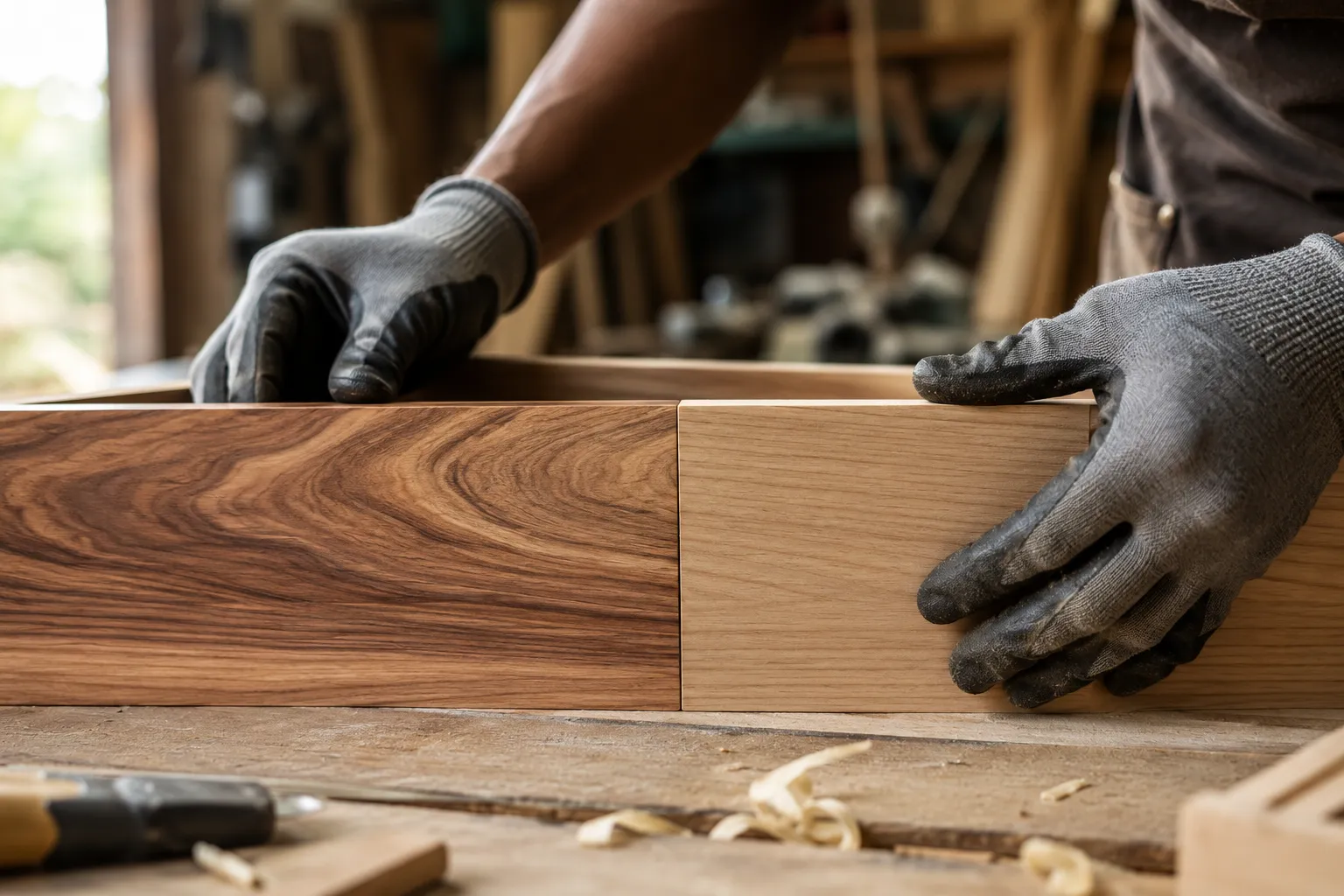
- Strategic Juxtaposition: Use contrasting grain patterns to highlight different sections of a piece. For example, a highly figured panel framed by straight-grained borders.
- Mixed Species: While more challenging, combining different wood species with complementary colors or contrasting grain patterns can be stunning. This requires careful consideration of how finishes will affect each wood. For tips on combining finishes, check out our article on Wood Finishing for Statement Pieces: Techniques to Preserve Natural.
3. Account for Wood Movement
Even the best grain match can be ruined by improper joinery that doesn’t account for wood movement. Wood expands and contracts primarily across its grain.
- Grain Direction and Stability: Aligning grain directions within an assembly is crucial not only for aesthetics but also for structural integrity. Boards whose grain runs parallel to each other will move similarly.
- Panel Construction: For wider panels, such as tabletops, gluing multiple narrower boards with alternating end-grain patterns (e.g., every other board’s growth rings facing up then down) helps equalize internal stresses and minimize cupping.
- Appropriate Joinery: Employ joinery techniques that allow for wood movement where necessary. Floating panels in frame-and-panel construction are a classic example.
Advanced Techniques and Finishing for Visible Natural Finishes
Beyond the basic principles, several advanced techniques can further refine your Wood Grain Matching and Selection: Choosing Complementary Lumber for Visible Natural Finishes. The choice of finish plays a pivotal role in revealing and enhancing the grain.
Fine-Tuning Your Selection
- Wetting the Wood: Temporarily wetting wood with mineral spirits or water can give you a preview of how the grain and color will appear once a finish is applied. This is particularly helpful for identifying hidden figure or color inconsistencies.
- Sanding and Surface Preparation: Impeccable sanding is critical for allowing the grain to truly shine. Any scratches or inconsistencies will become amplified by the finish. Progress through grits methodically.
- Considering Sapwood and Heartwood: Decide whether to embrace the natural color variation between sapwood (lighter outer wood) and heartwood (darker inner wood) or to trim it away for a more uniform look. Sometimes, a thin strip of sapwood can add a beautiful, natural accent.
The Role of Finishing in Highlighting Grain
The right finish doesn’t just protect the wood; it enhances its inherent beauty, bringing out the depth, color, and figure of the grain.
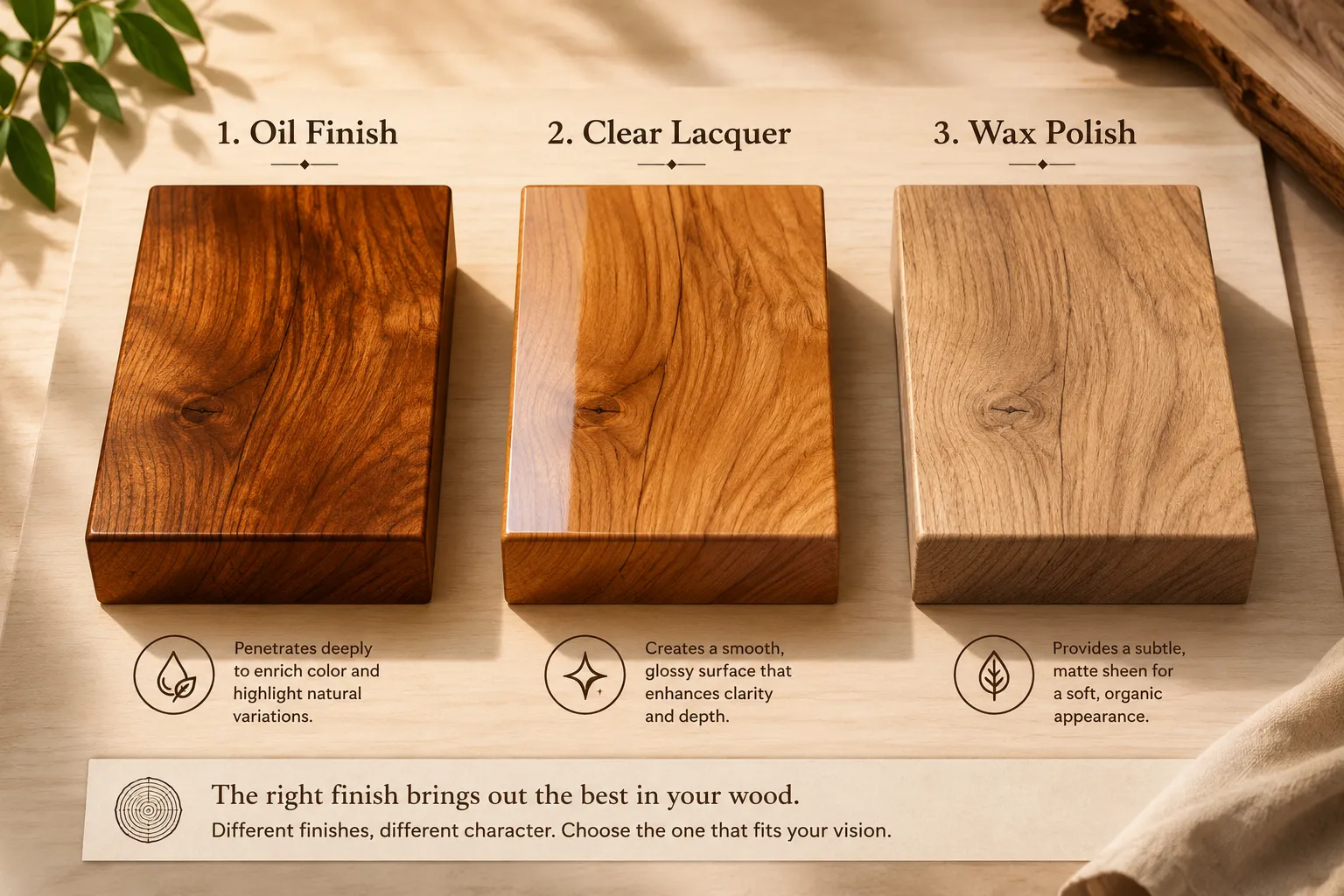
- Oil Finishes (e.g., Tung Oil, Linseed Oil): These penetrate the wood fibers, enriching the natural color and chatoyancy (the optical effect of a wood’s grain appearing to shift in depth as the angle of light or observation changes). Oil finishes offer a natural, hand-rubbed look and are excellent for highlighting figured woods. For eco-conscious makers, exploring Natural Wood Finishing Without Chemicals: Plant-Based Stains, Oils, can be very beneficial.
- Clear Lacquers and Polyurethanes: These create a protective film on the surface. While they don’t penetrate as deeply as oils, high-quality clear coats can provide excellent clarity and depth, making the grain appear vibrant. They offer varying sheen levels, from matte to high gloss, each affecting grain perception differently.
- Waxes: Often used over other finishes or on their own for a very subtle, natural sheen. Waxes provide a soft luster that enhances tactile feel and gently brings out the grain without dramatically altering its appearance.
- Stains: If a specific color shift is desired, transparent stains can be used, but choose them carefully. Opaque stains can obscure the grain, defeating the purpose of meticulous grain matching. Gel stains are often a good choice as they sit on the surface, allowing more grain to show through. Always test stains on scrap pieces of the same wood.
- Dyes: Dyes penetrate the wood more deeply and uniformly than stains, often resulting in richer, more vibrant colors that still allow the grain to be seen clearly. They are excellent for popping figure, especially on woods like curly maple.
When working with visible natural finishes, the aim is to let the wood speak for itself. The choice of finish should complement, not overpower, your careful Wood Grain Matching and Selection. For examples of how different finishes highlight texture and story, consider checking out articles on Finishing Reclaimed Wood for 2026: Polishes That Highlight Texture.
Common Challenges and Solutions in Grain Matching
Even with the best intentions, wood grain matching can present challenges.
- Limited Material: Sometimes, you simply don’t have enough lumber from the same source to achieve a perfect match.
- Solution: Focus on consistency in color and tone, even if grain patterns aren’t identical. Strategically place the most visually disruptive pieces in less prominent areas. Consider using contrasting trim or inlay to intentionally break up the surface in an aesthetically pleasing way.
- Unpredictable Wood Movement: Despite best efforts, wood can behave unexpectedly.
- Solution: Always over-engineer for wood movement in your joinery and design. Acclimate lumber in your workshop for an extended period before milling and assembly. Ensure your glue-ups are sound and evenly clamped. For more on this, see Understanding Wood Movement: Essential Joinery and Design Principles to Prevent Cracking and Warping.
- Different Species from One Project: Using multiple wood species in a single project creates unique matching considerations.
- Solution: Focus on harmonious contrast. Choose woods that complement each other in color, even if their grain patterns are different. Test finishes on all species simultaneously to ensure they react similarly and maintain the desired aesthetic.
Conclusion
Mastering Wood Grain Matching and Selection: Choosing Complementary Lumber for Visible Natural Finishes is a journey that elevates woodworking from a craft to an art form. By understanding the nuances of wood grain, thoughtfully planning your layouts, and selecting appropriate finishes, you can transform ordinary lumber into extraordinary pieces that showcase the unparalleled beauty of natural wood. In 2026, as craftsmanship continues to be highly valued, this skill is more relevant than ever.
Begin by slowing down and observing your materials. Lay out your boards, experiment with different arrangements, and don’t be afraid to try wetting them to preview the final look. With practice, your eye for grain will sharpen, and you’ll find immense satisfaction in creating woodworking projects where every fiber tells a cohesive and beautiful story.