
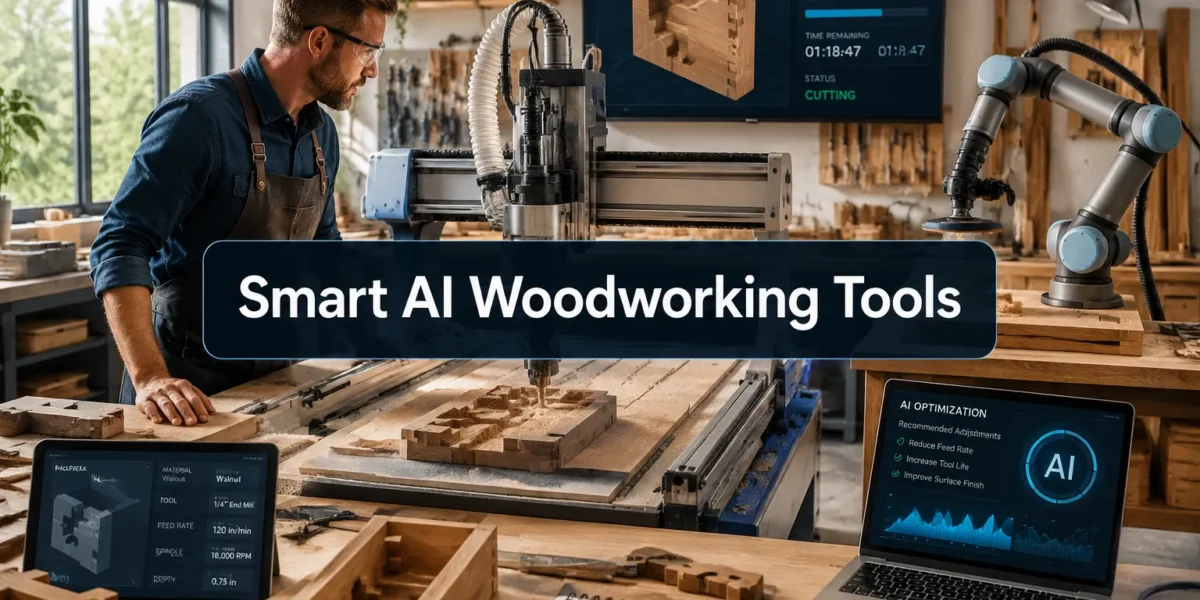
The craft of woodworking, traditionally rooted in hand skills and precision honed over generations, is undergoing a profound transformation in 2026. This evolution isn’t just about faster saws or sharper chisels; it’s about the seamless integration of artificial intelligence (AI), advanced automation, and collaborative robots (cobots) directly into the home workshop. This technological shift promises to redefine what’s possible for hobbyists and small-scale professionals alike, enhancing precision, boosting efficiency, and significantly improving safety. The era of Smart and AI-Assisted Woodworking Tools: How Automation and Cobots Are Changing Home Workshops is not a distant future, but a present reality that woodworkers are beginning to embrace.
Key Takeaways
- Smart tools integrate sensors, connectivity, and AI to offer enhanced precision and automated adjustments.
- Automation streamlines repetitive tasks, from cutting to sanding, increasing efficiency and consistency.
- Cobots work alongside human woodworkers, providing assistance with heavy lifting, repetitive motions, and intricate detailing, improving safety and reducing fatigue.
- These technologies make complex woodworking techniques more accessible and reduce the learning curve for ambitious projects.
- The future of home workshops involves a blend of traditional craftsmanship with cutting-edge digital assistance, fostering creativity and productivity.
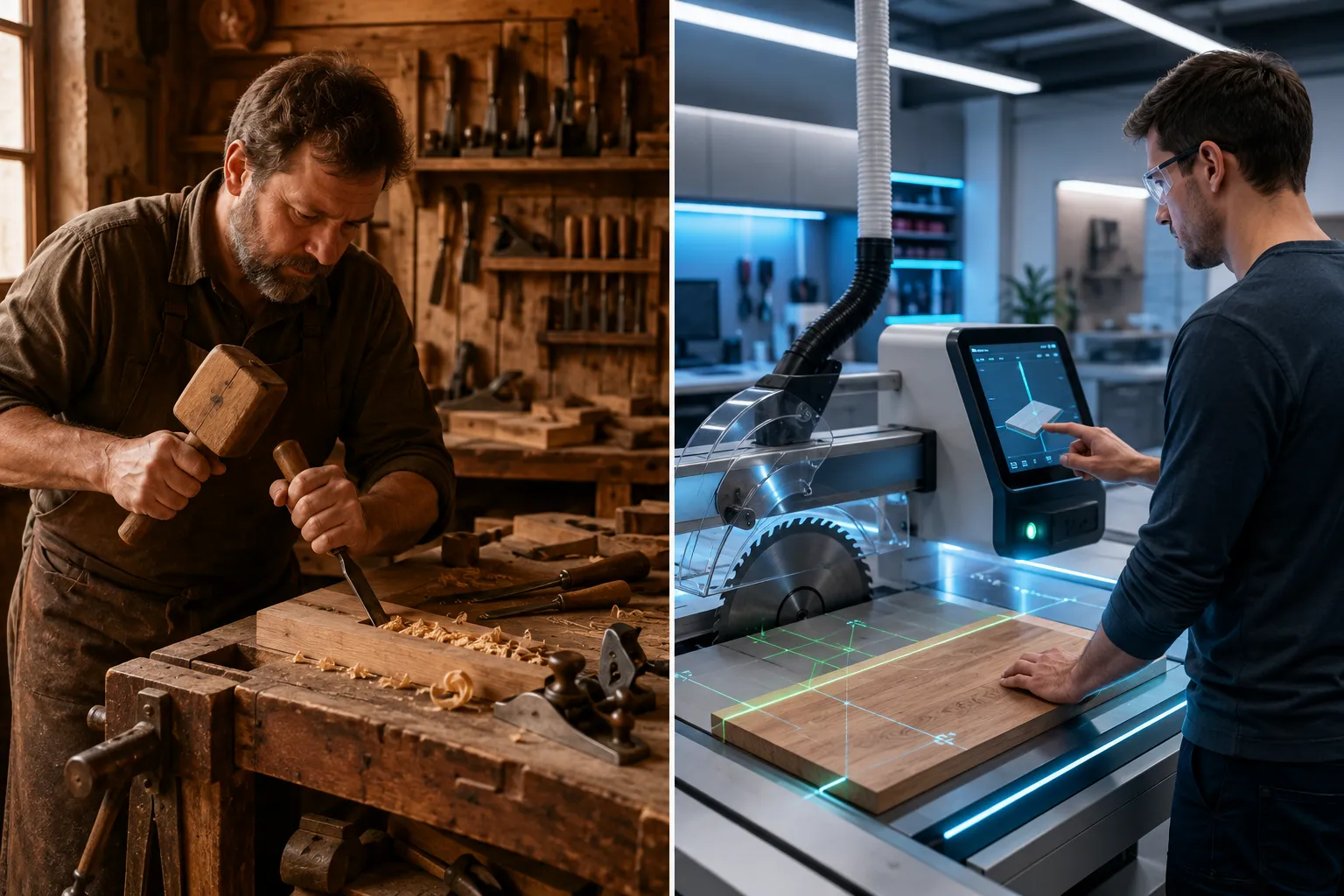
The Evolution of Woodworking: From Hand Tools to Smart Machines
For centuries, woodworking was defined by the skill of the artisan, the sharpness of their tools, and the sheer effort involved in shaping wood. While the romance of traditional hand tools remains, the landscape of the modern workshop in 2026 is increasingly populated by machines that think, adapt, and assist. This shift is particularly evident in the realm of smart and AI-assisted woodworking tools.
Smart tools are more than just powerful; they are intelligent. Equipped with embedded sensors, processors, and network connectivity, these tools can monitor their own performance, provide real-time feedback, and even make automatic adjustments. Imagine a table saw that detects subtle changes in wood density and adjusts blade speed to prevent kickback, or a router that corrects its path based on a 3D scan of the workpiece. These capabilities are no longer confined to industrial settings but are becoming accessible to the dedicated home woodworker.
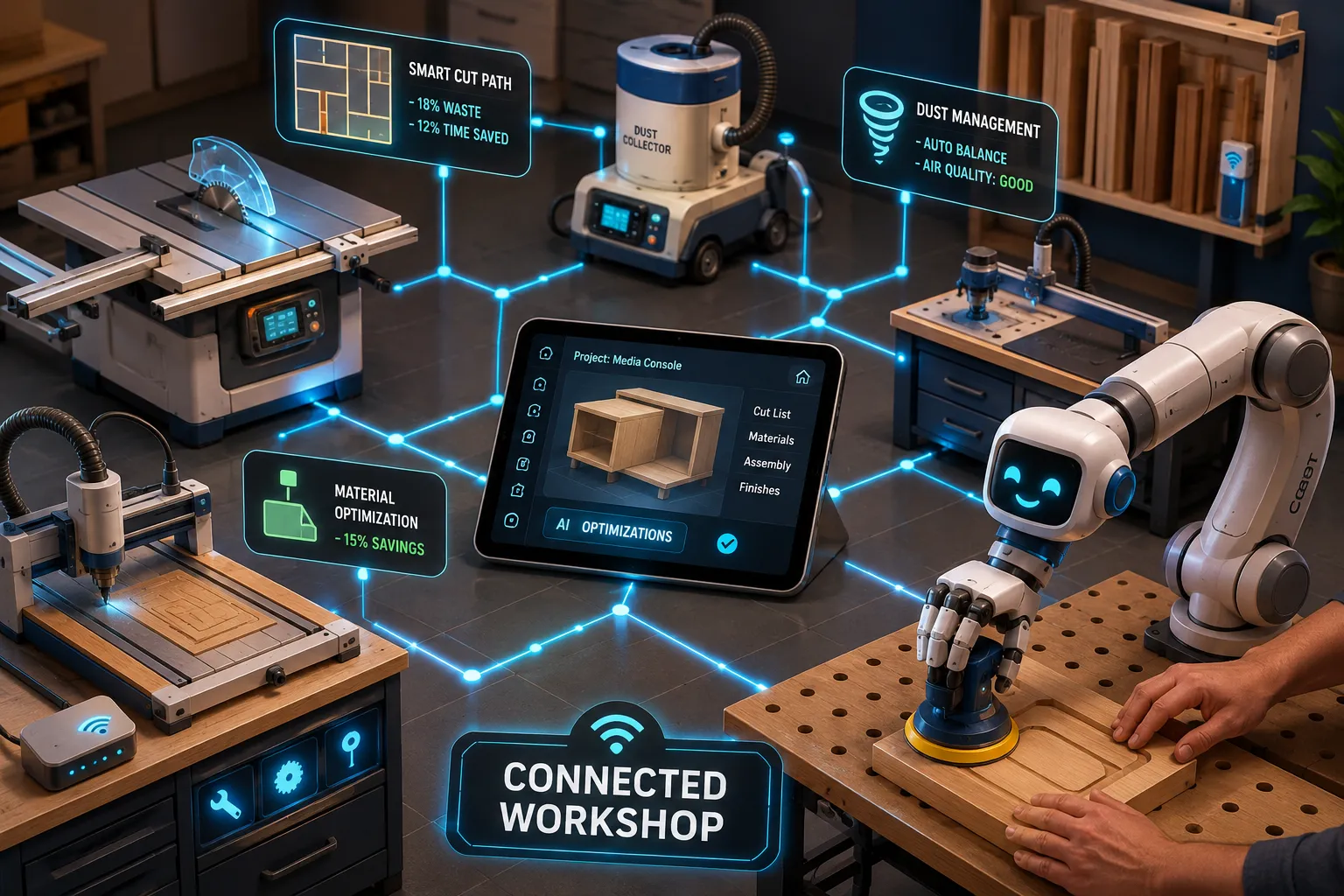
AI algorithms power many of these intelligent features. For instance, AI can analyze project designs and suggest optimized cutting patterns to minimize material waste, a feature particularly beneficial when working with expensive hardwoods or finishing reclaimed wood for 2026. It can also learn from a user’s habits and preferences, offering personalized recommendations for tool settings or project sequences. This adaptive intelligence makes complex projects more manageable and helps users achieve professional-level results with greater ease.
Automation, a key component of this evolution, extends beyond individual tools. We’re seeing integrated systems where a design in CAD software can directly instruct multiple machines: a CNC router cuts intricate joinery, a robotic arm sands a curved surface, and a smart dust collection system activates precisely when needed. This level of synchronization dramatically increases efficiency, allowing woodworkers to tackle larger or more numerous projects with the same amount of time and effort. This holistic approach to the workshop environment aligns with the principles of “Smart and Connected Power Tools: Precision, Safety, and Integration” where every component works in concert for optimal output.
Collaborative Robots (Cobots) in the Home Workshop
Perhaps the most revolutionary aspect of Smart and AI-Assisted Woodworking Tools: How Automation and Cobots Are Changing Home Workshops is the introduction of collaborative robots, or cobots. Unlike traditional industrial robots that operate in cages due to safety concerns, cobots are designed to work safely alongside humans, sharing the workspace and tasks.
In a home workshop, cobots can take on a variety of roles that are often strenuous, repetitive, or require extreme precision. Consider a cobot performing:
- Precision Sanding and Finishing: Achieving a perfectly smooth surface, especially on complex curves or intricate carvings, is time-consuming and requires a steady hand. A cobot can be programmed to apply consistent pressure and follow precise paths, ensuring uniform sanding and finishing.
- Material Handling and Positioning: Large or heavy pieces of lumber can be cumbersome and dangerous to maneuver alone. A cobot can assist in lifting, rotating, and holding workpieces in place for cutting, drilling, or assembly, reducing the risk of injury and physical strain. This is especially helpful in small workshops where space is at a premium and a woodworker might be working on DIY folding and expandable work tables.
- Repetitive Assembly Tasks: For woodworkers producing multiple identical items, such as custom wooden coasters and trivets or components for larger furniture, a cobot can handle repetitive gluing, clamping, or drilling tasks with unwavering consistency.
- Precision Joinery Assistance: While a human might mark and set up complex joints like dovetails, a cobot could assist with the routing or cutting, ensuring perfect alignment and depth.
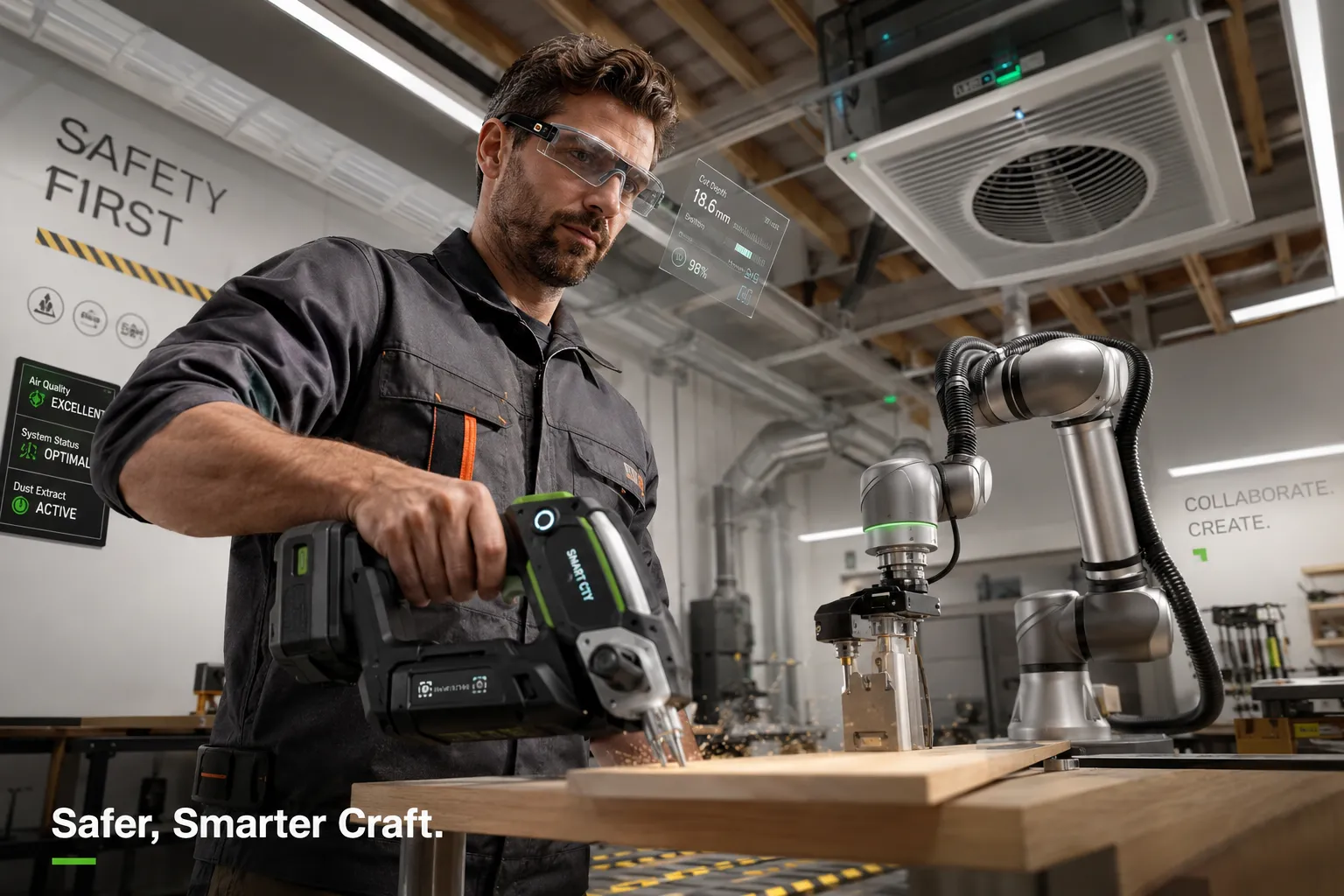
The safety aspect of cobots is paramount. They are equipped with advanced sensors that allow them to detect human presence and respond by slowing down or stopping, preventing collisions. This makes them ideal partners in a shared workshop environment, improving overall safety and allowing woodworkers to focus on the creative and critical aspects of their craft. The integration of cobots complements other smart workshop solutions, such as DIY smart workshop air filtration systems that activate automatically when dust levels rise, creating a truly intelligent and safe working space.
Enhancing Precision, Efficiency, and Safety in Your Craft
The benefits of integrating smart and AI-assisted tools and cobots extend across the core pillars of woodworking: precision, efficiency, and safety.
Unprecedented Precision
Modern smart tools can achieve levels of precision that are difficult, if not impossible, to consistently replicate by hand. Digital readouts on saws and routers, laser guides, and AI-driven path corrections ensure cuts are exact, holes are perfectly centered, and joinery is flawlessly tight. This enhanced precision reduces material waste, improves the structural integrity of projects, and elevates the aesthetic quality of the final product. Tools like smart calipers can measure wood dimensions with micrometer accuracy, feeding data directly into design software, preventing errors before they even occur. This level of accuracy is critical when working on intricate designs or when understanding wood movement is paramount to a project’s longevity.
Boosted Efficiency
Automation and AI streamline workflows, freeing up valuable time for the woodworker. Tasks that once required constant supervision or multiple setups can now be executed with minimal intervention. This means more projects can be completed, or more complex projects can be undertaken within the same timeframe. Consider how automated routing of complex patterns, or a cobot assisting in batch production of components, can dramatically speed up operations compared to manual methods. This efficiency is particularly valuable for small businesses or hobbyists who want to maximize their output from a limited workshop space, perhaps even a small workshop setup for 2026.
Superior Safety
Safety is a paramount concern in any workshop, and smart tools offer significant advancements.
- AI-Powered Kickback Prevention: Advanced sensors in table saws can detect potential kickback situations and instantly retract the blade or activate a braking mechanism, preventing serious injury.
- Automated Dust Extraction: Smart dust collectors integrated with power tools activate automatically when a tool is used, significantly reducing airborne dust and improving air quality. This goes hand-in-hand with systems like DIY smart workshop lighting which can detect activity and illuminate specific work zones, further enhancing safety and visibility.
- Cobot Collaboration: As discussed, cobots are designed with human safety in mind, sensing proximity and reacting to prevent accidents, particularly during heavy lifting or repetitive motions that can lead to strain injuries.
- Diagnostic Feedback: Smart tools can monitor their own condition, alerting users to dull blades, overheating motors, or other issues that could compromise safety or performance.
The combination of these factors not only makes woodworking more productive but also significantly safer and more enjoyable. Woodworkers can approach ambitious projects with greater confidence, knowing that their tools are working intelligently to assist them.
Conclusion
The integration of Smart and AI-Assisted Woodworking Tools: How Automation and Cobots Are Changing Home Workshops represents a pivotal moment for the craft. The fear that technology might diminish the artisan’s touch is rapidly giving way to an understanding that these advancements empower woodworkers, making the art more accessible, precise, and safer than ever before. From AI-optimized cutting paths to collaborative robots assisting with finishing, the modern workshop in 2026 is a testament to innovation working hand-in-hand with timeless craftsmanship.
For those looking to embrace this future, the journey begins with exploring the available smart tools, understanding their capabilities, and considering how automation and cobots can fit into their existing workflow. Start by researching smart versions of your most used power tools, then explore modular automation solutions. The initial investment may seem significant, but the long-term benefits in terms of project quality, personal efficiency, and enhanced safety are undeniable. The future of woodworking is smart, collaborative, and incredibly exciting.
SEO Meta Title: Smart & AI Woodworking Tools: Automation & Cobots for Workshops in 2026 SEO Meta Description: Explore how smart and AI-assisted woodworking tools, automation, and cobots are transforming home workshops in 2026, boosting precision, efficiency, and safety.