
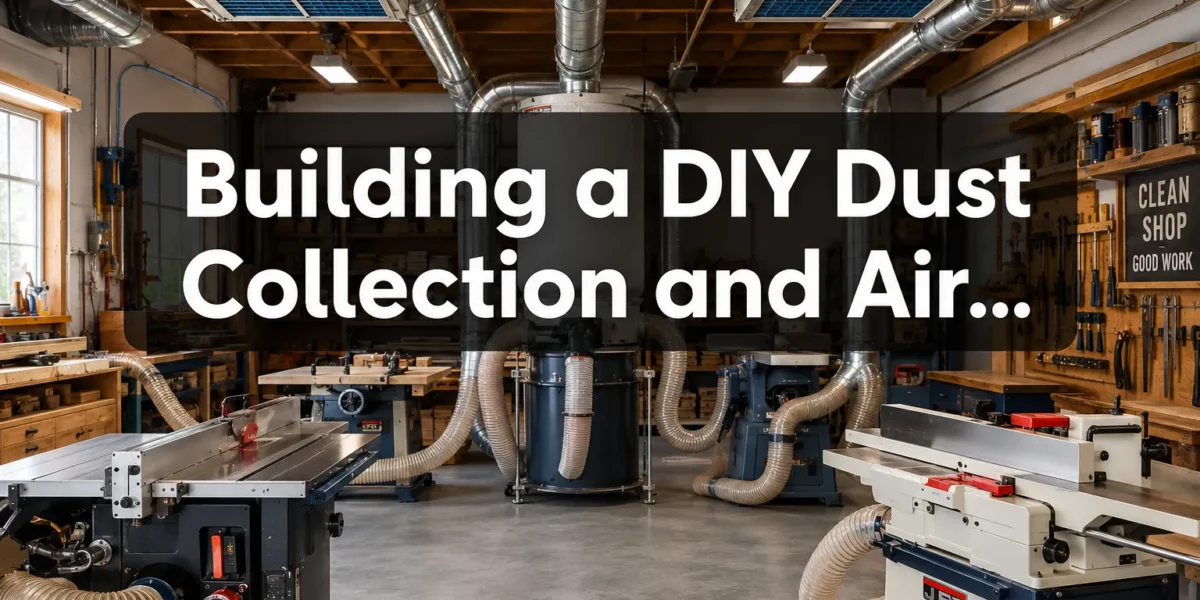
The insidious health risks of airborne sawdust are often underestimated, even by experienced woodworkers. Statistics reveal that prolonged exposure to wood dust can lead to severe respiratory issues, including asthma, chronic bronchitis, and even certain types of cancer (NIOSH, 2021). While small workshops might get by with basic shop vacuums and respirators, mid-size operations generating significant dust demand a more robust solution. This comprehensive guide moves beyond small-space limitations, focusing on Building a DIY Dust Collection and Air Filtration System: Beyond Small Spaces to Mid-Size Workshops to ensure a safer, cleaner, and more productive environment for serious woodworkers in 2026.
Key Takeaways
- System Sizing is Crucial: Properly calculate CFM (Cubic Feet per Minute) requirements for your largest tools and workshop volume.
- Two-Stage Separation is Key: Incorporate a cyclone separator to protect your main dust collector’s impeller and filter, significantly improving efficiency.
- Rigid Ductwork for Efficiency: Opt for smooth, rigid PVC or metal ducting over flexible hose for maximum airflow and reduced static pressure.
- Ambient Air Filtration is Essential: A dust collection system handles point-of-source dust; separate air filtration units manage airborne particulate.
- Safety and Maintenance: Regular filter cleaning/replacement and system checks are vital for long-term effectiveness and health protection.
Designing Your Mid-Size Workshop Dust Collection System
Moving beyond the portable solutions often found in compact spaces, a mid-size workshop requires a thoughtfully designed, semi-permanent dust collection infrastructure. The core principle for Building a DIY Dust Collection and Air Filtration System: Beyond Small Spaces to Mid-Size Workshops is to prioritize airflow, capture efficiency, and filter longevity.
Calculating Your Needs: CFM and Static Pressure
The first step in designing your system is to understand the airflow requirements of your tools. Each woodworking machine has a recommended Cubic Feet per Minute (CFM) for effective dust capture. For a mid-size shop, you’ll likely have a table saw, planer, jointer, and possibly a wide belt sander or CNC machine, all with varying CFM demands.
Example CFM Requirements for Common Mid-Size Workshop Tools:
| Tool Type | Recommended CFM Range |
|---|---|
| Table Saw | 350-600 CFM |
| Jointer | 400-700 CFM |
| Planer (12-15 inch) | 500-800 CFM |
| Bandsaw | 250-400 CFM |
| Drum Sander | 600-1000 CFM |
Your central dust collector’s motor and impeller must be capable of generating enough CFM to adequately serve your largest single tool or the combination of tools you anticipate running simultaneously. Crucially, the system must also overcome static pressure losses caused by ductwork, elbows, and filters. Longer runs of ductwork, more bends, and smaller diameter pipes all increase static pressure. Aim for a dust collector with a motor of at least 1.5 HP to 3 HP for a mid-size shop, capable of delivering 1000-1500 CFM at the impeller. Remember, rated CFM is often without ductwork, so factor in real-world performance.
The Power of Two-Stage Separation
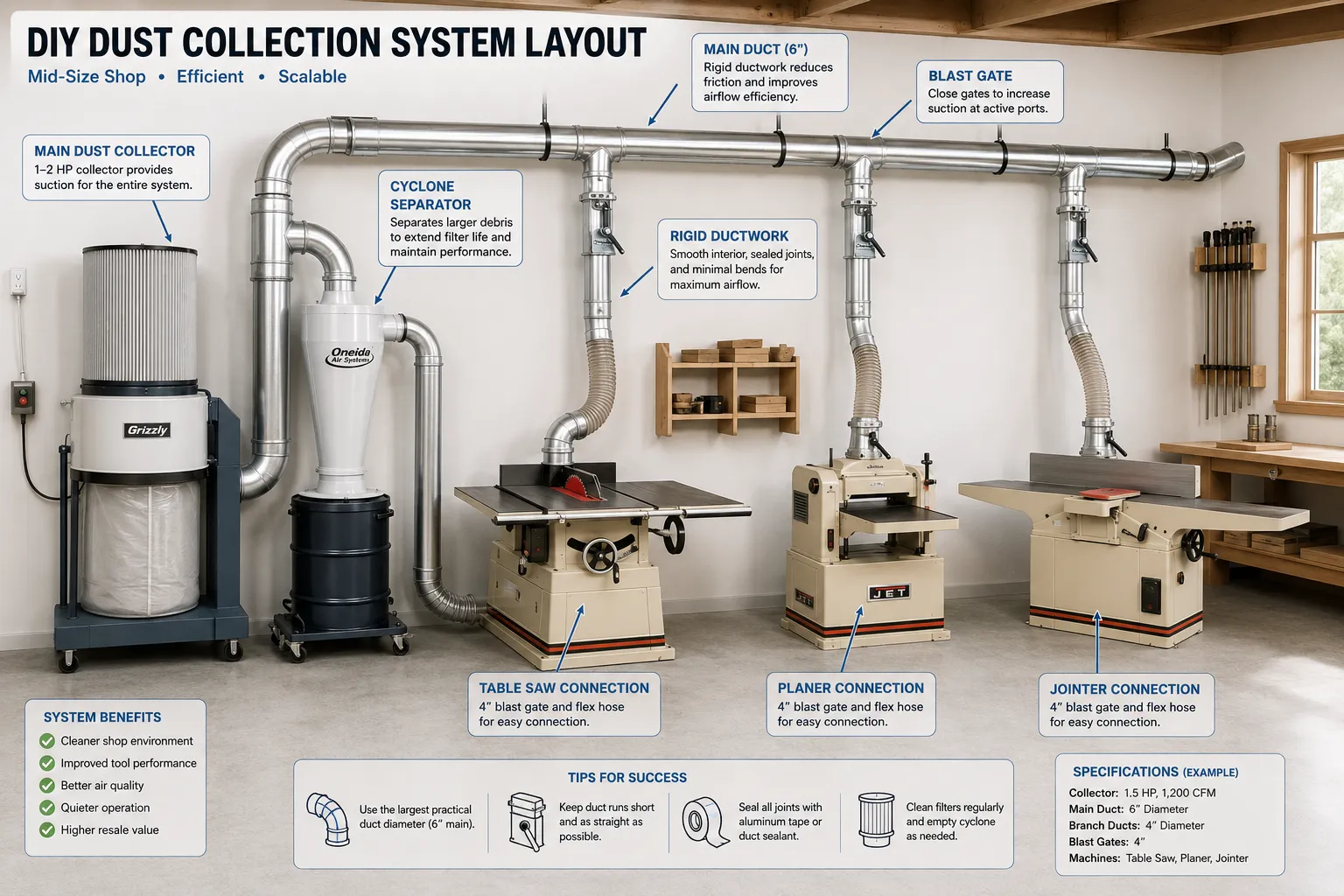
For any serious woodworking operation, a two-stage dust collection system is invaluable. The first stage, typically a cyclone separator, captures the vast majority of chips and heavier dust particles before they reach the main dust collector’s impeller and filter.
Benefits of a Two-Stage System:
- Protects the Impeller: Prevents large chunks of wood or metal from damaging the fan.
- Extends Filter Life: Significantly reduces the dust load on the main filter, leading to less frequent cleaning and replacement.
- Maintains Airflow: A cleaner filter means sustained airflow and better capture efficiency.
- Easier Waste Management: Chips collect in a simple drum or container that’s easier to empty than a dust bag.
DIY cyclone separators can be built using readily available materials like plywood, plastic drums, or even metal waste bins. The critical elements are the tangential inlet (to create the cyclone effect) and a sealed lid with a vacuum port for the clean air outlet and a cone for the dust drop.
Ductwork: The Veins of Your System
The type and layout of your ductwork are paramount to system efficiency. While flexible hose is convenient for small, portable setups, mid-size workshops demand rigid ducting.
Rigid Ductwork Advantages:
- Superior Airflow: Smooth interior surfaces drastically reduce static pressure compared to the corrugated interior of flexible hoses.
- Durability: Less prone to kinks, tears, or blockages.
- Static Dissipation: Metal ducts naturally dissipate static electricity, reducing spark risk. PVC can build up static, so grounding is important if you choose this material.
Ductwork Material Options:
- PVC Schedule 40: Affordable, easy to work with, but requires grounding.
- Spiral Metal Ducting: Excellent airflow, durable, naturally grounded, but more expensive and harder to modify.
- Galvanized Steel: Common in industrial settings, good performance, but can be heavy.
Key Design Considerations for Ductwork:
- Diameter: Use 6-inch or 5-inch main trunk lines, reducing to 4-inch or 3-inch branches for individual tools. Avoid reducing diameter more than necessary, as it chokes airflow.
- Minimizing Bends: Every 90-degree elbow creates significant static pressure. Use gradual, long-radius bends (e.g., two 45-degree elbows instead of one 90-degree) whenever possible.
- Blast Gates: Install metal or high-quality plastic blast gates at each tool connection to direct airflow only to the active machine.
- Shortest Runs: Route ductwork directly to tools with minimal length to reduce friction loss. Consider a central spine with branches to your various machines. For more on optimizing space, see our guide on small workshop setup for 2026.
Building an effective dust collection system is an investment in your health and the longevity of your tools. For a deeper dive into basic systems, you might find our article on Building a DIY Workshop Dust Collection System for Small Spaces helpful for foundational principles.
Beyond Extraction: Ambient Air Filtration for a Clean Workshop
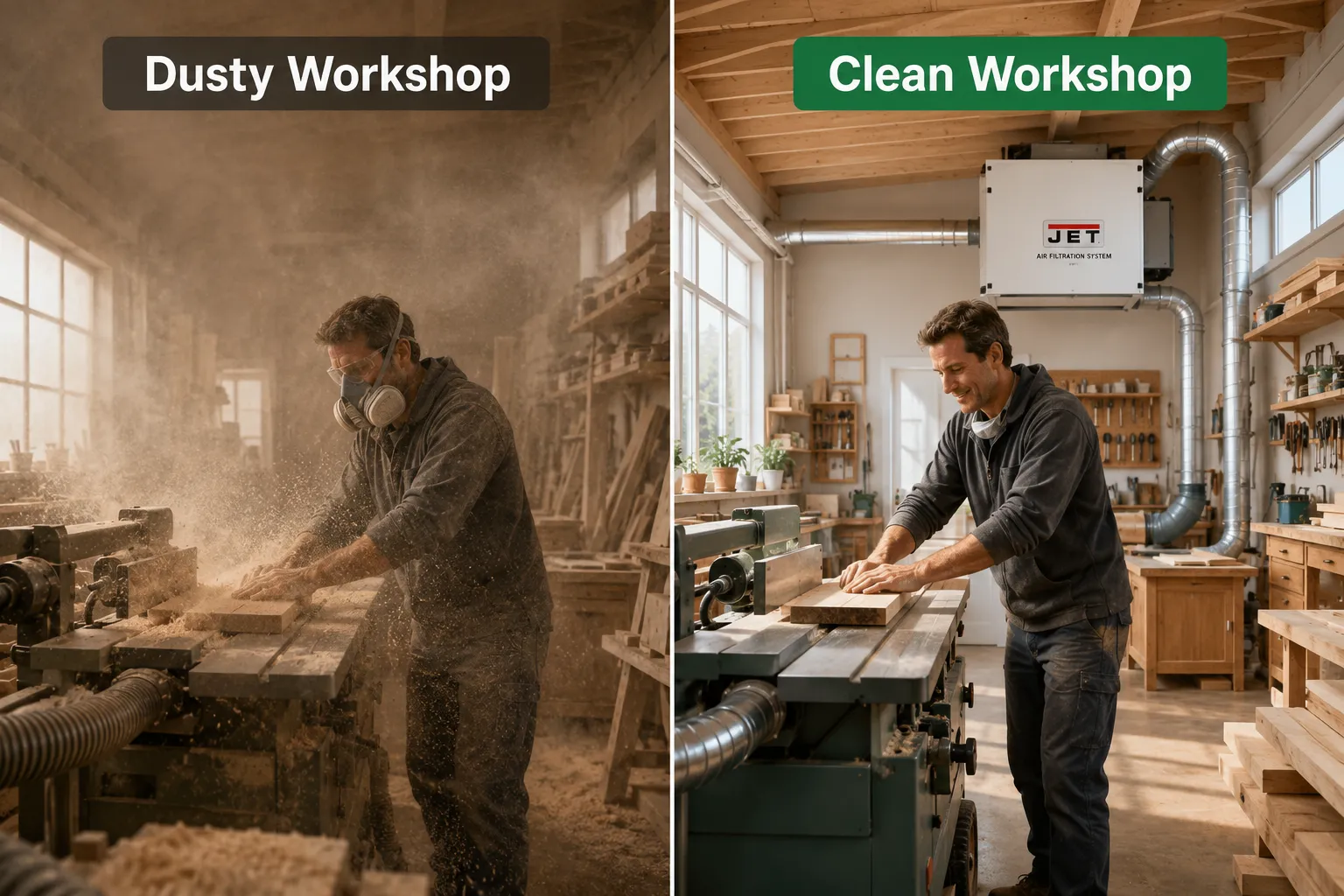
Even the most efficient point-of-source dust collection system won’t capture 100% of airborne particulate. Fine dust, invisible to the naked eye, lingers in the air after operations like sanding, contributing to health risks and settling on surfaces. This is where ambient air filtration becomes critical for a mid-size workshop.
The Need for Ambient Air Cleaners
Ambient air filtration units continuously draw in workshop air, filter out fine dust particles, and return clean air. They are designed to address the airborne dust that escapes your main dust collector. Think of them as the final line of defense for your lungs and your shop’s cleanliness.
Key Considerations for Ambient Air Filtration:
- Sizing: Air filtration units are rated by how many times they can exchange the air in a given volume within an hour (ACH – Air Changes per Hour). For a woodworking shop, aim for 6-10 ACH.
- Calculate Workshop Volume: Length (ft) x Width (ft) x Height (ft) = Cubic Feet.
- Calculate Required CFM for desired ACH: (Workshop Volume * ACH) / 60 minutes.
- Match this required CFM to the air filtration unit’s rating.
- Filtration Stages: Most quality units use a two-stage filter system:
- Pre-Filter: Captures larger particles (e.g., 5 microns) and extends the life of the finer filter.
- Secondary Filter: Captures much finer particles (e.g., 1 micron or 0.5 microns).
- Placement: Mount units overhead, typically near the center of the workshop or strategically placed to create a clean air circulation pattern. Avoid placing them directly above primary dust-generating tools, as that’s the job of your dust collector.
DIY Air Filtration Solutions
Commercially available ambient air filtration units can be expensive. Fortunately, Building a DIY Dust Collection and Air Filtration System: Beyond Small Spaces to Mid-Size Workshops extends to air purifiers as well.
A Common DIY Approach:
- Fan Unit: A box fan (18-inch to 20-inch) or a salvaged furnace blower serves as the core. Box fans are simpler but less powerful; furnace blowers offer superior airflow and longevity if properly wired and housed.
- Filter Box: Construct a sturdy plywood box around the fan, creating inlets and outlets.
- Filters: Integrate standard furnace filters (MERV 11-13) into the box. Use multiple filters in series or on different sides of the box for increased surface area and filtration. A common setup involves mounting a MERV 8 pre-filter and a MERV 11 or 13 main filter.
- Hanging Mechanism: Design a safe and secure way to hang the unit from your workshop ceiling using chains, threaded rods, or sturdy lumber.
Important DIY Safety Note: Ensure all electrical components are properly enclosed and wired to prevent fire hazards. Use appropriate gauge wiring and electrical boxes.
For inspiration on building other DIY workshop solutions, consider exploring articles like Building a Portable Folding Workbench or Building a Modular Wood Storage System. These can provide ideas for efficient space utilization which complements good air quality.
Installation, Maintenance, and Safety Considerations
Once you’ve designed your system, the installation phase requires careful attention to detail. Proper maintenance ensures long-term efficiency and safety.
Installation Best Practices
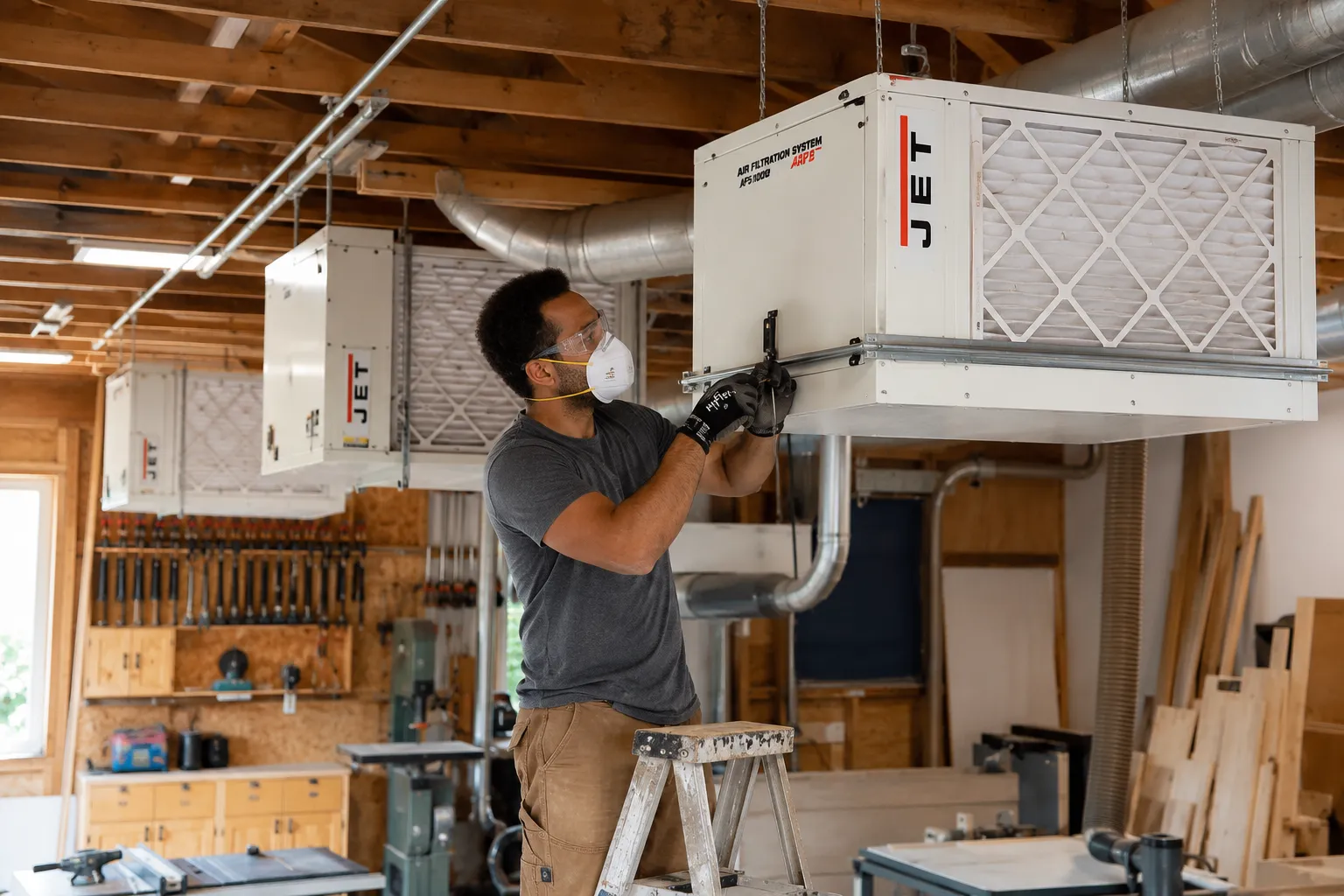
- Secure Mounting: All heavy components, particularly the dust collector and ambient air filters, must be securely mounted. Use appropriate fasteners for ceiling joists or wall studs.
- Sealed Connections: Ensure all ductwork connections are airtight. Use tape (HVAC foil tape for metal, duct tape for PVC) and caulk to seal joints, preventing air leaks that reduce suction.
- Grounding: If using PVC ductwork, run a bare copper wire inside the duct and ground it to the dust collector motor. This dissipates static electricity build-up, preventing shocks and potential ignition of fine dust.
- Power Requirements: Verify your dust collector’s electrical requirements and ensure your workshop’s circuit can handle the load. Many larger collectors require 220V power.
- Remote Control: Consider adding a remote control for your dust collector for convenience and safety, allowing you to turn it on/off from anywhere in the shop.
Ongoing Maintenance for Peak Performance
Regular maintenance is not just about extending the life of your system; it’s about consistently protecting your health.
- Emptying Dust Bins: Regularly empty the collection drum of your cyclone separator and the lower bag of your dust collector. Don’t wait until they’re overflowing, as this can impede airflow.
- Filter Cleaning/Replacement:
- Dust Collector Filters: Periodically clean pleated cartridge filters using compressed air (outdoors and with a respirator), or replace them when performance drops significantly. Cloth bags can be shaken or washed.
- Air Filtration Filters: Check pre-filters frequently (monthly) and secondary filters less often (quarterly). Replace them when they show significant dust loading.
- Ductwork Inspection: Periodically check ductwork for blockages, especially in bends or at blast gate entrances. Clean out any accumulated dust.
- Motor and Impeller Check: Listen for unusual noises. Annually, inspect the impeller for damage or excessive dust build-up. Always disconnect power before opening the dust collector.
Safety First: Beyond the System
Even with a top-tier dust collection and air filtration system, personal protective equipment (PPE) remains crucial.
- Respirators: While your system reduces airborne dust, always wear an N95 or P100 respirator during operations that generate a lot of fine dust (e.g., sanding, routing).
- Eye Protection: Safety glasses are non-negotiable.
- Hearing Protection: Especially when running loud machines and the dust collector simultaneously.
- Fire Safety: Fine wood dust is highly combustible. Ensure your system is grounded, regularly cleaned, and avoid open flames or sparks near collection points. Place fire extinguishers strategically in your workshop.
By diligently implementing these steps for Building a DIY Dust Collection and Air Filtration System: Beyond Small Spaces to Mid-Size Workshops, you create a safer, healthier, and more enjoyable woodworking environment.
Conclusion
Building a DIY Dust Collection and Air Filtration System: Beyond Small Spaces to Mid-Size Workshops is a critical undertaking for any serious woodworker. Moving past basic shop vac solutions, a well-designed, two-stage dust collection system paired with robust ambient air filtration transforms your workshop into a significantly safer and cleaner space. From carefully calculating CFM requirements and implementing rigid ductwork with blast gates, to integrating powerful cyclone separators and effective ambient air cleaners, every component plays a vital role.
The ongoing commitment to proper installation, regular maintenance, and adherence to personal safety protocols ensures that your investment in a DIY system truly pays off in terms of health, tool longevity, and overall workshop efficiency. By taking these steps, you’re not just moving dust; you’re cultivating a healthier passion for woodworking.
Actionable Next Steps:
- Assess Your Workshop: Map out your tools and measure your workshop’s dimensions to determine CFM requirements for both dust collection and ambient air filtration.
- Research Components: Investigate suitable dust collector motors (1.5-3HP), cyclone designs, and filter types (MERV 11-13).
- Plan Your Layout: Sketch out your ductwork runs, minimizing bends and optimizing for the shortest path to your most used machines.
- Gather Materials: Start sourcing PVC or metal ducting, blast gates, electrical components, and filter media.
- Build and Install: Follow safety guidelines meticulously during construction and installation, ensuring all connections are sealed and the system is properly grounded.
- Establish Maintenance Routine: Schedule regular emptying of collection bins and cleaning/replacement of filters to maintain peak performance.
References:
National Institute for Occupational Safety and Health (NIOSH). (2021). Wood Dust. Retrieved from https://www.cdc.gov/niosh/topics/wooddust/default.html
Meta Title: DIY Dust Collection & Air Filtration for Mid-Size Workshops Meta Description: Build a DIY dust collection and air filtration system for your mid-size workshop in 2026. Improve air quality, protect health, and enhance workshop safety.