
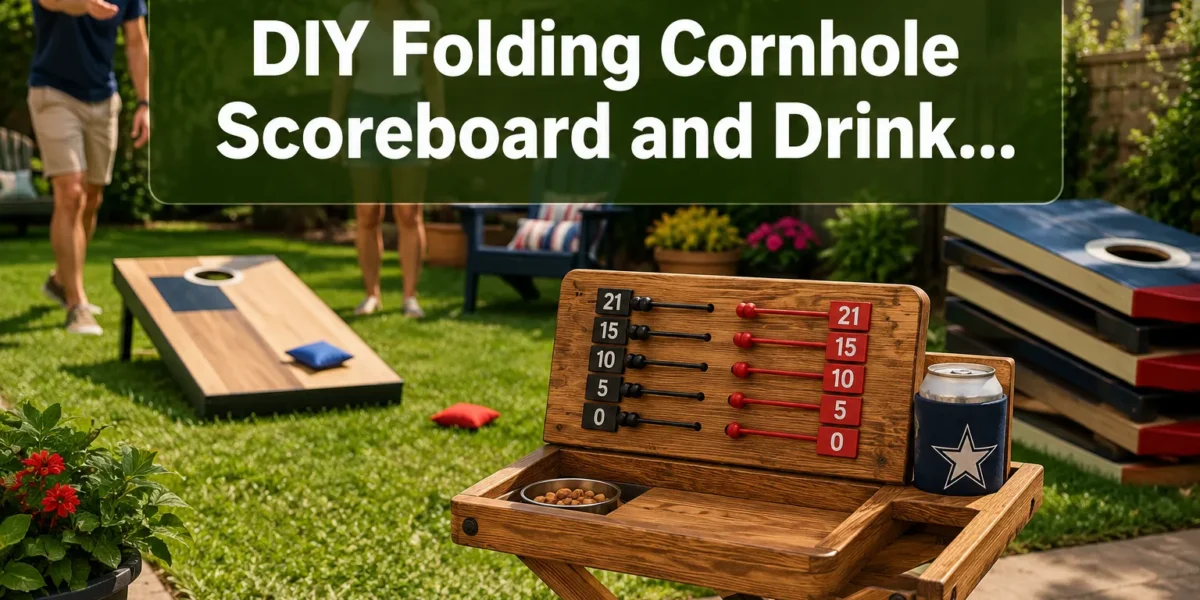
Over 60% of cornhole enthusiasts report struggling with keeping score and managing drinks during a lively game, often leading to misplaced beverages, smudged scorecards, or even arguments. This common backyard conundrum doesn’t require a costly store-bought solution. Instead, savvy woodworkers can transform leftover lumber, particularly offcuts from cornhole board builds, into a highly functional and compact accessory: the DIY Folding Cornhole Scoreboard and Drink Table. This project provides a practical solution for backyard game organization while simultaneously reducing workshop waste and honing essential woodworking skills.
Key Takeaways
- The DIY Folding Cornhole Scoreboard and Drink Table maximizes offcuts from other projects, promoting sustainable woodworking.
- Simple joinery techniques, such as mortise-and-tenon or pocket holes, make this an accessible build for various skill levels.
- Outdoor-safe finishes are crucial for durability, protecting the table from weather and spills.
- The folding design ensures easy storage and portability, making it a truly compact side table for backyard games.
- This project enhances the cornhole experience by providing a dedicated space for scoring and refreshments.
The Versatility of a DIY Folding Cornhole Scoreboard and Drink Table: A Compact Side Table for Backyard Games
The charm of backyard games lies in their casual, social nature, but often, the lack of a designated spot for scores and drinks can detract from the fun. The solution lies in creating a dedicated, multi-functional piece of furniture. A DIY Folding Cornhole Scoreboard and Drink Table directly addresses these needs by offering a stable surface for beverages, a clear system for tracking points, and the added benefit of being incredibly easy to store.
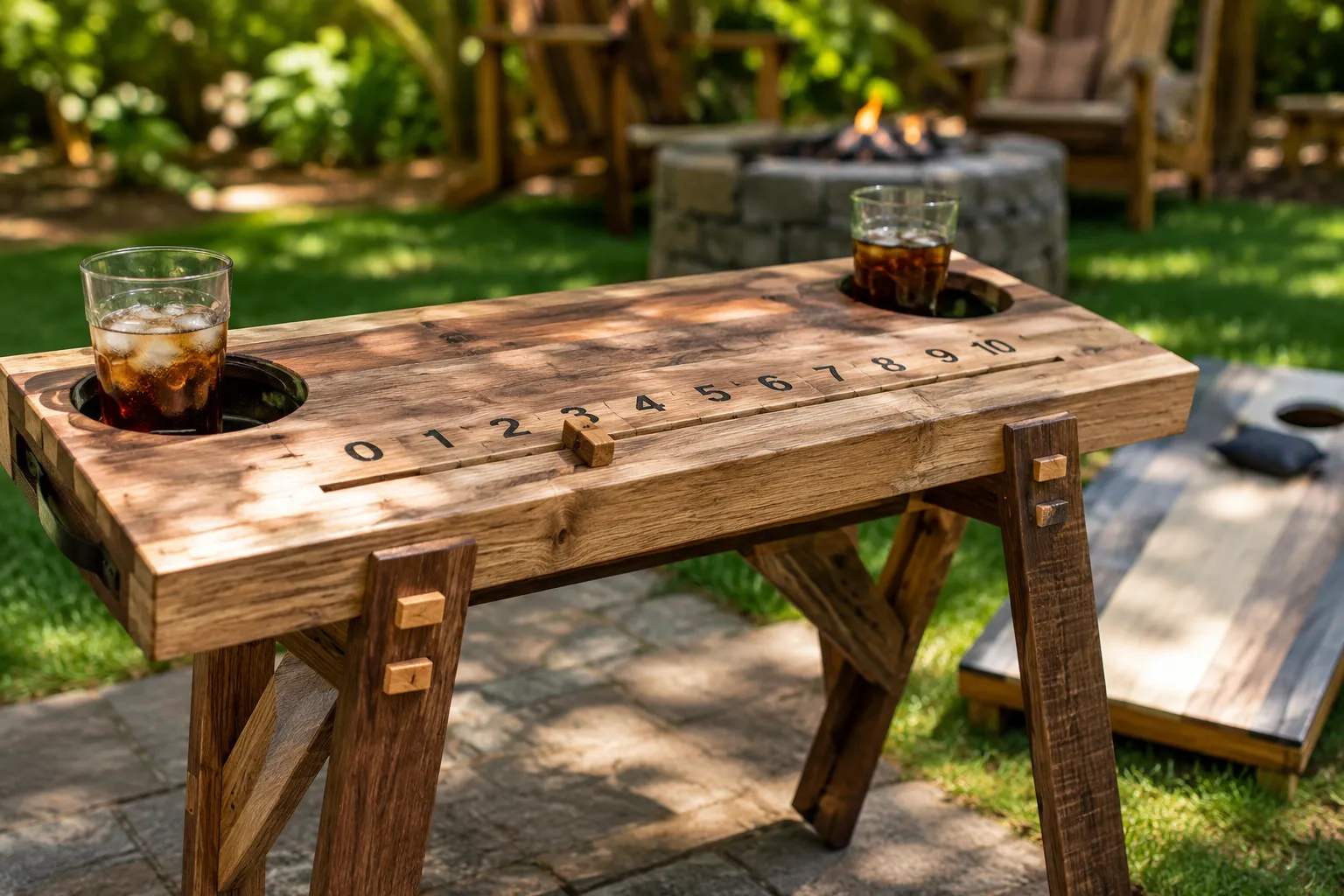
This project isn’t just about utility; it’s also an excellent way to utilize lumber that might otherwise go to waste. For those who frequently build cornhole boards or other outdoor furniture, the inevitable accumulation of offcuts presents a perfect opportunity. By repurposing these smaller pieces of wood, you not only save money but also contribute to a more sustainable woodworking practice. Imagine transforming those 2×4 or plywood scraps into a centerpiece of your next backyard gathering.
The design principles for such a table prioritize both functionality and compactness. A folding mechanism is paramount, ensuring that the table can be stowed away neatly when not in use, whether in a garage, shed, or even behind the cornhole boards themselves. This makes it an ideal compact side table for backyard games, fitting seamlessly into various outdoor setups without occupying permanent space. When crafting pieces that need to be space-efficient, understanding different folding table designs for tiny woodshops can offer valuable insights.
Essential Features and Design Considerations
When embarking on a DIY Folding Cornhole Scoreboard and Drink Table project, several features are non-negotiable for optimal usability and durability:
- Integrated Scoreboard: This can be as simple as a series of drilled holes with pegs or a more elaborate sliding track system. The key is visibility and ease of use for all players.
- Drink Holders: Recessed cup holders are ideal, preventing spills and ensuring drinks remain stable even during an enthusiastic game. Standard dimensions for beverage cans and bottles should be considered.
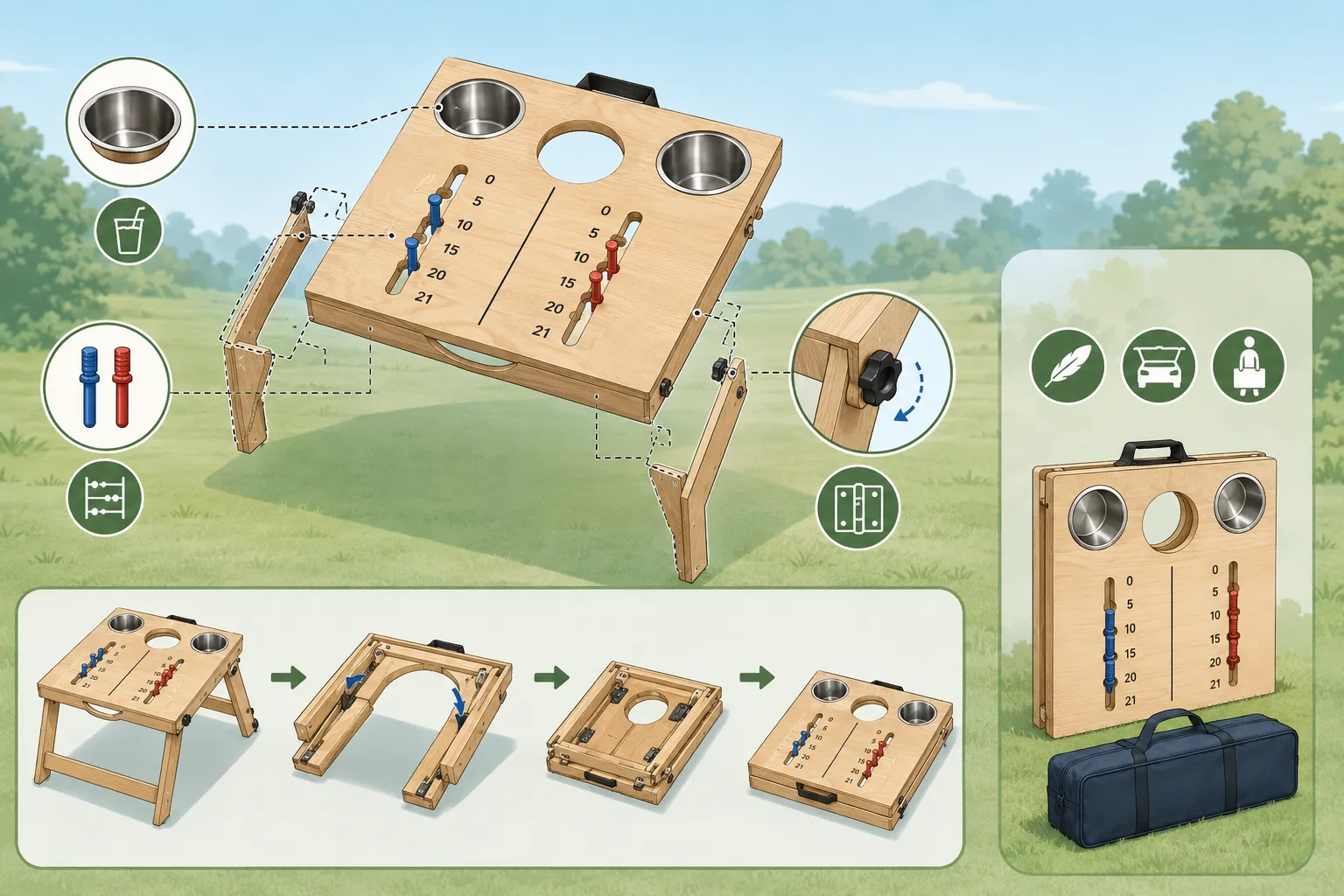
- Folding Legs: The cornerstone of its compact design. Various hinge mechanisms can be employed, from simple butt hinges to more robust folding table hardware.
- Sturdy Construction: Despite being foldable, the table must be stable enough to withstand accidental bumps and general outdoor use.
- Outdoor-Safe Finish: Protection against moisture, UV rays, and general wear and tear is critical for longevity.
The beauty of a DIY project is the ability to customize. You can tailor the height of the table to comfortably reach from a sitting position or stand alongside the cornhole boards. The width can be adjusted to accommodate more drinks or a larger scoring area. This level of customization ensures the final product perfectly matches your specific needs and aesthetic preferences for backyard entertaining. Considering other DIY outdoor furniture projects can inspire complementary pieces.
Building Your Folding Scoreboard and Drink Table: Joinery and Materials
The construction of your DIY Folding Cornhole Scoreboard and Drink Table relies on thoughtful material selection and appropriate joinery techniques. Because this project is ideal for using offcuts, lumber choice might be dictated by what’s available. However, prioritizing weather-resistant wood is crucial for any outdoor piece.
Common wood species suitable for outdoor use include cedar, redwood, cypress, and pressure-treated pine. Even if using hardwood scraps, ensure they are properly sealed. For the main structure, 1×4 or 2×4 lumber can provide a robust frame, while plywood scraps can form the tabletop. The dimensions can vary, but a tabletop roughly 12-18 inches wide and 24-30 inches long offers ample space without being cumbersome. The height should typically be around 24-30 inches, making it comfortable to reach when standing or sitting in a low chair.
Simple Joinery Techniques
For accessibility, this project lends itself well to straightforward joinery methods that even beginner woodworkers can master.
- Pocket-Hole Joinery: This is an excellent choice for its strength and relative simplicity. Using a pocket-hole jig, you can create strong joints quickly for attaching legs to the tabletop frame and assembling the frame itself. This method is particularly forgiving and produces clean, hidden fasteners.
- Mortise-and-Tenon Joinery: For those seeking a more traditional and robust connection, a simplified mortise-and-tenon joint can be employed for the leg attachments. While slightly more involved, it offers exceptional strength and a classic aesthetic. Even basic hand tools can create effective mortise and tenon joints, perfect for a durable outdoor piece.
- Butt Joints with Reinforcement: For parts of the frame, simple butt joints secured with waterproof wood glue and screws can be sufficient, especially if reinforced with corner braces or gussets. This is a quick and easy method.
When combining different wood species or thicknesses, ensure your joinery accounts for any discrepancies. For example, if you’re using thin plywood for the tabletop and thicker lumber for the frame, make sure your fasteners don’t protrude or weaken the thinner material.
Hardware and Finishes
The hardware for your folding mechanism is critical. Heavy-duty folding table leg hinges or standard butt hinges with locking supports are good options. Ensure the hinges are outdoor-rated to resist rust and corrosion. You will also need small dowel rods or golf tees for score pegs if you opt for a drilled-hole scoreboard.
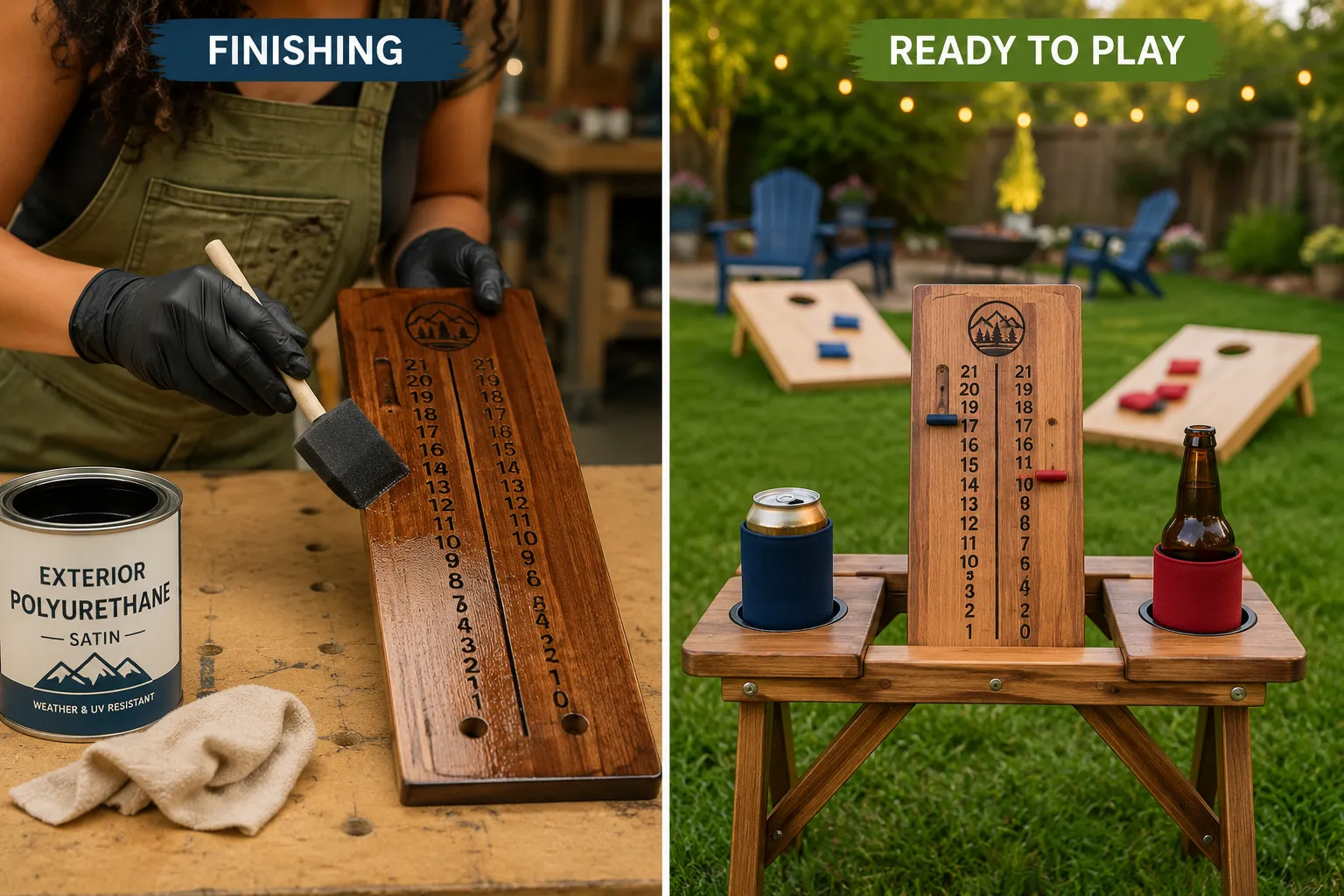
The most vital step for longevity is the outdoor-safe finish. Neglecting this will drastically shorten the life of your table, especially if using non-naturally resistant woods.
Consider these options:
- Outdoor Wood Stain and Sealer: A combination product or separate applications of a penetrating stain and a durable outdoor sealant (like spar urethane) will provide excellent protection against moisture and UV damage. Choose a stain color that complements your existing outdoor decor.
- Exterior Paint: For a vibrant look or to match existing furniture, exterior-grade paint offers robust protection. Primer is recommended for best adhesion and durability.
- Water-Repellent Preservative: These treatments penetrate the wood, offering protection against rot, mildew, and insects. They often require a topcoat for UV protection and aesthetic appeal.
Regardless of the finish chosen, proper surface preparation is key. Sand all surfaces smooth, starting with a coarser grit (e.g., 80-100) and progressing to finer grits (e.g., 180-220) to ensure good adhesion and a professional look. Applying multiple thin coats of finish is always better than one thick coat. For more details on protecting your wooden creations, explore various natural wood finishing options without chemicals.
Step-by-Step Construction and Customization of Your Compact Side Table
Building your DIY Folding Cornhole Scoreboard and Drink Table involves a sequence of logical steps, allowing for customization at each stage. This project is not only functional but also a rewarding woodworking experience, particularly for those looking to expand their skills beyond basic cuts.
1. Planning and Measuring
Start by sketching your design. Decide on the desired dimensions, taking into account the size of your cornhole boards and the typical height you prefer for a side table. A common tabletop size might be 16 inches by 28 inches. Determine the height of the legs, remembering that the folding mechanism will add a small amount to the overall collapsed length.
List out all the lumber pieces you’ll need:
- Tabletop panel (plywood or glued-up boards)
- Tabletop frame pieces (to secure the tabletop and provide attachment points for legs)
- Leg pieces (four equal lengths)
- Cross braces for legs (for stability)
This planning phase is critical for efficient use of your offcuts and minimizing waste.
2. Cutting and Preparing Lumber
Carefully cut all your lumber pieces according to your measurements. Ensure all cuts are square for clean joints. Sand all surfaces thoroughly at this stage. It’s often easier to sand individual components before assembly. Chamfer or round over sharp edges for safety and a more refined look.
For the scoreboard, determine the spacing for your score pegs. Typically, players track scores up to 21. You might mark 0-21 on one side for Team A and 0-21 on the other for Team B. Use a drill press for precise, perpendicular holes to ensure pegs stand upright. For drink holders, use a hole saw matching the diameter of common beverage containers (e.g., 3-3.5 inches).
3. Assembling the Tabletop
Construct the tabletop frame first, using pocket-hole joinery or mortise-and-tenon connections. For example, create a rectangle using 1x4s. Then, attach your prepared tabletop panel to this frame. You can use wood glue and screws driven from the underside into the frame for a clean look, or surface screws countersunk and plugged for a more rustic aesthetic. Ensure the drink holder holes are cut into the tabletop before it’s permanently attached to the frame.
4. Constructing the Legs and Folding Mechanism
Each pair of legs will form an “A-frame” or similar stable structure. Attach cross braces between each pair of legs for rigidity. If using an A-frame design, hinge the two leg sets to the underside of the tabletop frame. Ensure the hinges are positioned to allow the legs to fold flat against the tabletop when collapsed. Add locking mechanisms to keep the legs securely extended when the table is in use. This could be simple friction hinges, sliding bolts, or custom-made wooden braces. Remember to select outdoor-rated hardware for all components. For more ideas on how to create sturdy and versatile folding designs, check out this guide on DIY folding work tables.
5. Applying the Finish
Once assembled (or even before final assembly for easier access to all surfaces), apply your chosen outdoor-safe finish. Follow the manufacturer’s instructions for application, drying times, and recoating. Multiple thin coats are always better than one thick coat, as they provide better adhesion and a more durable finish. Pay particular attention to end grain, which absorbs moisture readily and benefits from extra protection.
6. Final Touches
Install your score pegs. You can paint the numbers next to the score holes, or use small metal plates with numbers. For added convenience, you might attach a small hook to the side of the table for hanging accessories like beanbags (though not during gameplay). Add non-slip feet to the bottom of the legs to prevent the table from sliding on smooth surfaces and to protect the wood from ground moisture.
This DIY Folding Cornhole Scoreboard and Drink Table is more than just a project; it’s an investment in countless hours of organized, enjoyable backyard fun. The satisfaction of crafting a useful item from repurposed materials further enhances its value.
Conclusion
The DIY Folding Cornhole Scoreboard and Drink Table: A Compact Side Table for Backyard Games is a highly practical and rewarding woodworking project. By leveraging offcuts from other builds, especially cornhole boards, you can create a durable, space-saving accessory that significantly enhances the backyard gaming experience. The project is accessible to woodworkers of varying skill levels, with options for simple pocket-hole joinery or more traditional mortise-and-tenon methods. Crucially, selecting outdoor-safe lumber and applying a robust finish ensures longevity, allowing the table to withstand the elements and frequent use. This compact side table not only provides a dedicated space for scorekeeping and refreshments but also embodies sustainable craftsmanship.
To embark on this project, gather your lumber offcuts, select appropriate outdoor-rated hardware, and choose a weather-resistant finish. Focus on precise measurements and careful assembly, paying particular attention to the folding mechanism and the integration of scorekeeping and drink-holding features. The resulting DIY Folding Cornhole Scoreboard and Drink Table will be a proud addition to your outdoor entertainment setup, ready for countless games and gatherings in 2026 and beyond.
SEO Meta Title: DIY Folding Cornhole Scoreboard & Drink Table for Games SEO Meta Description: Build a DIY folding cornhole scoreboard and drink table using offcuts. Get plans for a compact side table for backyard games in 2026.