

The woodworking landscape of 2026 is witnessing an exciting evolution, where timeless techniques are being reimagined with contemporary materials. Emerging trends strongly emphasize hybrid joinery and bio-resin details in furniture and organizers, forging pieces that boast not only superior structural integrity but also remarkable visual appeal and higher perceived value. This innovative approach to craftsmanship blends the proven strength and aesthetic of traditional wood joints with the versatile, often stunning, properties of modern bio-resins, creating a new frontier for artisans and designers alike.
Key Takeaways
- Fusion of Eras: Hybrid joinery merges classic woodworking methods with modern materials like bio-resins, enhancing both strength and visual appeal.
- Aesthetic & Structural Benefits: Bio-resin inlays offer vibrant artistic expression, stabilize natural wood features, and reinforce joints, elevating perceived value.
- Sustainable Choice: Bio-resins provide an eco-friendlier alternative to traditional petroleum-based resins, aligning with current environmental consciousness.
- Design Versatility: This combination allows for a wide range of creative applications, from functional furniture to decorative art pieces.
- Skill Development: Mastering these techniques requires a blend of traditional woodworking precision and understanding of modern material properties.
The Synergy of Hybrid Joinery and Bio-Resin Inlays: Combining Traditional Woodworking with Modern Materials
Traditional joinery methods, such as dovetails, mortise and tenon, and finger joints, have been perfected over centuries for their inherent strength, durability, and beauty. These methods rely on the precise interlocking of wood components, often without the need for mechanical fasteners, resulting in furniture and structures that stand the test of time. Artisans who master these techniques often produce pieces of unparalleled quality and longevity. For those interested in the foundational aspects of this craft, exploring introduction to traditional hand tool joinery exploring mortise and tenon with chisels and saws provides an excellent starting point.
However, the introduction of modern materials, particularly bio-resins, has opened up new dimensions for these traditional practices. Bio-resins, derived from plant-based or other renewable resources, offer an environmentally conscious alternative to petroleum-based epoxy resins. They can be poured, cast, or used as an inlay material, providing a spectrum of colors, transparencies, and finishes that were previously unattainable with wood alone. This is where the concept of “hybrid joinery” truly comes to life, not just in the structural reinforcement but in the artistic integration.
What is Hybrid Joinery?
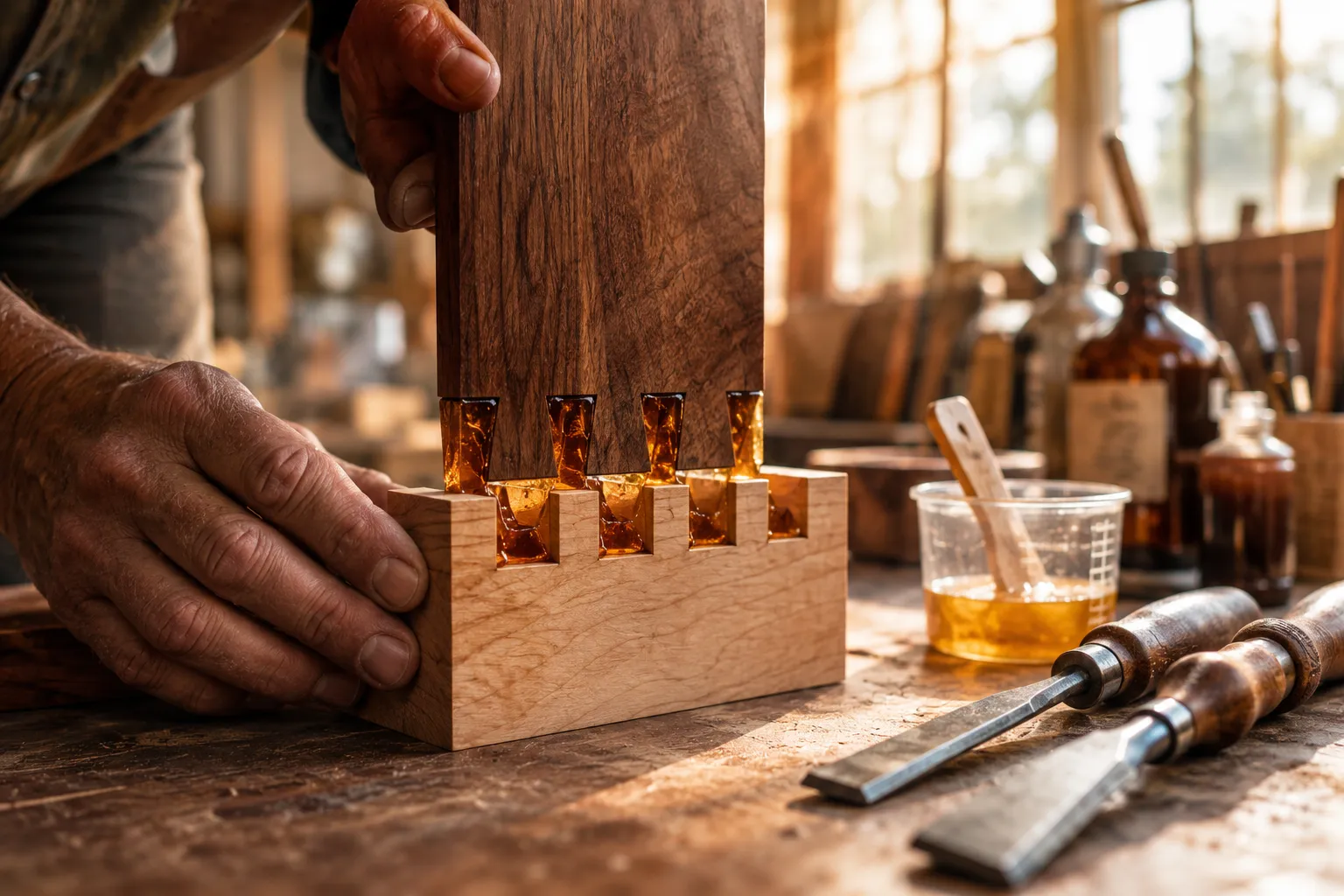
Hybrid joinery, in this context, refers to the strategic combination of traditional wood joinery techniques with modern adhesives or infill materials like bio-resin. It’s not about replacing time-honored methods but augmenting them to achieve enhanced aesthetics, increased structural integrity, or to address specific design challenges.
Consider a classic dovetail joint. While inherently strong, it can be further strengthened or visually emphasized by filling the gaps or voids with a contrasting bio-resin. This not only adds a unique design element but also encapsulates and stabilizes the wood fibers, potentially preventing future movement or splintering, especially with exotic or live-edge pieces. Similarly, a mortise and tenon joint might feature a bio-resin inlay within the tenon, creating a striking visual line through the mortised piece. This technique breathes new life into hand tool joinery for visible wood joints dovetails mortise and tenon and box joints as design features in furniture and small projects.
Benefits of Hybrid Joinery:
- Enhanced Strength: Resins can fill minor imperfections in joints, creating a more cohesive and robust bond.
- Aesthetic Appeal: The vibrant colors and translucency of bio-resins add a modern, artistic flair to traditional wooden pieces.
- Material Stability: Bio-resins can stabilize fragile wood sections, knots, or live edges, making them usable in applications where they might otherwise be too delicate.
- Design Flexibility: Opens up possibilities for intricate patterns, luminous accents, and unique visual narratives within the wood.
Understanding Bio-Resin Inlays
Bio-resin inlays are at the heart of this modern woodworking movement. Unlike traditional inlays that involve fitting pieces of wood, shell, or metal into routed grooves, bio-resin inlays use a liquid polymer that cures into a solid, durable material. The “bio” aspect signifies its sustainable origins, making it an attractive choice for environmentally conscious woodworkers and consumers.
The process typically involves:
- Preparation: Routing or carving channels or cavities into the wooden surface where the inlay is desired. This can range from simple lines to complex geometric patterns or filling natural voids in the wood.
- Mixing: Preparing the two-part bio-resin mixture, often with added pigments, dyes, or glow-in-the-dark powders to achieve desired colors and effects.
- Pouring: Carefully pouring the mixed resin into the prepared channels, ensuring even distribution and avoiding air bubbles.
- Curing: Allowing the resin to fully cure according to manufacturer specifications, which can take several hours to days.
- Finishing: Once cured, the resin is sanded flush with the wood surface and polished to a high sheen, creating a seamless and often luminous finish. This final step is crucial for achieving a professional look, as detailed in beyond basic sanding achieving a flawless finish with progressive grits and finishing techniques.
Types and Applications of Bio-Resin Inlays:
- River Tables: Perhaps the most famous application, where a channel running through a live-edge slab is filled with colored resin to mimic a river.
- Decorative Accents: Adding lines, geometric shapes, or freeform designs to tabletops, cabinet doors, or wall art for striking visual contrast. This can enhance projects like inlay cutting boards elevating kitchen essentials with geometric wood designs.
- Stabilizing Voids: Filling natural cracks, knot holes, or borer beetle damage in wood with clear or colored resin, turning imperfections into features.
- Joint Reinforcement and Embellishment: As discussed with hybrid joinery, using resin to fill and highlight traditional wood joints.
Techniques and Tools for Integrating Hybrid Joinery and Bio-Resin Inlays
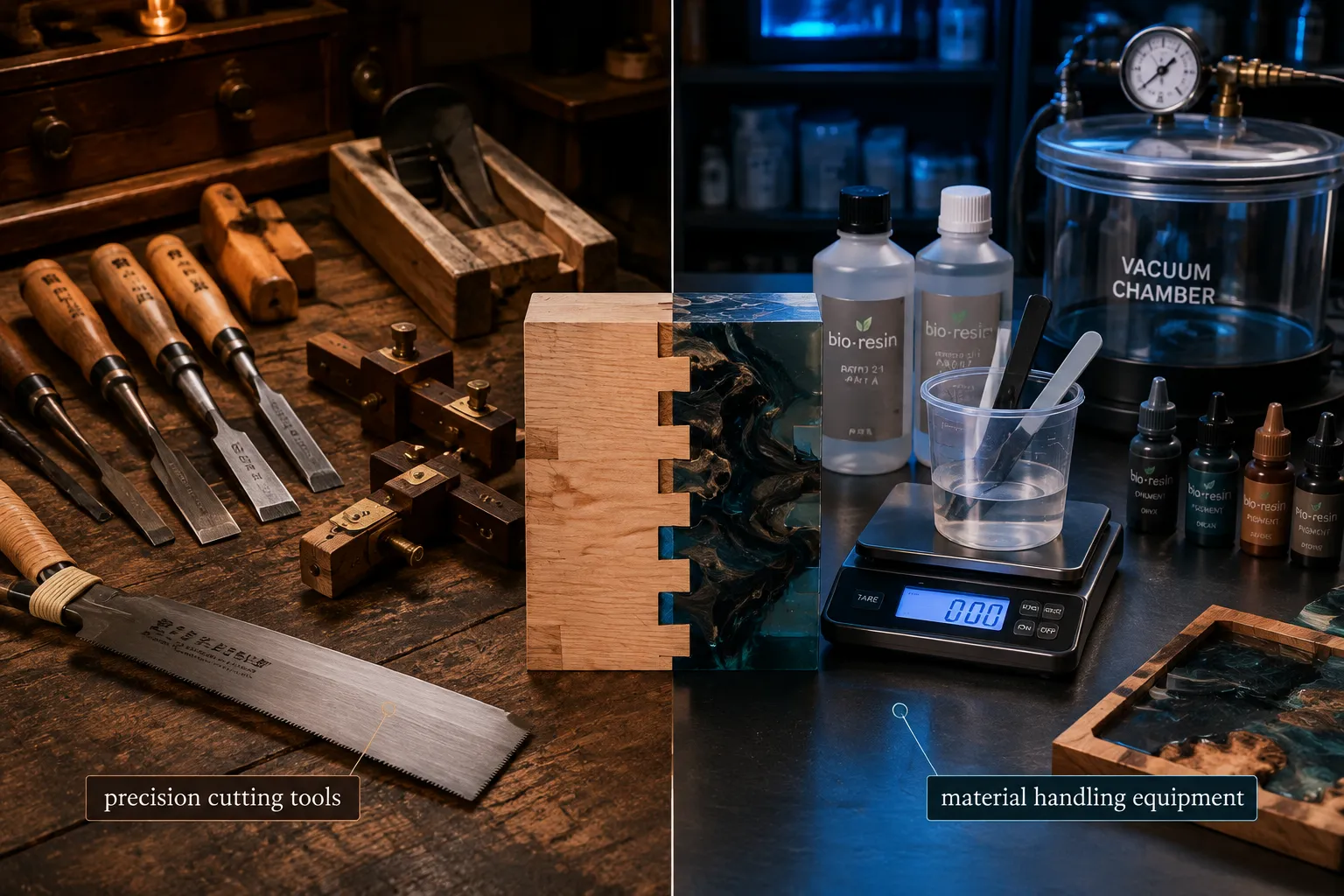
Successfully integrating hybrid joinery and bio-resin inlays requires a combination of traditional woodworking precision and a nuanced understanding of modern material handling. The tools and techniques employed bridge the gap between old-world craftsmanship and contemporary innovation.
Precision in Wood Joinery
The foundation of any successful hybrid piece remains the quality of the wood joinery itself. Whether it’s a precisely cut mortise and tenon or a tight-fitting dovetail, the woodworking must be accurate. For those refining their joinery skills, resources like beginners guide to hand cut joinery classic joints adapted for modern workshop workflows are invaluable.
- Hand Tools: Chisels, saws, and marking gauges are essential for the meticulous work of cutting traditional joints. Their precision allows for the tight tolerances needed for both wood-on-wood connections and for creating clean channels for resin.
- Power Tools: Routers, often used with jigs or CNC machines, excel at creating uniform channels and cavities for resin inlays, especially for repetitive or complex patterns. A well-maintained DIY router table build precision safety and custom features for advanced woodworking operations can significantly aid this process.
- Clamping and Support: Proper clamping is crucial to ensure that wood pieces remain stable during both joinery cutting and resin curing. This prevents movement that could lead to imprecise joints or resin leaks. Using an assembly table with integrated clamping solutions can be highly beneficial, such as building a portable woodworking assembly table with integrated clamping and storage solutions.
Working with Bio-Resins
The unique properties of bio-resins demand specific techniques for optimal results.
- Workspace Preparation: A clean, level, and well-ventilated workspace is essential. Protect surfaces with plastic sheeting, as spilled resin can be difficult to remove.
- Sealing: For wood with significant porosity or open grain, a thin sealing coat of resin or a compatible sealer might be necessary before the main pour to prevent excessive absorption or bubbling.
- Leak Prevention: For channels that extend to the edge of a workpiece, creating a dam with tape, silicone, or temporary wood barriers is crucial to prevent the liquid resin from flowing out before it cures.
- Mixing Ratios: Adhering strictly to the manufacturer’s mixing ratios for the bio-resin and hardener is paramount. Incorrect ratios can lead to improper curing, tackiness, or a brittle finish.
- Bubble Removal: Bubbles can be a common issue. Techniques include warming the resin slightly before mixing, pouring slowly from a height, or using a heat gun/torch (briefly and carefully) over the surface after pouring to release trapped air.
- Curing Environment: Maintaining a consistent temperature during the curing process is vital. Extreme temperatures can affect cure time and final hardness.
- Finishing: After full cure, the resin can be sanded with progressively finer grits, starting around 120-180 grit and moving up to 2000 or higher, followed by polishing compounds to achieve a glass-like finish.
Design Considerations and Creative Expression
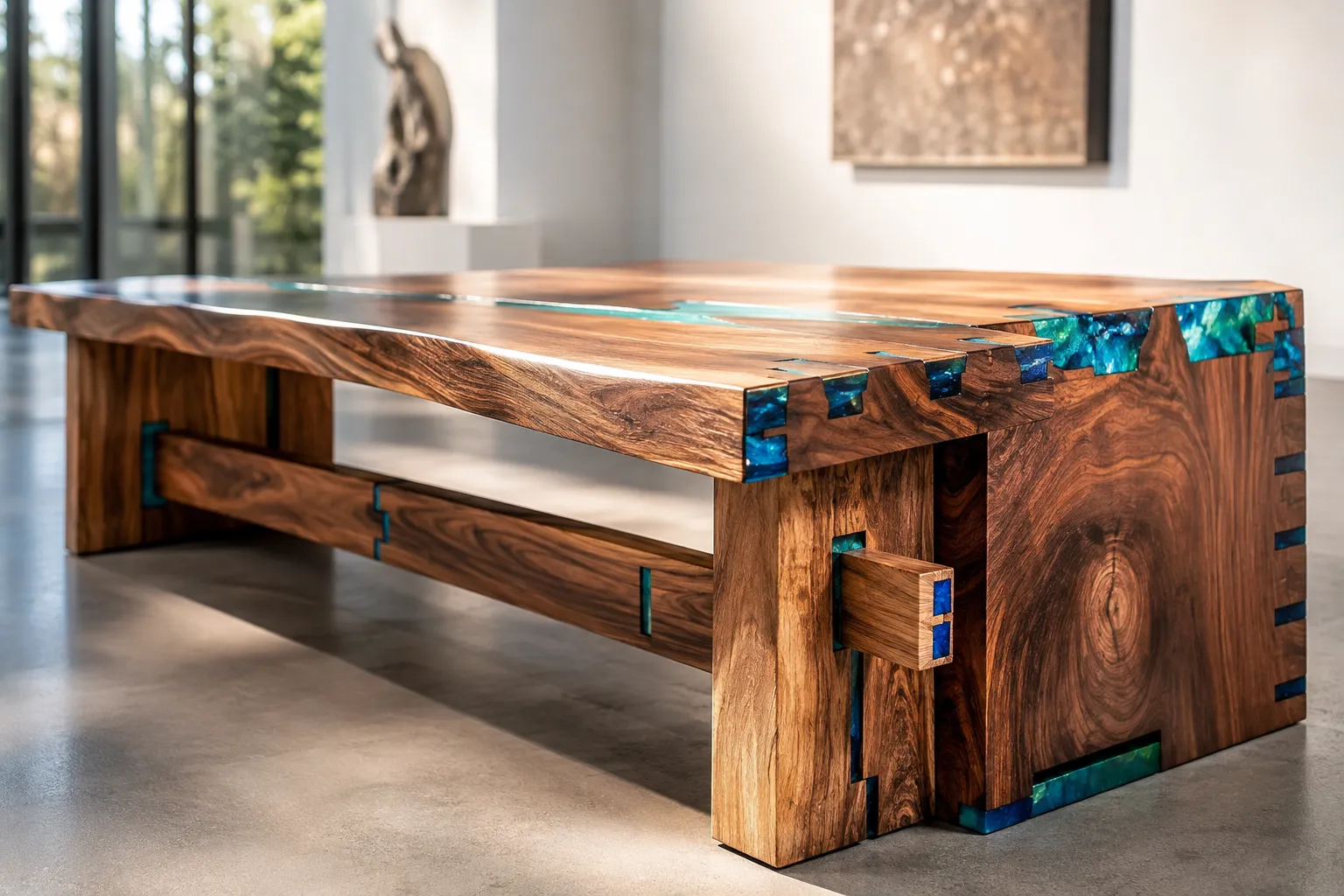
The true power of hybrid joinery and bio-resin inlays lies in the creative possibilities they unlock for woodworkers in 2026. This approach allows for furniture that is not merely functional but also a striking piece of art.
- Contrast and Harmony: Experiment with contrasting wood species (e.g., dark walnut with a light-colored resin) or complementary hues that enhance the natural beauty of the wood.
- Embracing Imperfections: Bio-resin is perfect for celebrating the natural character of wood. Instead of discarding boards with cracks or voids, these features can be turned into design highlights with colorful resin fills.
- Lighting Effects: Translucent resins can interact beautifully with light, creating luminous effects, especially in pieces designed for ambient lighting, such as a DIY modern nightstands with integrated wireless charging: a woodworking project for tech-savvy makers where light might pass through the resin.
- Geometric Precision vs. Organic Flow: The technique can be used to create sharp, modern geometric patterns or to mimic natural elements like flowing water or geological strata in live-edge pieces, aligning with a “Warm Minimalism in Wood Design Creating Uncluttered Spaces With Substantial Character Rich Materials” aesthetic.
Conclusion
The convergence of traditional woodworking and modern materials, particularly through hybrid joinery and bio-resin inlays, represents a significant and exciting trend in the woodworking community in 2026. This approach allows artisans to honor the timeless strength and beauty of wood while embracing innovative aesthetics and sustainable material choices. By mastering the precision of classic joinery and understanding the unique properties of bio-resins, woodworkers can create pieces that are not only structurally superior but also visually captivating, offering unique artistic expression and commanding higher perceived value. This fusion elevates woodworking from a craft to an art form, pushing the boundaries of what is possible with wood.
For those looking to venture into this creative space, the journey involves a commitment to both traditional skill refinement and an eagerness to experiment with new materials. Start by perfecting fundamental joinery, then gradually introduce bio-resin elements into smaller projects before tackling more ambitious designs. The rewards, in terms of aesthetic appeal, durability, and creative satisfaction, are immense, making hybrid joinery and bio-resin inlays a compelling path for any modern woodworker.