
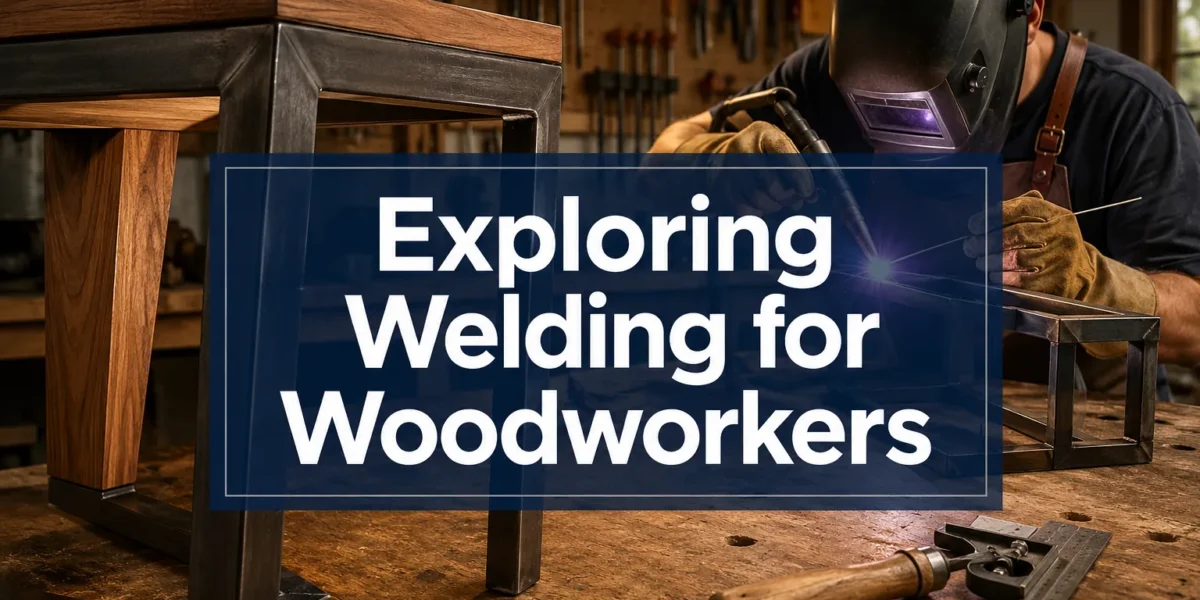
The rich tradition of woodworking, often perceived as a world of organic materials and intricate joinery, stands poised for a revolutionary evolution in 2026. While many woodworkers associate the term “welding” exclusively with industrial metal fabrication, the reality is that basic metal joining techniques offer an unparalleled opportunity to elevate hybrid wood projects. Discover how fundamental welding skills can significantly enhance your woodworking endeavors, enabling you to seamlessly integrate metal components for stronger joints, unique designs, and visually striking mixed-material furniture that pushes the boundaries of traditional craftsmanship. This integration isn’t about replacing wood, but about expanding its potential through complementary metalwork.
Key Takeaways
- Basic welding skills empower woodworkers to create stronger, more durable hybrid wood and metal projects.
- Metal integration opens new design avenues, allowing for structural elements, decorative accents, and unique aesthetic expressions.
- Understanding different welding techniques (MIG, TIG, Stick, Brazing) is crucial for choosing the right method for specific project needs.
- Prioritizing safety with proper PPE, ventilation, and fire prevention is paramount when working with welding equipment.
- Hybrid projects require careful planning for material compatibility, thermal expansion, and effective finishing techniques for both wood and metal.
Understanding the ‘Welding’ in Exploring ‘Welding’ for Woodworkers: Integrating Metal into Hybrid Wood Projects
For woodworkers, the concept of “welding” might initially seem alien, belonging to a separate craft entirely. However, when we talk about Exploring ‘Welding’ for Woodworkers: Integrating Metal into Hybrid Wood Projects, we’re referring to a practical skill set that allows for the permanent fusion of metal components. This fusion can dramatically enhance the structural integrity, aesthetic appeal, and longevity of wood creations. Unlike mechanical fasteners, welding creates a metallurgical bond, offering superior strength and a cleaner finish that can be integrated seamlessly into design.
The primary benefit lies in the ability to create robust frames, supports, and decorative elements that would be difficult or impossible to achieve with wood alone. Imagine a delicate wooden tabletop supported by a sleek, minimalist steel frame, or shelving units with elegant, slender metal uprights that offer immense strength without bulk. This synergy of materials allows for designs that celebrate both the warmth of wood and the industrial elegance of metal.
Key Welding Techniques for Woodworkers
While there are many welding processes, a few are particularly accessible and beneficial for woodworkers looking to integrate metal into their projects.
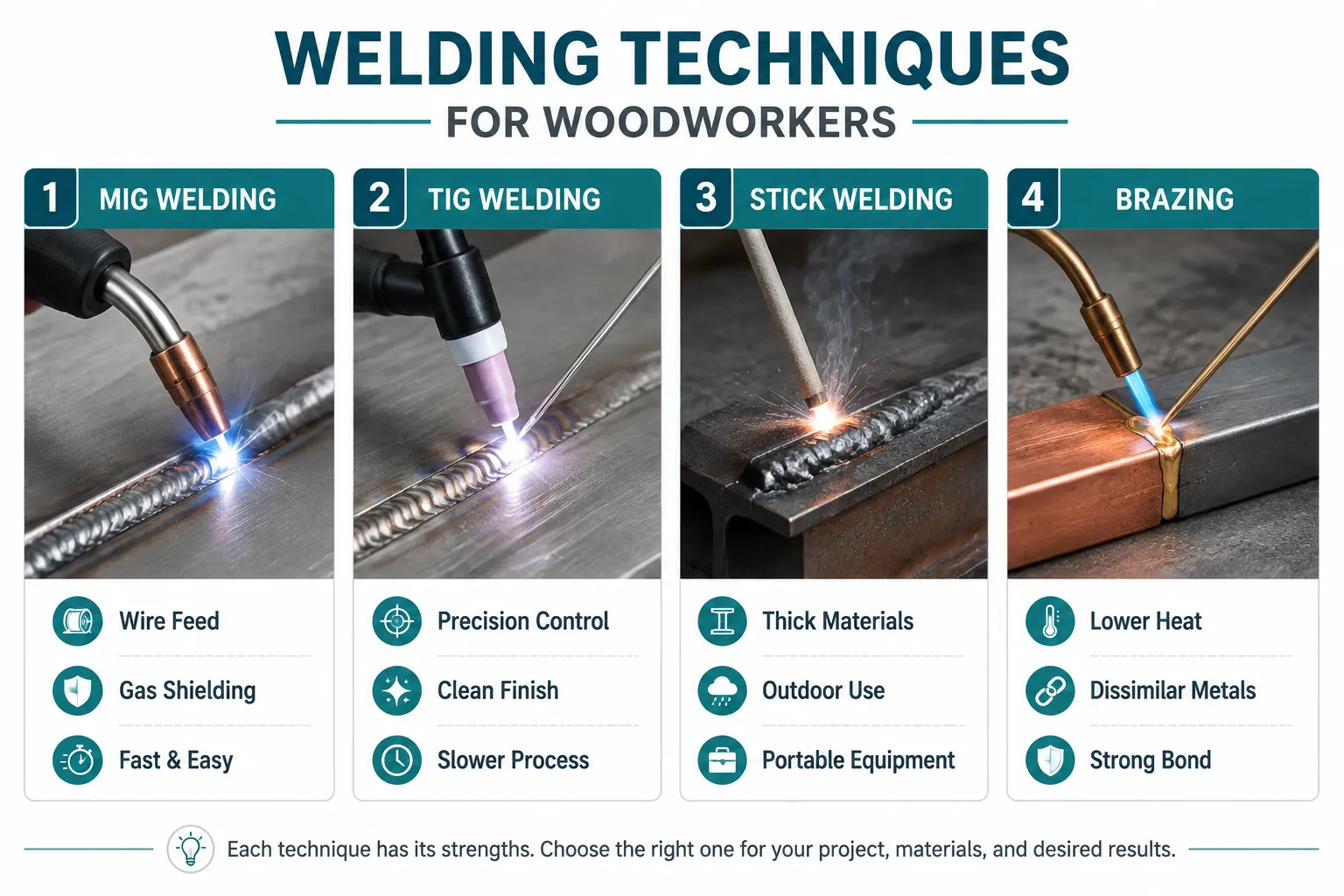
1. MIG Welding (Gas Metal Arc Welding)
MIG welding is often recommended for beginners dueence to its relative ease of use and speed. It employs a continuously fed wire electrode and a shielding gas (usually argon or a mixture of argon and CO2) to protect the weld puddle from atmospheric contamination.
- Pros: Relatively easy to learn, fast, produces clean welds, versatile for various metal thicknesses.
- Cons: Requires shielding gas (adds to setup cost), less portable than stick welding.
- Ideal for: Creating frames, brackets, and structural supports for furniture, jigs, and fixtures.
2. TIG Welding (Gas Tungsten Arc Welding)
TIG welding is renowned for its precision and ability to produce exceptionally clean and high-quality welds. It uses a non-consumable tungsten electrode and a separate filler rod, with an inert shielding gas (typically argon).
- Pros: Produces beautiful, precise welds; excellent control; ideal for thinner metals and exotic alloys.
- Cons: Slower process, requires significant skill and steady hand, higher equipment cost.
- Ideal for: Decorative elements, visible joints where aesthetics are paramount, fine metalwork accents, and joining stainless steel.
3. Stick Welding (Shielded Metal Arc Welding)
Stick welding, or SMAW, is one of the oldest and most versatile welding processes. It uses a consumable electrode coated in flux, which provides the shielding gas as it burns.
- Pros: Highly portable, inexpensive equipment, good for outdoor use and rusty or dirty metal, strong welds on thicker materials.
- Cons: Produces more spatter, requires more cleanup, not ideal for thin materials.
- Ideal for: Heavy-duty structural components, outdoor furniture frames, and projects where portability is key.
4. Brazing
While not strictly welding (it doesn’t melt the base metals), brazing is an excellent method for joining dissimilar metals or for situations where lower heat input is desired. It uses a filler metal with a lower melting point than the base metals, which flows into the joint via capillary action.
- Pros: Joins dissimilar metals (e.g., steel to brass), creates strong, leak-proof joints, minimizes distortion.
- Cons: Joint strength is typically less than a weld, requires careful surface preparation.
- Ideal for: Attaching decorative brass accents to steel, creating intricate metal detailing, or joining thinner metal components without high heat.
When selecting a technique, consider the metal type, thickness, desired aesthetic, and your budget for equipment and consumables. For most woodworkers starting out, MIG welding offers a good balance of accessibility and capability for integrating metal components.
Safety First: Essential Practices for Hybrid Metal-Wood Projects
Safety is paramount when Exploring ‘Welding’ for Woodworkers: Integrating Metal into Hybrid Wood Projects. Introducing welding into a woodworking shop brings new hazards, primarily from intense heat, sparks, fumes, and electrical risks. A proactive approach to safety can prevent accidents and ensure a productive work environment.
Personal Protective Equipment (PPE)
Investing in the right PPE is non-negotiable.
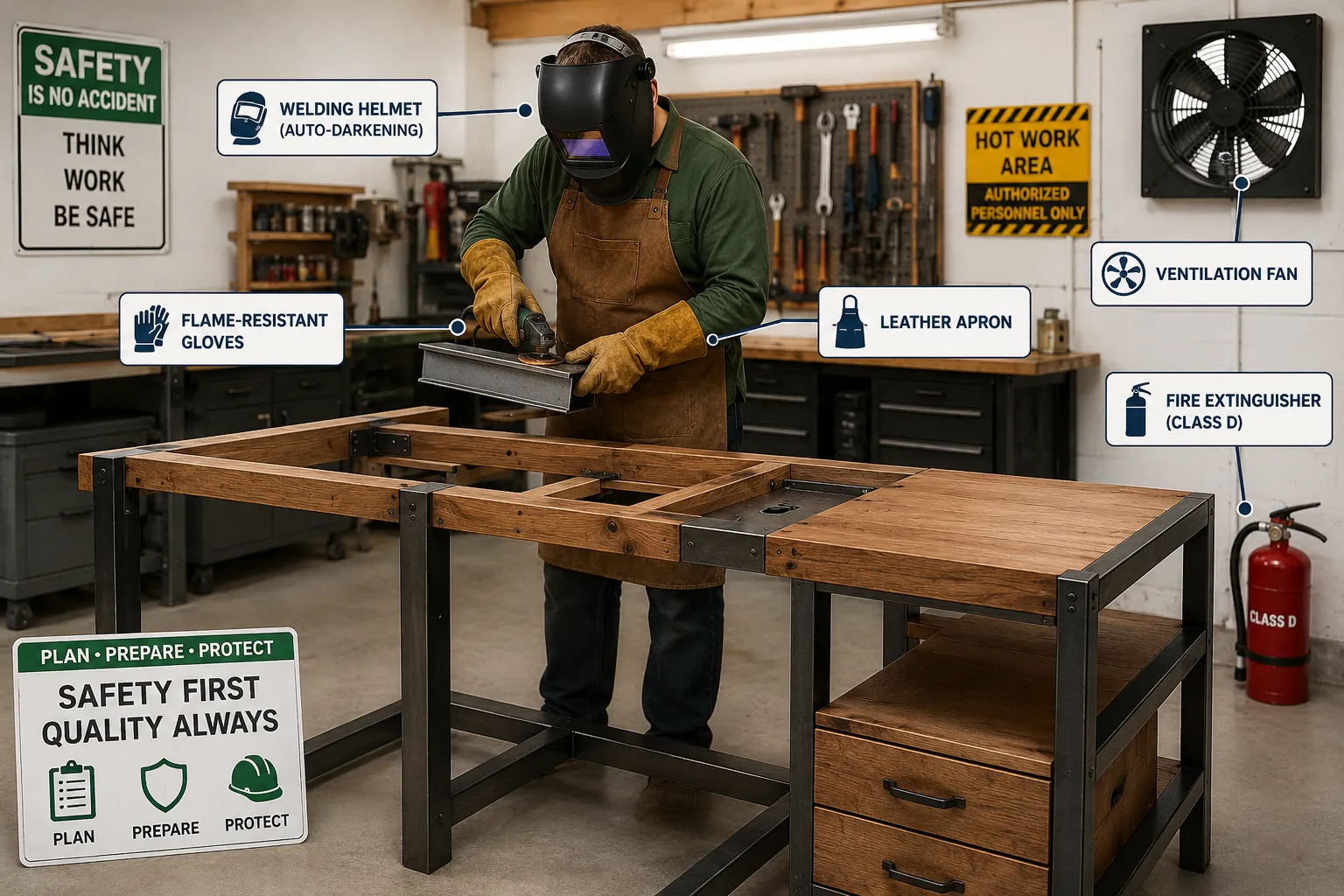
- Welding Helmet: An auto-darkening helmet is essential. It protects your eyes from harmful UV/IR radiation and intense visible light.
- Gloves: Heavy-duty, flame-resistant welding gloves protect your hands from heat, sparks, and electrical shock.
- Flame-Resistant Clothing: Long-sleeved shirts and pants made of natural fibers (cotton, denim) or specialized welding jackets are critical. Avoid synthetics which can melt onto skin. A leather apron offers additional protection.
- Closed-Toe Shoes: Leather boots protect your feet from falling hot metal and sparks.
- Respirator: Welding fumes can be toxic. Use a respirator with appropriate filters, especially when welding in confined spaces or with certain metals.
Workshop Preparation and Fire Prevention
Woodworking shops are inherently full of flammable materials. Rigorous preparation is vital before striking an arc.
- Clear the Area: Remove all flammable materials (sawdust, wood scraps, solvents, finishes) from the welding zone.
- Fire Extinguishers: Have a multi-purpose (ABC) and preferably a Class D (for combustible metals like magnesium, though less common in typical hybrid projects) fire extinguisher readily accessible and know how to use them.
- Ventilation: Good ventilation is crucial to disperse welding fumes. Use exhaust fans and open doors/windows when possible. For more intensive welding, local exhaust ventilation (fume extractors) is recommended.
- Fire Watch: For larger projects or when working near immovable flammable objects, have a “fire watch” buddy with a fire extinguisher ready to respond to stray sparks. Check the area for several hours after welding for lingering embers.
- Grounding: Always ensure your workpiece is properly grounded to prevent electrical shock.
General Electrical Safety
- Inspect Equipment: Regularly check welding cables, power cords, and equipment for damage.
- Dry Environment: Never weld in wet conditions or while standing in water.
- Proper Amperage: Use the correct amperage for your material and electrode to avoid overheating or inefficient welding.
Prioritizing these safety measures ensures that Exploring ‘Welding’ for Woodworkers: Integrating Metal into Hybrid Wood Projects remains a creative and rewarding endeavor, free from preventable accidents.
Integrating Metal: Design Considerations and Project Ideas
The true art of Exploring ‘Welding’ for Woodworkers: Integrating Metal into Hybrid Wood Projects lies in thoughtful design and seamless integration. Metal can serve both functional and aesthetic purposes, transforming ordinary pieces into extraordinary works of art and utility. When designing, consider how the inherent properties of each material can complement the other.
Design Principles for Hybrid Projects
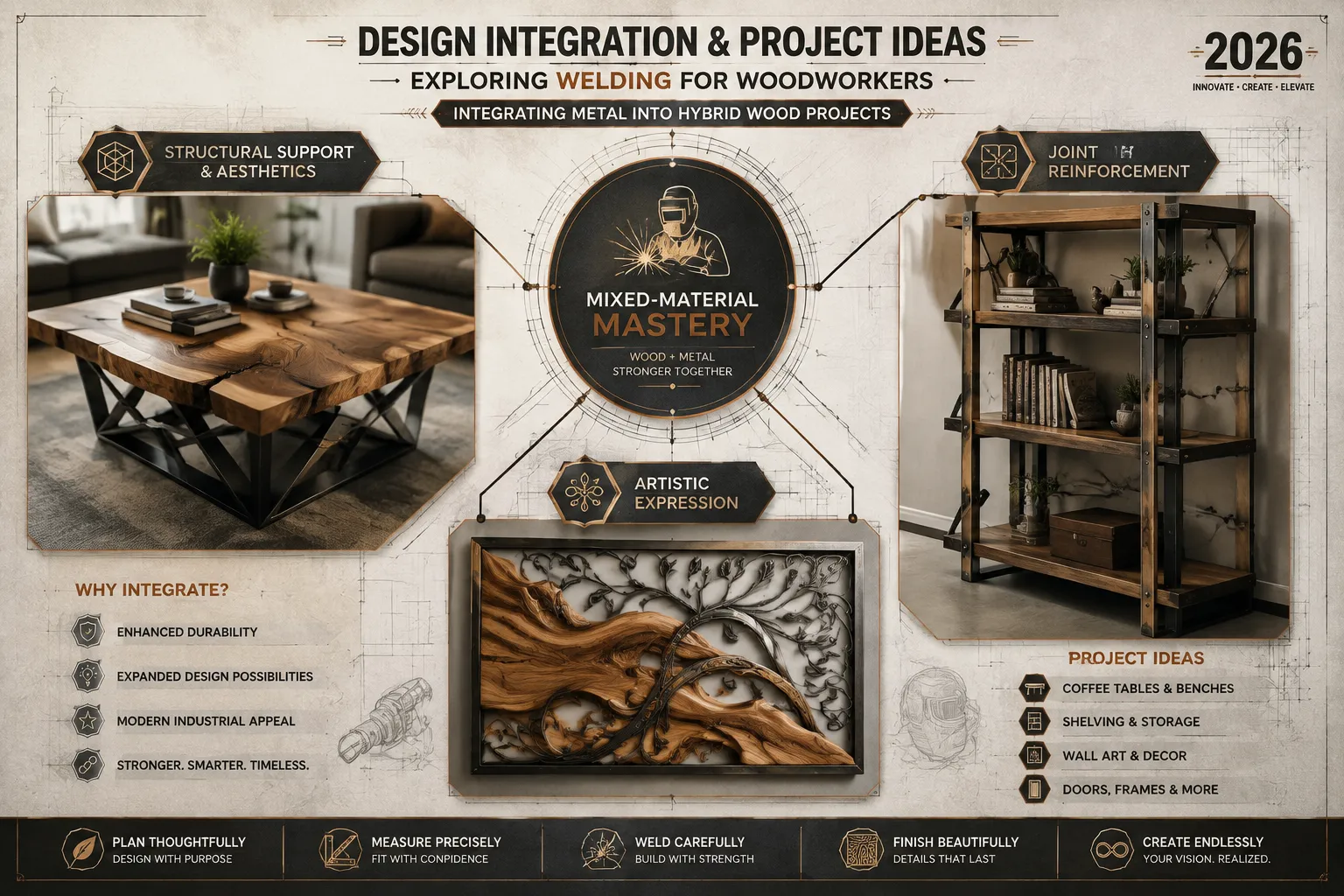
- Material Contrast: Exploit the visual and tactile contrast between warm wood and cool metal. A polished hardwood top on a raw, industrial steel base creates a dynamic visual.
- Structural Reinforcement: Metal excels at strength with minimal bulk. Use it for slender legs, rigid frames, or concealed internal supports that would require much thicker wood components. This is especially useful for building a robust outdoor dining table or a custom poolside table.
- Joint Reinforcement: Metal plates, brackets, or hidden internal structures can significantly strengthen critical joints, especially in furniture designed for heavy use. This can be combined with hybrid joinery and bio-resin inlays for truly innovative connections.
- Thermal Expansion: Remember that wood and metal expand and contract at different rates with temperature changes. Design joints that accommodate this movement to prevent warping or cracking. Slotted holes for bolts, or flexible connections, can mitigate these issues.
- Finishing Harmony: Consider how the finishes on both materials will interact. A rustic wood finish might pair well with patinated metal, while a sleek, modern piece might demand a highly polished wood and powder-coated metal. Explore options like budget friendly wood finishing to complement your metalwork.
Inspiring Hybrid Project Ideas
The possibilities for integrating metal are vast. Here are a few compelling ideas:
- Furniture Legs and Bases: Replace traditional wooden legs with welded steel or aluminum frames. This creates a contemporary, often lighter, look and superior stability. Think industrial-style coffee tables (see comparing coffee tables wood vs metal) or dining table bases.
- Shelving Units: Construct sturdy metal uprights or brackets that support wooden shelves. This allows for open, airy designs that can bear significant weight.
- Desk Frames: A welded metal frame can provide a rock-solid foundation for a beautiful wooden desktop, offering clean lines and durability.
- Decorative Accents: Incorporate small, intricate welded metal elements as inlays, handles, pulls, or decorative trim on wooden boxes, doors, or panels. This builds on the smithy’s influence on woodworking by giving woodworkers direct control over metal creation.
- Outdoor Furniture: Metal frames provide weather resistance and structural integrity for outdoor pieces, while wood provides comfort and aesthetic warmth. Consider this for building outdoor poolside tables and patio furniture.
- Storage Solutions: Combine wooden boxes or drawers with welded metal cages or racks for unique storage solutions, offering both strength and visual interest.
- Art and Sculpture: Merge carved or turned wood with welded metal forms to create striking mixed-media sculptures and wall art.
Essential Tools and Materials
Beyond welding equipment, you’ll need tools to prepare your metal components.
- Metal Saws: A chop saw with a metal cutting blade or an angle grinder with a cut-off wheel for precise cuts.
- Angle Grinder: Indispensable for grinding welds, shaping metal, and general metal fabrication.
- Clamps: Various metal clamps are essential for holding pieces securely during welding.
- Measuring Tools: Metal ruler, square, and calipers for accurate measurements.
- Metal Stock: Mild steel is a great starting point for beginners, readily available in various shapes (angle, flat bar, square tube).
By embracing basic welding, woodworkers in 2026 can unlock a new realm of design possibilities, creating truly distinctive and enduring pieces that celebrate the best of both materials.
Conclusion
Exploring ‘Welding’ for Woodworkers: Integrating Metal into Hybrid Wood Projects is not merely an adjacent skill but a powerful augmentation to the traditional craft. By understanding basic welding techniques and adhering to stringent safety protocols, woodworkers can unlock unparalleled structural integrity, introduce diverse aesthetic elements, and venture into innovative designs previously inaccessible. The synergy between the organic warmth of wood and the industrial strength of metal creates pieces that are not only durable and functional but also visually captivating and profoundly unique.
The journey into hybrid woodworking promises a broadened creative horizon and the ability to craft truly distinctive items. As you consider your next project, challenge yourself to think beyond purely wooden constructions. Start with simple metal bases or decorative accents, prioritize learning one welding technique (like MIG welding), and always remember that safety and meticulous planning are your best tools. Embrace this exciting frontier, and watch your woodworking projects transform into works of art that defy conventional boundaries.
SEO Meta Title: Welding for Woodworkers: Integrating Metal into Hybrid Projects SEO Meta Description: Explore how basic welding techniques can transform your woodworking projects in 2026, enabling stronger joints, unique designs, and beautiful hybrid wood-metal furniture.