
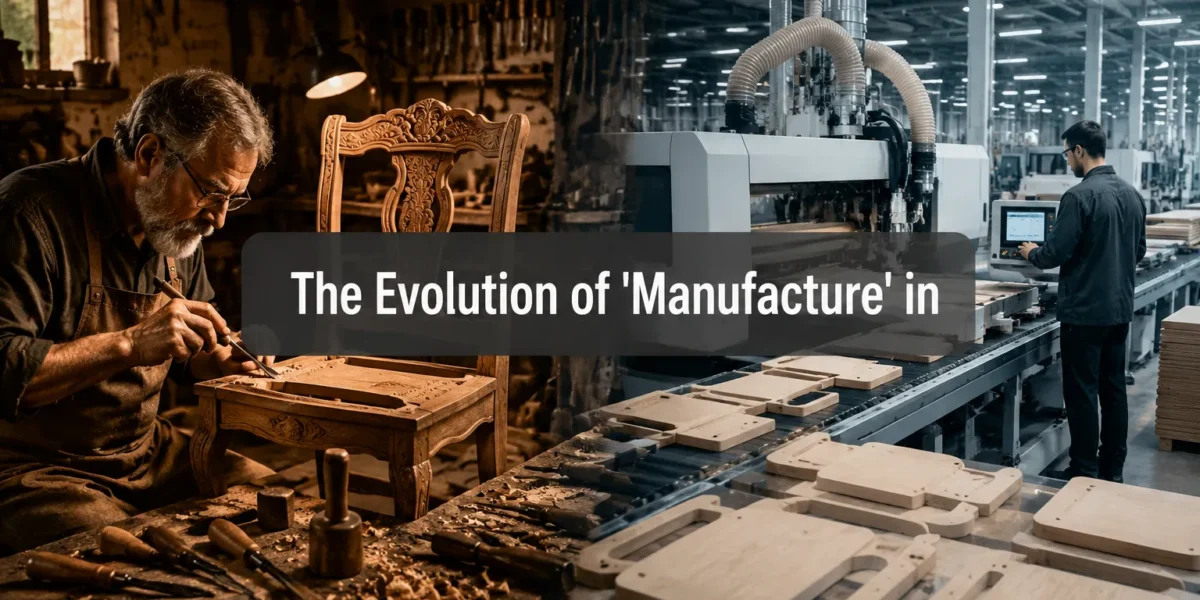
For millennia, the creation of objects from wood relied almost entirely on the skill and strength of individual artisans. This deeply personal connection between maker and material, passed down through generations, defined “manufacture” in woodworking. Yet, today in 2026, the term evokes images of sophisticated machinery, digital precision, and large-scale operations. This article traces The Evolution of ‘Manufacture’ in Woodworking: From Artisan Workshops to Modern Production, exploring how tools, techniques, and philosophies transformed this ancient craft into a diverse global industry. From the solitary artisan carving a unique masterpiece to automated factories producing thousands of identical components, this journey reveals a continuous drive for efficiency, scalability, and innovation, while still honoring the craft’s foundational principles.
Key Takeaways
- Early woodworking was defined by individual skill and hand tools, emphasizing craftsmanship and unique, bespoke pieces.
- The Industrial Revolution brought mechanization, standardizing parts and increasing production volume, marking a significant shift from artisan-led creation.
- Mass production emerged with electric power and assembly lines, prioritizing efficiency, cost-effectiveness, and wider accessibility of wood products.
- Modern woodworking incorporates advanced digital technologies like CAD/CAM, CNC, and robotics, enabling unprecedented precision, customization, and complex designs.
- Today’s industry balances mass production with high-tech custom fabrication, driven by sustainability concerns, new materials, and evolving consumer demands.
From Handcraft to Early Mechanization: The Artisan Era
The earliest forms of woodworking, stretching back thousands of years, were inherently artisanal. The term “manufacture” itself, derived from Latin manu factum meaning “made by hand,” perfectly encapsulated this era. Woodworkers, often master craftsmen, possessed an encyclopedic knowledge of timber, joinery, and design. Their workshops were hives of activity, relying on fundamental hand tools: axes for felling and rough shaping, adzes for smoothing, chisels and gouges for intricate carving, and various saws for cutting. Each piece of furniture, every structural beam, bore the unique mark of its creator.
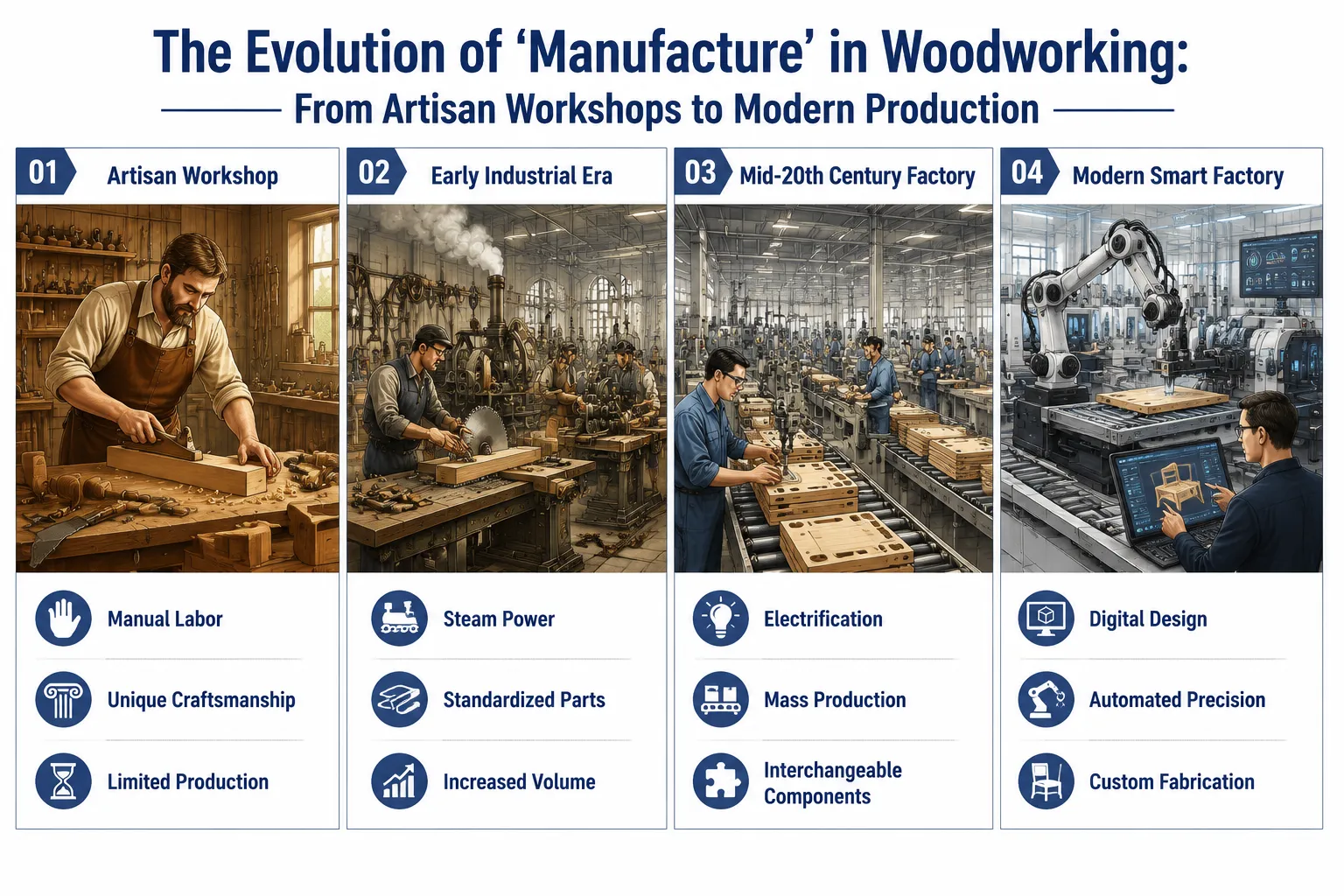
The training of these artisans was rigorous, typically involving long apprenticeships under a master. This system ensured the transmission of highly specialized skills, from selecting the right tree to executing complex joinery like mortise and tenon or dovetails, which are still revered today for their strength and beauty. For a deeper dive into traditional joinery, explore Mastering Wood Joinery Techniques Essential Methods For Strong And Beautiful Furniture. Production was slow, limited by human endurance and the manual nature of the work. Consequently, wood products were often valuable, bespoke items, primarily accessible to the wealthy or crafted for essential communal purposes.
The Dawn of Mechanical Assistance
While handcraft dominated for centuries, early forms of mechanization began to emerge before the full swing of the Industrial Revolution. Waterwheels and windmills were harnessed to power basic sawmills, transforming the arduous task of hand-sawing logs into planks. This marked a pivotal, albeit incremental, step towards increased production capacity.
| Era | Primary Tools/Methods | Production Volume | Key Characteristics |
|---|---|---|---|
| Artisan (Pre-18th Century) | Hand tools (chisels, saws, planes) | Low, bespoke | High craftsmanship, unique pieces, skill-intensive |
| Early Mechanization (18th-19th Century) | Water/steam powered saws, basic lathes | Medium, standardized parts | Increased lumber processing, some repetitive tasks automated |
The advent of steam power in the late 18th and 19th centuries further accelerated this trend. Steam-powered sawmills became more efficient and less geographically constrained. The invention of the circular saw and later the bandsaw revolutionized timber processing, allowing for faster and more precise cutting of wood into usable dimensions. These innovations laid the groundwork for the eventual shift from artisan-centric production to factory-based manufacturing, setting the stage for the true evolution of ‘manufacture’ in woodworking.
The Industrial Revolution and the Rise of Mass Production
The 19th century’s Industrial Revolution brought about a seismic shift in The Evolution of ‘Manufacture’ in Woodworking: From Artisan Workshops to Modern Production. The introduction of steam and then electric power to woodworking machinery fundamentally altered how wood products were made. Factories began to replace individual workshops, focusing on specialization, standardization, and volume.
Key developments included:
- Standardization of Parts: With machines capable of producing identical components repeatedly, the idea of interchangeable parts gained traction. This meant a chair leg could be mass-produced and fit any chair of that design, rather than being custom-fitted by a craftsman.
- Specialized Machinery: Instead of one artisan performing all tasks, factories employed specialized machines for specific operations: planers, jointers, moulders, and mortisers, each designed for a particular cut or shaping process.
- Assembly Line Production: Inspired by Henry Ford’s automotive assembly lines, woodworking factories adopted similar principles. Products moved through various stations, with each worker or machine performing a specific task, significantly reducing production time and cost.
This era saw the birth of large-scale furniture companies, producing pieces for a burgeoning middle class. Furniture became more affordable and widely available, though often at the expense of the intricate detailing and unique character found in artisan-made pieces. The emphasis shifted from bespoke craftsmanship to efficiency and economic viability.
The Mid-20th Century: Electrification and Efficiency
By the mid-20th century, electrification had fully transformed woodworking factories. Electric motors powered more reliable and versatile machinery, further refining the mass production model. The focus remained on optimizing workflow, reducing waste, and maximizing output. For strategies on reducing waste, consider exploring Turning Shop Scraps Into Design Features Mixed Wood Techniques And Offcut Utilization For Zero Waste Woodworking. Engineered wood products like plywood and particleboard also gained prominence, offering cost-effective alternatives and new design possibilities.
The transition was not without its critics. Many lamented the loss of traditional craft skills and the perceived decline in quality. However, mass production undeniably made functional and aesthetically pleasing wood products accessible to a far broader segment of the population, fundamentally changing consumer expectations and the economic landscape of woodworking. This period solidified the industrial definition of “manufacture” in the industry.
Modern Production and Custom Fabrication: The Digital Age of Woodworking
The late 20th century and early 21st century ushered in the most transformative period yet for The Evolution of ‘Manufacture’ in Woodworking: From Artisan Workshops to Modern Production: the digital age. Computer-Aided Design (CAD) and Computer-Aided Manufacturing (CAM) software, coupled with Computer Numerical Control (CNC) machines, revolutionized precision, customization, and efficiency.
Today in 2026, a modern woodworking facility integrates advanced technology at every stage:
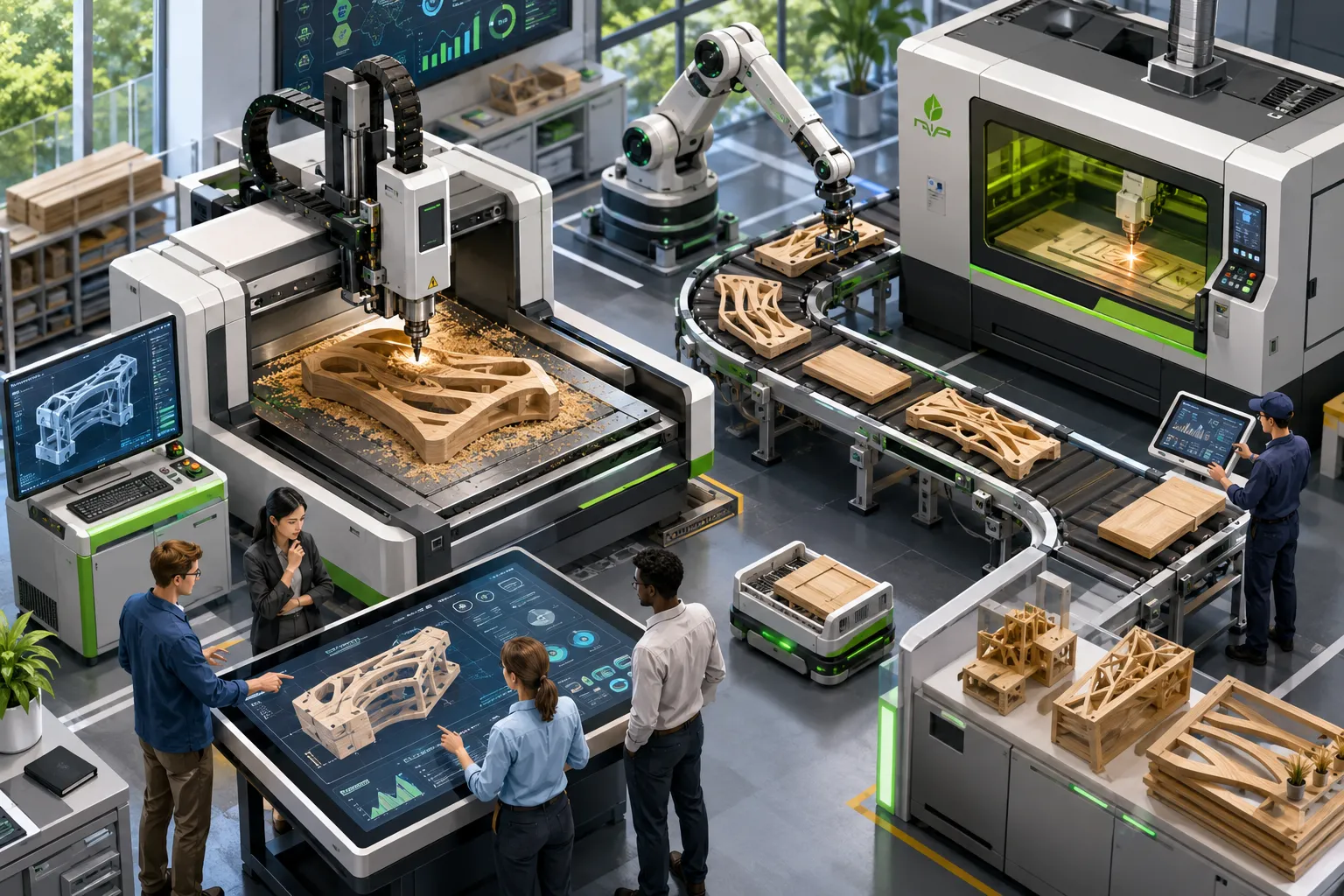
- Digital Design and Prototyping: Designers use CAD software to create intricate 3D models. These designs can be simulated, tested virtually, and refined before any physical wood is cut, saving time and materials.
- Automated Cutting and Shaping: CNC routers, lasers, and saws receive instructions directly from CAD/CAM files, executing complex cuts, engravings, and shaping with unparalleled accuracy and repeatability. This allows for both mass production of identical parts and highly customized one-off pieces with equal precision.
- Robotics and Automation: Robotic arms perform repetitive tasks like material handling, sanding, painting, and assembly, increasing speed, consistency, and worker safety.
- Optimized Material Use: Software can nest parts on a sheet of plywood or lumber to minimize waste, a critical aspect of sustainable practices. This aligns well with approaches discussed in Reclaimed Wood Woodworking: Sourcing, Preparing, and Building.
- Smart Workshops and IoT: Modern workshops often incorporate Internet of Things (IoT) devices, allowing machines to communicate, share data, and even self-diagnose maintenance needs, creating a more interconnected and efficient production environment. For insights into building such an environment, see Building a Smart Compact Workshop: Affordable Automation, Digital.
The Blurring Lines: Mass Customization and Artisanal Technology
One of the most exciting aspects of modern woodworking is the ability to achieve mass customization. Digital manufacturing allows consumers to order highly personalized items, from custom-sized shelving to unique furniture designs, that are produced efficiently through automated processes. This brings a touch of the artisanal bespoke experience back into large-scale production.
Furthermore, technology is not just for factories. Individual woodworkers now leverage smaller CNC machines, laser engravers, and 3D printers to enhance their craft, create intricate details impossible by hand, and expand their creative capabilities. This fusion of traditional skill with cutting-edge tools represents a new pinnacle in the evolution of ‘manufacture’ in woodworking, where the spirit of the artisan meets the precision of the machine. The integration of diverse materials, such as resin and metal, is also facilitated by these modern techniques, as explored in Mastering Mixed-Material Woodworking: Blending Wood with Resin.
The Enduring Legacy and Future Trajectories
The journey of ‘manufacture’ in woodworking, from rudimentary hand tools to sophisticated robotics, reflects humanity’s relentless pursuit of efficiency, precision, and innovation. While the scale and methods have transformed dramatically, the core principles, shaping wood for purpose and beauty, remain unchanged. Today, the woodworking industry stands at a fascinating crossroads, blending the best of both worlds: the rich heritage of artisanal skill and the boundless potential of modern technology.
Balancing Tradition and Technology
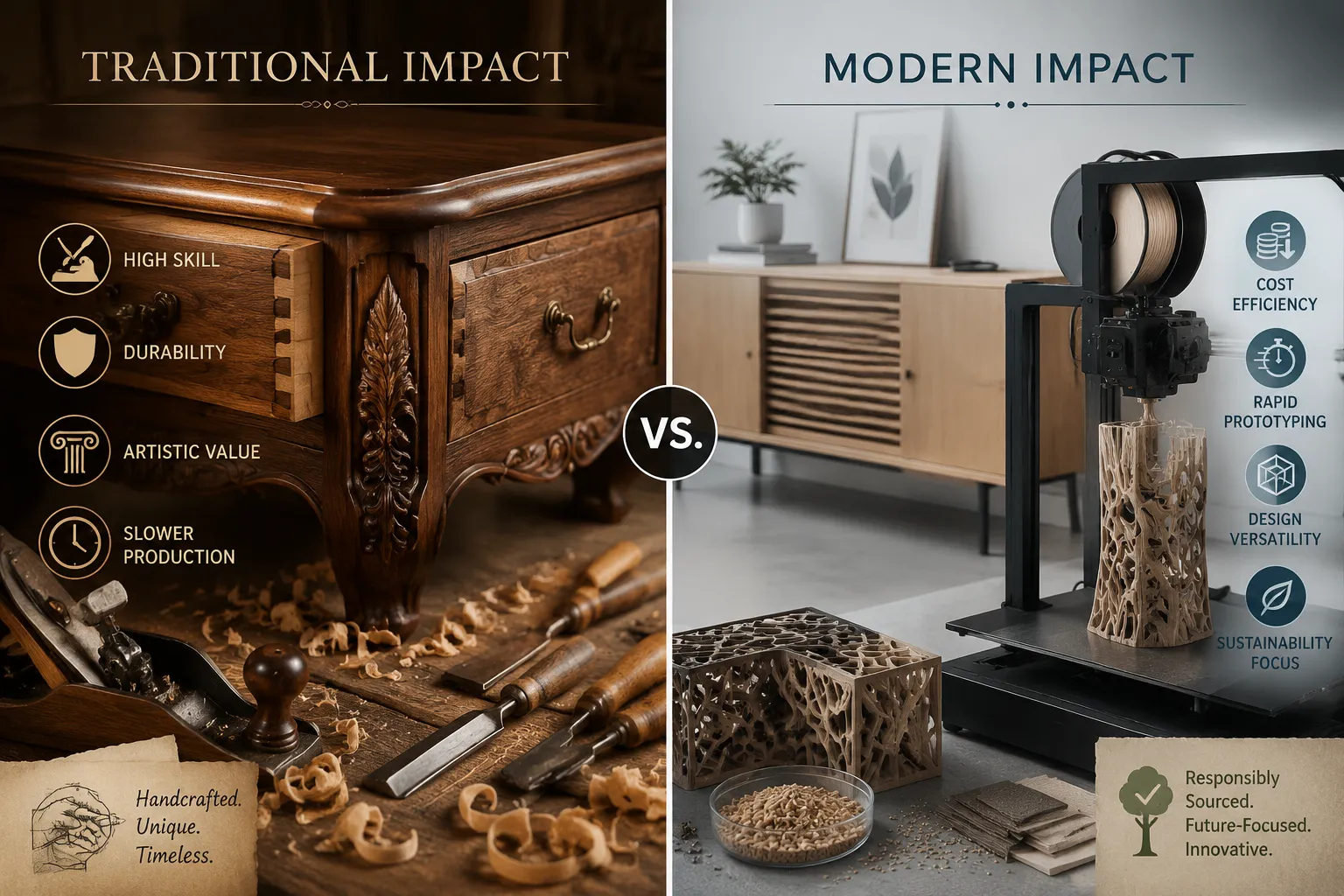
In 2026, the market values both the unique, handcrafted piece and the cost-effective, mass-produced item. This dual demand has fostered a dynamic environment where:
- Artisans continue to thrive, focusing on high-end, custom work, often incorporating modern design principles with traditional techniques. They might use a CNC machine for initial rough cuts but finish a piece with hand planes and chisels, a hybrid approach gaining popularity, as discussed in Hybrid Joinery Techniques: Blending Traditional Mortise-and-Tenon.
- Factories employ sophisticated automation to produce furniture, cabinetry, and building components with incredible speed and accuracy, often adapting designs for diverse global markets.
- Sustainability is a growing concern. Modern manufacturing processes are increasingly optimized for energy efficiency, waste reduction, and the use of sustainably sourced or recycled materials. This interest in salvaged materials is seen in resources like Wild Crafts and Rustic Woodworking: Building Furniture from Reclaimed.
The Future of Woodworking Manufacture
Looking ahead, several trends will continue to shape the evolution of ‘manufacture’ in woodworking:
- Further Automation and AI Integration: Expect more advanced robotics, predictive maintenance driven by Artificial Intelligence, and highly integrated smart factories.
- New Materials and Composites: Research into wood-plastic composites, engineered wood products with enhanced properties, and even 3D-printable wood-based materials will expand design and application possibilities.
- Increased Personalization: As technology becomes more accessible and flexible, the ability to create truly unique products on demand will continue to grow, catering to individual tastes without sacrificing efficiency.
- Circular Economy Principles: A stronger emphasis on designing products for disassembly, repair, and recycling will influence manufacturing processes, prioritizing longevity and resource conservation.
The evolution of ‘manufacture’ in woodworking is a story of continuous adaptation, innovation, and a deep respect for the material itself. From the painstaking efforts of a single artisan to the intricate dance of machines in a modern factory, wood continues to inspire creativity and ingenuity, promising a vibrant future for the craft and industry.
Conclusion
The evolution of ‘manufacture’ in woodworking is a journey that mirrors human progress, moving from the purely manual and bespoke to the highly automated and globally distributed. From the skilled hands of ancient artisans to the precision of 2026’s CNC machines and robotics, the industry has constantly sought better ways to shape wood into functional and beautiful objects. The Industrial Revolution democratized access to wood products through mass production, while the digital age has reintroduced an unprecedented level of precision and customization, blending the benefits of both eras.
For aspiring woodworkers or established businesses, understanding this evolution is crucial. It highlights the enduring value of traditional craftsmanship even amidst technological advancement, and the power of modern tools to unlock new creative and economic potential. The future of woodworking lies in embracing this rich history while simultaneously leveraging cutting-edge innovations to build a more efficient, sustainable, and personalized approach to working with wood. Whether you’re mastering a hand plane or programming a robotic arm, the spirit of creation remains at the heart of woodworking’s timeless appeal.
SEO Meta Title: Woodworking Evolution: Artisan Craft to Modern Production SEO Meta Description: Explore the evolution of ‘manufacture’ in woodworking, from ancient artisan workshops to 2026’s automated smart factories, blending craft with technology.