
The art of marquetry, with its delicate dance of wood veneers and intricate patterns, has graced royal palaces and grand estates for centuries. Yet, beyond the fundamental techniques lies a realm of mastery where artisans transform simple wood into breathtaking narratives. This article serves as a comprehensive masterclass on Advanced Marquetry and Wood Inlay: Crafting Intricate Designs for Heirloom Furniture, delving into the complex pattern creation, meticulous veneer selection, precise cutting methodologies, and seamless integration techniques required to produce truly stunning decorative effects for fine furniture that will be cherished for generations.
Key Takeaways
- Advanced marquetry moves beyond basic patterns, involving intricate designs, diverse material palettes, and specialized techniques.
- Selecting the right veneers based on grain, color, and workability is crucial for achieving desired aesthetic and structural integrity.
- Precision cutting, whether by hand or machine, is paramount for tight seams and flawless pattern execution.
- Mastering specialized techniques like boulle marquetry, tarsia certosina, and Advanced Marquetry and Wood Inlay: Crafting Intricate Designs for Heirloom Furniture provides a broader artistic repertoire.
- Seamless integration and meticulous finishing are essential for transforming marquetry into a durable, heirloom-quality piece.
Understanding the Nuances of Advanced Marquetry and Wood Inlay
While basic marquetry involves cutting and fitting simple shapes, advanced marquetry elevates this craft to an art form, demanding a deeper understanding of design principles, material properties, and execution techniques. It’s not merely about putting pieces together, but about creating visual depth, illusion, and storytelling through wood. The core of Advanced Marquetry and Wood Inlay: Crafting Intricate Designs for Heirloom Furniture lies in pushing boundaries, experimenting with exotic woods, incorporating alternative materials, and employing methods that achieve unparalleled detail and durability.
One significant aspect of advanced work is the sheer complexity of the patterns. This can range from highly detailed pictorial scenes and elaborate floral arrangements to intricate geometric tessellations and trompe l’oeil effects that trick the eye into seeing three dimensions on a flat surface. These designs often require hundreds, if not thousands, of individual veneer pieces, each cut with absolute precision.
Beyond complexity, the choice and manipulation of materials are critical. Advanced marquetry artists often employ a diverse palette of veneers, selecting them not just for color, but also for grain pattern, texture, and how they interact with light. This deliberate selection allows for subtle shading, highlighting, and the creation of visual movement within the design. The integration of other materials, such as mother-of-pearl, abalone, brass, pewter, or even stone, further expands the artistic possibilities, adding sparkle, contrast, and unique tactile qualities.
Advanced Design and Pattern Creation
The journey into advanced marquetry begins long before a knife touches wood. It starts with sophisticated design and meticulous pattern creation. Unlike simpler designs, advanced patterns often involve multiple layers, intricate curves, and delicate details that require careful planning and often, the use of digital tools.
Design Principles for Intricate Patterns:
- Harmony and Contrast: Balancing varied wood tones, grain directions, and material types to create visual interest without overwhelming the eye.
- Perspective and Depth: Utilizing shading (sand scorching), varied grain directions, and strategic color placement to create illusions of depth, distance, and dimension.
- Repetition and Variation: Employing repeating motifs with subtle variations to establish rhythm and visual flow throughout the design.
- Narrative and Symbolism: Crafting designs that tell a story, represent a concept, or incorporate symbolic elements, adding a deeper layer of meaning to the furniture piece.
Many master marqueters now leverage computer-aided design (CAD) software to create, refine, and scale their intricate patterns. This allows for precise measurements, virtual experimentation with different veneer combinations, and the ability to generate templates for both hand-cutting and CNC machines. While some purists prefer entirely freehand work, CAD tools can significantly enhance precision and efficiency for highly complex designs.
For further exploration of fine furniture craftsmanship, understanding fundamental techniques like Mastering Wood Joinery Techniques Essential Methods For Strong And Beautiful Furniture can provide a solid foundation for integrating marquetry into structural elements.
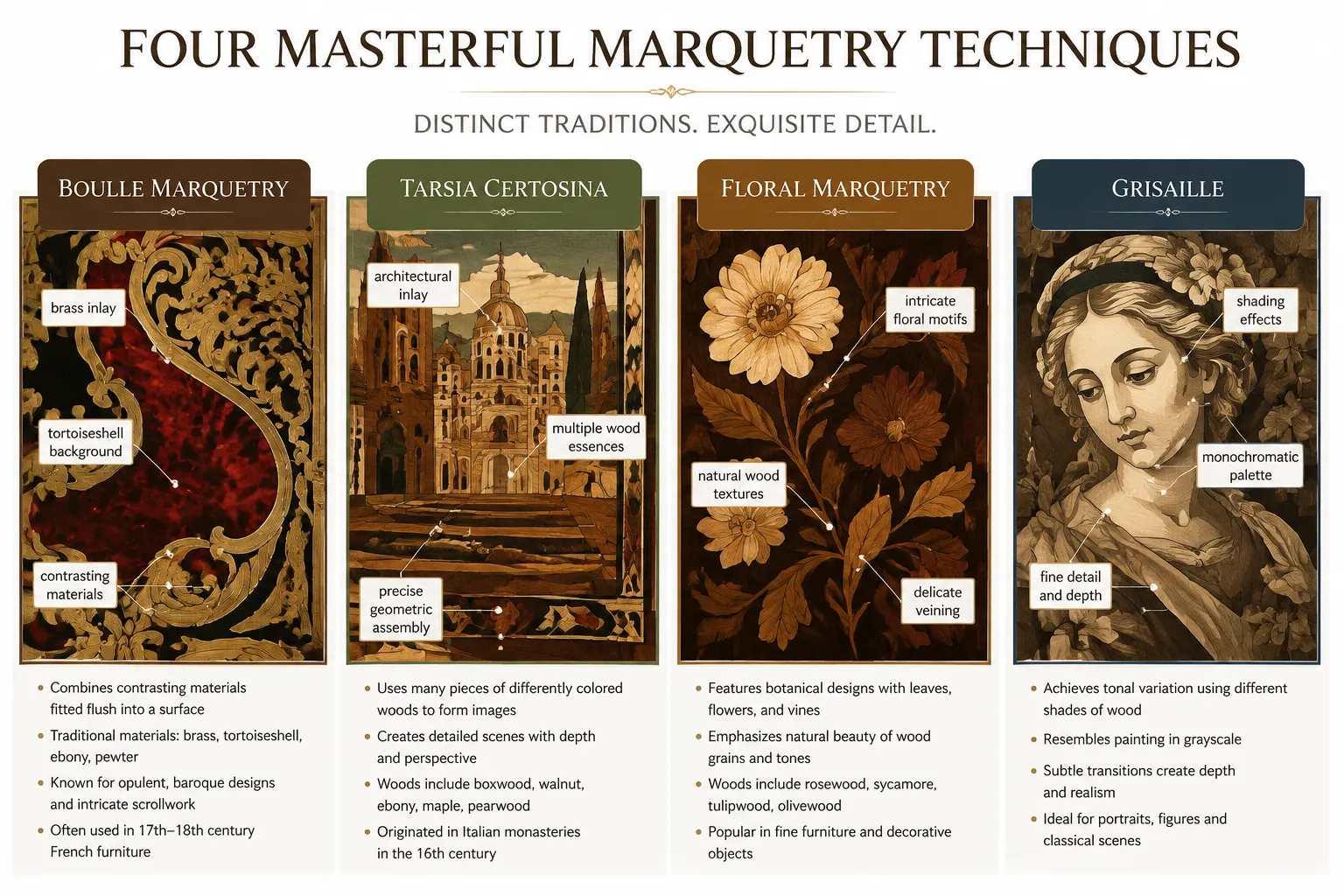
Mastering Veneer Selection and Preparation
The success of any marquetry project, particularly advanced ones, hinges critically on the quality and selection of veneers. This goes beyond simply picking attractive wood; it involves understanding the unique characteristics of each species and preparing them meticulously.
Key Considerations for Veneer Selection:
- Species and Color: A wide array of exotic and domestic woods offers a spectrum of natural colors, from the deep blacks of Gaboon Ebony to the vibrant reds of Padauk, and the creamy whites of Holly. The natural coloration is permanent and will deepen with age.
- Grain Pattern: Straight grain, curly grain, burl, and fiddleback all offer distinct visual textures. Matching or contrasting grain patterns can create dramatic effects. For example, Wood Grain Matching And Selection Choosing Complementary Lumber For Visible Natural Finishes delves into this important aspect.
- Thickness and Stability: Veneers typically range from 0.6mm to 1.5mm. Consistent thickness is crucial for a smooth finished surface. Stability is also key; some woods are more prone to warping than others.
- Workability: Some veneers are brittle (e.g., highly figured burls), while others are flexible. Understanding how a veneer cuts, sands, and finishes is vital.
- Availability and Cost: Exotic veneers can be expensive and sometimes difficult to source. Planning ahead is important for complex projects.
Veneer Preparation Techniques:
- Flattening: Veneers often arrive curled or buckled. They must be perfectly flat before cutting. This can be achieved by dampening and pressing between cauls, or using a veneer flattening solution.
- Taping: Individual veneer sheets may need to be taped together on their back side to create larger, more stable panels for cutting.
- Sand Scorching (Shading): This technique involves dipping edges of veneer pieces into hot sand to create a gradient burn, simulating natural shadows and adding immense depth to designs, especially in floral or pictorial marquetry.
- Dyeing: While less common in traditional marquetry, some artists dye veneers to achieve specific, vibrant colors not found naturally.
Choosing the right wood species is a foundational skill in all woodworking, including marquetry. Our Wood Species Selection Guide Hardwoods Vs Softwoods Cost Workability And Finishing For Every Project Type offers a comprehensive overview.
Precision Cutting and Assembly Techniques for Advanced Marquetry
The hallmark of exceptional marquetry is the invisible seam, where individual pieces fit together so perfectly that they appear as one continuous surface. Achieving this level of precision requires mastery of cutting tools and assembly methods.
Traditional Hand-Cutting Methods
Despite advancements in technology, many master marqueters still prefer traditional hand-cutting for its tactile control and ability to create subtle nuances.
- Marquetry Knife (Scalpel): The primary tool for fine cutting. A sharp blade is paramount, requiring frequent sharpening or blade changes. The angle of the cut, the pressure applied, and the movement of the hand all contribute to precision.
- Fret Saw / Piercing Saw: Used for cutting multiple layers of veneer simultaneously (the packet method or double bevel method). The fine blades allow for intricate internal cuts and tight curves. The table for a fret saw often has a large throat depth to accommodate large panels.
- Donkey: A specialized clamping device that holds the veneer packet securely while allowing the artisan to use both hands for cutting with a chevalet saw or marquetry knife. This provides superior control and stability.
The Packet Method (or Double Bevel Method): This technique involves stacking several layers of veneers, including the background and inlay woods, and cutting them simultaneously along the pattern lines with a slight bevel. When the pieces are separated, the bevel naturally creates a tight, gap-free joint when fitted. This method is crucial for Advanced Marquetry and Wood Inlay: Crafting Intricate Designs for Heirloom Furniture.
Modern Cutting Technologies
The 21st century has brought technological advancements that complement or even replace traditional hand-cutting for complex marquetry.
- Laser Cutting: Offers unparalleled precision and speed, especially for highly intricate and repetitive patterns. Laser cutters can slice through veneers with extreme accuracy, creating perfectly vertical edges. However, the laser can scorch the wood edges, which may require sanding or can be incorporated as a design element.
- CNC Routing: Similar to laser cutting, CNC routers can cut veneers with high precision using very fine bits. This method is particularly useful for larger pieces or when integrating marquetry into larger furniture components. When combined with traditional skills, Entry-Level CNC Routing for Woodworkers: Hybrid Hand-Tool and Digital provides insights into this hybrid approach.
- Waterjet Cutting: Less common for wood marquetry due to cost and potential for water absorption, but it offers extremely clean cuts on delicate and composite materials without heat-related issues.
The choice between hand-cutting and modern technology often depends on the project’s scale, complexity, and the desired aesthetic. Many artisans use a hybrid approach, designing with CAD, cutting major components with a laser, and finishing delicate details by hand.
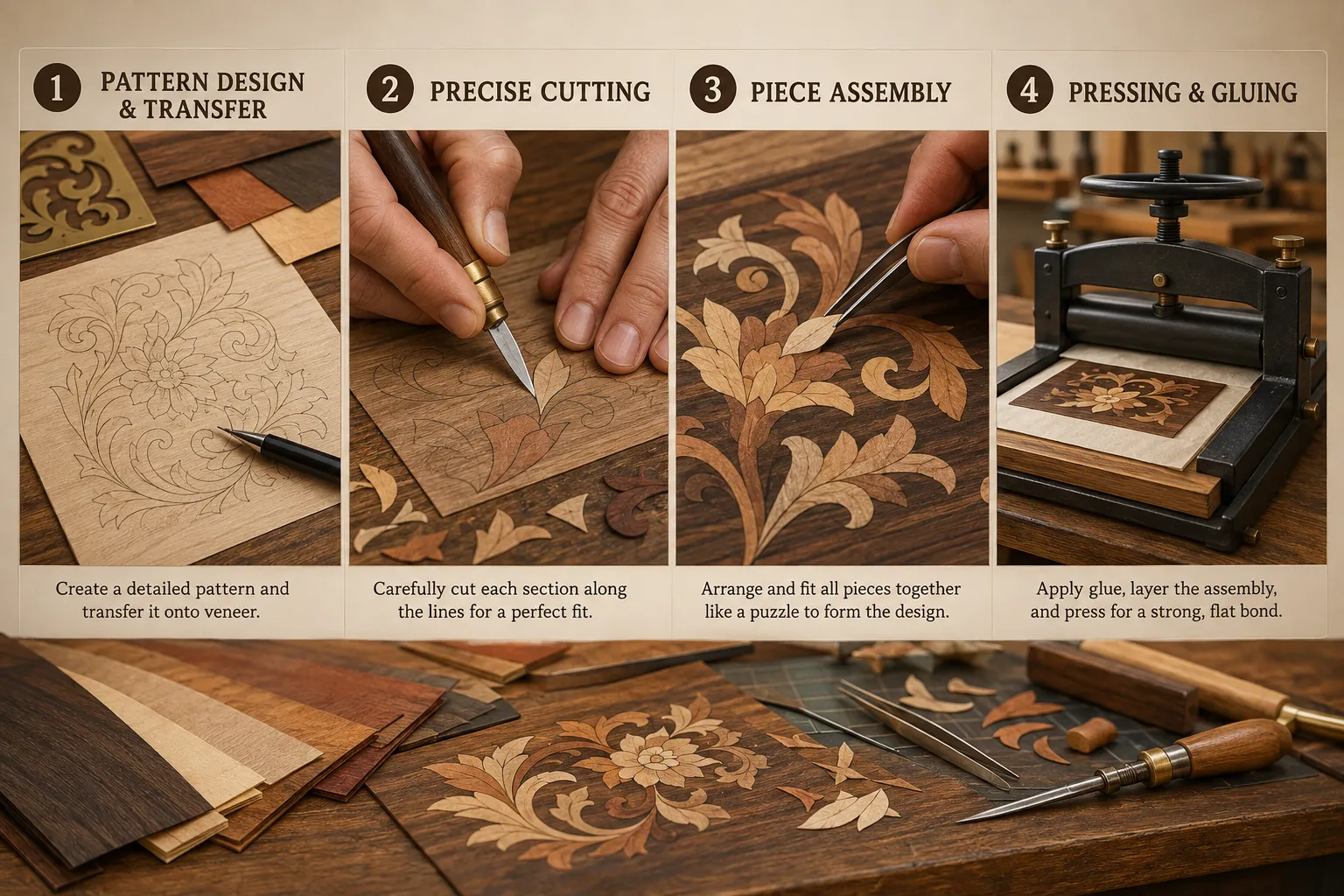
Advanced Assembly and Gluing Techniques
Once all the individual veneer pieces are cut, the next challenge is to assemble them into a cohesive design and permanently bond them to the substrate.
- Initial Assembly (Dry Fit): Carefully lay out all the cut pieces to ensure a perfect fit. This is the stage for minor adjustments and fine-tuning.
- Taping the “Picture”: Once satisfied with the fit, the entire marquetry panel is typically taped together on its face side using specialized veneer tape. This holds the pieces in place for gluing.
- Substrate Preparation: The substrate (the underlying wood panel) must be perfectly flat, smooth, and stable. Plywood or MDF are common choices due to their stability.
- Adhesive Application: Traditional hide glue is favored by many because it offers an open time for adjustments and is reversible. Modern wood glues can also be used, but require faster work. Ensure even coverage to prevent voids. For a deeper dive into adhesives, consult 9 Best Wood Glues For Every Repair Joint 2026 Hands On Guide and The Ultimate Guide to Wood Glue: Types, Application, and Achieving.
- Pressing: After applying glue, the taped marquetry panel is placed face down onto the substrate and pressed under even, high pressure. A veneer press, vacuum bag, or cauls with clamps are used to ensure uniform contact and prevent air bubbles or warping. This is a critical step for a flat, stable panel.
Seamless Integration and Finishing for Heirloom Furniture
The true artistry of Advanced Marquetry and Wood Inlay: Crafting Intricate Designs for Heirloom Furniture culminates in its seamless integration into the furniture piece and a flawless finish that enhances its beauty and protects it for generations.
Integrating Marquetry into Furniture
Marquetry designs are not just applied to a flat surface; they become an integral part of the furniture’s overall aesthetic and structure.
- Panel Integration: The finished marquetry panel is often veneered onto a core, which then becomes a drawer front, a tabletop, or a cabinet door panel. Care must be taken to ensure the panel’s grain direction and stability are compatible with the surrounding furniture components. For instance, when crafting a custom table, marquetry can elevate its aesthetic dramatically, as discussed in Crafting a Custom Wood Console Table for ‘Consoles and Tables’:.
- Edge Treatments: The edges of marquetry panels must be meticulously finished or joined to solid wood edgings to protect the delicate veneer and provide a polished look.
- Symmetry and Flow: For multi-panel pieces, ensuring symmetry and visual flow of the marquetry across different sections (e.g., matching designs on opposing cabinet doors) is essential for a cohesive heirloom aesthetic. This thoughtful design process is also key when considering elements like Designing Dining Room Tables And Chairs As A Matching Set Proportions Joinery And Wood Choices.
Sanding and Finishing for Longevity and Beauty
The finishing process is where the marquetry truly comes alive, revealing the depth, color, and texture of the various woods. It requires patience and a gentle touch.
- Gentle Sanding: The assembled marquetry panel is sanded extremely carefully, starting with fine grits (e.g., 220-grit) to avoid sanding through the thin veneers. The goal is to create a perfectly flat and smooth surface, removing any tape residue or minor irregularities.
- Filling Voids: Any tiny gaps between veneer pieces can be filled with colored wood filler, or a mixture of sanding dust and glue, matched to the surrounding wood.
- Choosing the Right Finish: The finish not only protects the marquetry but also enhances its visual appeal.
- French Polish: A traditional, high-gloss finish applied with a pad. It builds up a deep, lustrous sheen that is highly prized for fine furniture, enhancing the chatoyance of figured woods.
- Oil Finishes: Penetrating oils (like tung oil or linseed oil) offer a natural, matte to semi-gloss finish that brings out the richness of the wood. They are easy to repair but offer less protection than shellac or lacquer. Our guide to Budget Friendly Wood Finishing Achieving Professional Results With Oils Waxes And Shellac can be helpful here.
- Lacquer/Varnish: Provide durable, protective finishes ranging from satin to high gloss. These are often spray-applied for a smooth, even coating.
- Polishing and Waxing: After the primary finish has cured, a final polishing and waxing can add an extra layer of protection and deepen the luster, contributing to the heirloom quality of the piece.
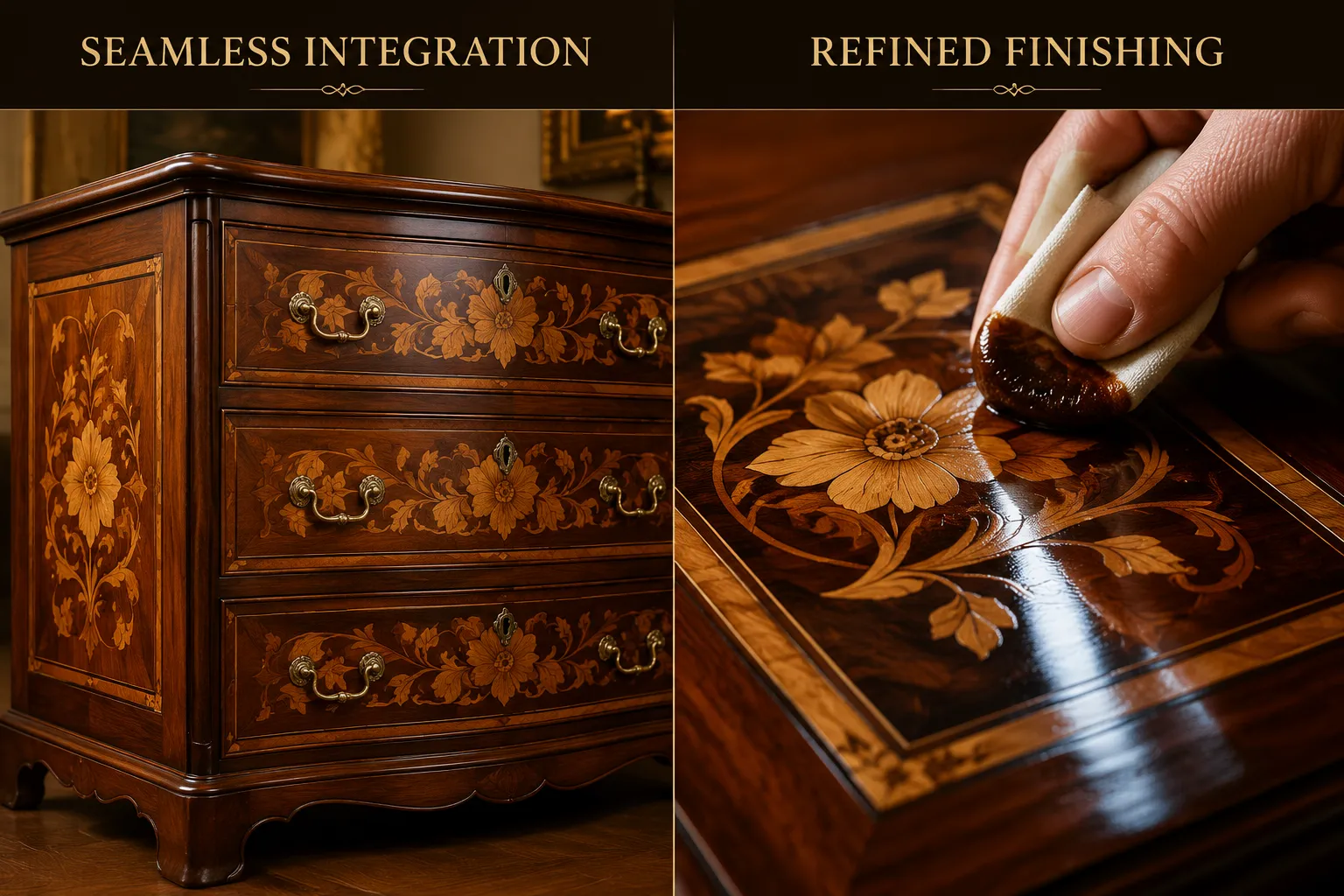
Proper finishing techniques are critical not just for marquetry, but for all woodworking projects. Learn more about general finishing principles in Beginners Guide To Wood Staining Color Selection Application And Troubleshooting Common Issues. The durability provided by these techniques ensures that the intricate designs will last for generations, becoming true heirloom furniture.
Conclusion
Advanced Marquetry and Wood Inlay: Crafting Intricate Designs for Heirloom Furniture represents the pinnacle of decorative woodworking, transforming functional pieces into works of art. From the initial conceptualization of complex patterns and the judicious selection of exotic veneers to the meticulous precision of cutting and the artistry of seamless integration, each step demands dedication, skill, and an unwavering commitment to excellence.
By mastering the nuances of design, embracing both traditional and modern cutting techniques, and applying expert finishing, woodworkers can create heirloom furniture that not only stands the test of time but also tells a story, captivating observers with its intricate beauty and enduring craftsmanship. The journey into advanced marquetry is a challenging yet profoundly rewarding one, offering endless possibilities for creative expression and the creation of truly unique, lasting legacies.
For those ready to embark on this advanced craft, the next steps involve dedicated practice, careful study of historical examples, and potentially investing in specialized tools or training. Begin with smaller, intricate projects to hone your skills before tackling grander heirloom pieces. The detailed work involved is a testament to patience and precision, ensuring that each piece crafted becomes a cherished treasure.
SEO Meta Title: Advanced Marquetry & Inlay: Crafting Heirloom Wood Designs SEO Meta Description: Master advanced marquetry and wood inlay techniques to craft intricate designs for heirloom furniture. Learn veneer selection, precise cutting, and seamless integration for stunning results in 2026.