
For woodworkers embarking on the ambitious and rewarding journey of timber milling, selecting the right equipment is paramount. The difference between struggling with underpowered tools and efficiently transforming raw logs into usable lumber often boils down to choosing machinery designed for the task. Specifically, when considering Husqvarna Chainsaws and Outdoor Power Tools for Woodworkers: Selecting the Right Equipment for Timber Milling, understanding the nuances of power, bar length, chain type, and complementary accessories becomes critical for both productivity and safety in 2026. This article will guide you through the process, ensuring you equip your workshop with the robust and reliable Husqvarna tools necessary to tackle substantial timber projects.
Key Takeaways
- Husqvarna offers various chainsaw series (Professional, Farm & Ranch) suitable for timber milling, each with distinct power and durability profiles.
- Selecting the correct chainsaw involves evaluating engine displacement (cc), horsepower, bar length capacity, and the specific type of chain (ripping chain) required for efficient lumber production.
- Essential accessories like milling attachments, sharpening tools, and personal protective equipment (PPE) are crucial for safe and effective timber milling.
- Proper maintenance, including regular cleaning, sharpening, and fuel management, extends the life of your Husqvarna equipment and ensures optimal performance.
- Safety protocols, including wearing appropriate PPE and understanding proper cutting techniques, are non-negotiable when engaging in timber milling.
Understanding Husqvarna Chainsaws and Outdoor Power Tools for Woodworkers: Selecting the Right Equipment for Timber Milling
Timber milling, often referred to as “sawmilling” or “lumberjacking,” is the process of converting logs into lumber or slabs. For a woodworker, this can mean sourcing local timber, milling it to custom dimensions, and utilizing it for bespoke furniture, construction projects, or unique craft items. Husqvarna, a brand synonymous with powerful and durable outdoor equipment, offers a range of chainsaws and associated tools that are particularly well-suited for these demanding tasks. When making choices regarding Husqvarna Chainsaws and Outdoor Power Tools for Woodworkers: Selecting the Right Equipment for Timber Milling, consider the scale of your projects, the types of wood you’ll be cutting, and your budget.
Milling lumber with a chainsaw is fundamentally different from felling trees or bucking firewood. It requires a more controlled, steady cut over a longer path, often through dense, green wood. This puts significant strain on the chainsaw, necessitating a model with ample power, a robust engine, and the capacity for a long guide bar.
Key Considerations for Chainsaw Selection
- Engine Displacement (cc) and Horsepower (hp): For milling, more power is generally better. Look for professional-grade chainsaws with engine displacements typically above 70cc, and ideally 90cc or more. This raw power allows the saw to maintain chain speed and cut efficiently without bogging down, even through wide, tough logs.
- Bar Length: The guide bar must be long enough to span the log’s diameter, plus some extra for the milling attachment. Common bar lengths for milling range from 24 inches to 36 inches, with some specialized setups using even longer bars. Ensure the chainsaw you choose can safely and effectively handle your desired bar length.
- Chain Type: Standard chains are designed for cross-cutting (cutting across the wood grain). For milling, you need a “ripping chain,” which has a different tooth angle (typically 10 degrees instead of 25-30 degrees). This angle is optimized for cutting with the grain, producing smoother, more consistent boards with less effort.
- Durability and Ergonomics: Milling is hard work. A well-built, durable chainsaw that can withstand prolonged, heavy use is essential. Features like anti-vibration systems, comfortable handles, and easy access to maintenance points contribute to a better user experience and reduce fatigue.
Recommended Husqvarna Chainsaw Series for Timber Milling
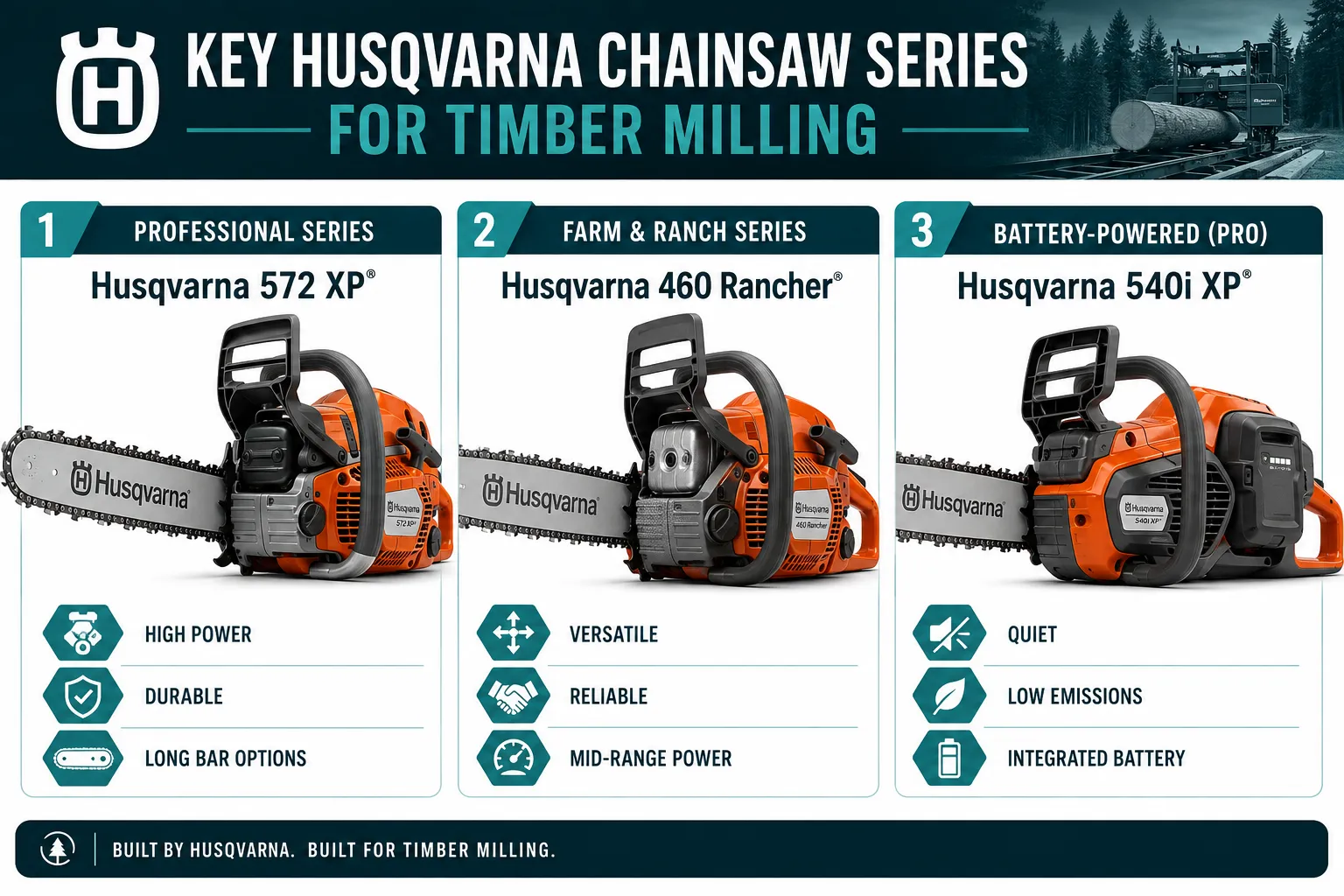
Husqvarna offers several series of chainsaws, each catering to different user needs. For serious timber milling, woodworkers should primarily look at the professional or high-end farm & ranch series.
- Husqvarna Professional Series (e.g., 572 XP, 395 XP, 3120 XP): These are the workhorses designed for demanding tasks. They feature high engine displacement, robust construction, and are engineered for optimal power-to-weight ratio and durability. The 3120 XP, while older, is particularly renowned for its massive power and ability to run very long bars, making it a legendary choice for milling. The newer 572 XP is also a strong contender, offering advanced features and excellent power.
- Husqvarna Farm & Ranch Series (e.g., 460 Rancher, 455 Rancher): While not as powerful as the dedicated professional saws, some of the higher-end models in this series can handle occasional light milling tasks, especially with smaller diameter logs. They offer a good balance of power, durability, and affordability for the hobbyist or occasional miller.
When comparing models, also consider fuel efficiency and ease of starting. Modern Husqvarna chainsaws often incorporate technologies like X-Torq® engines for reduced fuel consumption and emissions, and Smart Start® for easier starting. For a broader look at power tools, you might find our guide on choosing the right Dewalt power tools for your woodworking workshop helpful for other workshop needs.
Essential Outdoor Power Tools and Attachments for Timber Milling
Beyond the chainsaw itself, successful timber milling with Husqvarna Chainsaws and Outdoor Power Tools for Woodworkers: Selecting the Right Equipment for Timber Milling requires a suite of specialized attachments and supplementary equipment. These tools enhance precision, safety, and efficiency.
Chainsaw Milling Attachments
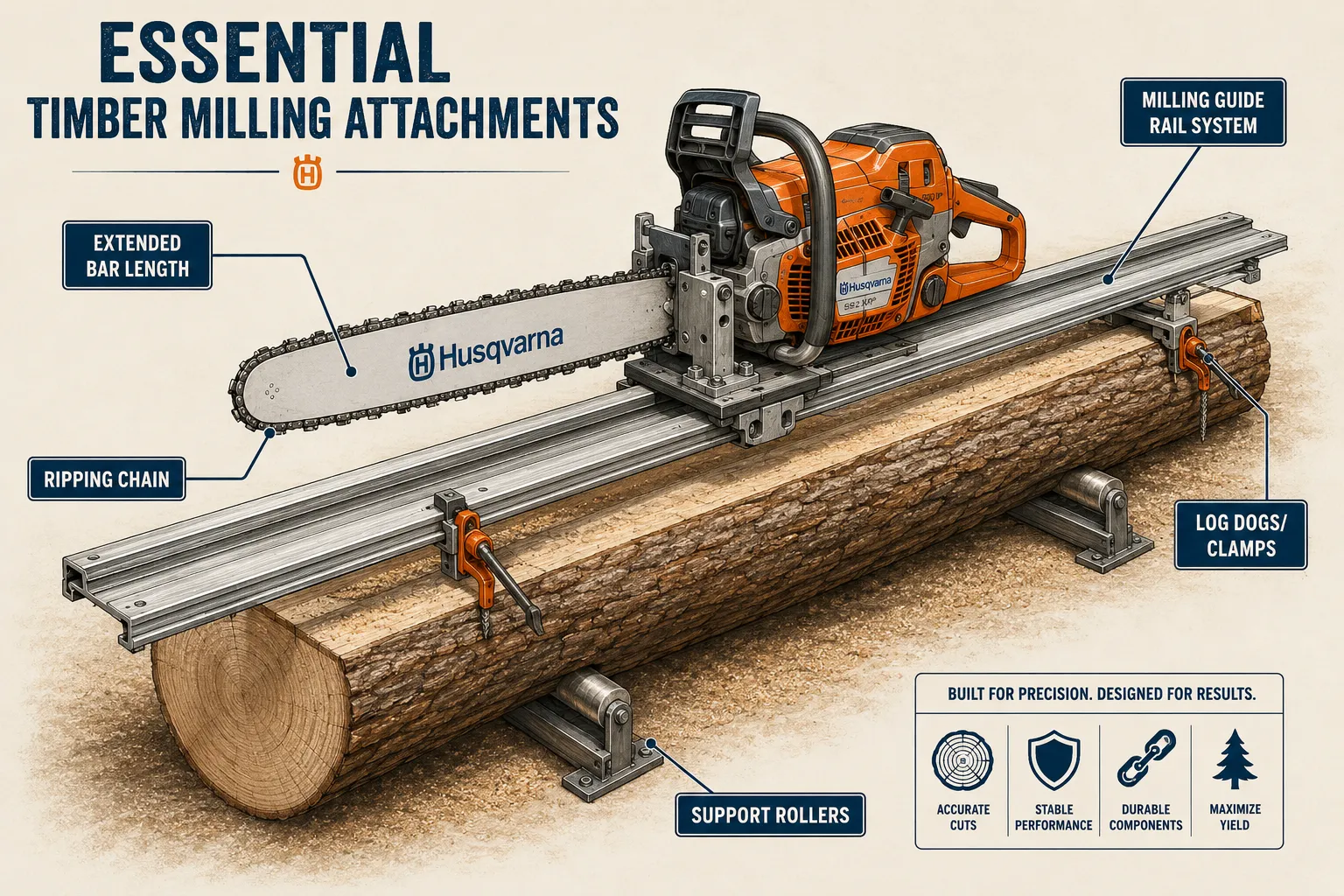
The most critical accessory for chainsaw milling is a dedicated milling attachment, often referred to as a “sawmill attachment” or “Alaska mill.” These devices rigidly hold the chainsaw at a set distance from a reference surface, allowing for consistent, straight cuts along the length of a log.
- Types of Milling Attachments:
- Side-mounted mills: These attach to the side of the chainsaw bar and ride along a guide rail or plank to create the initial flat surface on a log.
- Frame-mounted mills: These enclose the chainsaw body and often feature a more robust frame, sometimes with rollers, to provide greater stability and easier pushing through long cuts.
- Features to look for:
- Adjustability: Easy and precise adjustment of cutting depth is crucial for consistent board thickness.
- Robust construction: The attachment must be rigid enough to prevent flexing during a cut, which can lead to uneven lumber.
- Compatibility: Ensure the attachment is compatible with your Husqvarna chainsaw model and bar length.
Other Crucial Outdoor Power Tools and Accessories
- Log Handling Equipment: Moving large logs is strenuous and dangerous without the right tools.
- Log Arches/Dollies: These help lift and transport logs with less effort.
- Cant Hooks and Peaveys: Essential hand tools for rolling and positioning logs safely.
- Winch: A powerful winch (manual or powered) can be invaluable for moving logs into position for milling. You might also find portable power generators useful for various outdoor tasks; explore a beginner’s guide to Giga Watt portable power generators for workshop use.
- Sharpening Equipment: A sharp chain is paramount for efficient milling and safety.
- Round Files and File Guides: For manual sharpening of the chain cutters.
- Flat Files: For filing depth gauges.
- Electric Chain Sharpeners: For faster, more precise sharpening, especially when dealing with ripping chains that require consistent angles.
- Measuring and Marking Tools:
- Long Straightedges and Levels: For setting up initial guide rails.
- Tape Measures and Squares: For accurate lumber dimensions.
- Chalk Lines: For marking cut lines on logs.
- Fuel and Lubricants: Always use high-quality, fresh fuel mixed to the correct ratio for your 2-stroke Husqvarna engine. Keep plenty of bar and chain oil on hand, as milling consumes it rapidly.
Investing in these supplementary tools ensures that your Husqvarna chainsaw milling operation is not only productive but also safe and enjoyable. For further reading on sourcing and preparing lumber, consider exploring urban lumber sourcing for woodworkers.
Safety, Maintenance, and Best Practices for Husqvarna Timber Milling
Timber milling is inherently dangerous work. Prioritizing safety and adhering to strict maintenance schedules are non-negotiable when using Husqvarna Chainsaws and Outdoor Power Tools for Woodworkers: Selecting the Right Equipment for Timber Milling.
Essential Safety Practices
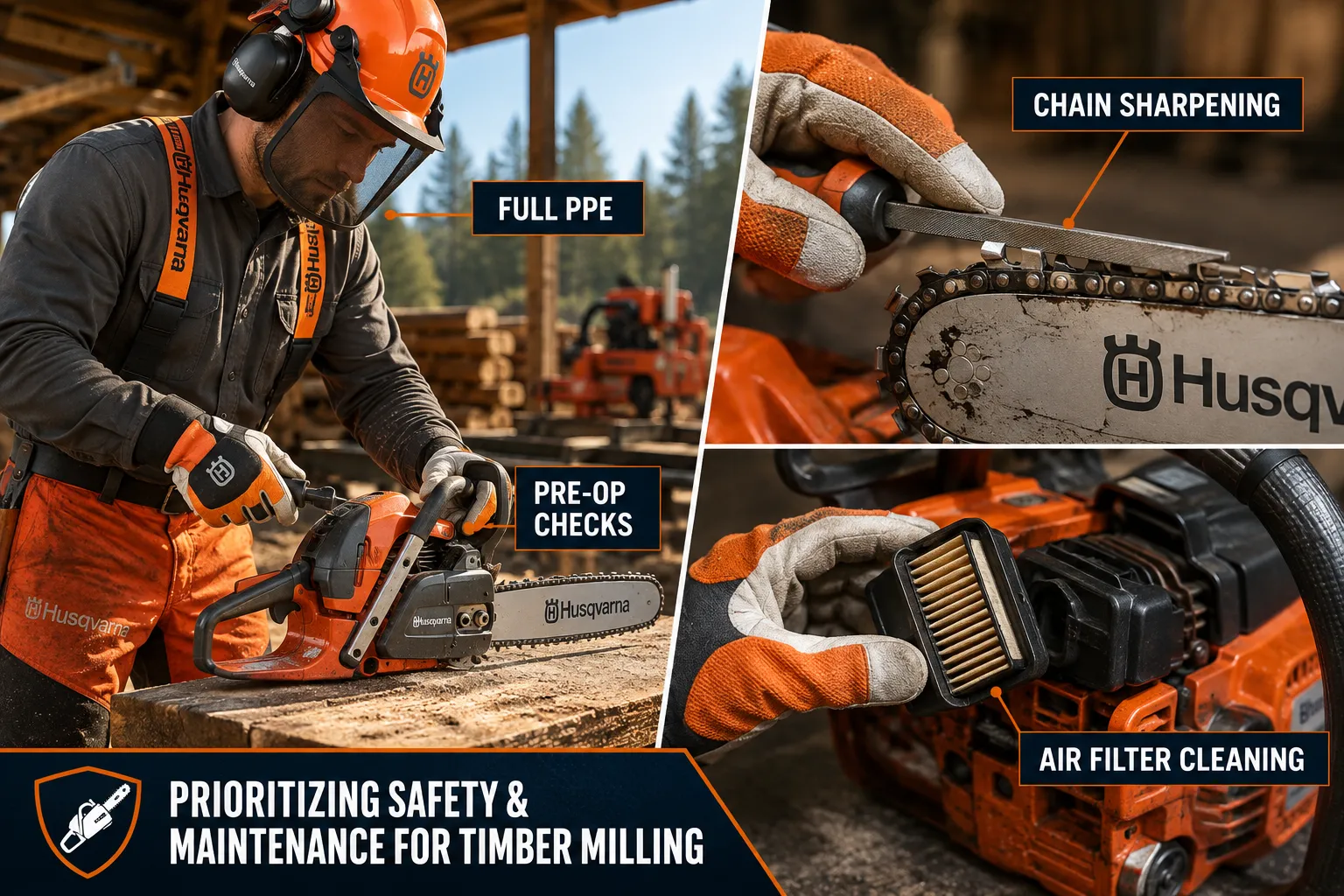
- Personal Protective Equipment (PPE): Never operate a chainsaw without appropriate PPE. This includes:
- Chainsaw Helmet: With hearing protection and a face shield.
- Chainsaw Chaps or Pants: Designed with ballistic nylon to stop a chain in case of contact.
- Gloves: Heavy-duty, anti-vibration gloves.
- Steel-toed Boots: For foot protection.
- Eye Protection: Even with a face shield, safety glasses offer an extra layer of defense.
- Work Area Preparation:
- Clearance: Ensure the milling area is clear of debris, trip hazards, and anything that could impede the chainsaw’s operation or your movement.
- Stable Logs: Logs must be securely chocked or blocked to prevent rolling or shifting during the cut.
- Awareness: Always be aware of your surroundings, potential kickback zones, and the path of falling lumber.
- Proper Cutting Technique:
- Maintain Control: Always hold the chainsaw firmly with both hands.
- Avoid Kickback: Be mindful of the kickback zone (the upper quadrant of the guide bar tip) and avoid cutting with it.
- Steady Pace: Allow the chainsaw to do the work. Don’t force it. A steady, consistent feed rate is key for smooth milling and prevents engine strain.
Critical Maintenance for Longevity and Performance
Regular maintenance extends the life of your Husqvarna equipment and ensures it operates safely and efficiently.
- Chain Sharpening: A dull chain significantly increases effort, produces poor-quality cuts, and increases the risk of kickback. Sharpen your ripping chain frequently, ideally after every few cuts, or at least every fuel tank. Pay close attention to the specific angles required for ripping chains.
- Air Filter Cleaning: A clean air filter is vital for engine performance and longevity. Check and clean it after every milling session. Replace it if it’s excessively dirty or damaged.
- Spark Plug Inspection: Inspect and clean the spark plug periodically. Replace it if it’s fouled or worn.
- Bar Maintenance: Keep the guide bar groove clean and remove any burrs from the edges. Flip the bar periodically to ensure even wear. Lubricate the sprocket nose (if applicable).
- Fuel System: Use fresh, correctly mixed fuel. Old or improperly mixed fuel can cause significant engine damage. Clean the fuel filter regularly.
- General Cleaning and Inspection: After each use, clean the saw thoroughly, inspecting for any loose bolts, damaged parts, or signs of wear.
Adhering to these safety protocols and maintenance routines will not only protect you but also maximize the return on your investment in Husqvarna outdoor power tools. For organizing your broader collection of outdoor tools, consider projects like string trimmer racks and outdoor tool holders.
Conclusion
The journey of transforming raw timber into usable lumber is one of the most rewarding aspects of woodworking, offering unparalleled control over material quality and dimension. By meticulously selecting the right Husqvarna Chainsaws and Outdoor Power Tools for Woodworkers: Selecting the Right Equipment for Timber Milling, you equip yourself for success in this demanding craft. Prioritize powerful, durable chainsaws capable of handling long bars and ripping chains. Invest in quality milling attachments, essential log handling tools, and comprehensive sharpening equipment. Most importantly, commit to rigorous safety practices and diligent maintenance to ensure every milling session is productive and safe. With the right Husqvarna gear and a disciplined approach, you can confidently process timber for all your woodworking projects in 2026 and beyond, turning logs into magnificent creations.
Actionable Next Steps
- Assess Your Needs: Determine the typical log diameters you’ll be milling and the frequency of use.
- Research Specific Models: Investigate Husqvarna’s professional series (e.g., 572 XP, 3120 XP) and their compatibility with various milling attachments.
- Budget Accordingly: Factor in the cost of the chainsaw, milling attachment, ripping chains, and all necessary PPE.
- Prioritize Safety Gear: Purchase high-quality chainsaw chaps, helmet, gloves, and boots before your first cut.
- Learn Proper Techniques: Seek out training or experienced mentors to learn safe and efficient chainsaw operation and milling techniques.
SEO Meta Title: Husqvarna Chainsaws for Timber Milling: A Woodworker’s Guide SEO Meta Description: Master timber milling with Husqvarna chainsaws. Discover pro models, essential attachments, safety, and maintenance tips for woodworkers in 2026.