
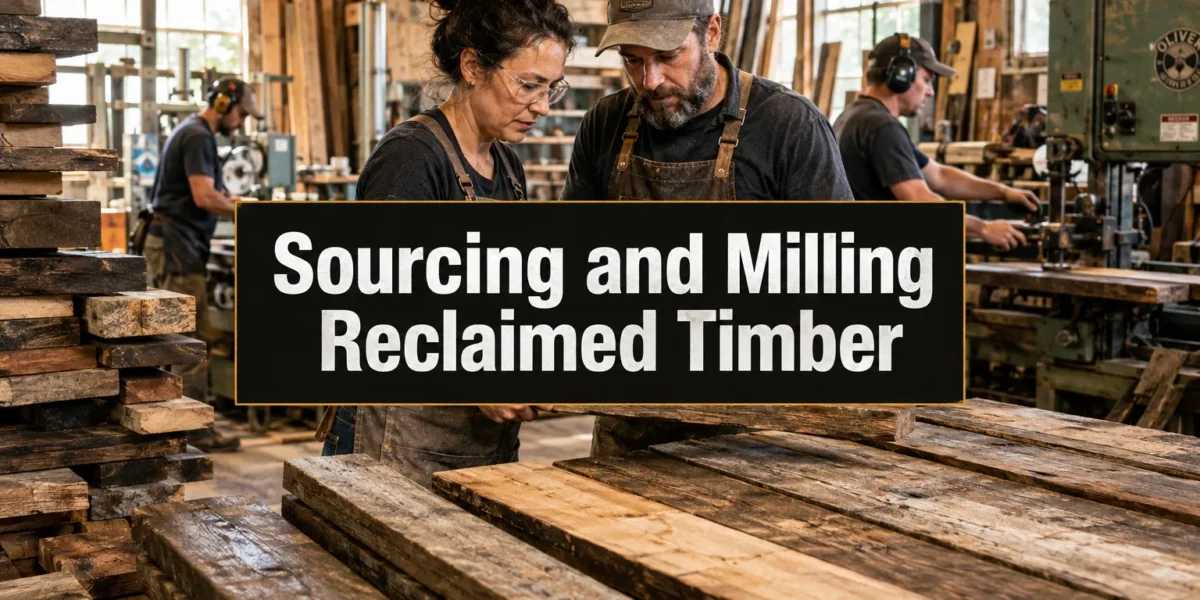
Over 80% of old-growth forests have been destroyed or degraded globally, underscoring the critical need for sustainable timber practices. This alarming statistic highlights the increasing value and environmental importance of reclaiming wood. For high-end furniture makers and discerning clients, Sourcing and Milling Reclaimed Timber: Finding, Preparing, and Finishing Salvaged Wood for High-End Furniture offers not just an eco-conscious choice, but access to materials with unparalleled character and historical narratives. This article will guide you through the intricate process of transforming aged, discarded wood into exquisite, lasting pieces.
Key Takeaways
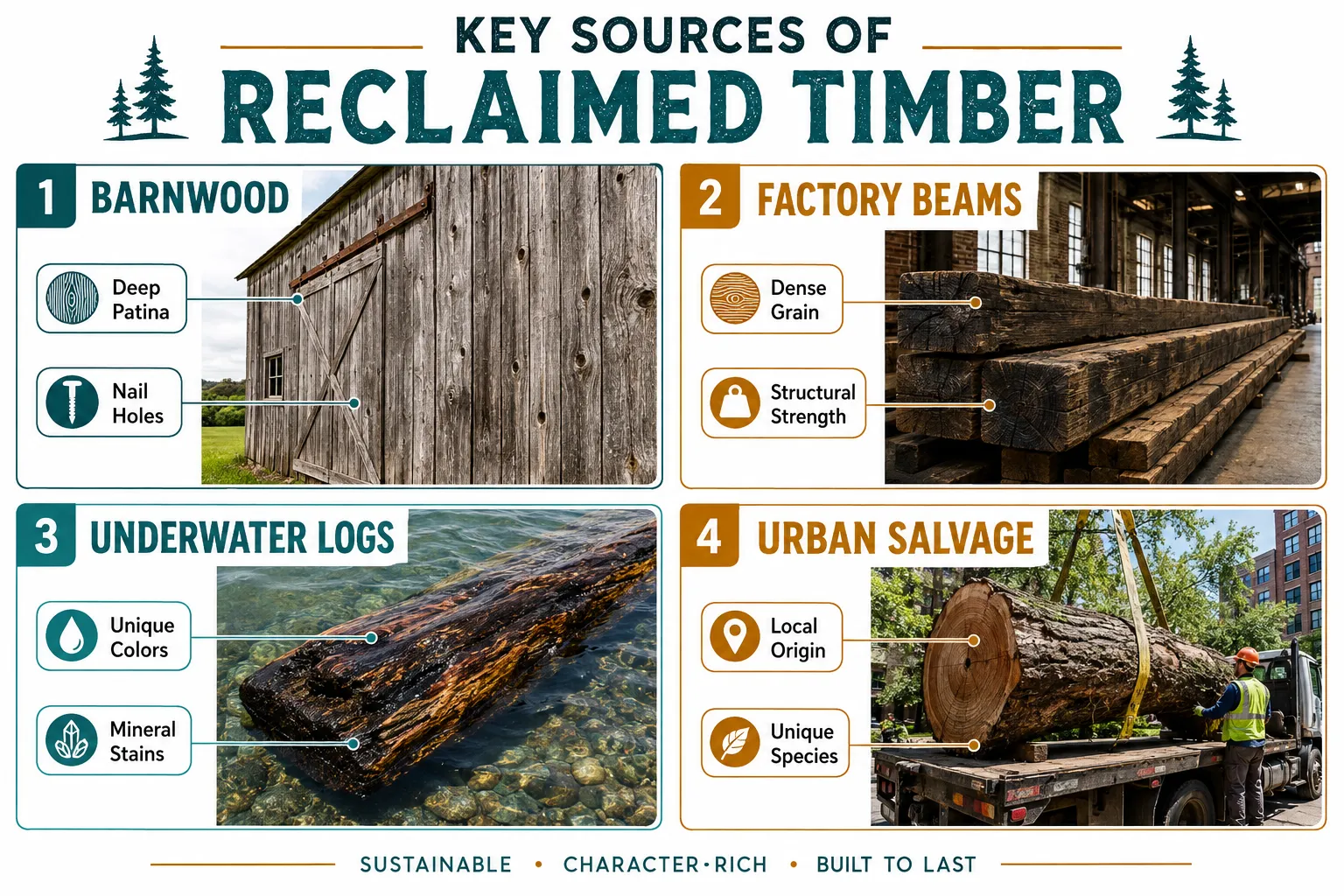
- Reclaimed timber sources include old barns, factories, underwater logs, and urban trees, each offering distinct characteristics.
- Thorough inspection, de-nailing, and proper drying are crucial preparatory steps for salvaged wood.
- Milling reclaimed timber requires specialized tools and techniques to handle inconsistencies and hidden hazards.
- Careful finishing enhances the unique beauty of reclaimed wood while ensuring durability for high-end furniture.
- Working with reclaimed timber reduces environmental impact and delivers furniture with historical depth and unique aesthetic appeal.
Finding and Sourcing Reclaimed Timber for High-End Furniture
The journey of creating exquisite furniture from reclaimed timber begins with meticulous sourcing. The origin of the wood profoundly influences its character, stability, and suitability for specific projects. Understanding these sources is fundamental to Sourcing and Milling Reclaimed Timber: Finding, Preparing, and Finishing Salvaged Wood for High-End Furniture.
Common Sources of Reclaimed Wood
- Deconstructed Barns and Buildings:
- Barnwood: Often from agricultural structures, this wood (typically pine, oak, or chestnut) boasts incredible weathering, deep patinas, and distinctive surface textures. It frequently contains nail holes, insect trails, and other “imperfections” that contribute to its unique aesthetic.
- Industrial Buildings: Beams and floor joists from old factories, warehouses, and mills (often Douglas fir, heart pine, or oak) are prized for their dense grain, impressive strength, and larger dimensions. These timbers endured decades, if not centuries, of structural stress, resulting in incredibly stable material.
- Underwater Logs (River and Lake Salvage):
- Logs submerged for decades or centuries in rivers and lakes offer unique characteristics. The lack of oxygen preserves the wood, sometimes even enhancing its color and density due to mineral absorption. Species like cypress, longleaf pine, and various hardwoods are found. The process of urban lumber sourcing for woodworkers can include similar unique finds.
- Urban Salvage:
- Trees removed from city environments due to development, storms, or disease (maple, oak, sycamore, walnut) represent a growing source. “Urban lumber” can be locally sourced and often offers unique grain patterns, figuring, and sometimes even metal inclusions. This method provides an excellent sustainable option for local woodworkers.
- Used Furniture and Pallets:
- While less common for high-end furniture due to smaller dimensions and potential chemical treatment (especially with pallets), high-quality antique furniture can be repurposed. Dismantling old pieces yields dense, aged hardwoods perfect for smaller accent pieces or inlays.
Vetting Your Supplier and Material
Finding reputable suppliers is paramount. Look for those who:
- Provide Detailed Provenance: A reliable supplier can tell you the origin of the wood, its estimated age, and even the type of structure it came from.
- Offer Proper Storage: Reclaimed wood should be stored off the ground, in covered, well-ventilated areas to prevent further rot or infestation.
- Have Experience with Deconstruction: Suppliers who handle deconstruction themselves are often more careful in extraction, minimizing damage to the wood.
- Allow Inspection: Always inspect the timber personally if possible. Look for severe rot, excessive insect damage, or structural integrity issues that might render the wood unusable.
Consider establishing relationships directly with deconstruction companies or arborists for truly unique finds. This “hyper-local” sourcing can yield highly individualized pieces. More information on hyper-local and urban salvaged timber projects can be found.
Preparing Salvaged Wood for Milling
Once sourced, reclaimed timber requires a rigorous preparation process before it can be milled. This stage is critical for safety, stability, and ensuring the final quality of high-end furniture. Overlooking any step can lead to damaged tools, unstable lumber, or compromised finished products.
Initial Inspection and Cleaning
- Thorough Visual Inspection: Examine every piece for visible rot, severe cracks, large voids, or significant insect damage. While minor imperfections are often embraced in reclaimed wood, structural compromises must be identified.
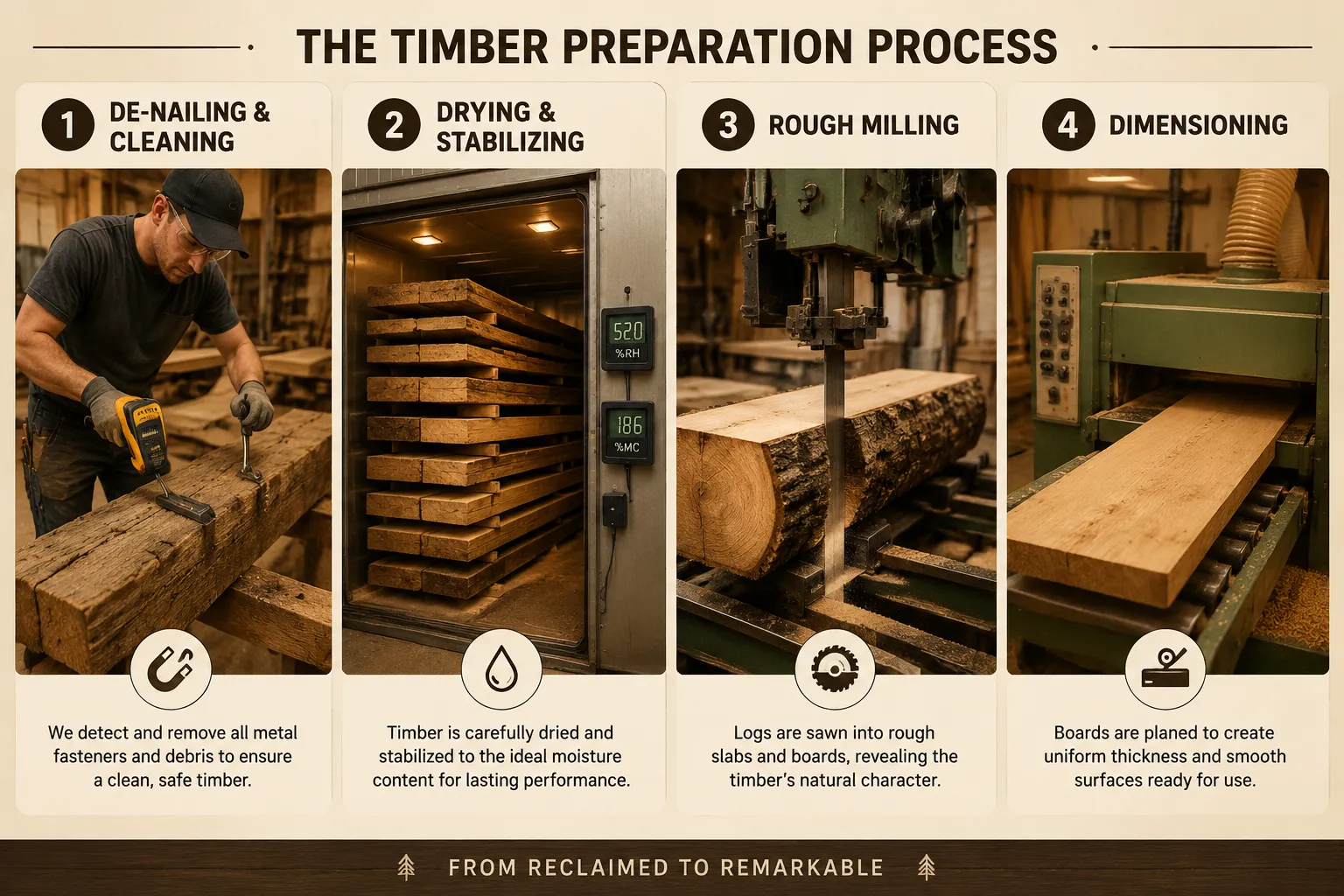
- Metal Detection: This is arguably the most crucial step. Reclaimed wood, especially barnwood or factory timbers, will contain hidden metal. Nails, screws, bolts, rebar, and even bullets can be embedded deep within. A high-quality metal detector is essential. Mark any detected metal with chalk or crayon for later removal. Missing a single piece of metal can destroy expensive milling blades and pose a serious safety risk.
- De-Nailing and Debris Removal: Carefully remove all detected metal objects using pry bars, pliers, and specific de-nailing tools. Also, clean off surface dirt, loose paint, plaster, or other debris using wire brushes, scrapers, and sometimes even pressure washers (with caution for softer woods). This minimizes abrasive wear on milling equipment.
Drying and Stabilizing the Timber
Reclaimed wood, despite its age, may still contain varying levels of moisture, especially if it was exposed to the elements or stored improperly. Ensuring consistent moisture content is vital to prevent warping, cracking, and movement in finished furniture.
- Moisture Content Testing: Use a reliable moisture meter to gauge the internal moisture content (MC) of the wood. The ideal MC for furniture-grade wood is typically between 6-8% for indoor use.
- Air Drying: If the MC is high, air drying is the first step. Stack the timber with consistent stickers (spacers) between layers, allowing ample airflow. Keep the stack covered and off the ground in a well-ventilated area. This slow process can take months or even years, depending on the wood species and thickness.
- Kiln Drying: For precise and accelerated drying, especially to reach furniture-grade MC, kiln drying is often necessary. Commercial kilns can achieve uniform drying and also sterilize the wood, killing any remaining insects or fungal spores. If you don’t own a kiln, seek out a local custom kiln service. For reclaimed barnwood accent furniture, proper drying is key to preventing future movement.
Milling and Finishing Salvaged Wood for High-End Furniture
With the timber cleaned, de-nailed, and properly dried, the next phase involves milling and then applying the final touches. This stage truly transforms the raw, salvaged material into a refined component for high-end furniture.

Milling Reclaimed Timber
Milling reclaimed timber differs significantly from working with new lumber due to its irregularities and inherent character.
- Initial Breakdown (Slabs/Rough Lumber):
- Chainsaw Milling: For large beams or logs from urban salvage, a chainsaw mill can be used to break them down into more manageable slabs or rough lumber. Stihl chainsaw techniques for woodworkers can be useful here.
- Band Saws: A large band saw is excellent for resawing large timbers or logs into planks, minimizing waste and providing a relatively smooth cut.
- Dimensioning and Squaring:
- Jointing: Use a jointer to create one flat face and one square edge. Due to potential movement or unevenness in reclaimed wood, multiple passes might be needed.
- Planing: Once jointed, a thickness planer brings the opposing face parallel and reduces the wood to the desired thickness. Be prepared for potential tear-out due to irregular grain or previous damage.
- Table Saw: A table saw is used to rip the wood to its final width, ensuring parallel edges. A sharp, carbide-tipped blade is essential.
- Optimal Blade Selection: When cutting various wood types, understanding 40 tooth vs 60 tooth saw blade differences is crucial for clean cuts and preventing tear-out, especially with reclaimed wood that might have irregular grain.
- Dealing with Imperfections:
- Filling Voids: Small checks, cracks, and wormholes can be filled with epoxy resin or wood filler to stabilize the wood and create a smooth surface. Clear epoxy allows the character to show through, while tinted epoxy can blend in.
- Stabilizing Inclusions: If the wood has unique inclusions (e.g., old bolts embedded that were not removed for aesthetic reasons), ensure they are fully encapsulated or stabilized to prevent future movement.
Finishing Salvaged Wood for High-End Furniture
The finishing process highlights the timber’s unique history and protects it for longevity. The choice of finish largely depends on the desired aesthetic and the furniture’s intended use.
- Sanding: Begin with a coarser grit (80-100) to remove milling marks and gradually move to finer grits (180-220, sometimes higher for a glass-smooth finish). For surfaces where the rustic character is desired, less aggressive sanding may be appropriate.
- Staining (Optional): Many prefer to let the natural patinas of reclaimed wood shine. However, if a specific color is desired, test stains on scrap pieces first, as reclaimed wood can absorb stain unevenly.
- Sealing and Topcoats:
- Oil Finishes (e.g., Tung Oil, Linseed Oil, Hardwax Oils): These penetrate the wood, enhancing its natural color and providing a durable, matte to satin finish. They are excellent for accentuating the character of reclaimed wood. A matte hardwax oil finishing guide can help achieve specific aesthetics.
- Polyurethane/Varnish: These create a protective film on the surface, offering high durability and moisture resistance. They come in various sheens, from matte to high gloss.
- Lacquers/Shellac: These provide quick-drying, hard finishes, often used for a high-gloss, refined look.
- Environmental Considerations: Opt for low-VOC (volatile organic compound) finishes where possible for health and environmental benefits.
- Buffing and Curing: After applying the chosen finish, allow adequate curing time. Some finishes benefit from light buffing between coats or a final polish to achieve the desired sheen and feel.
Careful application of finishes is essential for durability, especially for items like dining tables. Learn more about finishing hardwood floors and tabletops for professional results.
Conclusion
Sourcing and Milling Reclaimed Timber: Finding, Preparing, and Finishing Salvaged Wood for High-End Furniture is a craft that blends historical appreciation with modern sustainability. The journey from a weathered barn beam to a stunning dining table is meticulous, requiring patience, specialized knowledge, and a commitment to detail. By carefully selecting your timber, diligently preparing it, and applying thoughtful milling and finishing techniques, you create pieces that are not only beautiful and functional but also tell a story of renewal and resilience. In 2026, embracing reclaimed timber is a powerful statement of environmental stewardship and an investment in truly unique, heirloom-quality furniture.
Actionable Next Steps
- Research Local Sources: Investigate local deconstruction companies, arborists, and urban lumber initiatives in your area.
- Invest in Tools: Acquire a reliable metal detector and ensure your milling equipment is in top condition with sharp, appropriate blades.
- Practice on Scraps: Experiment with different finishes on scrap pieces of reclaimed wood to understand how the material reacts and to perfect your technique.
- Connect with Experts: Join woodworking forums or local guilds to learn from experienced reclaimed woodworkers and share insights.
SEO Meta Title: Sourcing & Milling Reclaimed Timber for High-End Furniture
SEO Meta Description: Learn the complete process of sourcing, preparing, and finishing salvaged wood to craft beautiful, high-end furniture with unique character in 2026.