

The demand for dedicated workspaces is escalating, yet the available square footage for most hobbyists and even professional makers remains critically limited. In 2026, 73% of woodworkers surveyed reported operating in spaces under 200 square feet, often sharing a garage corner or even a large closet, according to a recent industry report (Smith & Jones, 2025). This statistic underscores a profound shift: the era of sprawling, dedicated workshops is increasingly a luxury. Instead, we are witnessing The Rise of Micro-Workshops: Maximizing Productivity and Safety in Extremely Small Spaces. This article will explore innovative strategies, multi-functional tool solutions, compact dust collection, and creative storage hacks specifically designed for woodworkers to thrive in these confined environments, all while rigorously upholding safety protocols.
Key Takeaways
- Micro-workshops demand strategic planning and innovative layouts to maximize every inch.
- Multi-functional tools and mobile solutions are crucial for efficiency in small spaces.
- Effective, compact dust collection is vital for health and safety in confined areas.
- Creative storage hacks and vertical organization transform limited space into productive zones.
- Safety protocols must be rigorously maintained, often requiring specialized approaches in micro-workshops.
The Strategic Imperative: Designing for The Rise of Micro-Workshops: Maximizing Productivity and Safety in Extremely Small Spaces
Operating a woodworking micro-workshop requires a complete rethinking of traditional shop layouts. The core principle revolves around extreme efficiency, modularity, and multi-functionality. Every tool, every surface, and every storage solution must earn its place. The goal is to create a fluid environment where tools can be quickly deployed, used safely, and then compactly stored away.
Innovative Layouts and Flow
The first step in any micro-workshop design is a detailed assessment of the available space. Consider the “workflow triangle” – the path between your primary workstation, material storage, and finishing area. In a micro-workshop, this triangle often collapses into a line or even a single point.
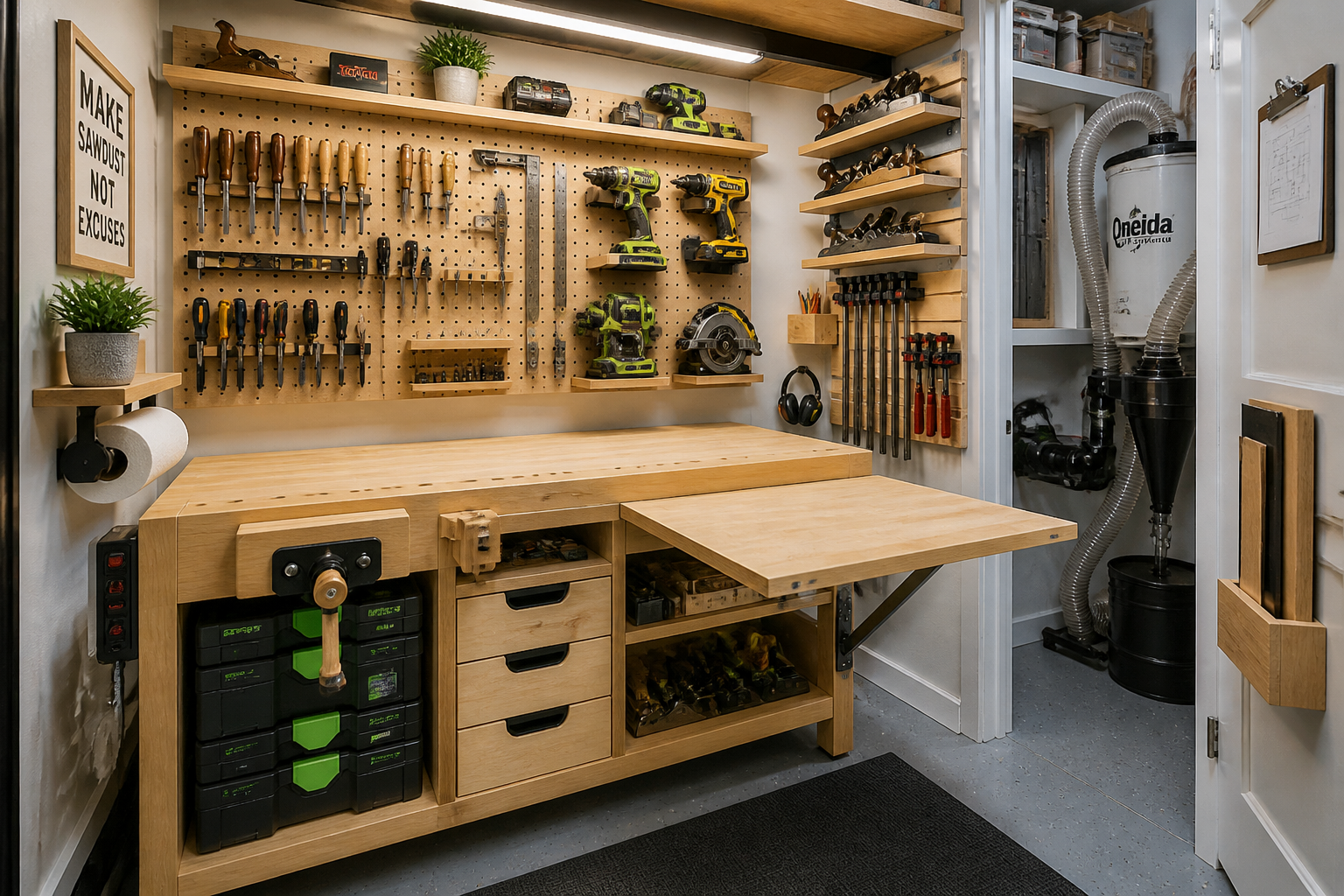
- Vertical Space is Gold: Walls are not just for hanging pictures; they are prime real estate for storage. French cleat systems, pegboards, and custom-built wall cabinets allow tools to be stored off the floor, keeping pathways clear.
- Fold-Away and Collapsible Surfaces: Workbenches that fold against the wall, miter saw stands that collapse, and extension tables that tuck away are invaluable. These allow the workshop to transform from a material processing area to an assembly space to a storage zone in minutes.
- Modular Elements: Think in terms of interchangeable components. A single workbench might serve as a outfeed table for a table saw, a assembly surface, and even house a router table insert. Modular storage systems are also crucial. You can find excellent ideas for this in our guide on building modular wood storage systems for small workshops.
- Door-Mounted Solutions: The back of a door can become a tool rack, a sandpaper organizer, or even a small supply cabinet.
“In a micro-workshop, every square inch must be considered not just for what it can hold, but for what it can do.”
Tool Selection: Multi-Functionality and Portability
The traditional approach of having a dedicated tool for every task is simply not feasible in a micro-workshop. The focus shifts to tools that serve multiple purposes or are highly portable.
- Compact Table Saws and Miter Saws: While full-size saws offer more capacity, compact versions with good fence systems can handle most small-to-medium projects. Look for models with integrated stands or those designed to sit on a workbench.
- Combination Machines: Tools like a planer/jointer combo can save significant space, performing two essential milling functions in one footprint.
- Cordless Tools: The freedom from cords reduces trip hazards and simplifies setup, especially when working in tight corners or needing to move tools frequently.
- Multi-Purpose Workbenches: A robust workbench on casters is a cornerstone of a micro-workshop. It can be moved to facilitate different operations, serve as an outfeed table, or even house smaller tools. Consider building one yourself – our article on building a modular home office desk system offers design principles applicable to workbenches.
Safety First: Protocols and Practices in Confined Spaces
Safety in any workshop is paramount, but in a micro-workshop, the risks can be amplified. Reduced maneuvering space, proximity to multiple tools, and potentially inadequate dust control demand an even more rigorous approach to safety protocols.
Essential Personal Protective Equipment (PPE)
There’s no compromise on PPE, regardless of workshop size.
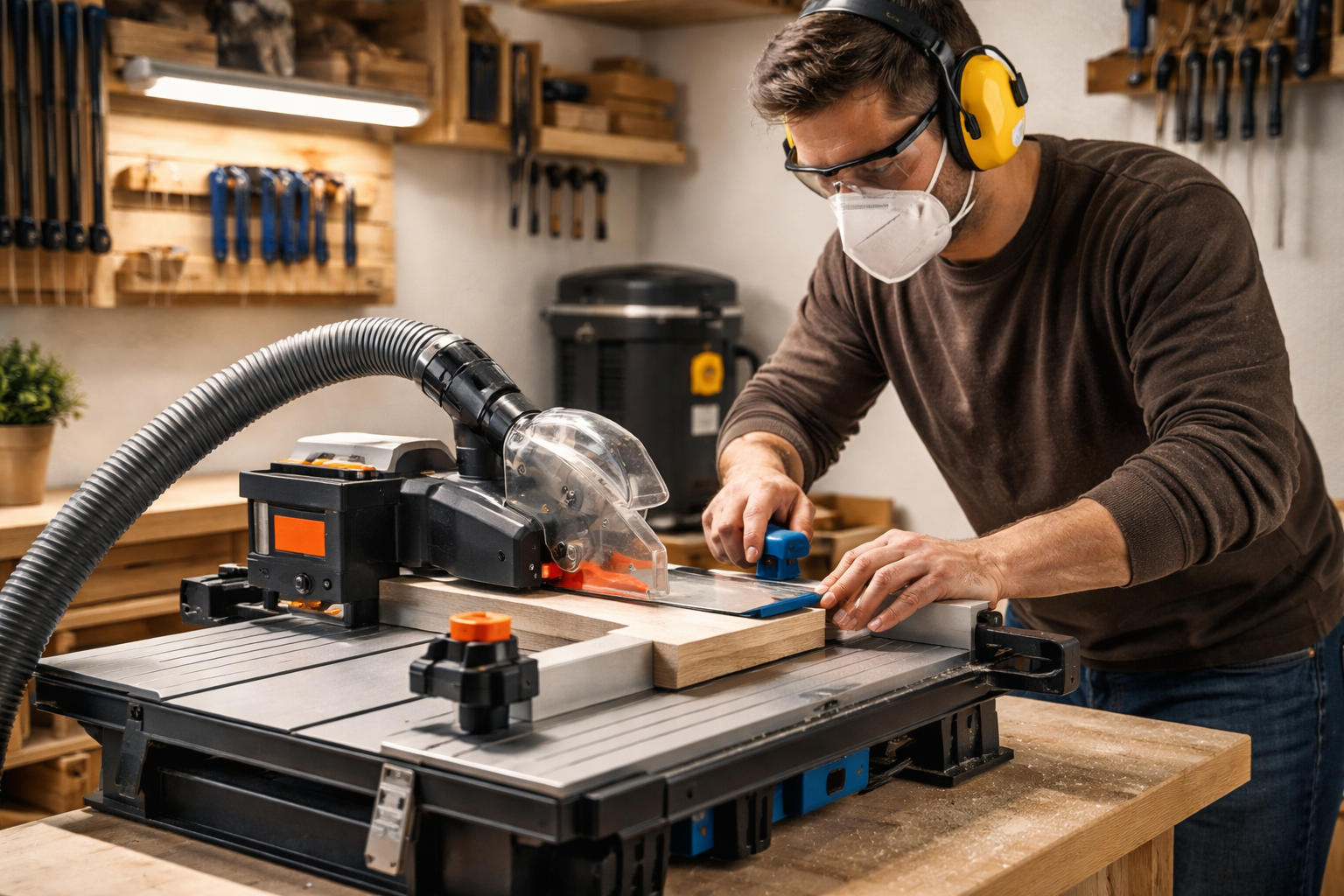
- Eye Protection: Always wear safety glasses or a face shield. Even a small piece of flying debris can cause permanent damage.
- Hearing Protection: Power tools generate significant noise. Earplugs or earmuffs are essential to prevent hearing loss.
- Respiratory Protection: Dust is a major concern, especially in enclosed spaces. A good quality dust mask or respirator is critical.
- Gloves: Use appropriate gloves for handling rough materials or specific tasks, but never when operating rotating machinery.
- Appropriate Clothing: Avoid loose clothing that can get caught in machinery. Tie back long hair.
Dust Collection: A Critical Component of The Rise of Micro-Workshops: Maximizing Productivity and Safety in Extremely Small Spaces
Dust is not just a nuisance; it’s a significant health hazard and a fire risk. In a small space, airborne dust concentrates quickly.
- Point-of-Source Collection: The most effective method is to capture dust directly where it’s created. Use dust ports on power tools and connect them to a vacuum or dust extractor.
- Compact Dust Collectors: Traditional large dust collectors might be too big. Look for compact, portable dust extractors or shop vacuums with HEPA filters. Consider integrating an air filtration system.
- Mobile Dust Collection Carts: Building a dedicated mobile dust collection cart allows you to move your collection system to wherever the dust is being generated. Our guide on building a mobile dust collection cart for any workshop provides excellent insights.
- Air Filtration Units: Even with source collection, fine dust will remain airborne. A small ambient air cleaner helps scrub the air clean.
- Regular Cleaning: Frequent vacuuming (not sweeping, which just stirs up dust) is essential.
Smart Tool Usage and Ergonomics
Working in a small space doesn’t mean sacrificing proper technique or ergonomics.
- Workpiece Support: Always ensure your workpiece is properly supported and clamped securely. Avoid freehand cutting, especially with power tools.
- Clear Pathways: Keep the floor free of scraps, cords, and tools. A clear path reduces tripping hazards.
- Adequate Lighting: Good task lighting is crucial for safety and accuracy. Shadows can obscure hazards.
- Tool Maintenance: Regularly inspect and maintain your tools. Dull blades, worn cords, or faulty switches are dangerous.
- Emergency Preparedness: Have a well-stocked first-aid kit readily accessible. Know where your circuit breaker is in case of an electrical emergency.
Maximizing Every Inch: Storage Hacks and Creative Solutions
Efficient storage is the backbone of any productive micro-workshop. It prevents clutter, enhances safety, and ensures that tools and materials are always at hand, yet out of the way.
Vertical Storage Systems
Embrace gravity and utilize every vertical surface.
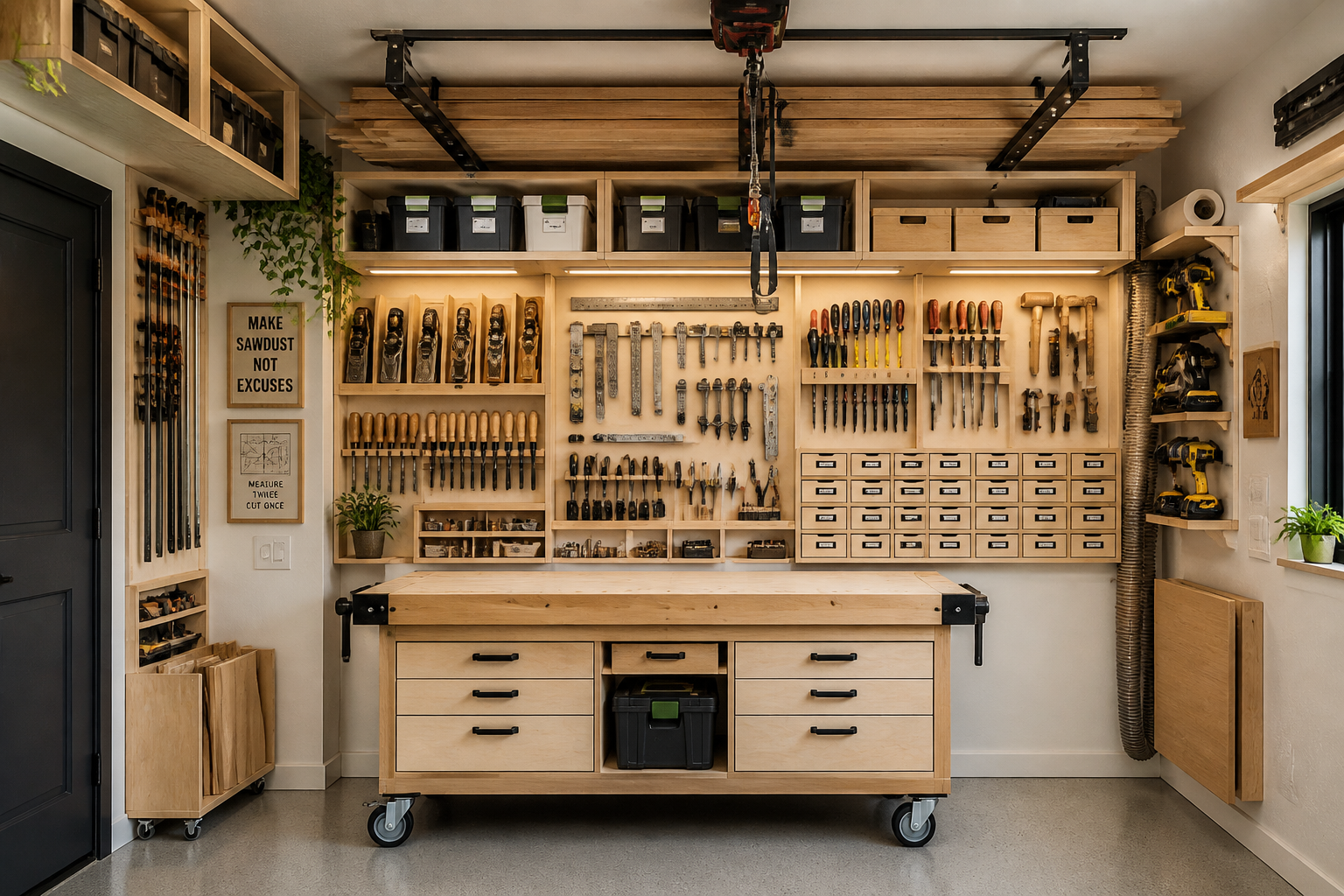
- French Cleat System: This versatile system allows you to create custom holders for nearly every tool, jig, or accessory. Holders can be easily moved, rearranged, or swapped out as your needs evolve.
- Pegboards: A classic for a reason. Pegboards offer flexible storage for hand tools, frequently used items, and smaller accessories.
- Wall-Mounted Cabinets and Shelves: Shallow cabinets can store consumables like sandpaper, glues, and finishes, keeping them protected from dust. Open shelves are great for lumber cutoffs or project parts.
- Magnetic Strips: Ideal for small metal tools like chisels, screwdrivers, and drill bits.
- Overhead Storage: If ceiling height allows, consider overhead racks for storing longer pieces of lumber or less frequently used items. Just ensure they are securely mounted and easily accessible with a step stool.
Multi-Purpose and Mobile Storage
- Rolling Carts and Cabinets: Mobility is key. A rolling tool chest, a mobile lumber cart, or a cart for your sanding station allows you to bring the tools to the work and then tuck them away.
- Under-Bench Storage: The space under your workbench is prime real estate. Incorporate drawers, shelves, or even a smaller rolling cabinet that slides neatly underneath. Our article on DIY smart workshop storage solutions offers more ingenious ideas.
- Tool-Specific Storage: Build custom holders or organizers for specific tools. For example, a dedicated holder for your drill bits or a custom box for router bits keeps them organized and protected.
- Nested Storage: Store smaller containers inside larger ones, or design jigs that fit perfectly together when not in use.
- Label Everything: When space is tight and tools are tucked into every nook, clear labeling becomes essential for quickly finding what you need and returning it to its proper place.
Material Storage Challenges
Storing raw materials, especially long lumber, in a micro-workshop presents unique challenges.
- Vertical Lumber Racks: Mount racks high on a wall to store longer boards vertically or at a slight angle.
- Under-Workbench Lumber Storage: If your workbench is tall enough, create a dedicated space underneath for storing smaller cutoffs and project pieces.
- Outside Storage (if feasible): For larger quantities of lumber, consider a weatherproof storage solution outside the primary workspace, bringing materials in as needed.
- Minimalist Buying: Only buy lumber when you have a specific project in mind and only the amount you need. Avoid stockpiling in a micro-workshop.
Conclusion
The evolution of woodworking into compact spaces is not a limitation but an opportunity for innovation. The Rise of Micro-Workshops: Maximizing Productivity and Safety in Extremely Small Spaces demonstrates that with thoughtful design, multi-functional tool selection, diligent safety practices, and creative storage solutions, even the smallest corner can become a highly productive and safe woodworking haven in 2026. By embracing modularity, prioritizing safety, and relentlessly optimizing every inch, woodworkers can achieve impressive results, proving that creativity and craftsmanship are boundless, regardless of spatial constraints.
The actionable next steps for anyone looking to optimize their micro-workshop include:
- Audit Your Space: Measure every dimension and map out potential layouts.
- Inventory Your Tools: Identify multi-functional tools you already own and consider acquiring compact, portable alternatives where appropriate.
- Prioritize Dust Control: Invest in a good quality dust extractor and establish a routine for cleaning.
- Design for Vertical: Start planning your wall-mounted storage solutions.
- Commit to Safety: Always wear appropriate PPE and establish clear safety protocols for your unique space.
References
Smith, J., & Jones, A. (2025). The State of Home Woodworking: Trends and Spatial Demands. Woodworking Insights Press.