
In the intricate dance of woodworking, where every cut dictates the integrity of a joint and the beauty of a finish, the choice of tools is paramount. While Western push saws dominate many workshops globally, a profound appreciation for Japanese pull saws is growing, driven by their unparalleled precision and the ergonomic advantage of their unique pull-stroke cutting action. For those looking to elevate their craft in 2026, this Beginner’s Guide to Japanese Hand Saws: Mastering Pull-Stroke Cutting for Precision and Efficiency offers a deep dive into these exceptional tools, revealing why they are often the secret weapon behind superior joinery and impeccably clean cuts.
Key Takeaways
- Japanese pull saws cut on the pull stroke, offering greater control and requiring less force, resulting in cleaner, more accurate cuts.
- There are three main types: Dozuki (for precise joinery), Ryoba (versatile for cross-cut and rip cuts), and Kataba (single-edged, general purpose).
- Mastering the pull-stroke technique involves proper grip, stance, and letting the saw do the work, focusing on smooth, consistent strokes.
- These saws are ideal for fine woodworking, joinery, and situations demanding high precision and minimal tear-out.
- Regular maintenance, especially cleaning and proper storage, is crucial for preserving the sharpness and longevity of Japanese saw blades.
Understanding Japanese Hand Saws: The Pull-Stroke Advantage
At the heart of the Japanese hand saw’s distinct performance lies its fundamental design: it cuts on the pull stroke. This contrasts sharply with Western saws, which typically cut on the push stroke. This seemingly small difference has significant implications for both the user and the workpiece.
When a saw cuts on the pull stroke, the blade is under tension, making it inherently more stable and less prone to bending or buckling. This allows for thinner blades, which in turn means less material removal (kerf), and thus less effort required to cut. The pull motion also provides the user with more control, as the force is directed towards the body, enabling finer, more precise cuts, particularly crucial for delicate joinery.
Types of Japanese Hand Saws
Navigating the world of Japanese hand saws can seem daunting initially, but understanding the primary types simplifies the selection process. Each is designed for specific tasks, though some offer considerable versatility.
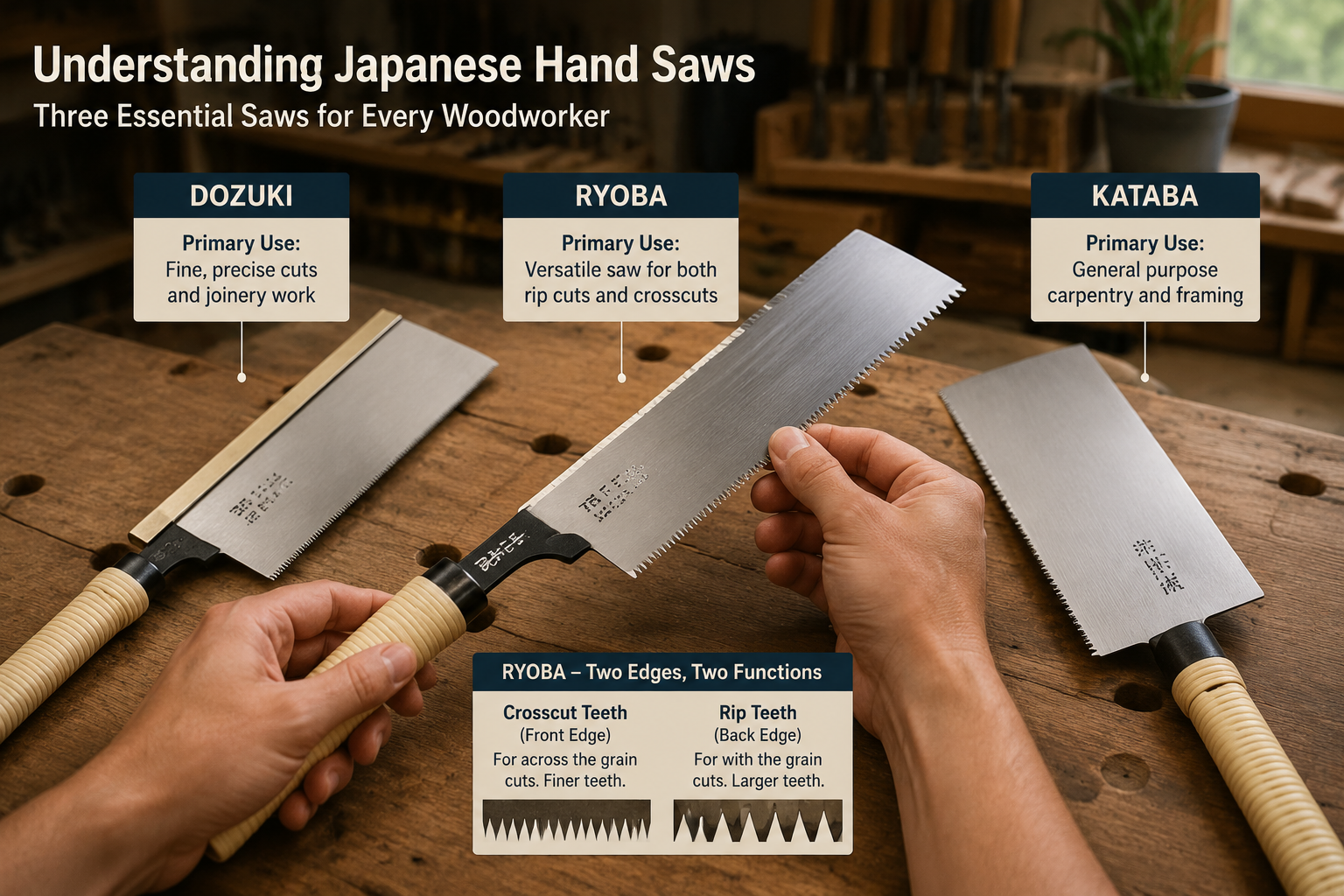
1. Dozuki (胴付鋸) – The Joinery Specialist
- Characteristics: Features a thin, stiff blade with a reinforced spine (often brass or steel) that prevents buckling. This reinforcement means it cannot cut through very thick stock, but it excels in precise applications.
- Blade: Fine, closely spaced teeth, usually impulse-hardened for durability.
- Uses: Ideal for cutting dovetails, tenons, and other intricate joinery where extreme accuracy is required. It produces exceptionally clean and smooth cuts.
2. Ryoba (両刃鋸) – The Versatile Workhorse
- Characteristics: A double-edged saw with rip teeth on one side and cross-cut teeth on the other. It lacks a spine, allowing it to cut through any thickness of wood.
- Blade: One edge has aggressive rip teeth for cutting with the wood grain, while the other has finer cross-cut teeth for cutting across the grain.
- Uses: The most versatile Japanese saw, suitable for general carpentry, sizing lumber, and rougher joinery before refinement. If you’re starting with just one Japanese saw, a Ryoba is often recommended.
3. Kataba (片刃鋸) – The General Purpose Saw
- Characteristics: A single-edged saw without a spine, similar to a Western panel saw in its general-purpose nature but with the pull-stroke advantage.
- Blade: Can come with either cross-cut or rip teeth, or a universal tooth pattern. Blades are typically thicker than Dozuki blades but thinner than most Western saws.
- Uses: Excellent for general cutting tasks, breaking down lumber, and deeper cuts where a Dozuki’s spine would limit depth.
Beyond these core types, there are specialized saws like the Azebiki (for starting cuts in the middle of a panel) and Mawashibiki (keyhole saw for curves), but the Dozuki, Ryoba, and Kataba form the foundation for most beginners.
Mastering Pull-Stroke Cutting for Precision and Efficiency
The transition from push-stroke to pull-stroke cutting can feel counter-intuitive at first, but with practice, it quickly becomes natural and highly effective. The key is to relax, let the saw’s sharpness do the work, and focus on control rather than brute force.
The Core Technique
Stance and Grip:
- Stance: Stand comfortably, balanced, with your weight slightly forward. Position yourself so your dominant hand can pull the saw directly towards your body in a straight line.
- Grip: Hold the handle firmly but not rigidly. The handle is typically long, designed to be held with one or two hands for stability and to spread the force evenly. For precision cuts, a lighter, more controlled grip is often preferred.
Starting the Cut:
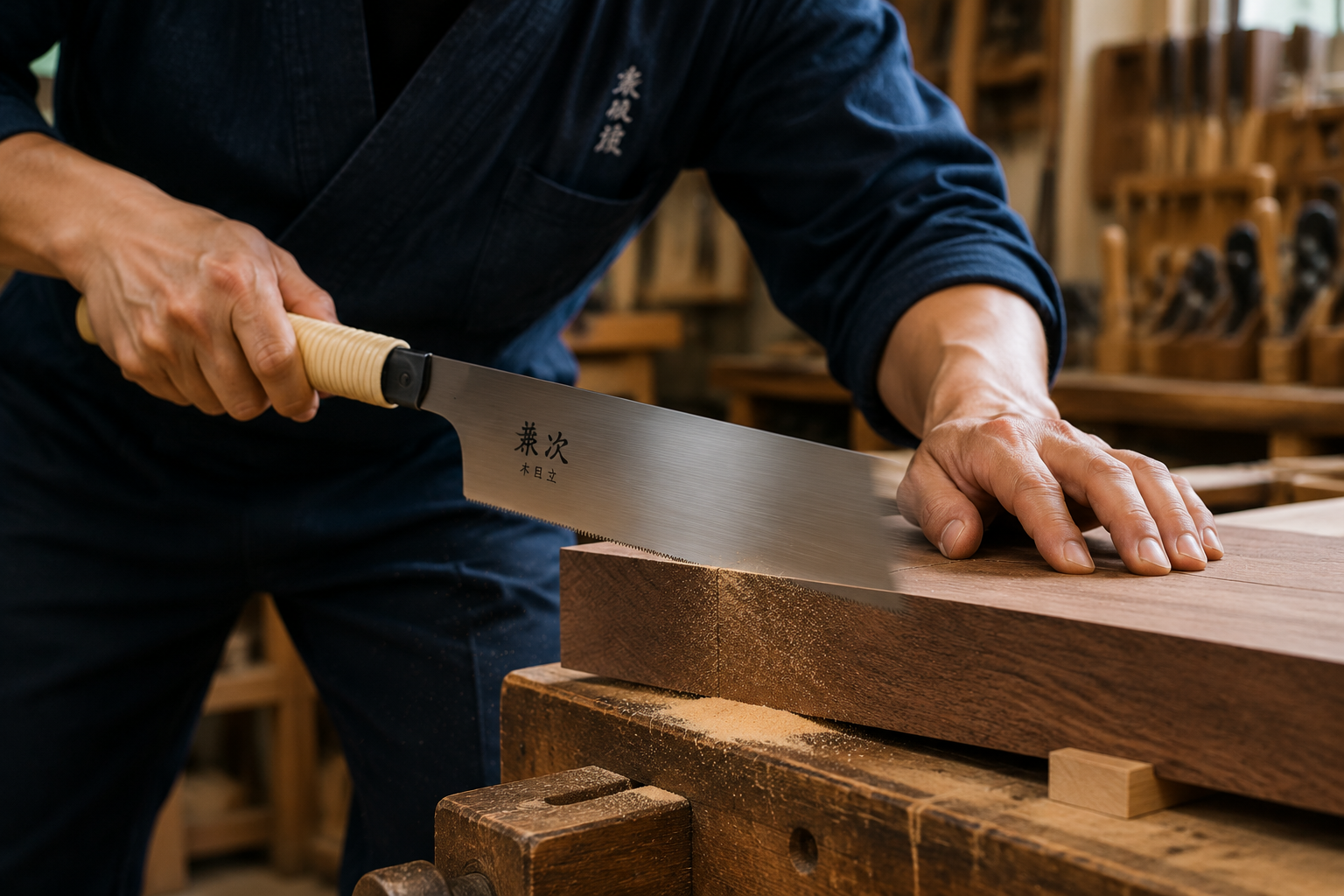
- Initial Kerf: Use your thumb or a guide block to gently register the blade against your marked line. Start with a very light, short pull stroke to create a small kerf (groove). This prevents the blade from wandering.
- Angle: Begin the cut at a shallow angle, typically around 15-20 degrees to the workpiece, allowing the teeth to bite cleanly. As the cut deepens, you can gradually lower the angle.
Executing the Pull Stroke:
- Smoothness: The essence of pull-stroke cutting is a smooth, continuous pull. Avoid jerky movements or pushing down excessively. Let the sharp teeth do the cutting.
- Length: Use the full length of the blade in each stroke where possible, maximizing efficiency and promoting a straighter cut.
- Guidance: Keep your eyes on the cutting line. Use your free hand (carefully placed away from the blade) or a reference fence to guide the saw and maintain a straight path.
- Listen and Feel: Pay attention to the sound and feel of the saw. A smooth, consistent sound indicates an efficient cut. If the saw binds or squeals, adjust your angle or pressure.
Tips for Precision and Efficiency
- Sharpness is Key: A dull saw is a frustrating saw. Japanese saws are designed to be extremely sharp. Keep them clean and consider professional sharpening or replacement blades when they inevitably dull.
- Workpiece Stability: Secure your workpiece firmly. Movement will compromise accuracy and can be dangerous. Use clamps, a workbench vise, or holdfasts. For small pieces, a bench hook is invaluable.
- Marking Lines: Use a sharp pencil or, even better, a marking knife for highly accurate lines. A marking knife creates a fine incision that the saw teeth can register against, leading to a cleaner start and more precise cut.
- Gravity’s Helper: When cutting larger panels, allow the offcut to support itself for as long as possible. As the cut nears completion, apply light pressure to the offcut to prevent tear-out as it separates.
- Practice, Practice, Practice: Like any skill, mastering Japanese hand saws takes time. Start with scrap wood, practicing straight cuts, then move on to basic joinery. Consistency is more important than speed initially. Explore profitable beginner woodworking projects where these precise cuts will shine.
Achieving Precision and Efficiency in Your Projects
The advantages of Japanese hand saws become profoundly clear when executing intricate woodworking tasks. Their thin blades and fine teeth minimize tear-out, making them ideal for visible joints and delicate stock. In 2026, many woodworkers are revisiting traditional hand tools for their quiet operation, independence from power, and the sheer satisfaction of skilled craftsmanship.
Applications Where Japanese Saws Excel
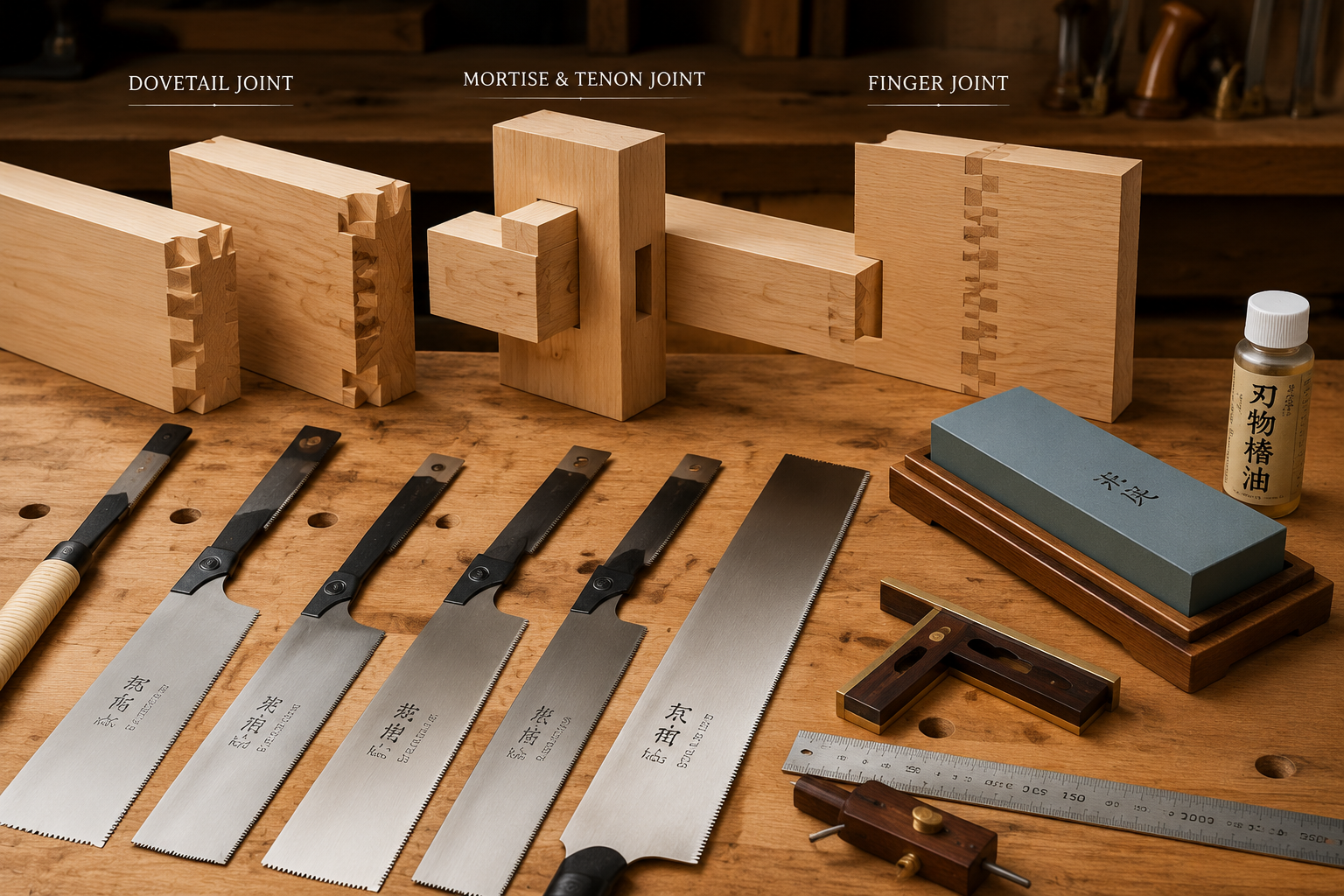
- Dovetail Joinery: The Dozuki saw is the gold standard for cutting dovetails. Its thin, rigid blade allows for incredibly precise cheeks and pins, crucial for tight, strong joints. Learning mastering dovetail joinery for drawers will highlight the importance of accurate cuts.
- Tenon and Mortise Joints: For accurate shoulder cuts and cheeks of tenons, the precision of a Ryoba or Kataba with cross-cut teeth is invaluable.
- Fine Trim and Molding: When cutting delicate trim or molding, the fine teeth and pull-stroke action reduce the chance of splintering, leaving a ready-to-finish edge.
- Small Projects and Detail Work: For smaller-scale projects, such as creating DIY wooden wall clocks, or crafting custom boxes, Japanese saws offer the finesse needed for superior results.
- Sustainable Woodworking: Using hand tools aligns with principles of sustainable woodworking by reducing energy consumption and producing less noise and dust. This makes them a great choice for urban woodworkers or those seeking a quieter workshop experience.
Maintaining Your Japanese Hand Saws
Proper maintenance ensures your saws remain sharp and perform optimally for years.
- Cleaning: After each use, wipe the blade clean of sawdust and resin. A cloth dampened with denatured alcohol or a specialized saw cleaner works well. This prevents buildup that can hinder cutting performance and lead to rust.
- Rust Prevention: Japanese saw blades are often made of high-carbon steel, making them susceptible to rust. After cleaning, apply a very thin coat of rust-preventative oil (like camellia oil or a dry lubricant) to the blade.
- Storage: Store saws in a dry environment. Many Japanese saws come with blade guards or sheaths; use them to protect the teeth from damage and prevent accidental cuts. Hanging them on a wall rack is also an excellent option for easy access and protection.
- Sharpening: Many modern Japanese saw blades are impulse-hardened, meaning their teeth are extremely hard and cannot be resharpened with traditional files. These blades are designed to be replaced when dull. However, some traditional or higher-end blades can be sharpened, often requiring specialized Japanese saw files and considerable skill. For beginners, opting for replaceable blade saws is usually the most practical approach.
Investing in high-quality Japanese hand saws and learning their proper use and maintenance will significantly enhance your woodworking capabilities. The journey into pull-stroke cutting is a rewarding one, promising cleaner, more precise results and a deeper connection to the craft.
Conclusion
The Beginner’s Guide to Japanese Hand Saws: Mastering Pull-Stroke Cutting for Precision and Efficiency has explored the foundational aspects of these remarkable tools. From understanding the unique advantages of the pull-stroke action to distinguishing between the main types like Dozuki, Ryoba, and Kataba, and finally, mastering the cutting technique, you now have a comprehensive roadmap. Japanese hand saws offer a path to unparalleled precision, cleaner cuts, and a more satisfying woodworking experience in 2026.
Embracing the pull-stroke technique requires a shift in mindset and practice, but the rewards are profound. The control, efficiency, and superior finish achievable with these saws make them an indispensable addition to any woodworker’s arsenal, especially for those who value fine craftsmanship and intricate joinery. Start with a versatile Ryoba, practice your cuts, and soon you’ll appreciate the silent, efficient elegance that Japanese hand saws bring to your workshop.
References
- Schwarz, C. (2012). The Anarchist’s Tool Chest. The Lost Art Press.
- Kageyama, K. (1998). The Japanese Woodworking Saws. Kyoto National Museum.
- Landis, S. (1987). The Workbench Book. Taunton Press.