
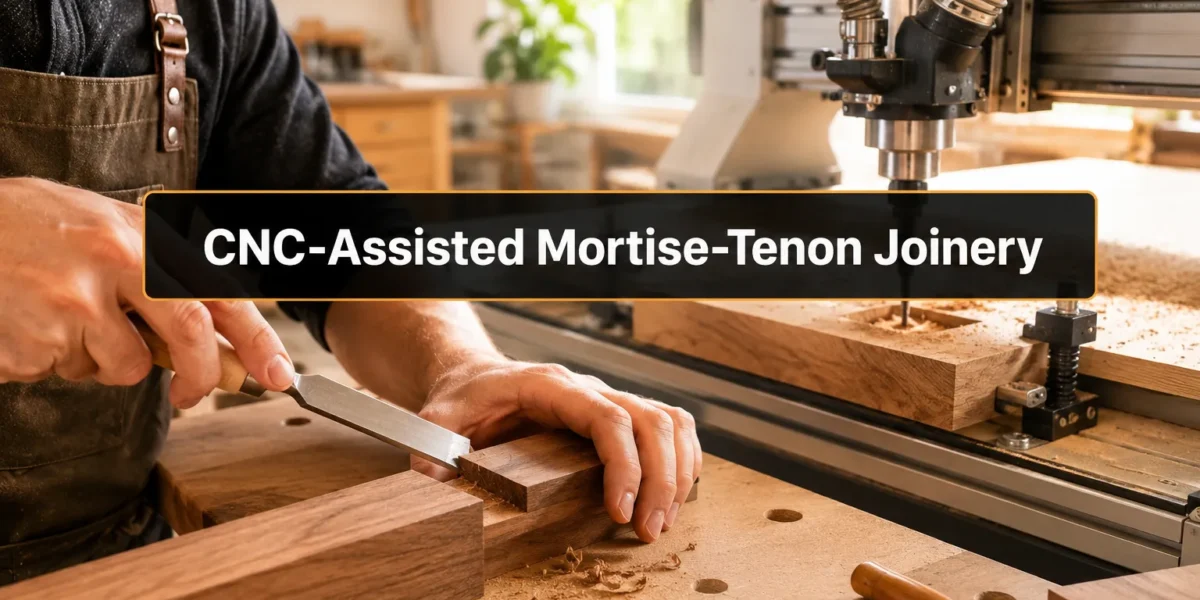
The notion that traditional woodworking and advanced CNC technology are mutually exclusive is a misconception that limits many home workshop enthusiasts. In 2026, the real power lies in their synergy. By leveraging CNC machines for precision layout and roughing, woodworkers can achieve faster, stronger furniture with hybrid techniques, elevating their craft beyond what either method could accomplish alone. This approach, known as CNC-Assisted Mortise-and-Tenon Joinery for Home Workshops, democratizes high-precision joinery, allowing even hobbyists to create furniture pieces with exceptional structural integrity and aesthetic appeal.
Key Takeaways
- CNC machines excel at repeatable, precise mortise layouts and tenon roughing, significantly reducing manual setup time.
- Hybrid techniques combine the speed and accuracy of CNC with the finesse and traditional touch of hand tools for final joint refinement.
- Designing alignment pockets and tenon templates with CAD software ensures perfect fit and consistent results across multiple pieces.
- This approach is ideal for home workshops, enabling hobbyists to tackle complex furniture projects more efficiently and with greater confidence.
- The blend of technology and tradition results in both stronger joints and a more enjoyable, less labor-intensive crafting process.
The Hybrid Approach to CNC-Assisted Mortise-and-Tenon Joinery for Home Workshops
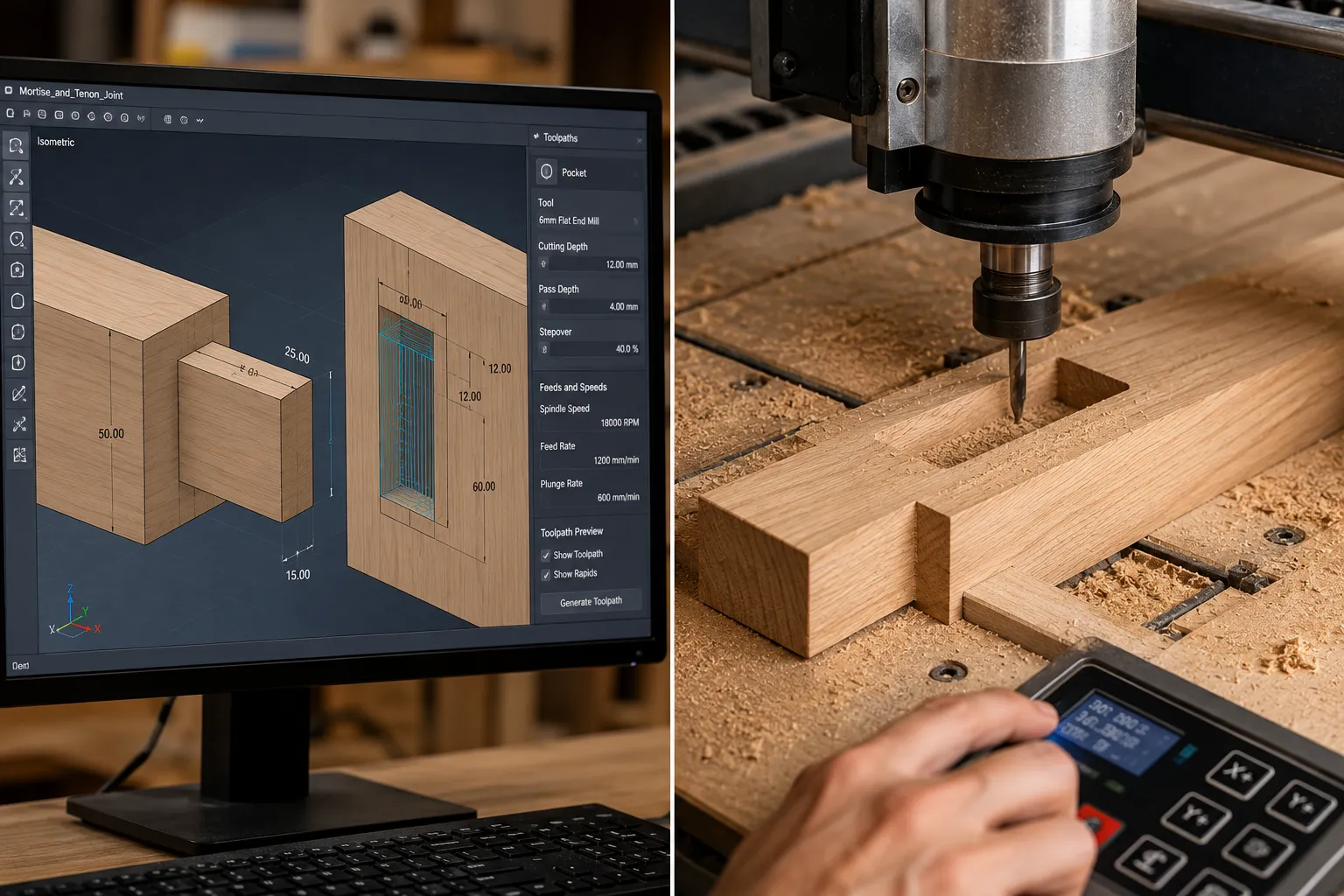
The mortise-and-tenon joint stands as a cornerstone of robust furniture construction, revered for its strength and elegant simplicity. Traditionally, creating these joints demanded significant skill, patience, and meticulous hand tool work. While purists still champion purely hand-cut joints, the landscape of home woodworking has evolved with the increasing accessibility of small CNC machines. The hybrid approach to CNC-Assisted Mortise-and-Tenon Joinery for Home Workshops embraces the strengths of both worlds: using the CNC for tasks where it excels in speed and precision, and reserving hand tools for the nuanced refinement that gives a joint its final, flawless fit.
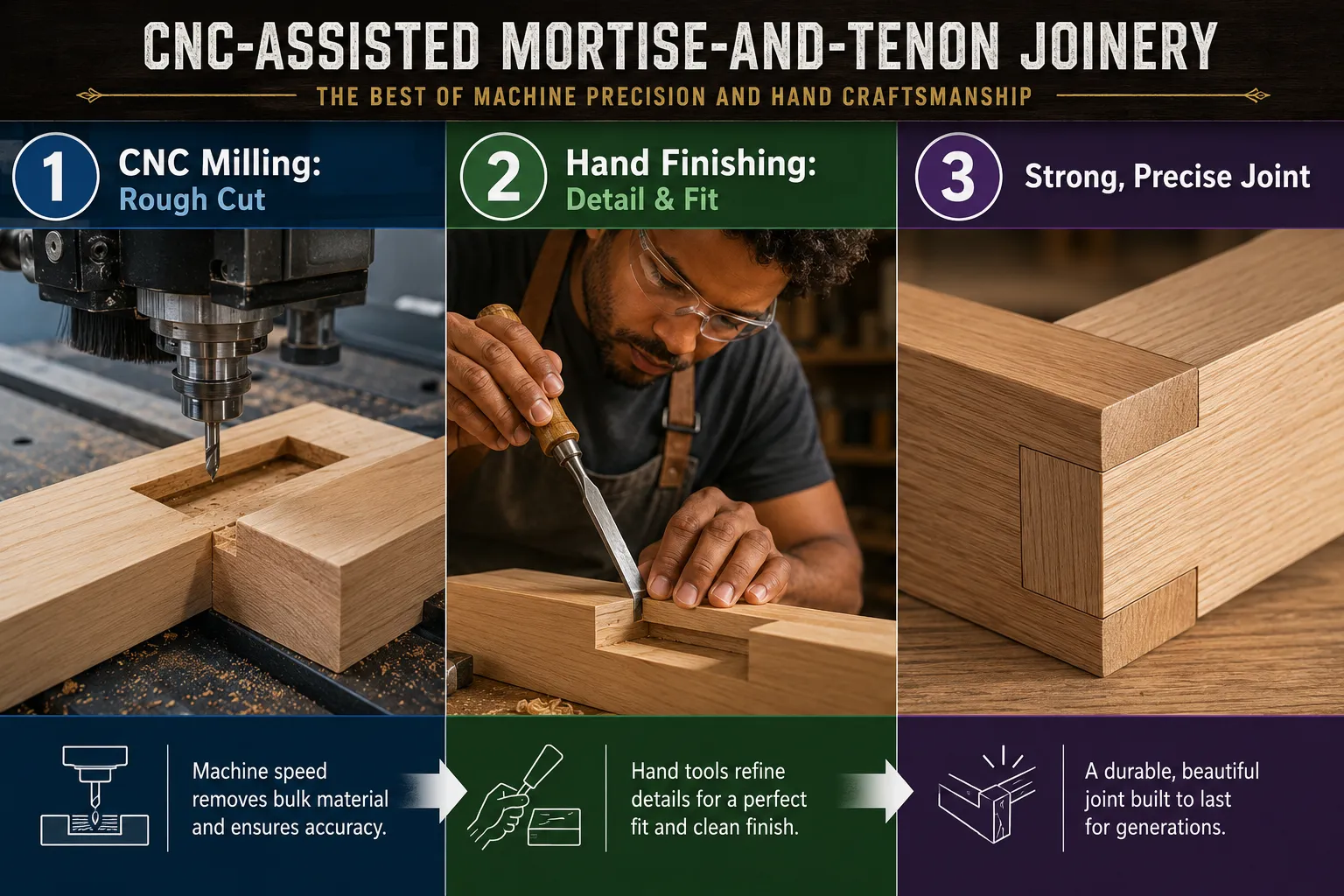
This strategy is particularly beneficial for hobbyists. A small CNC router can quickly and accurately mill the bulk of a mortise, define the shoulders of a tenon, or even cut precise alignment pockets. This frees the woodworker from repetitive measuring and cutting, reducing fatigue and drastically minimizing errors. Once the CNC has done the heavy lifting, the woodworker steps in with chisels and saws to pare the mortise corners square, trim the tenon cheeks for a snug fit, and ensure absolutely clean shoulders. This division of labor not only accelerates the construction process but also often leads to stronger, more consistent joints than either method used exclusively by an intermediate craftsman.
Consider the time saved. Laying out and chopping multiple mortises by hand can be time-consuming, and inconsistencies can creep into the process. A CNC machine, once programmed, can replicate the exact same mortise or tenon profile across countless pieces, ensuring perfect repeatability for projects involving multiple identical parts, such as chairs, tables, or cabinet frames. This synergy allows woodworkers to undertake projects that might otherwise seem daunting, expanding their creative possibilities and the structural integrity of their finished pieces. For those looking to build strong furniture efficiently, this hybrid technique offers a compelling advantage.
Designing for Precision: Mortise Layouts, Alignment Pockets, and Tenon Templates
The success of CNC-Assisted Mortise-and-Tenon Joinery hinges on meticulous design and execution in the digital realm. Before a single chip flies, the joinery must be accurately modeled in CAD (Computer-Aided Design) software. This is where the true precision of the CNC comes into play, as it will faithfully reproduce whatever is designed.
Mortise Layouts and Toolpaths
When designing mortises for CNC milling, several factors are critical:
- Bit Diameter: The router bit’s diameter determines the smallest internal radius a CNC can cut. Since most mortises require square corners for a traditional tenon, the CNC will cut the main cavity, leaving small rounded corners. These corners will later need to be squared by hand with a chisel.
- Pocket Depth: Accurately defining the mortise depth in the CAD software is crucial. The CNC will mill to this exact depth, ensuring consistent tenon protrusion.
- Toolpaths: Generate climb milling toolpaths for cleaner cuts, especially in hardwoods, to prevent tear-out. Consider multiple passes for deeper mortises to manage chip evacuation and reduce stress on the bit.
Alignment Pockets for Perfect Registration
One of the most powerful applications of CNC in this context is the creation of alignment pockets. These are small, precisely milled depressions or holes on the workpiece that serve as reference points. They ensure that when you flip a board to mill the mortise from the other side, or when mating two components, they register perfectly.
For example, a small, shallow circular or square pocket can be milled into the face of a rail and a corresponding matching feature on the stile. These pockets don’t become part of the final joint but guide clamps or pins during assembly, ensuring that the mortise and tenon align flawlessly. This is particularly useful for furniture where visible joints demand impeccable alignment. For more on achieving precision in your workshop, consider exploring Small CNC and Laser Cutter Mastery: Jigs, Templates, and Detail Work.
Repeatable Tenon Templates
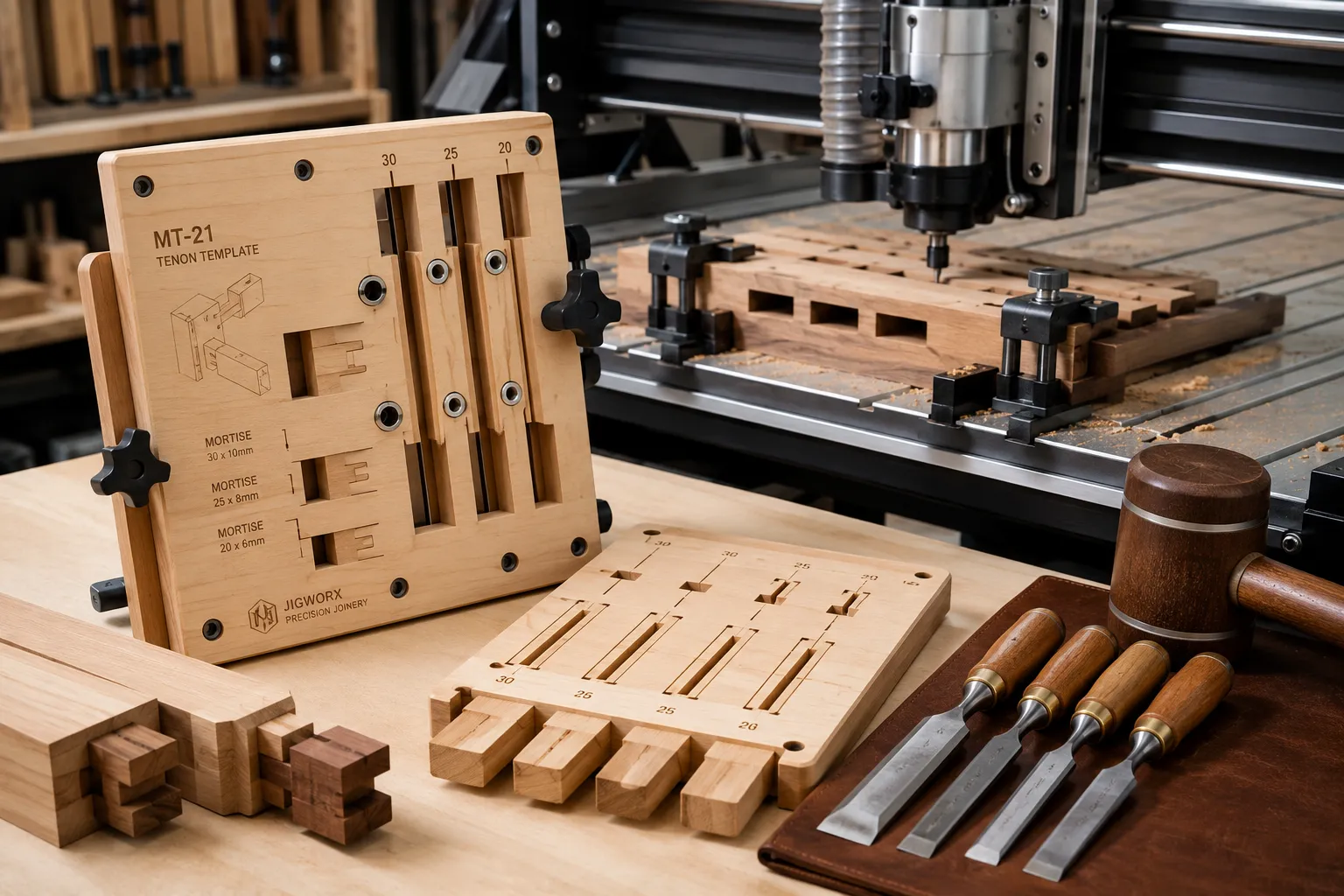
While a CNC can directly mill tenons, especially floating tenons, creating a physical template for traditional tenons offers advantages for speed and consistency, particularly when using a router table or bandsaw. The CNC can be used to carve out a perfect template from MDF or plywood. This template can then be used repeatedly to guide a router bit with a flush trim bit, or a marking knife for hand cutting.
The template approach ensures that every tenon is identical, simplifying the fitting process. It also allows for creative variations, such as haunched tenons or through tenons, with perfect repeatability. Furthermore, it’s an excellent way to prepare for projects like a building a nightstand side table where multiple precise joints are required.
Mastering Hybrid Techniques: Integrating Hand Tools with CNC for Superior Joints
The true art of CNC-Assisted Mortise-and-Tenon Joinery for Home Workshops lies in the seamless integration of machine precision with the nuanced touch of hand tools. This hybrid methodology capitalizes on the strengths of each, allowing the woodworker to achieve joints that are not only faster to produce but also stronger and aesthetically superior.
Squaring Mortise Corners by Hand
As mentioned, CNC router bits are round, leaving rounded corners in the mortise. While some prefer to round the tenon to match, squaring the mortise corners is a hallmark of traditional joinery and often results in a cleaner aesthetic and better glue surface area.
Steps for Hand Squaring:
- Chisel Selection: Use a sharp, high-quality chisel that matches the width of your mortise, or slightly narrower. For details on maintaining sharp tools, refer to The Essential Guide to Hand Tool Sharpening and Maintenance.
- Paring Technique: Position the chisel in the rounded corner, bevel side facing the waste. Use a mallet for initial registration, then apply hand pressure or light taps to pare away the waste. Work from both sides of the mortise to prevent blowout.
- Check for Square: Regularly check the corners with a small square to ensure they are perfectly 90 degrees and plumb with the mortise walls.
Refining Tenon Shoulders and Cheeks
The CNC can cut tenon shoulders with remarkable precision, but subtle imperfections can still occur. Dust, slight tool deflection, or grain orientation can lead to minute variations. Hand tools provide the necessary finesse to achieve a perfect, gap-free fit.
- Shoulder Refinement: Use a sharp chisel or a shoulder plane to shave the tenon shoulders perfectly flat and square to the tenon cheeks. This ensures a tight fit against the mating piece, eliminating unsightly gaps. This is especially important for hand tool joinery for visible wood joints.
- Tenon Cheek Adjustment: If the tenon is slightly too thick for the mortise, gentle passes with a hand plane or a sharp chisel can thin the cheeks incrementally. This process demands a light touch and frequent test fits to avoid removing too much material. The goal is a firm, even friction fit, not one that requires excessive force.
The Advantage of Hybrid Joint Strength
The combination of CNC precision and hand tool refinement results in incredibly strong joints. The CNC ensures consistency in geometry, maximizing glue surface area, while the hand tools achieve the absolute tightest possible fit. This reduces reliance on glue to fill gaps and instead allows the adhesive to perform its primary function of bonding perfectly mating surfaces. The result is furniture that is not only beautiful but also exceptionally durable. Learn more about optimal adhesives in The Ultimate Guide to Wood Glue.
Jigs and Fixtures for Consistency
Even with CNC assistance, jigs and fixtures remain invaluable in a home workshop. The CNC can be used to create highly accurate jigs for hand tool operations, such as specialized chiseling guides or shoulder plane fences. This further enhances the repeatability and accuracy of the hybrid process, truly empowering the home woodworker. For example, your CNC could mill a jig to hold a workpiece at a specific angle for hand-cutting dovetails after the main components were processed by the machine.
Conclusion
CNC-Assisted Mortise-and-Tenon Joinery for Home Workshops: Faster, Stronger Furniture with Hybrid Techniques represents a powerful evolution in woodworking. By strategically blending the precision and speed of CNC machines with the finesse and control of traditional hand tools, home woodworkers in 2026 can unlock new levels of craftsmanship. This hybrid approach significantly reduces the learning curve for complex joinery, minimizes errors, and allows for the creation of furniture that is not only structurally sound but also embodies the refined artistry often associated with master craftsmen.
Embracing this methodology means faster project completion, greater consistency across components, and ultimately, stronger, more durable furniture. It’s an approach that respects tradition while fully leveraging modern technology, offering a deeply satisfying and efficient path for any woodworking enthusiast looking to elevate their craft. Start by experimenting with basic mortise and tenon designs, then gradually integrate CNC for layout and roughing, reserving your hand tools for the critical final fit. The resulting improvement in your furniture projects will be immediately apparent and deeply rewarding.
SEO Meta Title: CNC Mortise & Tenon Joinery: Hybrid Techniques for Stronger Furniture SEO Meta Description: Master CNC-assisted mortise and tenon joinery for home workshops in 2026. Learn hybrid techniques for faster, stronger, and more precise furniture builds.