
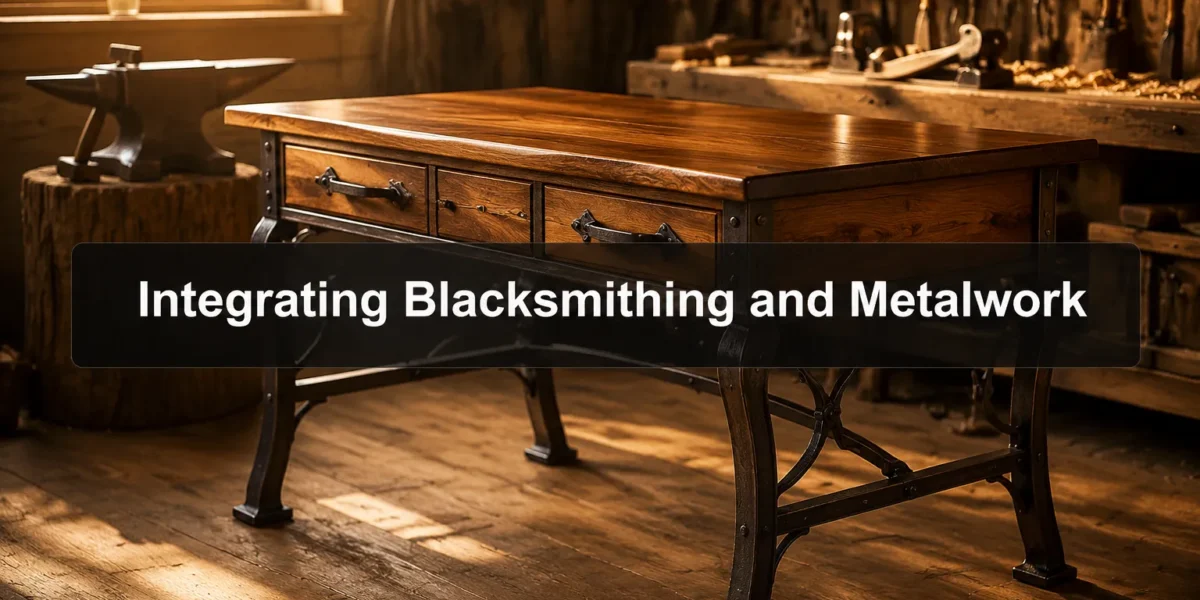
The inherent warmth and organic beauty of fine woodworking can be profoundly elevated by the cold strength and sculptural potential of metal. While often considered disparate crafts, the art of integrating blacksmithing and metalwork into fine woodworking offers advanced techniques for hybrid furniture, creating pieces that are not merely functional but truly artful. This fusion, a testament to thoughtful design and masterful execution, unlocks new dimensions of structural integrity, aesthetic contrast, and narrative depth in contemporary and traditional furniture alike. As woodworkers increasingly seek to differentiate their craft and push creative boundaries, understanding how to skillfully blend these materials becomes an invaluable asset in 2026.
Key Takeaways
- Holistic Design Approach: Successful hybrid furniture requires a cohesive design that considers both wood and metal properties from the outset.
- Specialized Joinery: Advanced techniques like through-tenons with metal collars or recessed metal inlays are crucial for strong, aesthetically pleasing connections.
- Custom Hardware: Blacksmithing enables the creation of bespoke metal components that perfectly complement a furniture piece’s design and function.
- Surface Integration: Techniques extend beyond structural elements to decorative metal inlays, banding, and accents that enhance visual appeal.
- Material Compatibility: Understanding the properties of different woods and metals, including their expansion and contraction, is vital for long-lasting pieces.
Foundations of Integrating Blacksmithing and Metalwork into Fine Woodworking: Advanced Joinery Concepts
At the heart of any hybrid furniture piece lies the successful marriage of wood and metal. This isn’t merely about attaching pre-made brackets; it’s about thoughtful design and advanced joinery that creates a cohesive, durable, and visually striking result. The synergy begins with understanding how these two materials interact, particularly regarding their different rates of expansion and contraction. Wood is hygroscopic, changing dimension with humidity, while metal is largely stable in comparison. Advanced techniques for Mastering Mixed-Material Woodworking: Blending Wood with Resin provide a broad overview, but integrating blacksmithing demands specific considerations.
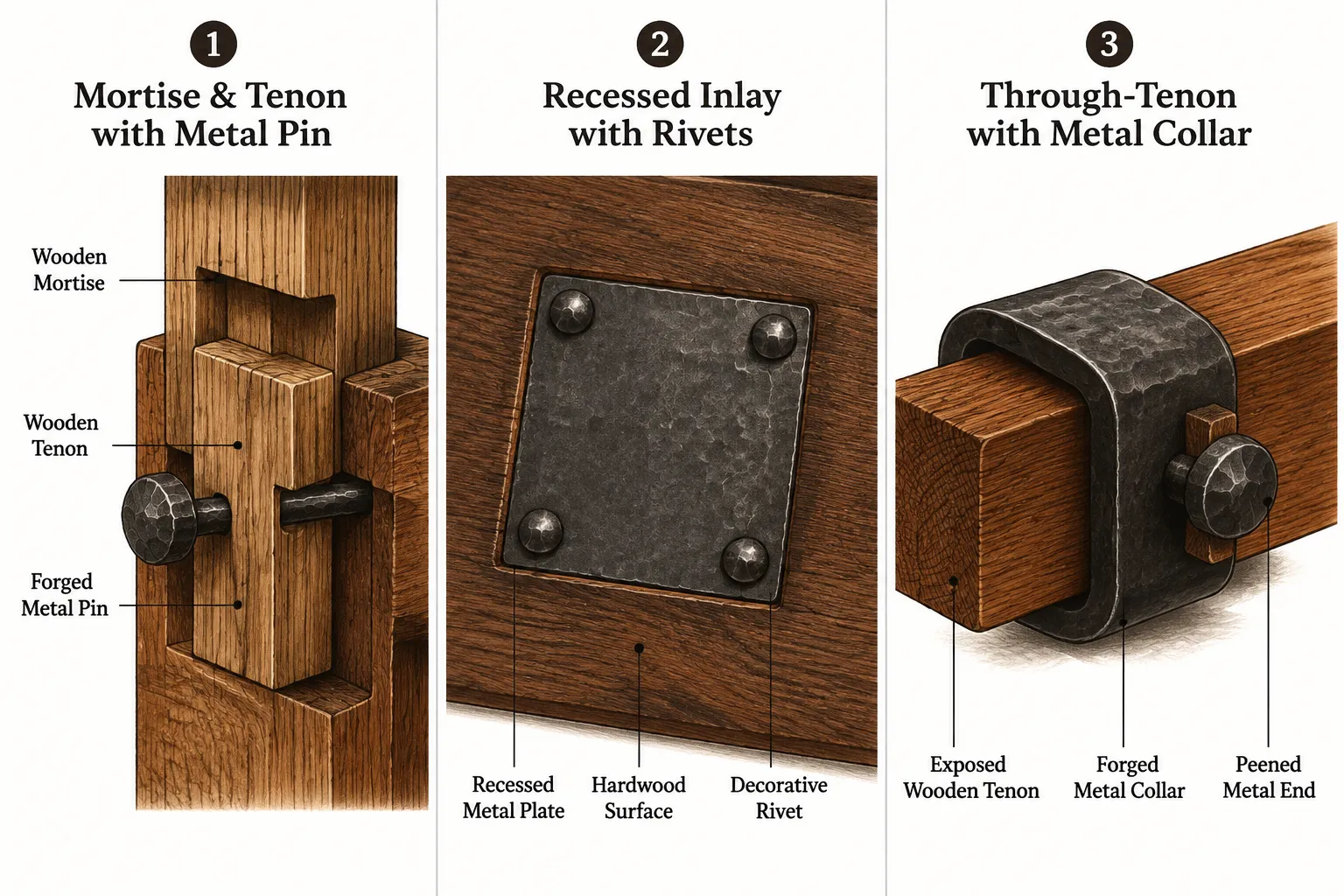
One primary method for sound integration is through mechanical fastenings that account for movement. Instead of relying solely on adhesives, which can fail under differential stress, mechanical joints leverage the inherent strength of each material.
Advanced Mechanical Joinery Techniques
Through-Tenons with Metal Collars or Straps: This technique elevates the classic mortise and tenon. Instead of hiding the joint, the wooden tenon passes completely through the metal element (a leg, support, or decorative band) and is secured on the other side. The tenon can be wedged, pegged with a smaller metal pin, or even peened (mushroomed) for a permanent, visible connection. This creates significant structural integrity and a powerful visual statement. For inspiration on the wood side, refer to articles on advanced mortise and tenon variations through blind and wedged joints for fine furniture.
Recessed Metal Plates with Rivets: For flat surfaces or structural reinforcement, a metal plate can be precisely cut and then recessed into the wood, flush with the surface. This is particularly effective for tabletops or structural panels. The plate is then secured with decorative rivets, which not only hold the plate in place but also add a rustic or industrial aesthetic. The careful recessing prevents snagging and creates a seamless feel.
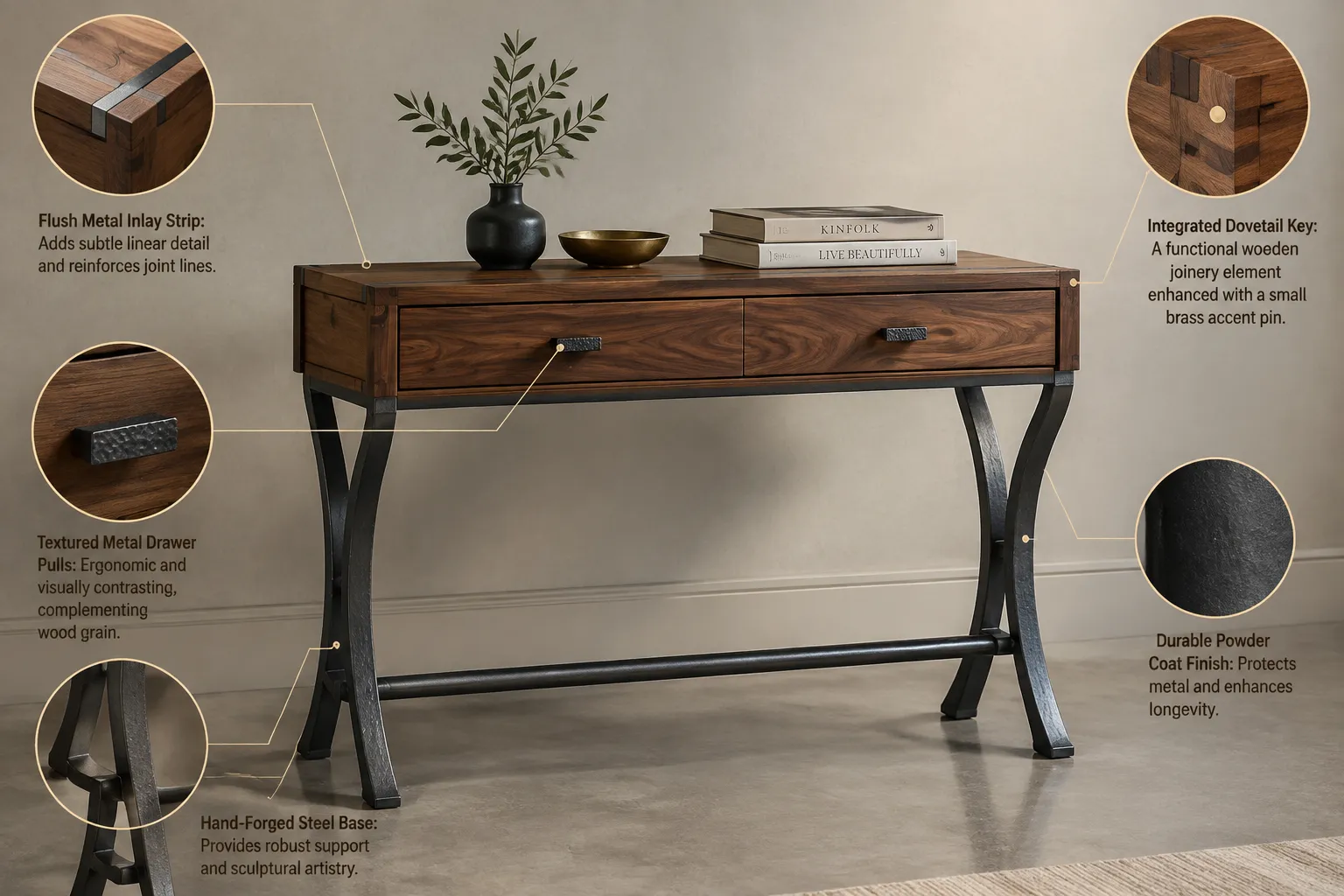
Dovetail Keys with Metal Accents: While dovetails are a quintessential woodworking joint, they can be enhanced with metal. A wooden dovetail key, often used for breadboard ends or stabilizing cracks, can be created with a channel for a thin metal inlay. Alternatively, a metal element itself can be shaped as a dovetail key, providing a striking visual contrast and mechanical locking. This falls under the broader category of hybrid joinery and bio-resin inlays: combining traditional woodworking with modern materials.
Pinned Joinery with Custom Metal Pins: Traditional pinned joinery involves driving wooden dowels through a mortise and tenon. In a hybrid approach, these pins can be custom-forged metal. Small, decorative iron or brass pins, perhaps with hammered heads or specific patinas, can be used to secure joints, adding both strength and unique visual detail. This is a subtle yet effective way of integrating blacksmithing.
Considering Material Properties
When designing such joints, always consider:
- Wood Movement: Design joinery to accommodate wood’s seasonal expansion and contraction. For instance, slotted holes for screws in metal brackets allow the wood to move without cracking.
- Corrosion: Certain metals can react with specific wood tannins, causing discoloration or corrosion. For example, iron can stain oak black. Using barrier layers or choosing compatible metals (like brass or stainless steel) is crucial.
- Strength and Hardness: Match the strength of the metal and wood components. Softwoods may not hold up to heavy, rigid metal elements without proper reinforcement.
By focusing on these advanced joinery concepts, woodworkers can move beyond simple attachments to truly integrate blacksmithing and metalwork into fine woodworking, creating pieces that are structurally sound and aesthetically sophisticated.
Fabricating Custom Metal Hardware for Hybrid Furniture
The true power of integrating blacksmithing into fine woodworking comes from the ability to create custom metal hardware. Off-the-shelf hardware, while functional, rarely matches the specific aesthetic and structural demands of a bespoke furniture piece. Blacksmithing allows for the creation of unique hinges, pulls, brackets, and structural elements that perfectly complement the wood’s grain, form, and finish.
Essential Blacksmithing Skills for Woodworkers
While becoming a master blacksmith is a journey, certain fundamental skills are highly beneficial for furniture makers:
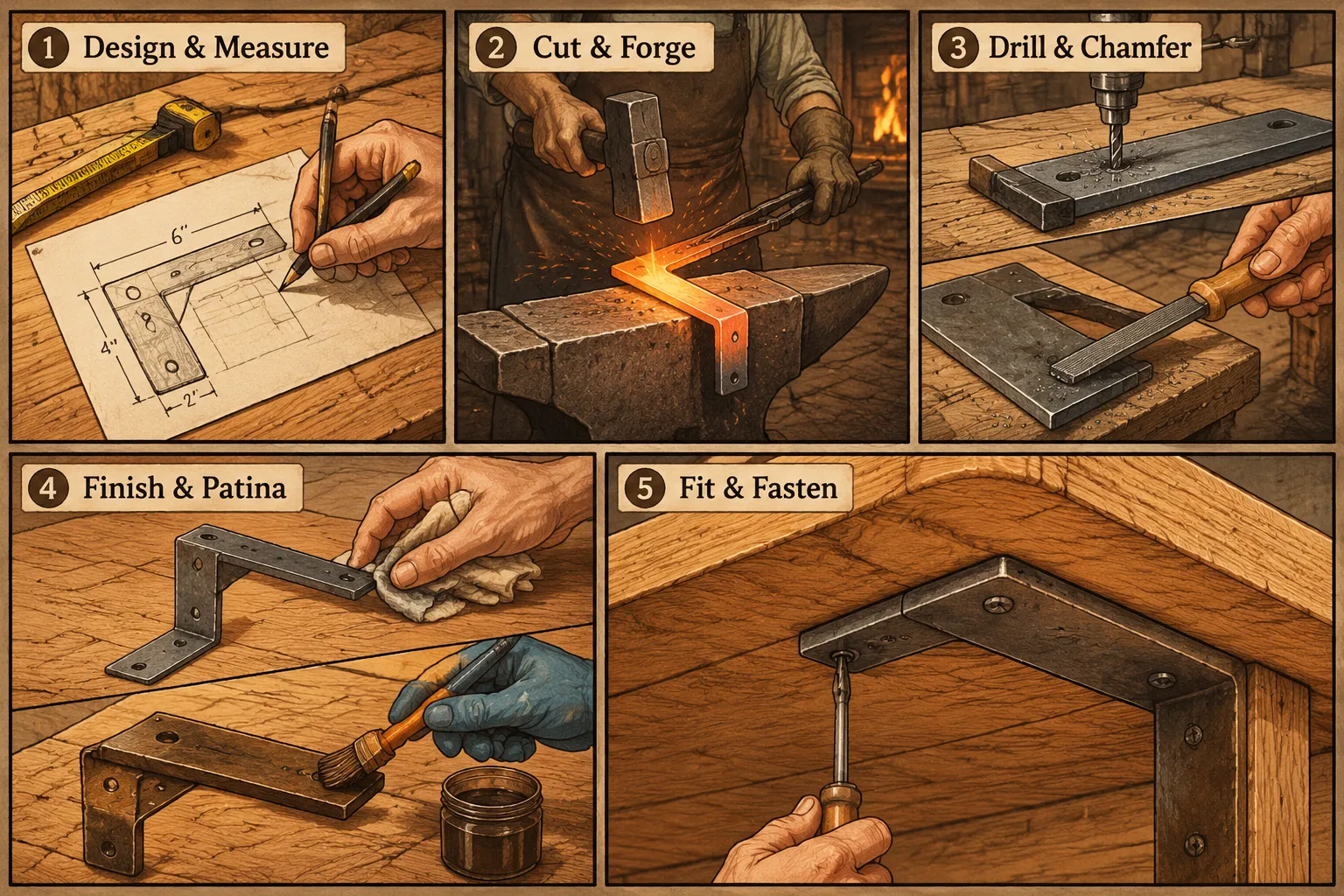
- Heating and Forging: Understanding how to heat metal (typically mild steel or brass) in a forge and shape it with a hammer on an anvil is foundational. This includes drawing out (lengthening), upsetting (thickening), bending, twisting, and punching holes.
- Cutting and Shaping: Basic cutting techniques using a hot cut chisel or cold chisels, along with grinding and filing, are necessary for refining shapes.
- Joining Metal: Riveting, welding (though often less aesthetically subtle for fine work), and collaring are methods for joining multiple metal pieces.
- Finishing and Patination: Applying various finishes, from brushed steel to blackened iron or chemical patinas, dramatically impacts the final look and protects the metal.
Designing and Crafting Custom Metal Components
- Sketching and Prototyping: Start with detailed sketches that integrate the metal component with the wooden design. Consider scale, proportion, and how the metal will interact with the wood. Creating cardboard or wooden prototypes can help visualize the piece before working with metal.
- Material Selection: Mild steel is an excellent starting point for blacksmithing due to its workability and cost. For specific applications, consider stainless steel for corrosion resistance (e.g., for building outdoor poolside tables and patio furniture), brass for its warm color, or copper for its distinctive patination.
- Forge Work: Heat the chosen metal to the appropriate temperature (typically bright orange for steel) and begin shaping. This is where artistic vision meets physical skill. Hammers, tongs, and various anvil tools are your extensions. Focus on clean lines and consistent hammering.
- Fit and Finish: Once forged, the metal piece will need refinement. Grind away excess material, file edges smooth, and polish surfaces as desired. Then, apply a suitable finish, wax for a natural look, lacquer for protection, or a chemical patina for a specific color or antique appearance.
Consider the example of a custom drawer pull. Instead of a standard rectangular pull, a blacksmith might forge a delicate, organic handle that mirrors a curve in the wooden leg of a cabinet, or a robust, textured pull that contrasts beautifully with a smooth, polished wood surface. Similarly, structural brackets can be forged with intricate twists or hammered textures, transforming a functional necessity into a decorative feature. This attention to detail defines the advanced techniques for hybrid furniture.
Decorative Metal Inlays and Surface Enhancement
Beyond structural components and hardware, metalwork offers incredible opportunities for decorative integration, transforming the surface of woodworking projects. These techniques can add visual weight, intricate detail, and a unique textural contrast that cannot be achieved with wood alone. This is where integrating blacksmithing and metalwork into fine woodworking truly shines as an art form.
Metal Inlays: Adding Elegance and Detail
Metal inlays involve embedding metal directly into the surface of the wood. This requires precision in both woodworking and metalwork.
- Channel Creation: The first step is to create a precise channel or recess in the wood where the metal will sit. This can be done with specialized router bits, chisels, or even fine carving tools for intricate designs. The depth and width must perfectly match the metal inlay material. For techniques related to other inlay materials, exploring Epoxy Resin Inlay Woodworking can offer foundational understanding.
- Metal Preparation: The metal (often thin brass, copper, or aluminum sheet) is cut, filed, and shaped to precisely fit the channel. Blacksmithing skills allow for custom shaping of metal wires or small forged elements for unique inlay patterns.
- Embedding and Securing: The metal inlay can be secured with various methods:
- Adhesive: Epoxy or strong metal-to-wood adhesives are commonly used, especially for flush inlays.
- Mechanical Fit: For thicker inlays or wire, a slight interference fit can hold it in place, sometimes enhanced with a dab of adhesive.
- Peening/Riveting: For certain designs, small tabs of metal can be peened over into small undercut sections of the wood, or tiny decorative rivets can secure broader metal sections.
- Finishing: Once embedded, the metal is sanded flush with the wood, then polished or patinated to achieve the desired finish, contrasting beautifully with the surrounding wood grain.
Metal Banding and Edging
Applying thin strips or bands of metal to edges or around panels offers both protection and a sophisticated aesthetic. Forged metal banding, perhaps with a hammered or textured surface, can be used to reinforce table edges, add decorative trim to cabinet doors, or define the perimeter of a tabletop. These can be secured with small screws, decorative rivets, or carefully bent tabs.
Sculptural and Decorative Accents
Blacksmithing allows for the creation of small, sculptural metal accents that can be incorporated into furniture.
- Forged Handles and Knobs: As discussed, custom handles can elevate a piece.
- Decorative Appliqués: Small, flat forged motifs (leaves, geometric shapes, abstract designs) can be meticulously fastened to wooden surfaces, adding unique points of interest.
- Combined Elements: Think of a carved wooden panel that incorporates a flowing, organic metal vine, or a drawer front featuring a stylized forged metal emblem.
The beauty of integrating blacksmithing and metalwork into fine woodworking lies in this versatility. From the robust structural support of forged legs on a dining table to the delicate sparkle of a brass inlay on a keepsake box, these advanced techniques enable woodworkers to create truly distinctive and enduring hybrid furniture pieces in 2026.
Conclusion
Integrating blacksmithing and metalwork into fine woodworking is more than a trend; it’s a powerful evolution in furniture crafting that opens up a world of creative possibilities. By moving beyond conventional approaches and embracing advanced techniques, woodworkers can create hybrid furniture that boasts unparalleled structural integrity, visual intrigue, and a distinct artistic voice. This fusion challenges practitioners to master not one, but two ancient crafts, resulting in pieces that are rich in narrative and craftsmanship.
As you embark on this journey, remember that success hinges on a deep understanding of both materials, meticulous planning, and a willingness to learn and experiment. Start with smaller projects to refine your metalworking skills, such as crafting simple hinges or decorative inlays, before tackling complex structural integrations. Invest in quality tools for both disciplines and prioritize safety in the workshop. The reward is furniture that transcends the ordinary, standing as a testament to the enduring beauty when wood and metal are forged together with purpose and passion.
Actionable Next Steps:
- Acquire Basic Blacksmithing Skills: Seek out local workshops or online courses to learn fundamental forging techniques. Even basic hammering, bending, and punching skills will be invaluable.
- Experiment with Small Projects: Begin by creating custom drawer pulls, escutcheon plates, or small decorative metal inlays for existing woodworking projects to gain confidence.
- Study Hybrid Designs: Analyze contemporary and historical hybrid furniture for inspiration, paying close attention to how materials are joined and how they complement each other.
- Invest in Appropriate Tools: Gradually build your collection of blacksmithing tools (anvil, forge, tongs, hammers) alongside your woodworking essentials.
- Prioritize Material Research: Understand the properties of various woods and metals, especially regarding expansion, contraction, and potential for galvanic corrosion, to ensure the longevity of your hybrid creations.
SEO Meta Title: Integrating Blacksmithing & Metalwork in Hybrid Furniture SEO Meta Description: Explore advanced techniques for integrating blacksmithing and metalwork into fine woodworking, creating unique hybrid furniture pieces with custom hardware and decorative inlays in 2026.