
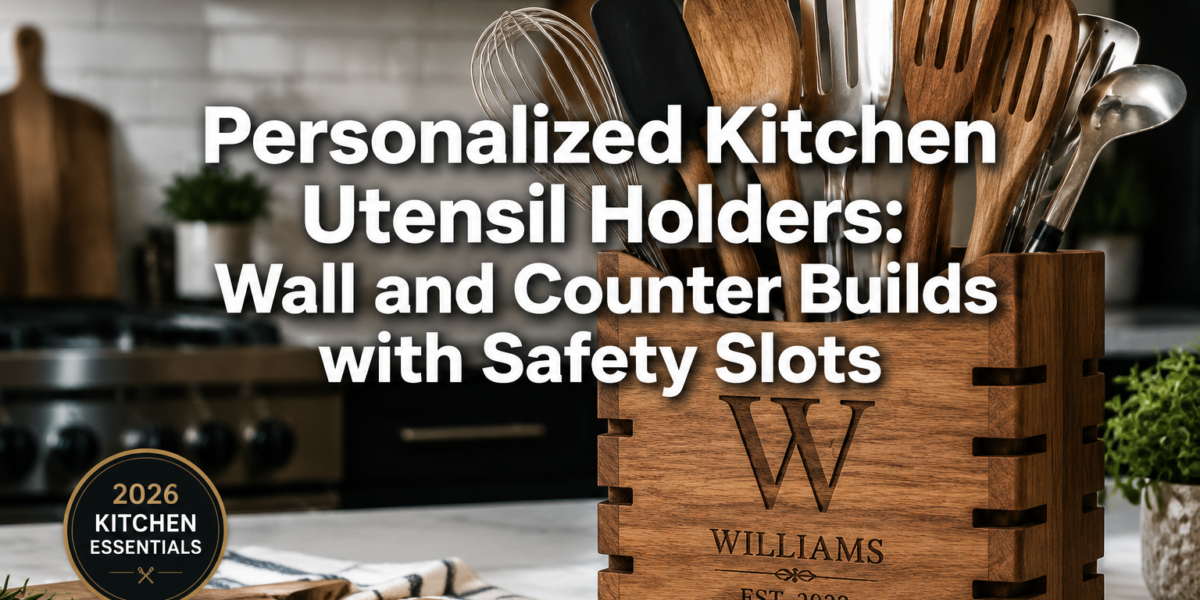
The average kitchen, despite its modern appliances, often struggles with a fundamental problem: disorganized and unsafe utensil storage. Spatulas crammed into narrow crocks, whisks toppling over, and sharp knives haphazardly mixed in can create a daily culinary frustration and potential hazard. This ubiquitous issue underscores the critical need for well-designed storage solutions, particularly personalized kitchen utensil holders, whether as wall or counter builds, that incorporate safety slots. In 2026, the focus for many homeowners is on functional kitchen makeovers, where bespoke storage combines aesthetic appeal with practical, secure organization. These specialized holders elevate kitchen efficiency and safety by providing dedicated, stable homes for every tool, ensuring durability through robust joinery and protection with food-safe finishes for everyday utility.
Key Takeaways
- Enhanced Organization and Safety: Personalized utensil holders with safety slots prevent tools from toppling, reducing clutter and the risk of accidents.
- Customization for Aesthetics and Function: Tailoring designs to specific kitchen layouts and utensil collections maximizes space and visual appeal.
- Durable Joinery is Crucial: Robust construction techniques ensure longevity and stability for both wall-mounted and counter-top units.
- Food-Safe Finishes: Selecting appropriate finishes protects the wood and ensures hygiene, especially for items in contact with food preparation areas.
- Versatile Design Options: Both wall-mounted and counter-top builds offer distinct advantages, catering to various kitchen sizes and user preferences.
The Evolution of Kitchen Utensil Storage: Beyond the Basic Crock
For decades, the humble ceramic or stainless steel crock served as the default solution for kitchen utensil storage. While functional, these often fall short in terms of organization and safety. Utensils tend to clump together, making it difficult to find the right tool, and lighter items can easily be pushed aside, leading to a jumbled mess or even sharp edges becoming exposed. The modern kitchen demands more sophisticated solutions, and this is where personalized kitchen utensil holders with safety slots come into their own. They represent a significant upgrade, moving beyond mere containment to active organization and protection.
The current trend in 2026 favors custom solutions that integrate seamlessly into the kitchen’s design language. Homeowners are increasingly seeking ways to declutter countertops and utilize vertical space effectively, making both wall-mounted and counter-top builds popular choices. The “personalized” aspect means these aren’t off-the-shelf items; they are crafted to fit specific needs, whether it’s accommodating an unusually long whisk or a collection of specialized baking tools.
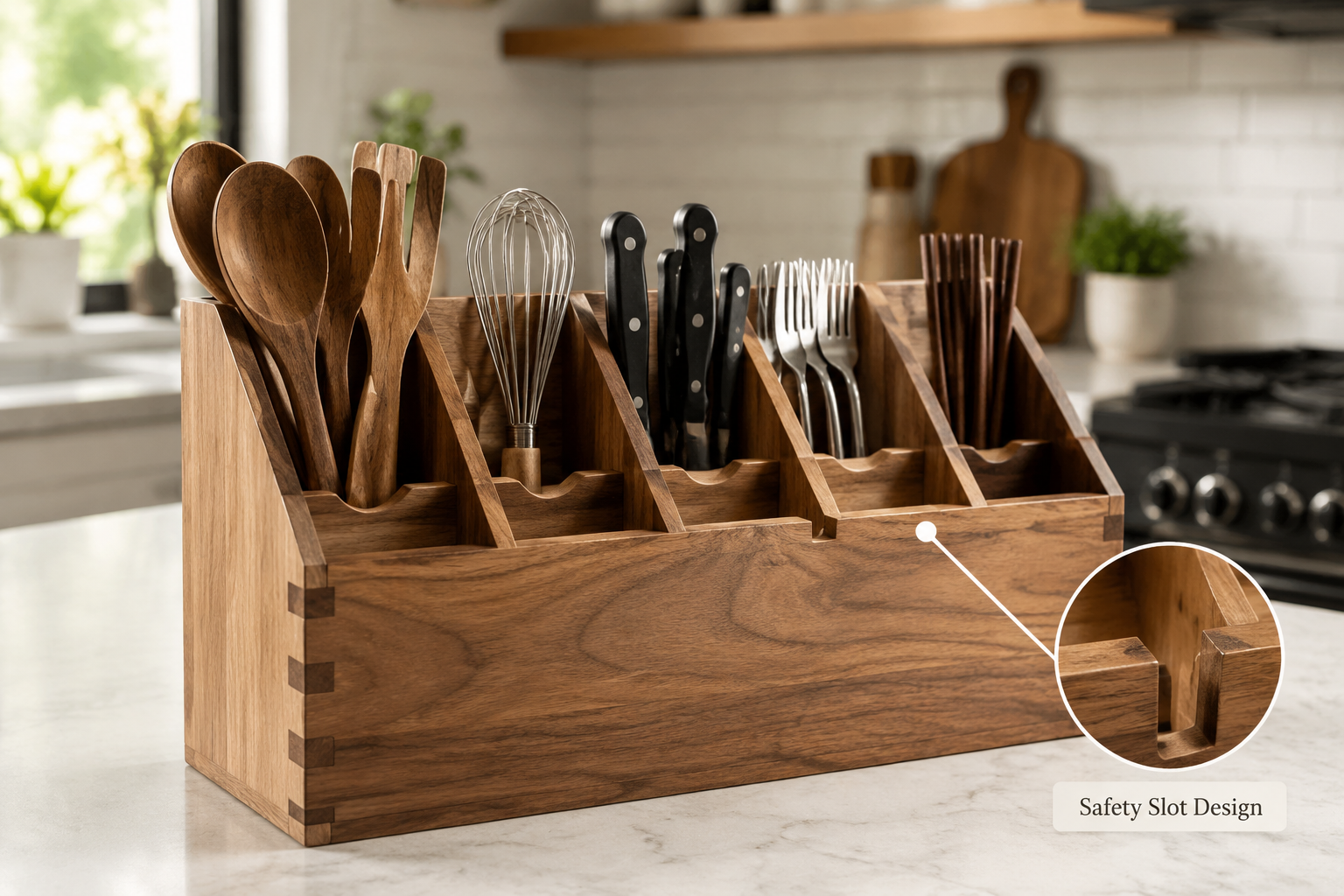
A key differentiator for these advanced holders is the inclusion of “safety slots.” These are not merely open compartments; they are engineered with specific dimensions, internal dividers, or subtle retaining mechanisms that prevent utensils from shifting, falling out, or tipping over. This level of design consideration is crucial for kitchens, especially those with high traffic or where children might be present. When designing and building such holders, focusing on durable joinery is paramount. Techniques like dovetail joints or mortise and tenon ensure structural integrity, preventing the holder from loosening over time, even with daily use. For guidance on achieving strong, lasting connections, consider exploring “Mastering Dovetail Joinery for Drawers: Hand and Router Methods” or “Mastering Modern Hand-Cut Joinery: Adapting Classics for Live Edge and Modular Furniture”. These techniques are highly transferable to crafting resilient utensil holders.
Furthermore, the choice of finish plays a vital role in both aesthetics and hygiene. Given that these holders will house tools used for food preparation, applying food-safe finishes is non-negotiable. Options include natural oils like mineral oil or tung oil, or specific food-grade waxes and sealants that protect the wood from moisture and wear without introducing harmful chemicals. For more on appropriate wood treatments, our article on “Natural Wood Finishing Techniques” provides valuable insights.
Designing Personalized Kitchen Utensil Holders: Wall and Counter Builds with Safety Slots
Creating a personalized kitchen utensil holder that truly meets a homeowner’s needs requires careful planning and execution. The first step involves assessing the user’s specific collection of utensils, their kitchen layout, and their aesthetic preferences.
For Counter-Top Builds:
Counter-top utensil holders are ideal for kitchens with ample counter space or for those who prefer easy access to their most frequently used tools. The design considerations include:
- Footprint and Capacity: Determine the maximum number of utensils to be stored and the available counter space. A wider base can offer more stability, while a compact design suits smaller kitchens.
- Slot Configuration: Instead of a single open chamber, design individual or grouped slots. These can be simple square or circular cutouts, or more advanced designs with tapered openings that gently grip the utensil handles. For wider spatulas or ladles, wider slots are necessary.
- Weight Distribution: Ensure the holder is heavy and stable enough not to tip over, especially when loaded with unevenly weighted tools. Adding a solid base or even internal weighting can help.
- Drainage (Optional but Recommended): If utensils might be stored while slightly damp, consider incorporating a false bottom with small drainage holes or a removable drip tray to prevent moisture build-up and protect the wood.
For Wall-Mounted Builds:
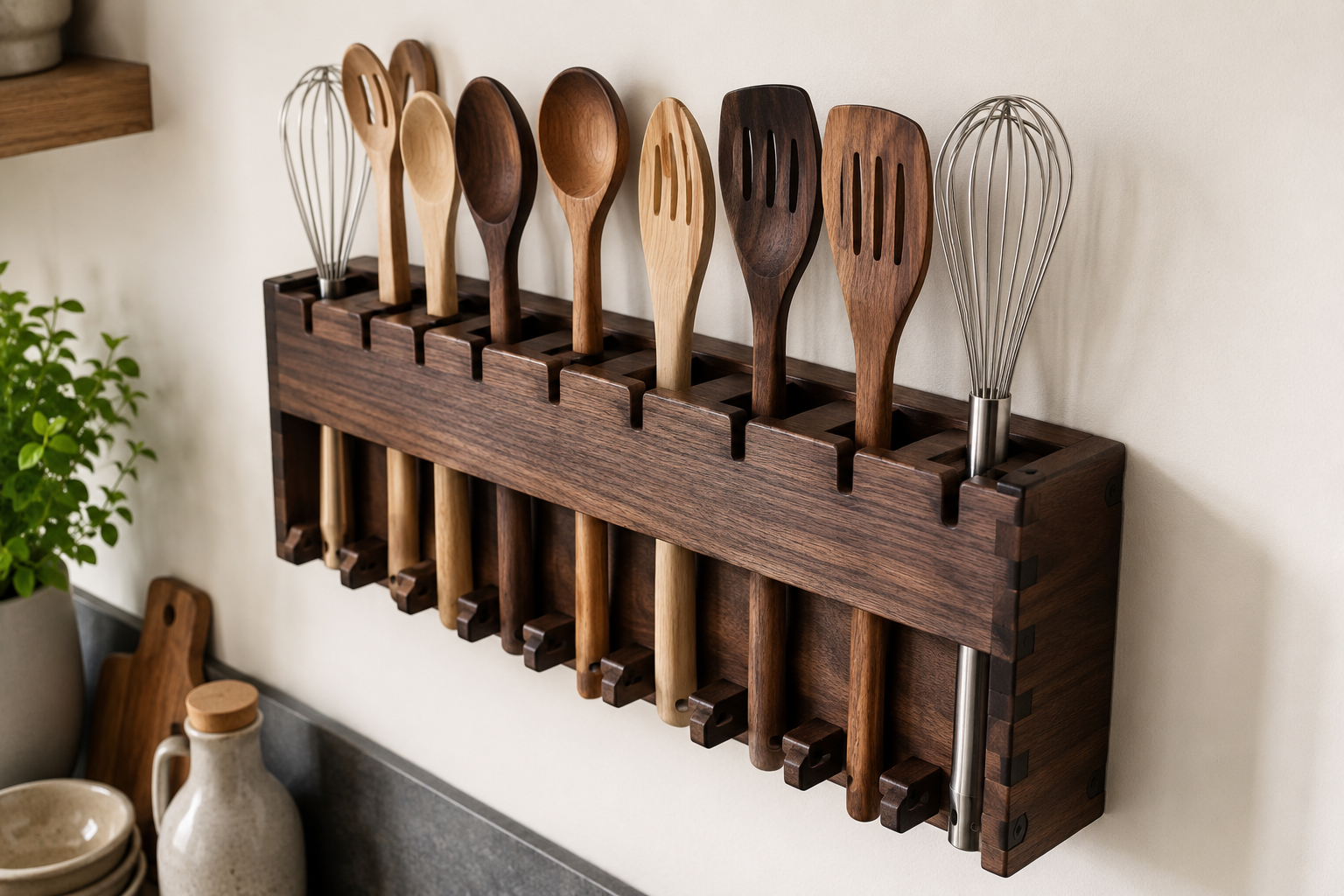
Wall-mounted personalized kitchen utensil holders are excellent for maximizing vertical space and keeping countertops clear. This is especially valuable in smaller kitchens or those aiming for a minimalist aesthetic.
- Mounting Strength: The primary concern is secure attachment to the wall. This requires strong fasteners anchored into studs or robust wall anchors. The joinery for the holder itself must also be exceptionally strong to bear the weight of the utensils.
- Accessibility: Mount the holder at a comfortable height for easy reach.
- Design Integration: Consider the overall kitchen decor. A sleek, modern design might use hidden mounting hardware, while a rustic look could feature exposed, decorative brackets.
- Slot and Hook Combination: Many wall-mounted designs effectively combine safety slots for bulkier items with hooks for smaller, lighter tools like measuring spoons or ladles with hanging loops.
- Depth and Clearance: Ensure the holder doesn’t protrude too far from the wall, obstructing movement, and that utensils don’t hit the wall when inserted.
When choosing materials, hardwoods like maple, oak, or cherry are excellent choices for their durability and attractive grain. For those seeking unique character, sourcing reclaimed and salvaged wood can add a rich narrative to the piece. Our guide on “Sourcing Reclaimed and Salvaged Wood: Quality Assessment, Restoration, and Safe Handling” offers great advice on this. The craftsmanship involved in these personalized holders can even be a profitable endeavor for woodworkers, as bespoke kitchen accessories are in high demand in 2026. Think about the market for “Profitable Beginner Woodworking: Picture Frames, Cutting Boards, and Kitchen Products that Sell Fast.”
Crafting Safety Slots and Applying Food-Safe Finishes
The “safety slots” are the defining feature of these advanced utensil holders. Their design goes beyond simple holes. Here are some techniques for implementing effective safety slots:
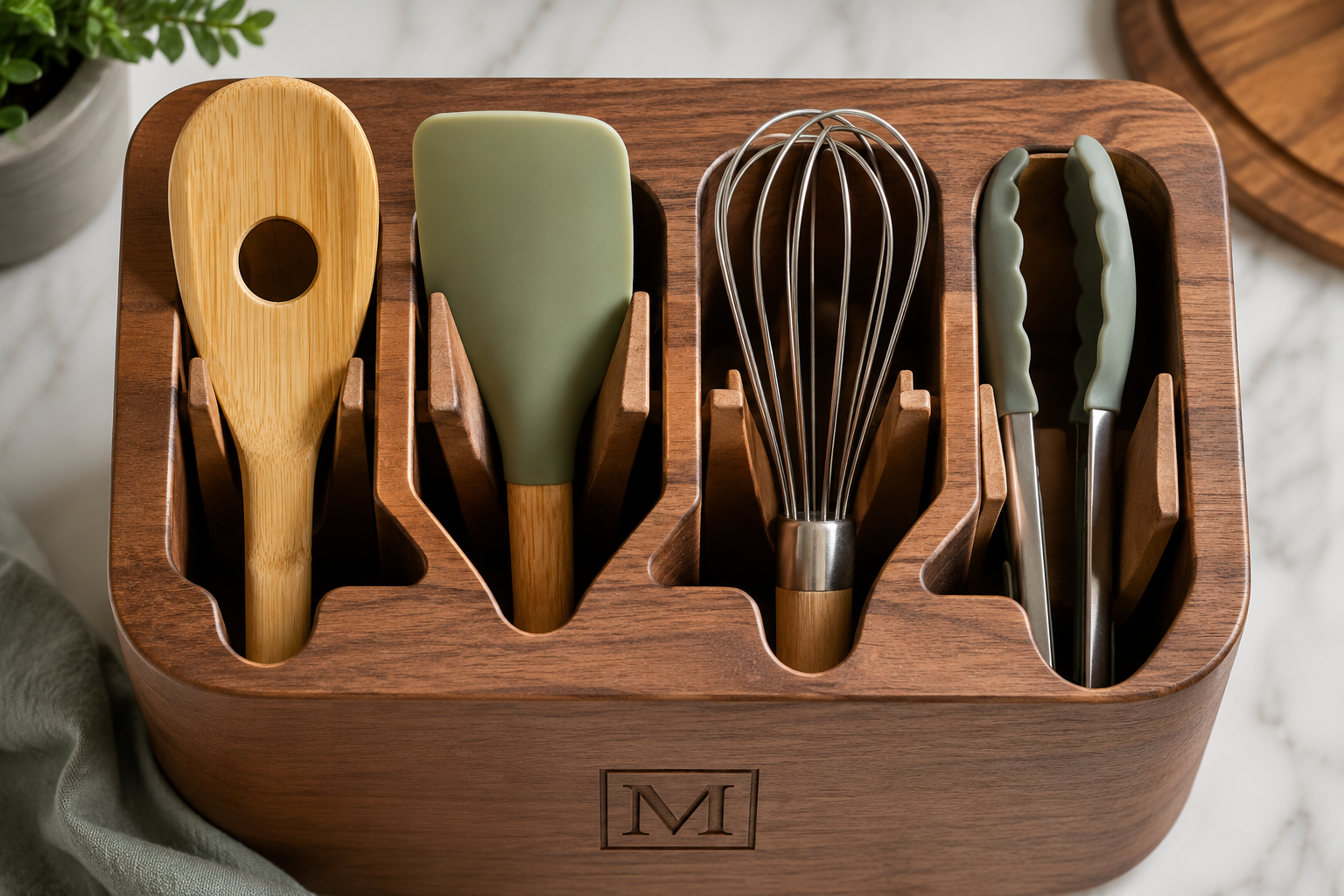
- Individual Compartments: Instead of one large opening, create multiple, distinct compartments for each primary utensil. This prevents tangling and allows each tool to stand upright. These can be formed by internal dividers, precisely cut and joined within the main structure.
- Tapered or Angled Slots: For utensils with varying handle thicknesses, a slot that is wider at the top and gradually narrows can provide a gentle grip, holding the utensil securely without it rattling or falling.
- Raised Edges or Lips: A subtle raised lip or edge around the top of each slot can prevent handles from easily sliding out, especially in wall-mounted designs where gravity plays a role.
- Bottom Support: Ensure each slot provides a solid bottom support. For very long utensils, the depth of the holder is crucial to prevent top-heaviness.
The process of cutting these slots requires precision. A router with appropriate bits can create clean, uniform openings. For intricate shapes or tighter spaces, hand tools may be necessary. For those looking to refine their tool usage, “Hand Tool Mastery for Detail Work: Chisels, Hand Planes, and Rasps for Refined Joinery and Finishing” can be an invaluable resource.
Once the woodworking is complete, the application of a food-safe finish is critical. This protects the wood from moisture, food residue, and daily wear and tear, while ensuring it remains non-toxic.
Common Food-Safe Finishes include:
- Mineral Oil: This is a popular, inexpensive, and easy-to-apply option. It penetrates the wood, enhancing its natural color, and can be reapplied regularly to maintain protection. It is non-toxic and often used for cutting boards.
- Beeswax/Mineral Oil Blends: These offer a slightly more durable and water-resistant finish than mineral oil alone, providing a soft sheen.
- Pure Tung Oil: Derived from the nut of the tung tree, this oil provides a harder, more water-resistant finish than mineral oil. It polymerizes within the wood, offering excellent protection. Ensure you use 100% pure tung oil, not “tung oil finish” which can contain varnishes or solvents.
- Food-Grade Lacquers or Varnishes: While less common for utensil holders that see direct food contact, certain acrylic or water-based lacquers are certified food-safe once fully cured. Always check product specifications carefully.
Applying these finishes requires sanding the wood to a fine grit (e.g., 220-320 grit) for a smooth surface. Apply the finish in thin coats, allowing adequate drying time between applications, and buffing as directed by the product instructions. For more comprehensive insights into wood finishing, the article on “Wood Finishing Techniques” offers a broader perspective. The longevity and safety of your personalized kitchen utensil holders, whether wall or counter builds with safety slots, hinges on these careful choices and precise applications.
Conclusion
The demand for functional and aesthetically pleasing kitchen solutions continues to grow in 2026, and personalized kitchen utensil holders, designed as wall or counter builds with integrated safety slots, offer a perfect blend of utility, safety, and bespoke craftsmanship. By moving beyond generic storage, these custom pieces enhance kitchen organization, prevent common culinary frustrations, and add a touch of personalized elegance to any home. The emphasis on durable joinery ensures longevity, while the careful selection and application of food-safe finishes guarantee that these holders are both beautiful and hygienic. Whether mounted on a wall to free up counter space or positioned proudly on the counter for easy access, a well-designed and skillfully crafted utensil holder can transform a cluttered kitchen into an efficient and enjoyable culinary workspace. Embarking on such a project not only improves your home but also allows for a rewarding application of woodworking skills, proving that even everyday items can be elevated through thoughtful design and execution.
Meta Title: Personalized Kitchen Utensil Holders: Wall & Counter with Safety Slots Meta Description: Upgrade your 2026 kitchen with personalized utensil holders. Discover wall and counter builds featuring safety slots, durable joinery, and food-safe finishes for ultimate organization.