
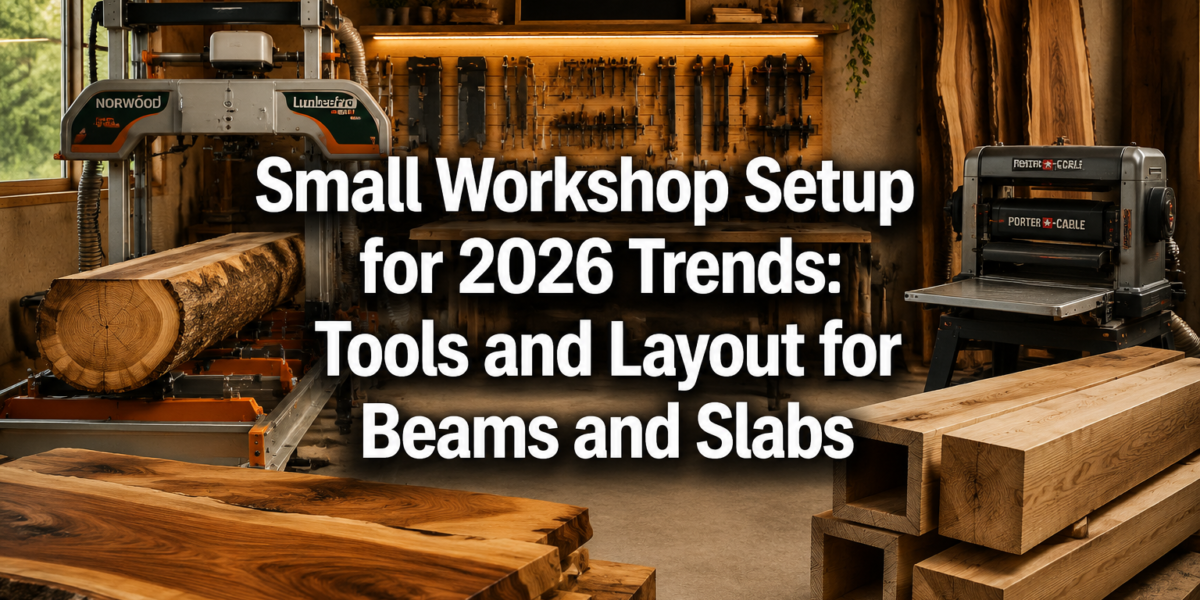
The average small woodworking shop often grapples with a fundamental challenge: how to maximize limited square footage while incorporating the diverse range of tools required for modern projects, especially those involving substantial components like beams and slabs. In 2026, the demand for custom, character-rich woodwork, particularly live-edge slabs and intricate box beams for narrative interior projects, necessitates a highly optimized and efficient workspace. This article delves into the essential components of a robust Small Workshop Setup for 2026 Trends: Tools and Layout for Beams and Slabs, focusing on integrating must-have power and hand tools, smart storage hacks, and critical safety measures to empower woodworkers to tackle ambitious projects within tiny spaces.
Key Takeaways
- Optimize your small workshop for 2026 trends by focusing on multi-functional, mobile, and precision tools for beams and slabs.
- Prioritize a strategic layout that minimizes wasted motion and maximizes vertical space through modular storage solutions.
- Invest in dust management and comprehensive safety gear to ensure a healthy and secure working environment.
- Embrace digital design tools and jigs to enhance accuracy and efficiency in fabrication, especially for complex joinery.
- Consider portable milling equipment for processing raw live-edge lumber within a confined space, opening new project possibilities.
Essential Tools for Beams and Slabs in a Small Workshop Setup for 2026 Trends
Working with large stock like solid wood beams and live-edge slabs in a compact environment demands a specific suite of tools that offer both power and precision without occupying excessive floor space. The Small Workshop Setup for 2026 Trends: Tools and Layout for Beams and Slabs emphasizes portability, versatility, and the ability to handle heavy material safely and accurately.
Power Tools: Precision and Power in Compact Forms
Power tools are the workhorses for dimensioning and shaping large timber. For small workshops, the key is selecting models that offer performance comparable to their larger counterparts but with a smaller footprint or enhanced mobility.
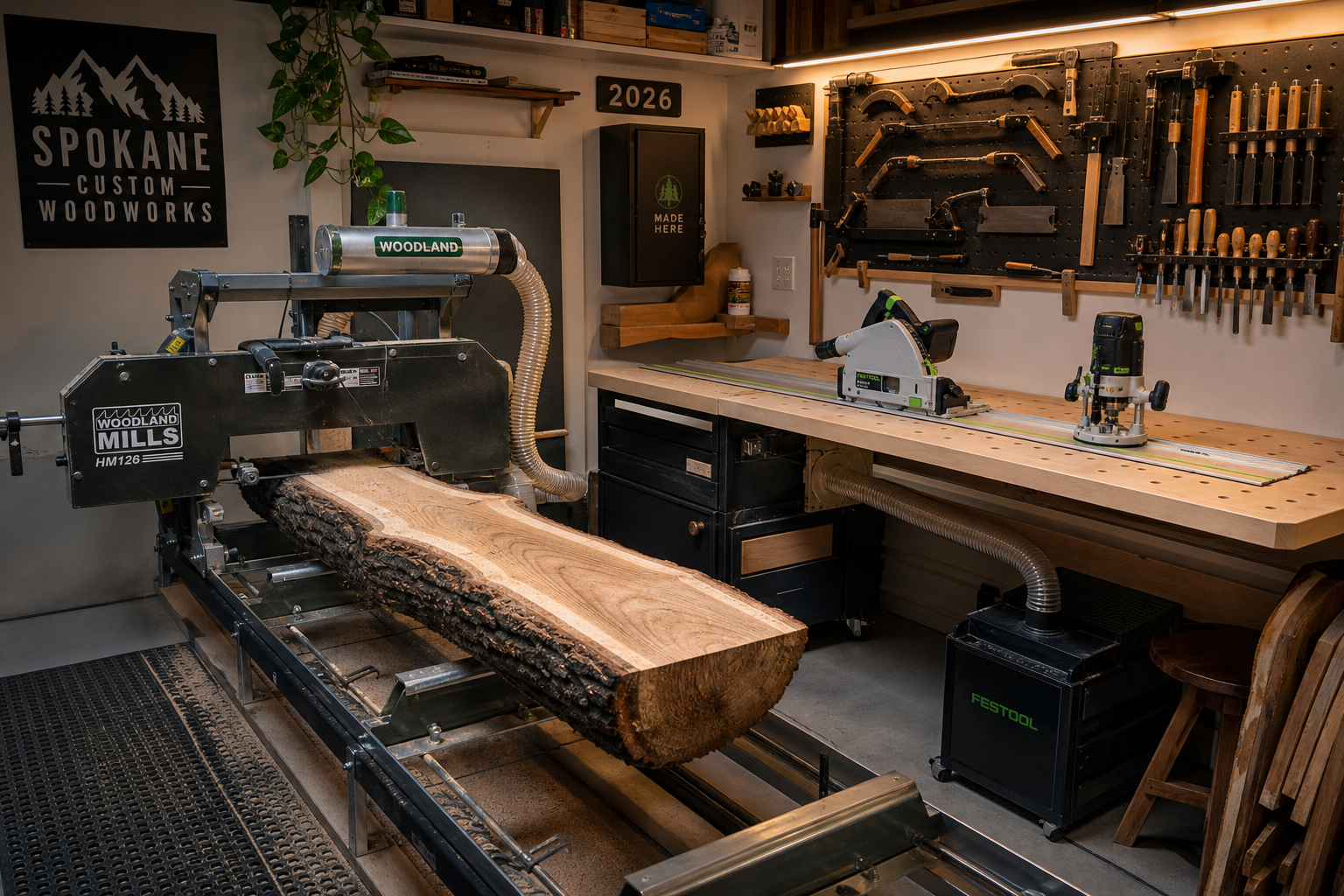
- Portable Sawmill: For those looking to work with truly raw, live-edge slabs, a small, portable bandsaw mill is an invaluable asset. While it might seem counterintuitive for a “small” workshop, models designed for hobbyists can be stored vertically or disassembled, allowing for on-demand milling of logs up to 12-18 inches in diameter. This capability unlocks unique material acquisition and significantly reduces lumber costs.
- Track Saw System: A track saw is non-negotiable for accurate, straight cuts on large slabs and beam components. It eliminates the need for a large table saw to rip wide boards and can perform crosscuts with exceptional precision. Paired with a suitable cutting platform, it’s a space-saving alternative that delivers professional-grade results.
- Heavy-Duty Planer (Benchtop or Portable Stand): Flattening and dimensioning slabs is critical. While a large jointer is impractical, a 13-inch or 15-inch benchtop planer can handle most slab widths in multiple passes. Mounting it on a mobile stand or a dedicated flip-top cart allows it to be tucked away when not in use. Look for models with helical cutterheads for superior finish and quieter operation.
- Router and Router Table: A powerful router is essential for creating consistent edges, dados, and joinery. A compact router table, perhaps integrated into a workbench or a dedicated flip-top station, allows for more precise and safer routing operations on smaller beam components or slab edges. For detailed work, explore Mastering the Router Table: Essential Jigs, Safety, and Advanced Techniques for Precision Joinery and Edges.
- Miter Saw (Sliding Compound): A sliding compound miter saw offers excellent cross-cutting capacity for beam ends and smaller slab sections. Mounting it on a foldable or mobile stand further optimizes space.
- Cordless Tools: The flexibility of cordless drills, impact drivers, and sanders cannot be overstated in a small space. They eliminate tripping hazards from cords and allow for work in various areas of the shop or even outdoors when milling.
Hand Tools: Precision, Detail, and Craftsmanship
Despite the efficiency of power tools, hand tools remain indispensable for the nuanced work on beams and slabs, especially for joinery, fine-tuning, and creating narrative character.
- Chisels and Mallets: For cleaning up joinery, mortises, and shaping intricate details on beams, a sharp set of chisels is crucial. A good mallet ensures precise control. For insights into hand tool mastery, refer to Hand Tool Mastery for Detail Work: Chisels, Hand Planes, and.
- Hand Planes (Jointer, Jack, Block): While power planers handle bulk material removal, hand planes are essential for achieving perfectly flat surfaces, removing planer snipe, and adding chamfers or bevels to slab edges. A long jointer plane can work wonders on larger surfaces, while block planes are ideal for end grain and small details.
- Saws (Japanese Pull Saws, Panel Saw): Japanese pull saws offer incredible precision for joinery and dovetails, invaluable for custom beam connections. A rip-cut panel saw can be surprisingly efficient for breaking down smaller lumber pieces without electricity. For specific techniques, consider Beginner’s Guide to Japanese Hand Saws: Precision Cuts and Essential.
- Scrapers and Rasps: For refining slab surfaces, especially those with unique contours or live edges, cabinet scrapers and woodworking rasps are excellent for blending curves and removing tear-out.
Optimizing Layout and Workflow for Beams and Slabs
A well-designed layout is the cornerstone of any efficient small workshop, particularly when dealing with large, heavy lumber. The goal for a Small Workshop Setup for 2026 Trends: Tools and Layout for Beams and Slabs is to create a fluid workflow, minimize material handling, and maximize every square inch.
Strategic Zone Planning
Divide your workshop into distinct, yet interconnected, zones to streamline operations.
- Dimensioning Zone: This area should accommodate your track saw system and planer, ideally with mobile outfeed/infeed supports. This is where rough lumber is cut to size and flattened. Proximity to a dust collection point is vital here.
- Fabrication/Assembly Zone: A central, sturdy workbench is the heart of this zone. It should be robust enough to hold heavy beam components and slabs securely. Consider a mobile workbench or one with integrated storage. For guidance, check out Building a Custom Wood Workbench: Design Considerations and. This zone is where joinery, shaping, and assembly of beams and smaller slab elements occur.
- Finishing Zone: Ideally, this zone should be separated or easily cleared to prevent dust contamination. It needs good lighting and ventilation. This is where sanding, oiling, and other finishing processes take place on your newly crafted beams and slabs.
- Storage Zone: Crucial for small spaces, this zone must accommodate raw materials, cutoffs, and finished components efficiently.
Mobile and Multi-Functional Workstations
Mobility is paramount in a small workshop.
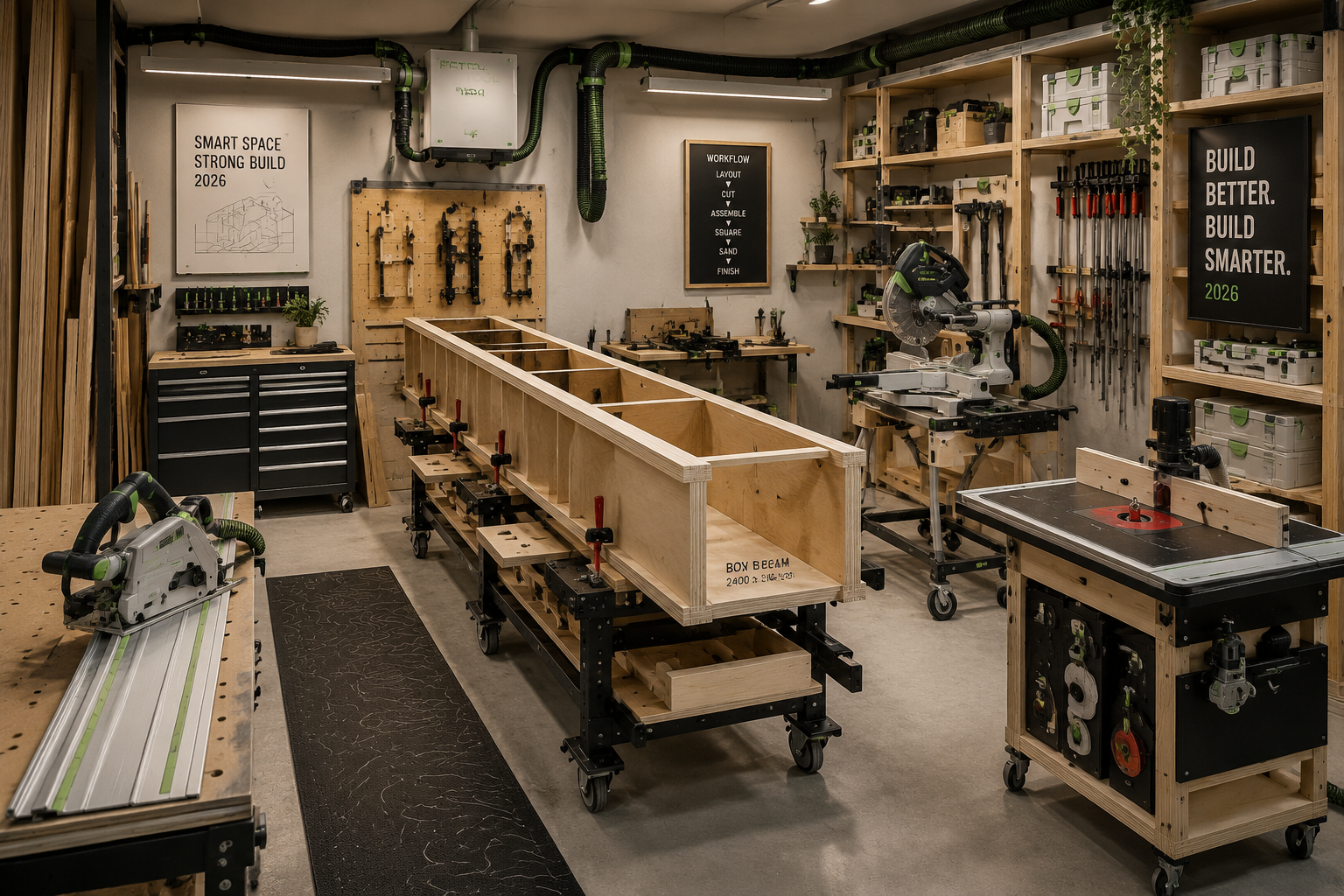
- Mobile Workbenches and Carts: Equip all your heavy tools (planer, miter saw, router table) with sturdy locking casters. This allows you to reconfigure your shop layout for specific tasks, moving tools out of the way when not needed. A multi-functional cart might serve as an outfeed table for your track saw, then transform into an assembly table.
- Flip-Top Tool Stands: These ingenious stands allow two tools (e.g., planer and router table, or miter saw and belt sander) to share a single footprint. Simply flip the top to switch between tools.
- Wall-Mounted and Foldable Solutions: Consider wall-mounted dust collectors, folding work surfaces, and tool cabinets that keep the floor clear. Even a folding lumber rack can be invaluable.
Incorporating Box Beam and Live-Edge Specifics
- Box Beam Jigs: Fabrication of box beams can be intricate, often involving mitered edges or interlocking joinery. Develop custom jigs for cutting consistent angles, dados, and for clamping during glue-up. For advanced techniques, see Complex Exposed Ceiling Beam Layouts: Grids, Trusses, and Ca.
- Slab Carts/Dollies: Moving heavy, unwieldy slabs can be a challenge. Invest in or build a sturdy slab cart or several heavy-duty dollies to easily transport material around your shop.
- Clamping Stations: Ensure you have ample clamping capacity, including large pipe clamps or parallel clamps, and dedicated clamp racks to keep them organized and accessible.
Smart Storage, Safety, and Digital Integration for the 2026 Workshop
Beyond tools and layout, the truly optimized small workshop for 2026 trends integrates intelligent storage, unwavering safety protocols, and digital efficiencies. This holistic approach ensures productivity, worker well-being, and precision for projects involving beams and slabs.
Maximizing Storage in Limited Space
Effective storage is not just about tidiness; it’s about maximizing usable workspace and minimizing wasted time searching for tools or materials.
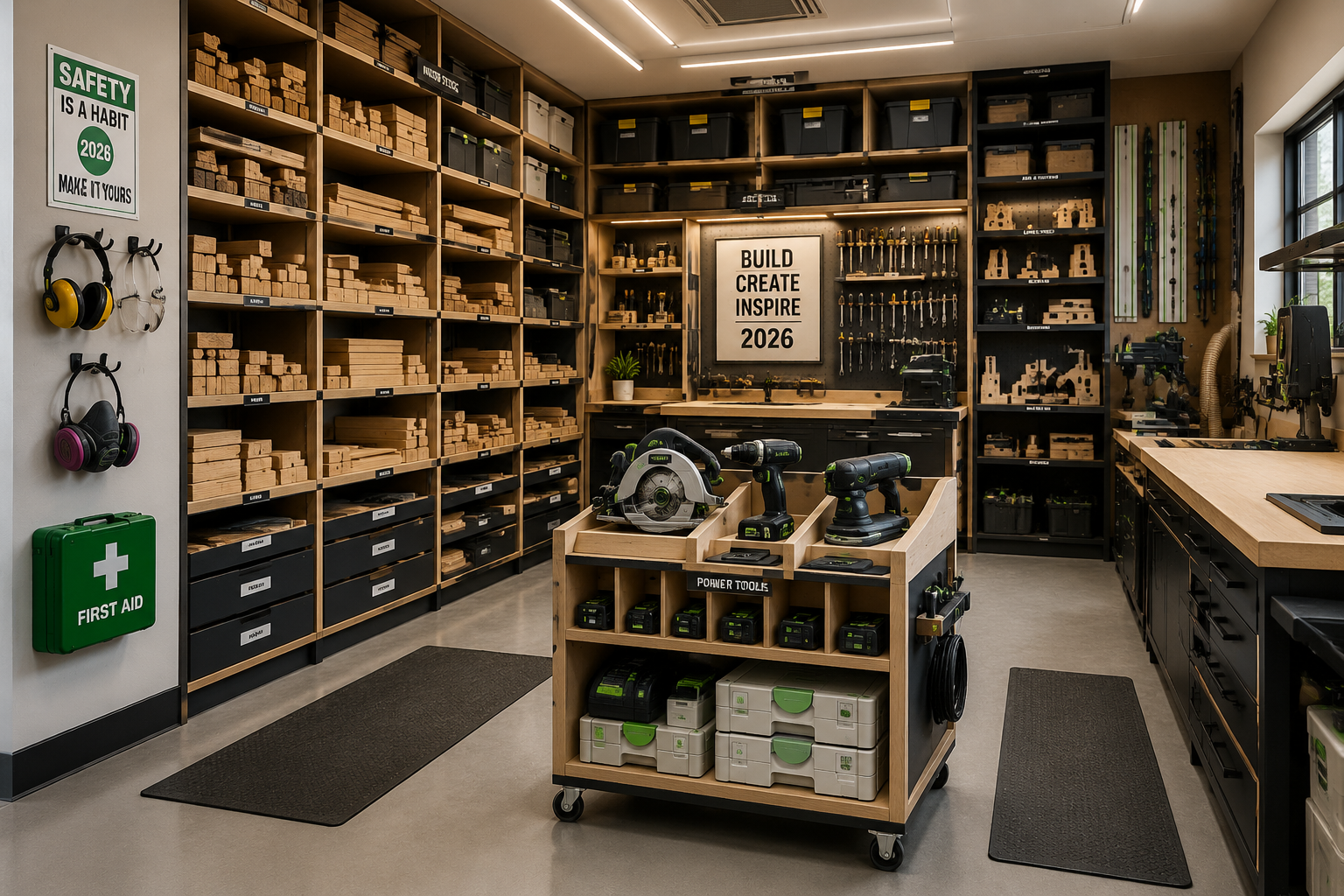
- Vertical Storage Systems: Utilize every inch of wall space. Pegboards, French cleat systems, and custom wall cabinets are excellent for organizing hand tools, jigs, and smaller power tools. Tall, narrow shelving units can house lumber offcuts and smaller project components. For comprehensive ideas, explore Smart Workshop Storage Solutions: Maximizing Small Spaces with.
- Under-Bench Storage: The space beneath your workbench is prime real estate. Incorporate drawers, cabinets, or open shelving for frequently used items, project components, and fasteners.
- Overhead Storage: If ceiling height allows, consider overhead racks for storing longer, lighter stock or seasonal items. Ensure any overhead storage is robust and securely fastened.
- Tool Boxes and Organizers: For smaller tools, hardware, and accessories, clear, stackable bins and dedicated toolboxes keep things organized and portable. Label everything clearly.
- Specialized Lumber Storage: For slabs and beams, vertical rack systems (either wall-mounted or freestanding) are ideal. Store slabs on their edges to prevent warping and save floor space. Ensure racks are strong enough to support significant weight.
Prioritizing Safety
Safety is non-negotiable, especially when working with large, heavy wood and powerful machinery in a confined area.
- Dust Collection: Wood dust is a serious health hazard. Invest in a robust dust collection system. For a small shop, a portable dust collector with HEPA filtration is a good start. Connect it to your track saw, planer, and miter saw. Additionally, a shop air filter can help keep airborne dust levels down.
- Personal Protective Equipment (PPE): Always wear safety glasses, hearing protection (earmuffs or earplugs), and a dust mask or respirator when operating machinery or generating dust. Heavy gloves are recommended when handling rough lumber.
- Adequate Lighting: Good lighting reduces eye strain and helps prevent accidents. Supplement overhead ambient lighting with task lighting at your workbench and critical tool stations.
- Clear Work Zones: Keep pathways clear of obstructions. When working with long material, ensure you have sufficient infeed and outfeed support and that no one can accidentally walk into the path of the material.
- Fire Safety: Keep a fire extinguisher readily accessible. Empty dust collection bags and clean up sawdust regularly to reduce fire hazards.
Digital Integration and Efficiency
Leveraging technology can significantly enhance precision and planning, especially for custom beam and slab projects.
- CAD/CAM Software: For designing complex box beam structures or planning cuts on irregular live-edge slabs, 2D CAD software or even simple sketch programs can be invaluable for optimizing material yield and visualizing the final product.
- Digital Measuring Tools: Digital calipers, angle gauges, and measuring tapes offer superior accuracy compared to their analog counterparts, crucial for tight tolerances in joinery.
- Project Management Apps: Even for a small shop, using a simple app to track project timelines, material lists, and client communications can improve efficiency.
By meticulously planning your Small Workshop Setup for 2026 Trends: Tools and Layout for Beams and Slabs, incorporating smart tool choices, optimized layouts, intelligent storage, and a culture of safety, woodworkers can overcome spatial limitations and produce high-quality, impactful projects.
Conclusion
Creating an effective small workshop for the 2026 trends, particularly when focusing on demanding projects like beams and slabs, is an exercise in thoughtful planning and resourcefulness. The emphasis shifts from sheer size to intelligent design, multi-functional tools, and an optimized workflow. By investing in portable yet powerful tools, adopting modular storage solutions, and steadfastly adhering to safety protocols, woodworkers can transform even the most confined spaces into highly productive and inspiring environments. The ability to efficiently mill live-edge lumber, precisely fabricate box beams, and execute intricate joinery within a compact footprint opens up a world of creative possibilities, allowing craftsmen to meet the growing demand for unique, narrative-driven wood elements in modern interiors. Start by evaluating your most frequent tasks, then strategically acquire tools and implement layout changes that minimize friction and maximize your creative potential.