
Over 80% of furniture pieces in an average home serve a purely utilitarian purpose, yet their design and construction often go unnoticed, despite dictating their longevity and aesthetic impact. From the sturdy dining table that gathers families for meals to the delicate accent piece holding a cherished photograph, tables are fundamental to our living spaces. Understanding the fundamental principles behind designing and constructing various types of tables, including structural stability, leg attachments, and aesthetic considerations for dining, coffee, and accent pieces, is crucial for both aspiring woodworkers and informed consumers. This article delves into the basics of ‘table’ design and construction: from dining to accent pieces, offering a comprehensive look at what makes these everyday objects both functional and beautiful.
Key Takeaways
- Structural Integrity is Paramount: A table’s primary function is to provide a stable, flat surface; thus, robust joinery, appropriate material selection, and balanced design are critical for preventing wobbling, sagging, or collapse.
- Diverse Leg Styles and Attachments: From classic four-leg designs to modern pedestals, the choice of leg style and how it attaches to the tabletop or apron profoundly affects both stability and aesthetic appeal.
- Material Selection Influences Everything: The type of wood, metal, or composite used impacts durability, weight, cost, and the overall visual statement of the table.
- Form Follows Function (and Vice-Versa): Dining tables prioritize surface area and legroom, while accent tables might prioritize intricate details or unique shapes, demonstrating how purpose dictates design choices.
- Finishing Protects and Enhances: The final finish not only protects the table from wear and tear but also significantly enhances its natural beauty and ensures longevity.
Fundamental Components and Structural Stability in Table Construction
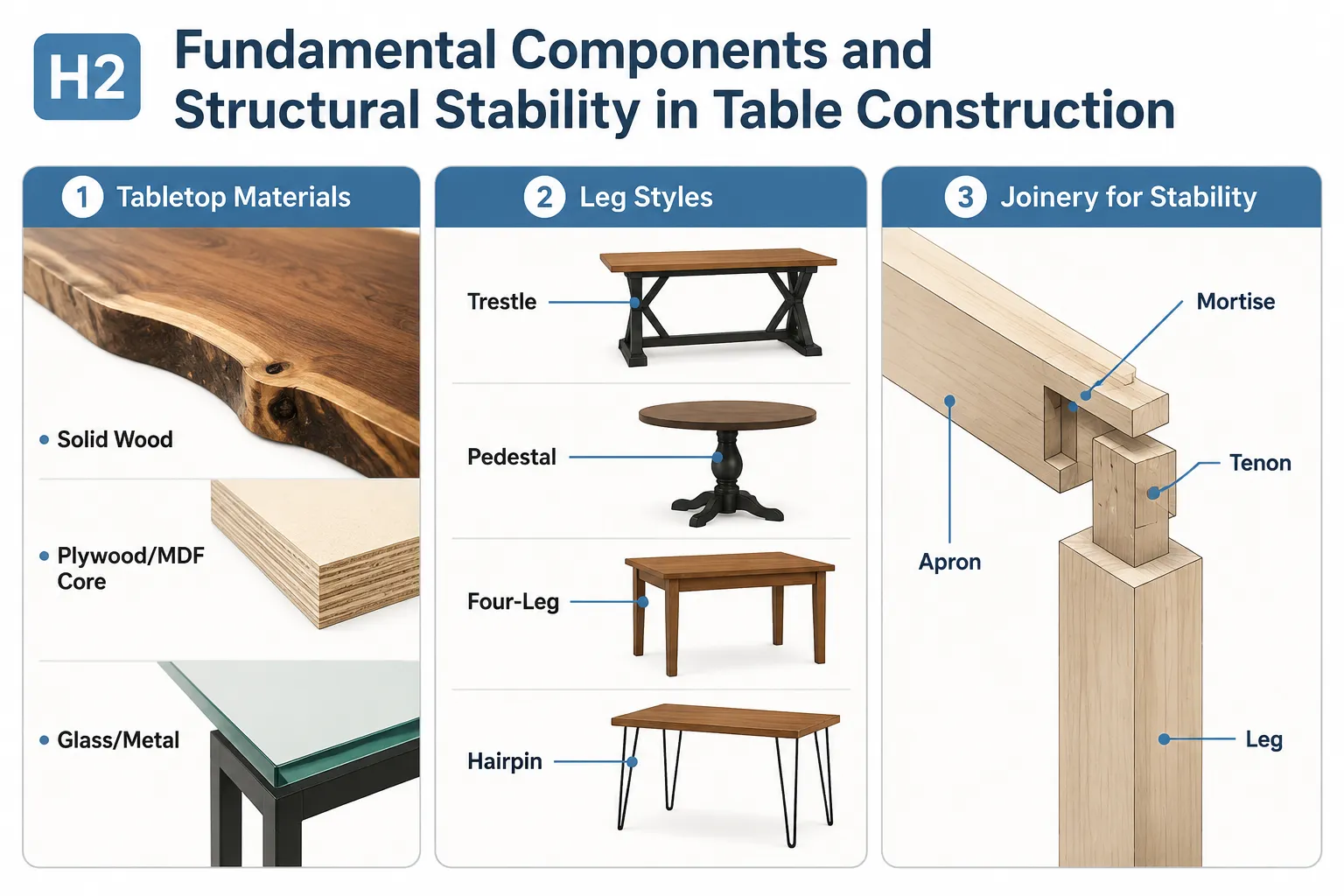
At its core, a table is a simple structure: a flat surface supported by one or more legs. However, achieving true structural stability requires a deep understanding of physics, material science, and woodworking techniques. The fundamental components typically include the tabletop, the apron (a frame connecting the legs and supporting the tabletop), and the legs themselves. Each component plays a vital role in the overall integrity of the piece.
The Tabletop: Foundation of Functionality
The tabletop is the primary functional surface of any table. Its design begins with selecting the appropriate material, which dictates its weight, durability, and visual characteristics.
Common Tabletop Materials:
- Solid Wood: Offers natural beauty, durability, and the ability to be refinished multiple times. Types like oak, maple, walnut, and cherry are popular for their strength and grain patterns. However, solid wood can be prone to seasonal movement (expansion and contraction) and is generally heavier and more expensive. For more on wood choices, explore The Ultimate Wood Selection Guide For Tables Hardwoods Vs Softwoods And Grain Patterns.
- Plywood/MDF with Veneer: More stable and often less expensive than solid wood, these engineered products provide a flat, uniform surface. A veneer layer can mimic the look of solid wood. However, they are less durable in terms of impact resistance and cannot be refinished as extensively.
- Glass: Provides a modern, light aesthetic, making spaces feel larger. It’s easy to clean but can be prone to scratches and shattering.
- Metal (e.g., Steel, Aluminum): Durable, often used in industrial or modern designs. Can be heavy and may scratch or dent.
- Stone (e.g., Marble, Granite): Luxuriously heavy, highly durable, and heat-resistant. Very expensive and requires specialized handling.
Regardless of material, the tabletop must be flat and rigid enough to support its intended load without sagging or warping over time. For solid wood tops, techniques like breadboard ends or strategic battens are often used to mitigate wood movement.
Aprons and Their Role in Stability
The apron is a skirt-like frame that runs horizontally beneath the tabletop, connecting the legs. It serves several critical functions:
- Structural Support: The apron significantly increases the rigidity of the table, preventing the legs from splaying outwards and the tabletop from sagging.
- Leg Connection Point: It provides a strong and stable point for attaching the legs, distributing stress evenly across the structure.
- Aesthetic Element: The apron can also be a design feature, influencing the perceived depth and bulk of the table.
For example, when considering how to build a robust dining table, an apron is almost always essential for stability, as discussed in How To Build A Dining Table That Feels Built In Sizes Aprons And Stretcher Choices.
Legs: The Pillars of Support
Table legs come in an immense variety of styles, from straight and tapered to ornate and sculptural. Beyond aesthetics, their design directly impacts stability.
Key Considerations for Table Legs:
- Number of Legs: Most tables have four legs, offering excellent stability. Pedestal tables use a central column for support, which can provide more legroom but may be less stable if poorly designed. Trestle tables use two main supports with a stretcher between them.
- Leg Thickness: Thicker legs generally provide more stability and a heavier aesthetic.
- Splay and Angle: Legs that splay outwards can increase stability but may reduce legroom.
- Foot Design: The base of the leg, or foot, can influence stability and protect flooring.
The interplay between the tabletop, apron, and legs is what ultimately determines a table’s structural integrity. Good design ensures that forces are distributed efficiently, preventing stress concentrations that could lead to failure.
Exploring Table Leg Attachments and Joinery Techniques
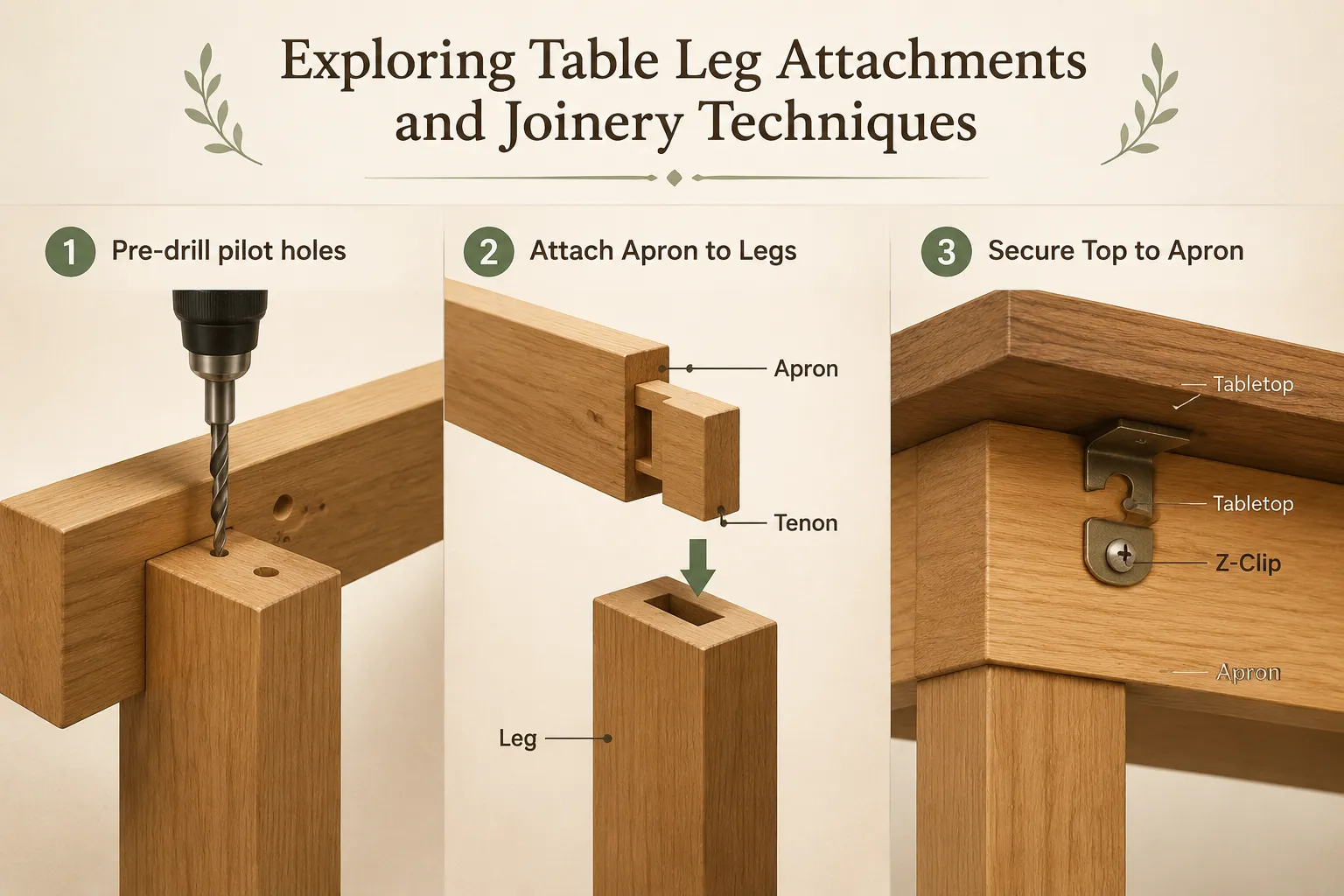
The method by which table legs are attached to the apron and the apron to the tabletop is crucial for both the table’s stability and its long-term durability. Different joinery techniques offer varying levels of strength, ease of construction, and aesthetic appeal.
Traditional Joinery for Strength
For solid wood furniture, traditional joinery methods are often preferred for their exceptional strength and longevity.
- Mortise and Tenon: This is one of the strongest and most classic joints in woodworking. A “tenon” (a projecting piece of wood) on the end of the leg fits precisely into a “mortise” (a corresponding hole or slot) in the apron. This joint provides excellent resistance to racking (sideways movement).
- Dovetails: While primarily used for drawers, smaller dovetail joints can be used to connect aprons to legs, offering immense resistance to pull-out forces.
- Bridle Joints: Similar to mortise and tenon but with an open-ended mortise, providing a strong connection for legs and stretchers.
These joints often require a higher level of skill and specialized tools but result in furniture that can last for generations. For advanced techniques, see Advanced Wood Joinery for Fine Furniture: Beyond Basic Dovetails for.
Modern and Expedient Attachment Methods
For simpler projects or contemporary designs, other attachment methods are widely used.
- Pocket Hole Joinery: This technique uses angled screws to create strong joints quickly and easily. A pocket hole jig drills a precise angle, allowing screws to pull two pieces of wood tightly together. It’s a popular choice for DIY projects, including coffee tables, as detailed in our DIY Coffee Table Building Guide: From Design to Finished Centerpiece.
- Bolt-On Legs with Metal Plates: Many modern tables feature legs that are bolted directly to the underside of the tabletop or an attached apron. This often involves metal plates that receive hanger bolts or lag screws, making assembly and disassembly straightforward.
- Angle Brackets: Metal angle brackets can provide additional support and reinforcement, especially for lighter accent tables or when simpler butt joints are used.
Attaching the Tabletop
Once the leg and apron assembly (known as the base) is complete, the tabletop needs to be securely attached. This attachment must accommodate any natural movement of the wood due to humidity changes, especially with solid wood tops.
- Z-Clips (Tabletop Fasteners) or Figure-8 Fasteners: These metal clips allow the tabletop to expand and contract slightly without putting stress on the apron or cracking the wood. They are inserted into slots routed into the apron and screwed into the underside of the tabletop.
- Wood Buttons/Blocks: Small wooden blocks with elongated holes can be screwed into the apron, with a screw passing through the elongated hole into the tabletop. This allows for movement.
- Screws through Elongated Holes: For non-solid wood tops, or where movement is less of a concern, screws can be driven through elongated holes in the apron directly into the tabletop.
Properly securing the tabletop ensures not only its stability but also the longevity of the entire piece, preventing cracking or warping caused by restricted wood movement.
Aesthetic Considerations and Functional Design Across Table Types
The beauty of table design lies in its incredible versatility. While the fundamental principles of stability and construction remain, the specific application of these principles shifts dramatically between different table types, such as dining tables, coffee tables, and accent pieces. Each type has distinct functional requirements that drive its aesthetic and structural choices.
Dining Tables: Where Function Meets Grandeur
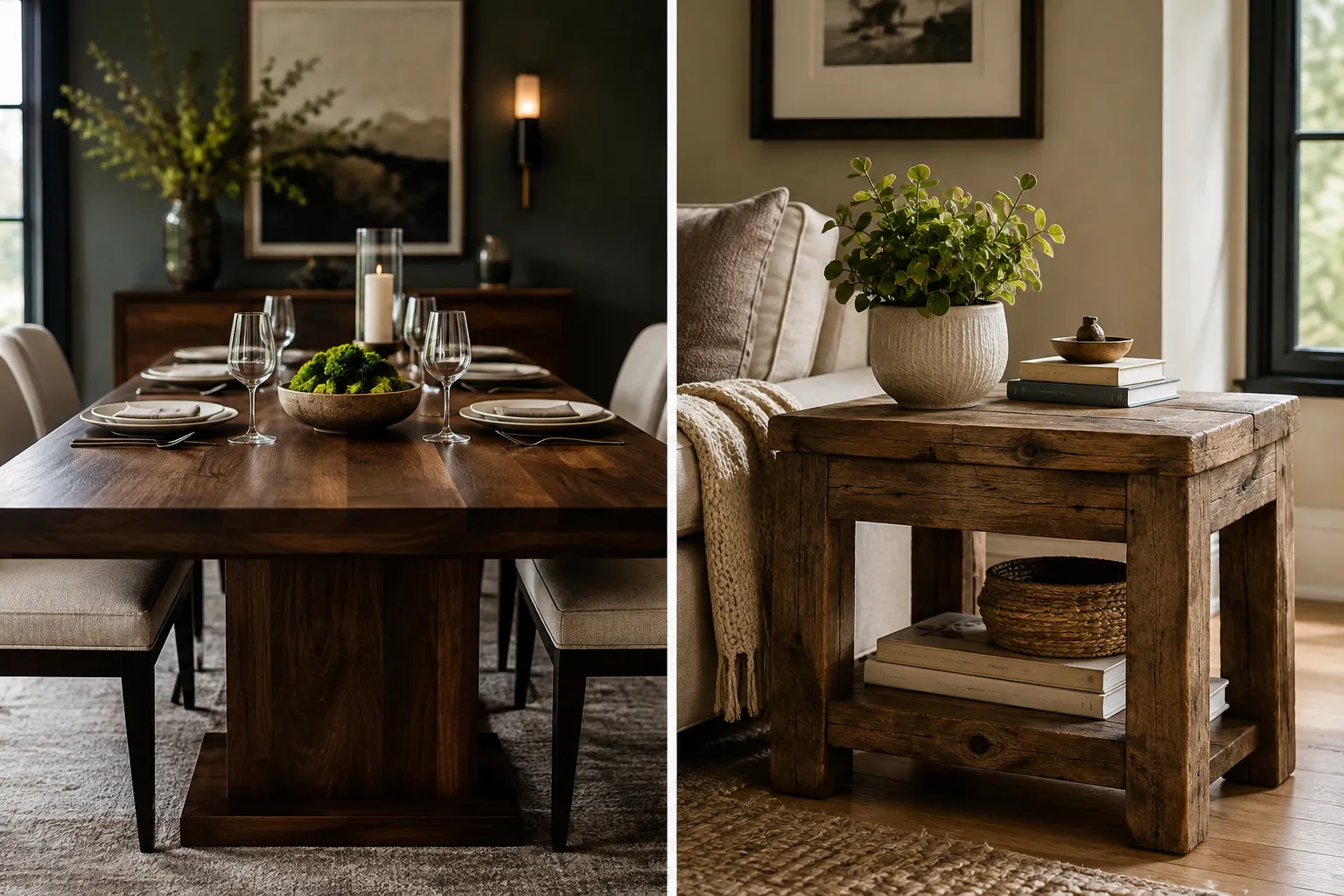
Dining tables are often the centerpiece of a dining room, designed to accommodate multiple people for meals and gatherings.
- Size and Scale: Dining tables must be large enough to comfortably seat the intended number of guests, with adequate space for place settings and serving dishes. Standard heights are typically around 29-30 inches (74-76 cm) to allow for comfortable seating. Guidance on appropriate sizing can be found in Beginner Woodworkers Guide To Dining Room Tables Standard Sizes Clearance Rules And First Build Joinery.
- Legroom: The design must ensure ample legroom for all diners. Pedestal bases or trestle designs can offer more flexibility than traditional four-leg tables, which might have legs that interfere with seating. For smaller spaces, a compact round dining table with integrated leaf can be an excellent solution.
- Durability and Finish: Dining tables experience significant use, so durable materials and finishes are paramount to withstand spills, heat, and constant cleaning. Hardwoods and robust finishes are preferred.
- Aesthetic Impact: Dining tables often make a strong design statement. Traditional, farmhouse, minimalist, or modern styles dictate choices in wood species, leg profiles, and edge treatments.
Coffee Tables: The Living Room Anchor
Coffee tables are lower than dining tables, typically 16-20 inches (40-50 cm) high, and serve as a central focal point in living areas. Their functional needs are different, leading to distinct design priorities.
- Proportion and Relationship to Seating: A coffee table’s height should complement the surrounding sofas and chairs, being roughly the same height as or slightly lower than the seat cushions.
- Surface Area and Storage: They provide a convenient surface for drinks, books, and remote controls. Many coffee tables incorporate shelves or drawers for additional storage, blending utility with aesthetics. Explore various styles in Coffee Table Design Styles And Build Variations Farmhouse Mid Century Industrial And Minimalist.
- Material and Style Versatility: Coffee tables offer immense creative freedom. They can be rustic reclaimed wood, sleek glass and metal, or even incorporate mixed materials like concrete and wood for an industrial look.
- Mobility (Optional): Some designs incorporate casters for easy repositioning, especially in flexible living spaces.
Accent Tables: Enhancing Spaces with Detail
Accent tables encompass a wide range of smaller tables, including end tables, side tables, console tables, and nightstands. Their primary role is to add functionality and aesthetic detail to a specific area without dominating the space.
- Size and Placement: These tables are typically smaller and designed to fit into narrower spaces, next to chairs, beds, or in entryways. For example, a space-saving console table is perfect for hallways.
- Purpose-Driven Features:
- Nightstands: Often feature drawers or shelves for bedside essentials, sometimes with integrated charging docks. See our guide on DIY Night Side Table With Hidden Compartment Designing Storage Without Making The Piece Bulky.
- Console Tables: Typically narrow and long, placed against walls in entryways or behind sofas. They can provide display space or hidden storage.
- End/Side Tables: Complement seating, providing a surface for lamps, drinks, or decorative items.
- Design Freedom: Accent tables are excellent opportunities for creative expression, using unique leg designs, intricate carvings, or interesting material combinations to add visual interest. They can be a focal point in a small nook or a subtle support for other decor.
The process of designing and constructing any table, from the grandest dining table to the most intricate accent piece, involves a thoughtful balance of structural requirements, material properties, and the intended aesthetic and functional role within a space.
Conclusion
The journey through the basics of ‘table’ design and construction, from dining to accent pieces, reveals that these ubiquitous furniture items are far more complex than their simple appearance suggests. Achieving a stable, durable, and aesthetically pleasing table requires careful consideration of structural components, the nuances of joinery, and a keen understanding of how functional needs dictate design choices. Whether you are a budding woodworker crafting your first side table or a homeowner seeking to understand the value behind a well-made dining table in 2026, these fundamental principles provide a solid foundation.
By focusing on appropriate material selection, robust leg attachments, and design elements tailored to a table’s specific purpose, one can create or choose pieces that not only serve their function flawlessly but also enhance the beauty and character of any living space for years to come. The next step for anyone interested in this craft is to begin experimenting with different wood types, joinery techniques, and design aesthetics, perhaps starting with a simple accent table to hone skills before tackling larger projects.
SEO Meta Title: Table Design & Construction Basics: Dining to Accent Pieces
SEO Meta Description: Master the basics of table design and construction in 2026. Explore structural stability, leg attachments, and aesthetic choices for dining, coffee, and accent tables.