
Over 80% of woodworkers, when first introduced to traditional Western saws, struggle with the push stroke, often resulting in bowed cuts and splintered edges. This common frustration frequently leads many to abandon hand tool woodworking prematurely. However, a different path exists, one that harnesses the natural biomechanics of the human body for effortless precision: the Japanese hand saw. This comprehensive article, “The Beginner’s Guide to Japanese Hand Saws: Understanding Types, Techniques, and Maintenance for Precision Cuts,” aims to demystify these remarkable tools, transforming your approach to woodworking and enabling you to achieve cuts you once thought impossible with hand tools.
Key Takeaways
- Japanese saws cut on the pull stroke, offering superior control and precision with thinner blades.
- Three primary types—Ryoba, Kataba, and Dozuki—each serve specific cutting purposes (rip, crosscut, joinery).
- Proper cutting technique involves a relaxed grip, controlled pull, and letting the saw do the work.
- Regular cleaning, oiling, and sharpening are crucial for maintaining performance and blade longevity.
- Mastering these saws unlocks a new level of accuracy and enjoyment in woodworking.
Understanding the Unique World of Japanese Hand Saws: Types for Precision Cuts
Unlike their Western counterparts that cut on the push stroke, Japanese saws (known as nokogiri 鋸) operate on the pull stroke. This fundamental difference is key to their superior performance and user experience, especially for beginners. The pull action keeps the blade under tension, allowing for much thinner blades that create finer kerfs (the width of the cut) and require less force. This results in incredibly precise cuts with minimal tear-out, making them ideal for fine woodworking and joinery.
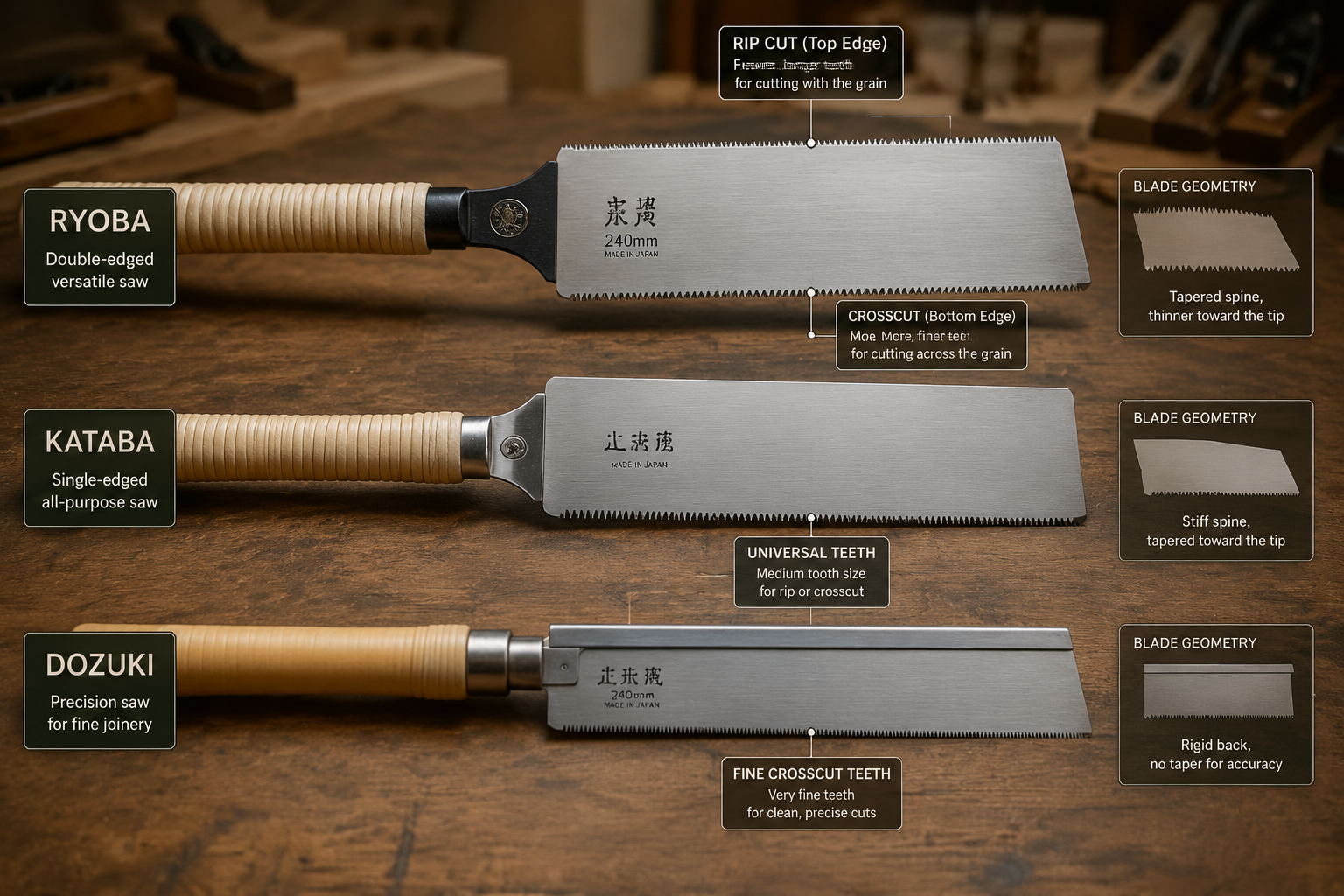
There are three main types of Japanese hand saws, each designed for specific tasks:
1. Ryoba Saws (両刃)
The Ryoba is arguably the most versatile Japanese saw and an excellent starting point for any beginner. Its defining feature is a double-edged blade:
- Rip Teeth: One edge features larger, aggressive teeth designed for cutting with the grain of the wood (ripping). These teeth are typically triangular and resemble Western rip saws.
- Crosscut Teeth: The other edge has smaller, finer teeth optimized for cutting across the grain (crosscutting). These teeth are often ground with multiple facets, similar to small knives, to cleanly sever wood fibers.
Best Use: The Ryoba is your go-to for general lumber breakdown, sizing stock, and anytime you need both rip and crosscut capabilities without switching tools. It’s a true workhorse.
2. Kataba Saws (片刃)
Kataba saws feature a single-sided blade with teeth primarily designed for either rip or crosscut, though some hybrid versions exist.
- Crosscut Kataba: Most commonly found with crosscut teeth, offering exceptional precision for cutting across the grain, often with a slightly thicker plate than a Dozuki.
- Rip Kataba: Less common, but available for dedicated ripping tasks where a Ryoba might be too cumbersome or a longer blade is desired.
Best Use: Kataba saws are excellent for general crosscutting where a very clean finish is important, such as tenon shoulders or panel sizing. They are often favored for their balance and rigidity in specific applications.
3. Dozuki Saws (胴付鋸)
The Dozuki is the pinnacle of precision among Japanese hand saws, specifically designed for fine joinery.
- Back Spine: The most distinctive feature of a Dozuki is its rigid back spine (the dozuki itself). This spine prevents the incredibly thin blade from flexing, ensuring perfectly straight and accurate cuts.
- Fine Teeth: Dozuki saws typically have very fine, closely spaced crosscut teeth, though rip versions for dovetails are also common.
Best Use: Dozuki saws are indispensable for intricate joinery like dovetails, tenons, and lap joints. Their thin kerf and extreme accuracy make them perfect for precise fitting. For insights into perfecting dovetails, explore our guide on Mastering Dovetail Joints with Hand Tools: A Step-by-Step Guide for flawless wood joinery.
| Saw Type | Primary Use | Key Features | Beginner Friendliness |
|---|---|---|---|
| Ryoba | General purpose, rip & crosscut | Double-edged, no back spine | High |
| Kataba | Specific rip or crosscut | Single-edged, no back spine | Medium |
| Dozuki | Fine joinery, dovetails | Single-edged, rigid back spine, very thin blade | Medium-High |
Mastering Japanese Hand Saw Cutting Techniques
The transition to a pull saw can feel counter-intuitive at first, but with a few key techniques, you’ll quickly appreciate the control and efficiency. The core principle is to let the saw do the work; minimal downward pressure is required.
1. The Stance and Grip
- Stance: Stand comfortably with your feet shoulder-width apart, slightly offset. Position the workpiece securely at a comfortable height, ideally in a workbench vise or clamped firmly. For more on workbench setups, see our article on Building a Compact and Ergonomic Workbench for Small Workshops: Maximizing Space and Efficiency.
- Grip: Hold the saw handle firmly but not rigidly. Your grip should be relaxed, allowing your wrist and elbow to move naturally. Many Japanese saws have longer handles to accommodate a two-handed grip for more power and control, especially with larger saws.
2. Initiating the Cut
- Marking: Always clearly mark your cut line. A sharp pencil or knife line is essential for precision.
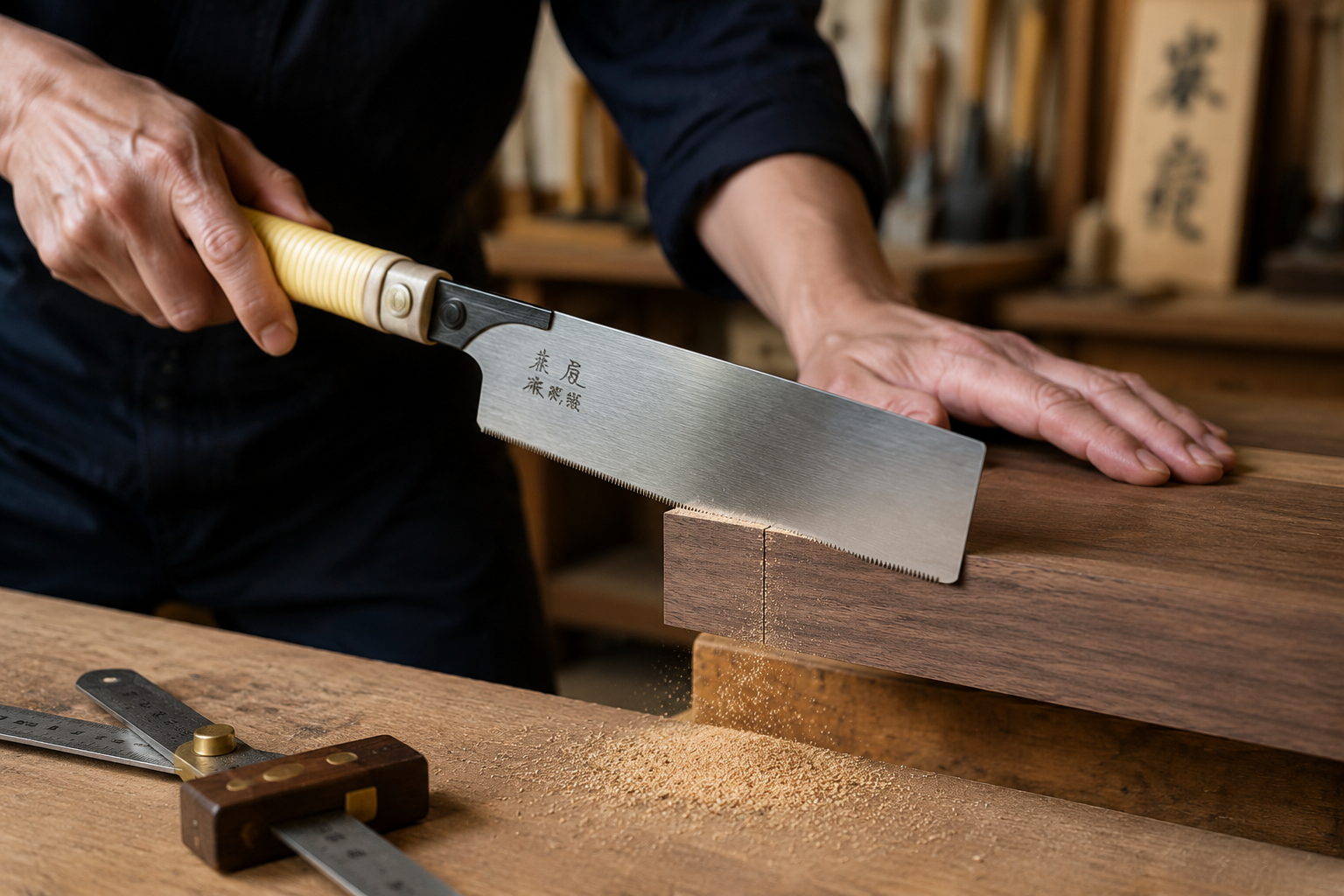
- Starting the Kerf: Place the saw on the waste side of your line. Use your thumb or knuckle as a guide against the blade to steady it. Start with very light, short pull strokes to create a shallow kerf. This establishes your cut path.
- Angle: For crosscuts, start with a low angle (around 15-20 degrees) and gradually increase it as the kerf deepens. For rips, a slightly steeper angle (20-30 degrees) is often effective.
3. The Pull Stroke
- Smooth and Consistent: Once the kerf is established, begin longer, smooth pull strokes. The cutting action happens on the pull.
- Minimal Pressure: Do not force the saw. Let the sharpness of the teeth and the pull stroke do the work. Excessive downward pressure will cause the blade to bind or wander.
- Full Blade Use: Utilize the full length of the blade with each stroke. This distributes wear evenly and makes for a more efficient cut.
- Follow Through: Ensure your strokes are straight and consistent. Keep your eye on the line and adjust your body as needed to maintain alignment.
- Supporting the Waste: As you approach the end of the cut, support the waste piece to prevent it from breaking off prematurely, which can cause tear-out.
4. Special Considerations for Different Cuts
- Crosscutting with Ryoba/Kataba: Focus on maintaining a consistent angle. The fine teeth will create a clean surface.
- Ripping with Ryoba: The larger rip teeth will be more aggressive. Ensure the wood is well-clamped and you’re maintaining a straight line with each pull.
- Joinery with Dozuki: These saws demand the utmost precision. Take your time, use a low starting angle, and rely on the back spine to guide your cut perfectly straight. For mastering intricate joints, refer to our article on Mastering Dovetail Joinery for Drawers: Hand and Router Methods.
“The beauty of a Japanese saw lies in its intuitive operation; the pull stroke aligns perfectly with our natural body mechanics, translating minimal effort into maximum precision.”
Essential Maintenance for Precision Cuts
Proper care extends the life of your Japanese hand saws and ensures they consistently deliver precise cuts. Neglecting maintenance can lead to dull blades, poor performance, and frustration.
1. Cleaning Your Saw
Sawdust and resin can build up on the blade, especially after cutting resinous woods like pine. This buildup can increase friction, leading to harder cuts and potential binding.
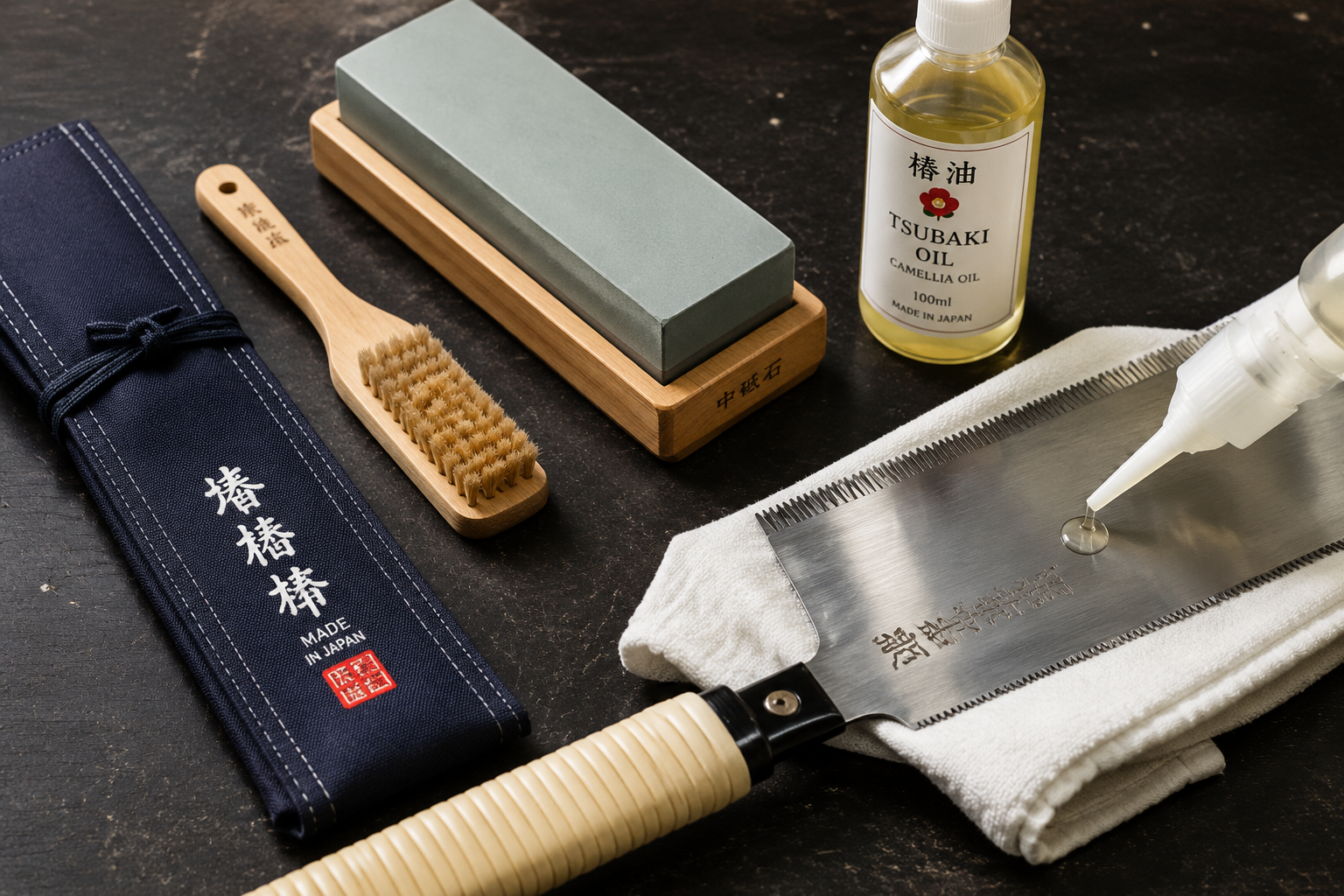
- After Each Use: Use a stiff brush or a soft cloth to wipe away sawdust.
- For Resin Buildup: A citrus-based cleaner or mineral spirits can effectively remove stubborn resin. Apply a small amount to a cloth, wipe the blade, and then dry it thoroughly. Avoid harsh chemicals that could damage the blade’s finish or handle.
2. Protecting the Blade
Japanese saw blades are thin and sharp, making them susceptible to damage if not stored correctly.
- Blade Guards: Many Japanese saws come with a plastic or wooden blade guard. Always use it when the saw is not in use.
- Storage: Store your saws flat or hang them vertically by the handle, ensuring the blade is protected from accidental bumps or drops. Avoid storing them in damp environments, which can lead to rust.
3. Oiling for Rust Prevention
The high-carbon steel used in many Japanese saw blades is prone to rust if exposed to moisture.
- Camellia Oil: Traditionally, camellia oil (tsubaki abura) is used for protecting saw blades. It’s a non-drying oil that provides excellent rust prevention.
- Application: After cleaning, apply a thin coat of camellia oil to the entire blade using a soft cloth. Wipe off any excess. This forms a protective barrier.
- Frequency: Oil your saws after each significant use, or at least monthly if stored in a humid environment.
4. Sharpening Japanese Saws
Sharpening Japanese saws, particularly those with impulse-hardened teeth, can be challenging or even impossible for the average woodworker.
- Disposable Blades: Many modern Japanese saws, especially those designed for beginners, feature impulse-hardened teeth. This hardening process makes the teeth extremely durable and holds an edge for a very long time. However, it also makes them extremely difficult to resharpen once dull. For these saws, the blade is designed to be replaced when it eventually dulls.
- Traditional Saws: Some higher-end, traditional Japanese saws can be resharpened. This is a specialized skill, often performed by master saw doctors in Japan. If you own such a saw, consider professional sharpening services or delve into advanced sharpening techniques if you’re keen on traditional methods. For general sharpening principles, our guide on The Ultimate Guide to Sharpening Woodworking Chisels and Planes: Achieving Razor Sharp Edges offers foundational knowledge applicable to edge tools.
5. Handle Care
The wooden handles of Japanese saws, often wrapped in rattan, also benefit from occasional care.
- Cleaning: Wipe down the handle with a damp cloth to remove grime.
- Oiling: A light coat of a natural oil, like Danish oil or a furniture wax, can help preserve the wood and rattan, preventing drying and cracking.
By incorporating these simple maintenance routines into your woodworking practice, your Japanese hand saws will remain sharp, efficient, and a joy to use for years to come in 2026.
Conclusion
Embracing Japanese hand saws can be a transformative experience for any woodworker, offering a path to unparalleled precision and a deeper connection with your craft. By understanding the distinct purposes of Ryoba, Kataba, and Dozuki saws, adopting the natural pull-stroke technique, and committing to diligent maintenance, you unlock a world of incredibly fine and efficient cuts. These tools are not just instruments; they are extensions of your will, capable of executing intricate joinery and smooth, clean cuts with astonishing accuracy.
As you embark on your journey with these remarkable saws in 2026, remember that patience and practice are your greatest allies. Start with basic cuts, observe how the saw interacts with the wood, and gradually challenge yourself with more complex tasks. The precision you gain will not only elevate the quality of your projects but also enhance your enjoyment of woodworking. Dive into “The Beginner’s Guide to Japanese Hand Saws: Understanding Types, Techniques, and Maintenance for Precision Cuts,” and discover the satisfaction of truly masterful hand-cut joinery and pristine surfaces.
Actionable Next Steps:
- Invest Wisely: Start with a good quality Ryoba saw as your first Japanese saw. It offers the most versatility for a beginner.
- Practice on Scrap: Before tackling a project, practice on scrap wood to get a feel for the pull stroke and different saw types.
- Secure Your Workpiece: Always ensure your wood is clamped firmly to prevent movement and ensure safety.
- Master Your Marking: Sharpen your marking skills; a precise line is the foundation of a precise cut.
- Maintain Regularly: Make cleaning and oiling your saws a habit after each use to ensure longevity and peak performance.
SEO Meta Title: Japanese Hand Saws: Beginner’s Guide to Types, Techniques & Care SEO Meta Description: Master Japanese hand saws! This beginner’s guide covers Ryoba, Kataba, Dozuki types, pull-stroke techniques, and essential maintenance for precision woodworking cuts.