
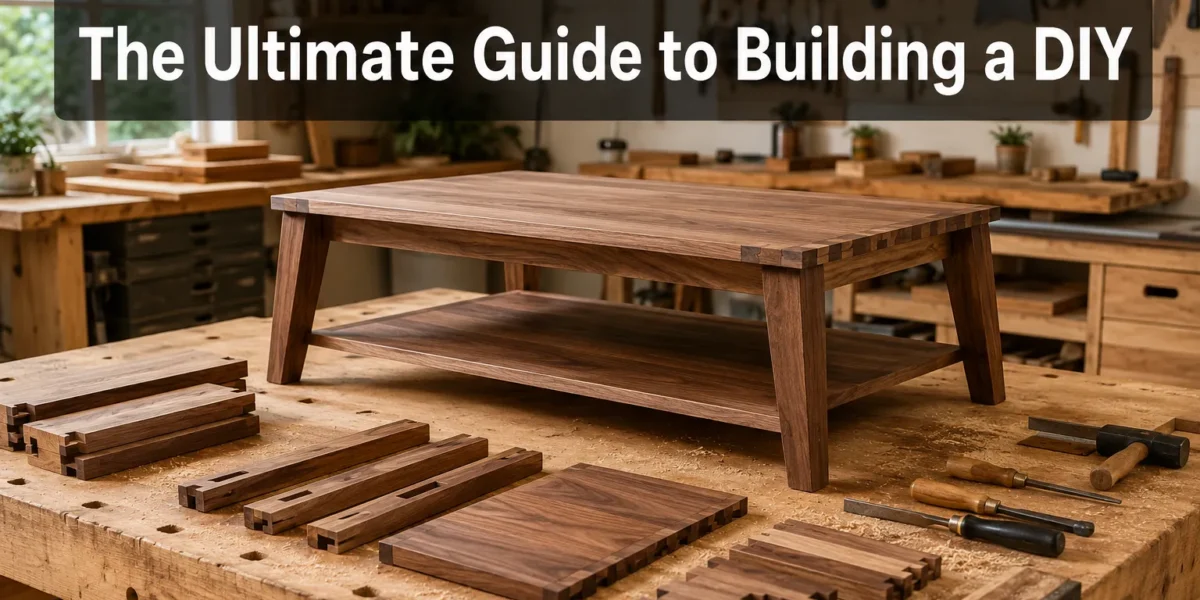
The average homeowner spends thousands of dollars furnishing their living space over a lifetime, yet a truly unique coffee table often remains elusive. From rustic farmhouse to modern minimalist, mastering the art of building your own custom coffee table can transform a generic room into a personalized sanctuary. This comprehensive guide will equip you with the knowledge to create a centerpiece that reflects your style, offering practical advice on design principles, joinery techniques, and professional finishing, ultimately providing you with The Ultimate Guide to Building a DIY Coffee Table: Design, Joinery, and Finishing for Every Style.
Key Takeaways
- Tailored Design: Custom coffee tables allow for perfect integration with existing décor, offering unique dimensions, materials, and aesthetic details.
- Fundamental Joinery: Understanding and implementing strong joinery techniques is crucial for structural integrity and longevity.
- Wood Selection Matters: The choice of wood significantly impacts the table’s appearance, durability, and workability.
- Finishing for Longevity: Proper finishing protects the wood, enhances its beauty, and ensures the table withstands daily use.
- Budget-Friendly Customization: Building your own table can be more cost-effective than purchasing a custom piece, while yielding superior quality.
Designing Your Dream Coffee Table: Exploring Styles and Functionality
Before the first cut is made, the most critical step in building a DIY coffee table is meticulous design. This phase dictates not only the aesthetic but also the functionality and structural integrity of your finished piece. Consider your living space, existing furniture, and how the coffee table will be used in 2026. Will it primarily serve as a display surface, or will it be a hub for family games, meals, or even work?
Understanding Design Styles
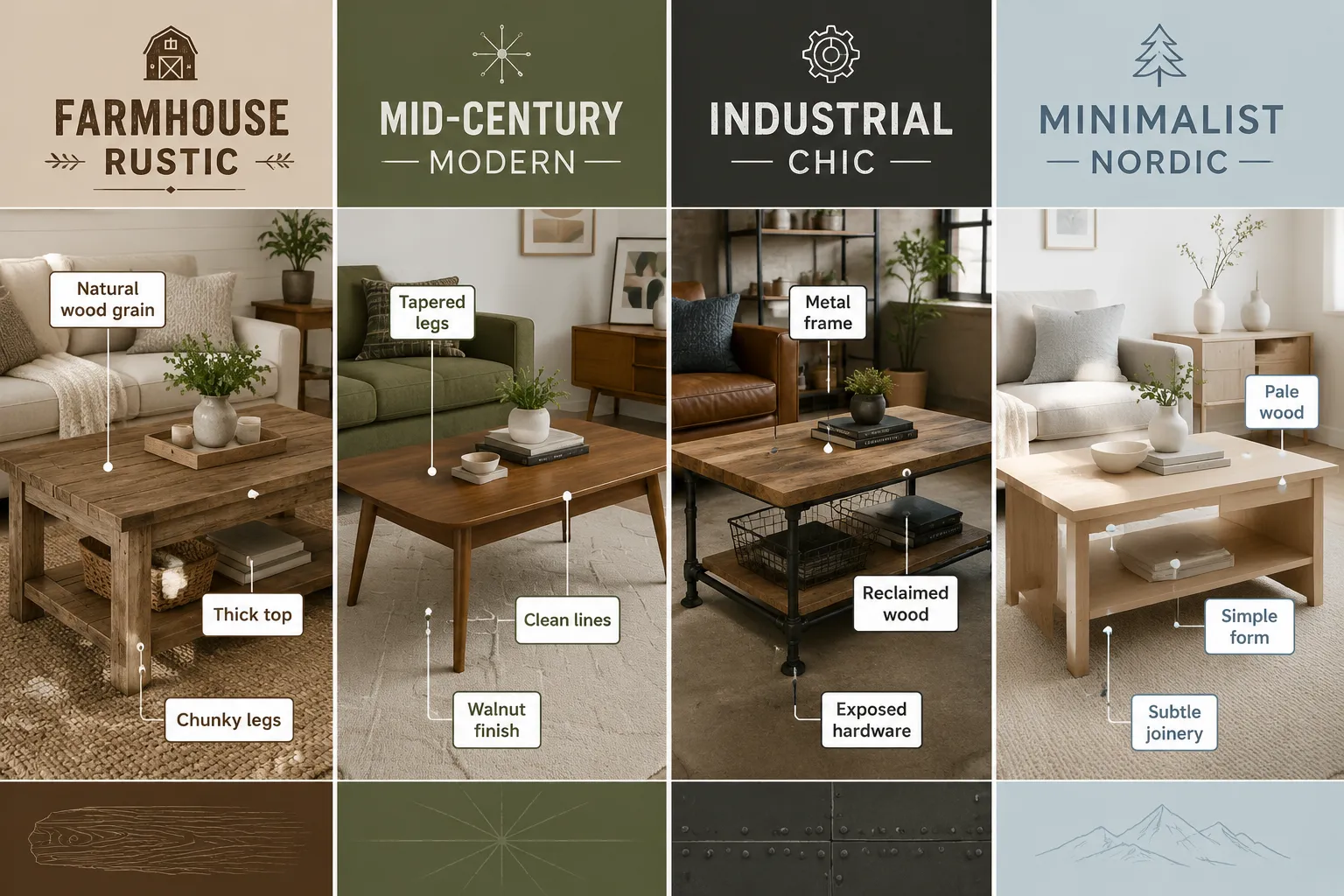
Coffee tables are versatile, fitting into numerous aesthetic categories. Each style brings its own considerations for materials, lines, and construction methods.
- Farmhouse: Characterized by sturdy, often distressed wood, simple lines, and a warm, inviting feel. Materials often include pine, oak, or reclaimed wood. Coffee Table Design Styles And Build Variations Farmhouse Mid Century Industrial And Minimalist offers deeper insights into this and other styles.
- Mid-Century Modern: Features clean lines, organic shapes, tapered legs, and often a mix of wood and sometimes metal accents. Walnut, teak, and oak are popular choices.
- Industrial: Blends natural wood with metal elements like steel pipes, angle iron, or cast iron bases. Often has a raw, unfinished look.
- Minimalist/Scandinavian: Emphasizes simplicity, functionality, and light-colored woods. Clean lines, often with a focus on negative space and subtle detailing.
- Contemporary: A broad category, often incorporating glass, metal, and engineered wood, focusing on current trends and innovative forms.
Dimensions and Ergonomics
The ideal size for your coffee table depends heavily on your sofa’s dimensions and the room’s layout. A good rule of thumb is that the coffee table should be approximately two-thirds the length of your sofa. Height is also crucial; it should generally be within 1-2 inches (2.5-5 cm) of your sofa’s seat height. This ensures comfortable access for drinks, remote controls, and other items.
Table 1: Coffee Table Dimension Guidelines
| Sofa Length | Recommended Coffee Table Length | Recommended Coffee Table Height (relative to sofa seat) |
|---|---|---|
| 60-70 inches (152-178 cm) | 40-47 inches (102-119 cm) | 1-2 inches (2.5-5 cm) below or above |
| 70-80 inches (178-203 cm) | 47-53 inches (119-135 cm) | 1-2 inches (2.5-5 cm) below or above |
| 80-90 inches (203-229 cm) | 53-60 inches (135-152 cm) | 1-2 inches (2.5-5 cm) below or above |
Consider also the clearance around the table. Aim for at least 18 inches (45 cm) between the coffee table and the sofa to allow for comfortable movement. For other surrounding furniture, 24-30 inches (60-75 cm) of clearance is generally sufficient.
Material Selection for Your DIY Coffee Table
The wood you choose will define much of your table’s character and durability. Hardwoods like oak, maple, walnut, and cherry are highly durable and offer beautiful grain patterns. Softwoods such as pine are more affordable and easier to work with but are more susceptible to dents and scratches. For a comprehensive overview, refer to The Ultimate Wood Selection Guide For Tables Hardwoods Vs Softwoods And Grain Patterns.
Beyond solid wood, consider plywood or MDF for cost-effective tops or bases, especially if you plan to paint them. Reclaimed wood offers a unique story and character, perfect for farmhouse or industrial styles.
Mastering Joinery for a Robust DIY Coffee Table
The strength and longevity of your coffee table hinge on the quality of its joinery. While screws and glue can suffice for basic projects, incorporating traditional woodworking joints significantly enhances durability and aesthetics. For advanced techniques, explore Building DIY Coffee Tables: Advanced Joinery and Premium Finishes for.
Essential Joinery Techniques
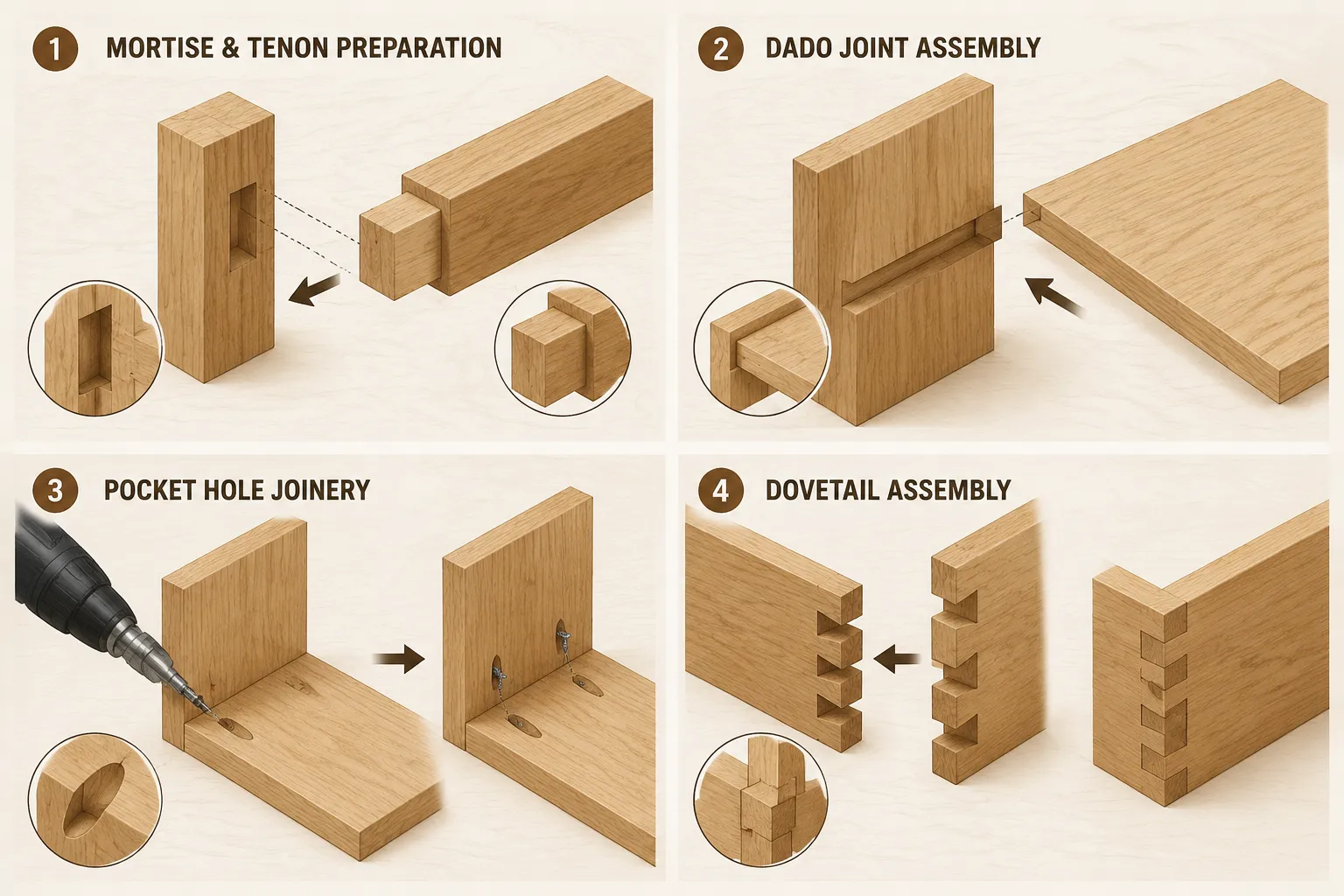
- Butt Joints: The simplest joint, where two pieces of wood are joined end to end or edge to edge. Relies heavily on screws, nails, or dowels for strength. Best for non-structural elements or where aesthetics aren’t critical.
- Dado Joints: A groove cut into one piece of wood to receive the end or edge of another. Common for shelves or table aprons, offering good mechanical strength.
- Rabbet Joints: Similar to a dado, but cut along the edge of a board. Often used for back panels or drawer bottoms.
- Mortise and Tenon: A classic, incredibly strong joint. A rectangular hole (mortise) is cut into one piece, and a projecting tongue (tenon) is cut on another, fitting snugly together. Ideal for leg-to-apron connections. Learning to master these is crucial for strong furniture.
- Dovetail Joints: Renowned for their strength and beauty, especially in drawer construction. Interlocking trapezoidal pins and tails create a robust mechanical lock. While complex, they are a hallmark of fine woodworking.
- Pocket Hole Joinery: A modern technique using a jig to drill angled holes, allowing screws to draw two pieces of wood tightly together. Fast, strong, and relatively easy for beginners.
Selecting the Right Joinery for Your Design
The chosen joinery should complement your coffee table’s design and intended use. For a minimalist table with clean lines, hidden joinery like mortise and tenon or pocket holes might be preferred. For a rustic piece, exposed through-tenons or breadboard ends can add character.
Table 2: Joinery Suitability for Coffee Table Components
| Component | Recommended Joinery Options |
|---|---|
| Legs to Aprons | Mortise and Tenon (strongest), Dowels, Pocket Holes, Bolted Connections (for industrial styles) |
| Aprons to Top | Z-clips, Figure-8 fasteners, Wood screws in elongated slots (to allow for wood movement), Buttons |
| Shelf to Legs | Dado Joints, Rabbet Joints, Mortise and Tenon (for heavy-duty shelves), Shelf pins (adjustable shelves), Pocket Holes |
| Table Top | Edge gluing with biscuits, splines, or dowels (for wide panels), Tongue and Groove (less common for tops but possible for rustic looks) |
Always use a high-quality wood glue with your joints to maximize strength. For guidance on glues, consult The Ultimate Guide to Wood Glue: Types, Application, and Achieving.
Finishing Your DIY Coffee Table: Protection and Aesthetic Appeal
The finishing stage is where your coffee table truly comes to life. A proper finish protects the wood from moisture, spills, and wear, while enhancing its natural beauty. For outdoor tables, special considerations for weatherproofing are necessary, as outlined in Building A Robust Outdoor Dining Table Wood Selection Weatherproofing And Joinery For Longevity.
Preparing the Surface
Before applying any finish, thorough surface preparation is essential. Start by sanding progressively through grits, from rough (e.g., 80-100 grit) to fine (e.g., 180-220 grit). Ensure all milling marks, scratches, and glue squeeze-out are removed. For a glass-smooth surface, consider sanding up to 320 or 400 grit for hardwoods.
After sanding, clean the surface meticulously to remove all dust. A tack cloth or a vacuum with a brush attachment works well. Any residual dust will compromise the finish.
Choosing the Right Finish
Finishes can be broadly categorized into film-forming and penetrating finishes.
Film-Forming Finishes: These create a protective layer on top of the wood.
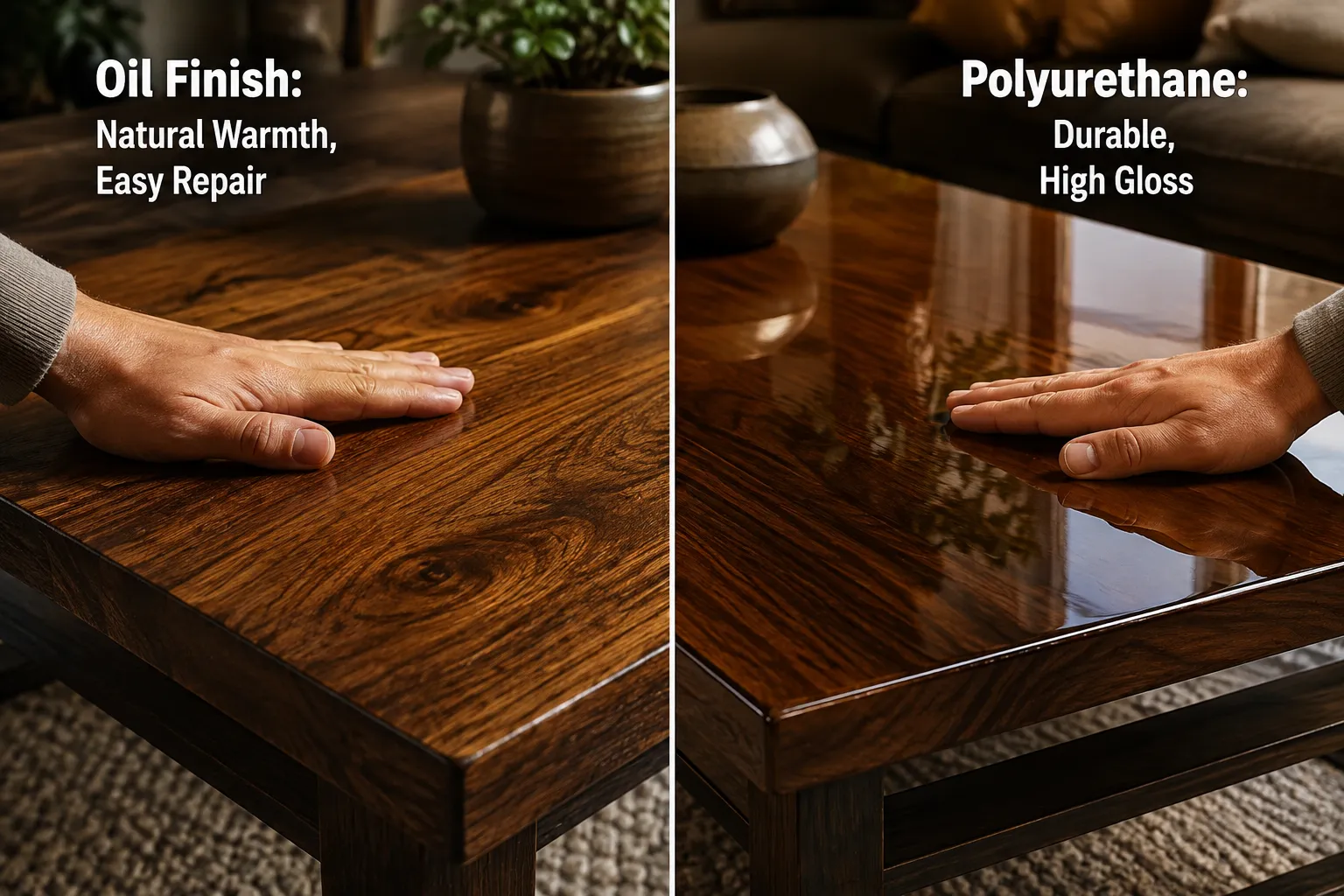
- Polyurethane (Oil-based or Water-based): Extremely durable, resistant to water, heat, and chemicals. Oil-based polyurethanes impart an amber tone, while water-based versions are clear. Ideal for high-traffic surfaces like coffee tables. Apply multiple thin coats, sanding lightly between coats.
- Lacquer: Dries quickly and builds a smooth, clear film. Often sprayed for best results, providing a professional look. Less durable than polyurethane for impact resistance.
- Varnish: A traditional, durable finish offering good protection. Contains resin, oil, and solvent. Spar varnish is particularly good for outdoor use due to its UV and moisture resistance.
- Shellac: A natural, non-toxic finish that offers good stain and water resistance. Dries fast and is easy to repair. Often used as a sealer before other finishes.
Penetrating Finishes: These soak into the wood fibers, enhancing the natural grain without forming a thick surface film.
- Oils (Tung Oil, Linseed Oil, Danish Oil): Penetrate deeply, providing a natural, warm look and feel. Offer moderate protection against moisture but less against impact. Easy to repair by re-oiling. Budget Friendly Wood Finishing Achieving Professional Results With Oils Waxes And Shellac details effective techniques.
- Waxes: Often used over oil finishes or shellac for added protection and a soft sheen. Not as durable on their own as film-forming finishes.
Application Techniques
Regardless of the finish chosen, thin, even coats are key. Avoid applying too much at once, as this can lead to drips, runs, and a cloudy appearance.
- Brushing: Use a high-quality brush for even application, especially with polyurethanes and varnishes. Follow the grain of the wood.
- Wiping: Oils and some thin polyurethanes can be wiped on with a clean cloth, offering a more controlled application and fewer brush marks.
- Spraying: Lacquers and some polyurethanes are best applied with a sprayer for a perfectly smooth, factory-like finish. This requires more equipment and proper ventilation.
Always allow adequate drying time between coats and light-sand with very fine grit (400-600) sandpaper or synthetic steel wool (0000 grade) to remove dust nibs and ensure good adhesion for subsequent coats. Conclude with a final buffing or polishing if desired, following the finish manufacturer’s recommendations.
Conclusion
Building your own DIY coffee table is a rewarding endeavor that allows for unparalleled customization and a deep sense of accomplishment. By carefully considering design styles, understanding the nuances of joinery, and applying appropriate finishing techniques, you can craft a piece that not only serves its functional purpose but also stands as a testament to your craftsmanship. This Ultimate Guide to Building a DIY Coffee Table: Design, Joinery, and Finishing for Every Style provides a foundational roadmap, but remember that practice and patience are your best tools. Embrace the process, learn from each step, and enjoy the satisfaction of creating a truly unique and enduring centerpiece for your home in 2026.
Actionable Next Steps
- Sketch and Plan: Start by sketching your ideal coffee table, considering dimensions, style, and desired functionality.
- Research Materials: Select your wood and any other materials (metal, glass) based on your design and budget.
- Choose Joinery: Decide on the joinery techniques that match your skill level and the structural needs of your design.
- Gather Tools: Ensure you have the necessary tools for cutting, joining, and finishing.
- Practice: If new to certain joinery or finishing techniques, practice on scrap wood before working on your final pieces.
- Build and Finish: Follow your plan meticulously, taking your time with each step to ensure a high-quality outcome.
SEO Meta Title: DIY Coffee Table Guide: Design, Joinery, & Finishing for All Styles SEO Meta Description: Master building your own coffee table in 2026! This ultimate guide covers design, joinery, and finishing for farmhouse, modern, and industrial styles.