
The average household in North America purchases approximately 70-80 pieces of wooden furniture over a lifetime, yet how many of these items truly embody the essence of ‘craft’? Beyond mere utility or mass production, understanding ‘craft’ in modern woodworking delves into a rich tapestry where artistry, functionality, and the burgeoning maker movement converge. It’s a concept that transcends simple construction, elevating wood into a medium for expression, innovation, and enduring value.
Key Takeaways
- Modern woodworking ‘craft’ integrates artistic vision, structural integrity, and user experience.
- Artistry extends beyond aesthetics to the intentionality behind material selection, joinery, and finish.
- Functionality demands durability, ergonomics, and suitability for the intended purpose, often influencing design significantly.
- The Maker Movement empowers individual woodworkers, fostering innovation, customization, and community collaboration.
- Technology, from CNC machines to digital design, now complements traditional hand tools, expanding the possibilities of modern craft.
Defining ‘Craft’ in Modern Woodworking: Artistry, Function, and the Maker Movement
In the contemporary woodworking landscape, the term ‘craft’ signifies much more than simply making something by hand. It embodies a holistic approach that integrates aesthetic excellence, robust utility, and a profound connection between the maker and the object. This nuanced definition is particularly relevant in 2026, as consumers increasingly seek unique, sustainable, and thoughtfully produced items that stand apart from mass-manufactured goods.
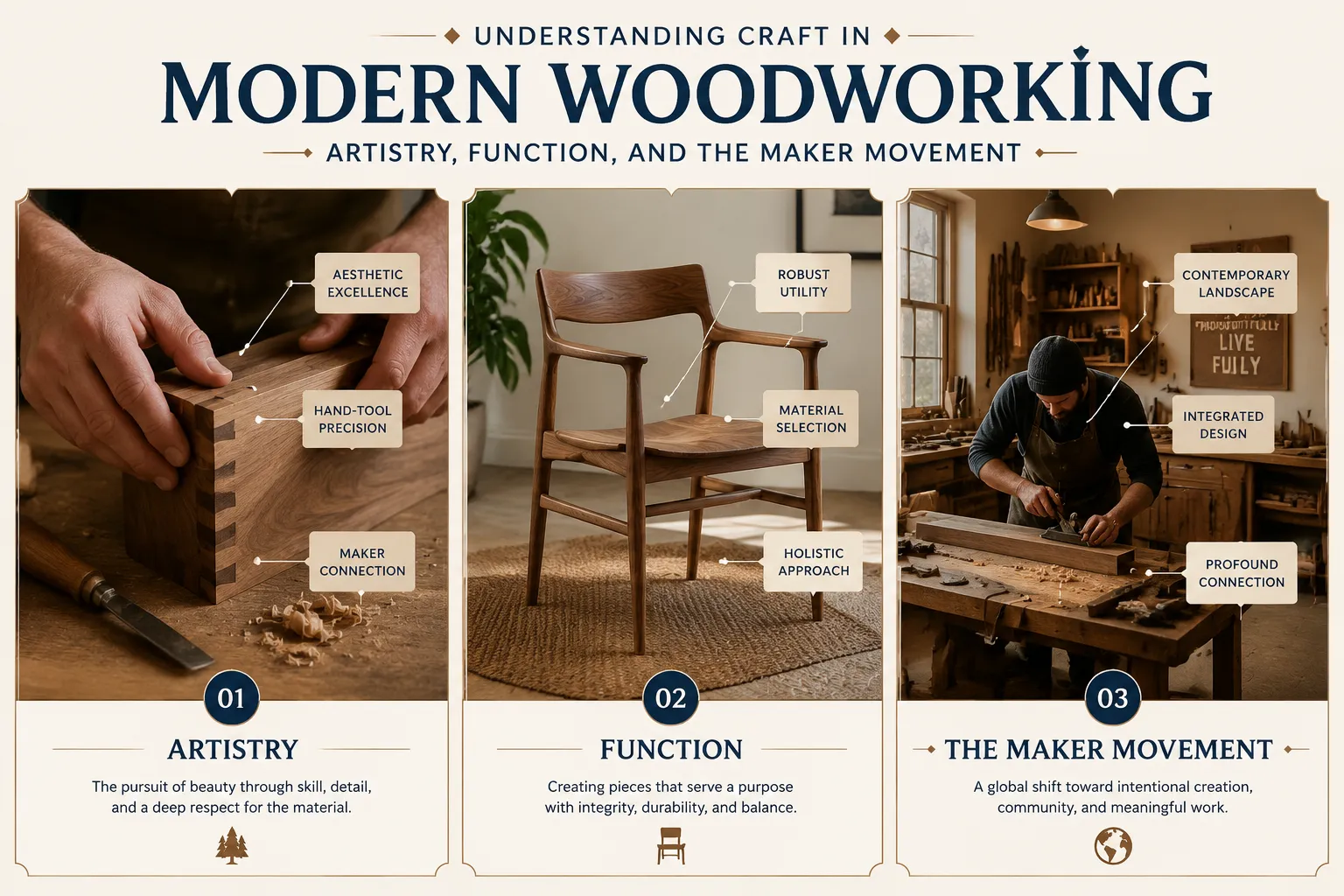
A piece of furniture, a decorative item, or even a simple kitchen utensil is deemed “crafted” when it reflects intentional design, skilled execution, and a deep understanding of the material. This isn’t just about flawless joinery or a smooth finish; it’s about the narrative woven into the grain, the ergonomic considerations in its form, and the maker’s personal touch that imbues it with character. The interplay of artistry, function, and the underlying ethos of the maker movement defines the quality and appeal of modern woodcraft.
Artistry and Aesthetics: Beyond Surface Beauty
Artistry in woodworking is often the first thing that catches the eye. It encompasses the visual appeal, the tactile experience, and the emotional resonance a piece evokes. However, true artistry goes far beyond superficial decoration. It involves:
- Material Selection: Choosing wood not just for its color, but for its grain pattern, workability, sustainability, and how it will age. For instance, selecting best wood species for outdoor coffee tables involves considering both aesthetics and weather resistance.
- Design Language: Developing a unique style, whether it’s minimalist, rustic, contemporary, or inspired by historical forms. This includes understanding proportion, balance, and how a piece interacts with its environment.
- Form and Flow: Sculpting wood to create pleasing curves, sharp angles, or intricate details that guide the eye and invite touch.
- Finishing: Applying finishes that enhance the wood’s natural beauty while protecting it, ranging from natural oils and waxes to durable lacquers. A budget-friendly wood finishing approach can still yield professional results, highlighting the wood’s inherent qualities.
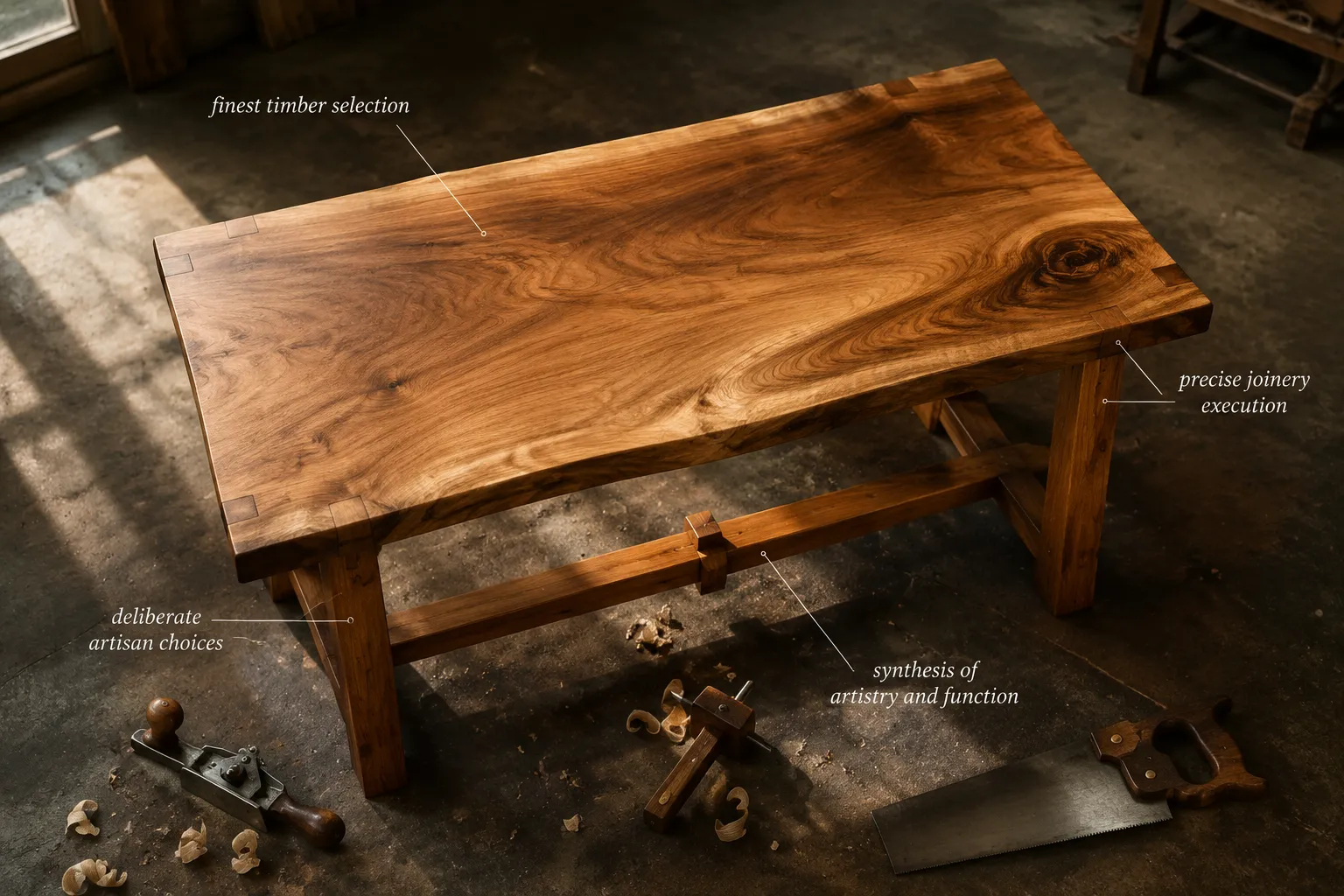
Consider the difference between a mass-produced coffee table and a custom-made one. The handcrafted table might feature a live edge that follows the tree’s natural contour, or perhaps a complex joinery technique like a hand-cut dovetail, visible as an integral design element. These choices are deliberate, showcasing the maker’s skill and artistic vision, elevating the piece from mere furniture to a statement of design and craftsmanship.
“Artistry in woodworking isn’t just about what you see; it’s about the intention behind every cut, every joint, and every curve. It’s the silent dialogue between the maker, the material, and the eventual user.”
Functionality: Craftsmanship That Serves a Purpose
While artistry captures the soul, functionality ensures the body of the work is sound and practical. A beautifully crafted piece that fails to serve its purpose or falls apart quickly misses the mark of true craft. Functionality in woodworking demands:
- Durability and Longevity: Employing appropriate joinery techniques and construction methods that ensure the piece will withstand years of use. This is where mastering wood joinery techniques becomes crucial.
- Ergonomics: Designing pieces that are comfortable and easy to use. For example, a chair should support the body correctly, and a round dining room table vs round table for crafting should be at a suitable height for its intended activity.
- Stability and Strength: Building structures that are robust and secure, whether it’s a bookshelf or a dining table. Understanding the ultimate guide to wood glue is fundamental to achieving strong, lasting bonds.
- Practicality: Considering how the item will be used in daily life. Does a coffee table have enough surface area? Is a nightstand easy to clean?
- Sustainability: Choosing responsibly sourced timber and minimizing waste, contributing to both environmental and functional integrity.
A meticulously built shelf that sags under the weight of books, or a beautifully sculpted stool that wobbles, ultimately detracts from its crafted value. True craft unites form and function seamlessly, where the aesthetic choices enhance, rather than detract from, the item’s utility. Modern woodworkers consider the entire lifecycle of a piece, from its creation to its daily interaction with the user.
For example, when mastering shelf woodworking, the woodworker not only considers the type of wood and its finish but also the load-bearing capacity, the stability of the mounting system, and the overall integration into the user’s living space.
The Maker Movement: Empowering the Modern Woodworker
The Maker Movement has profoundly reshaped our understanding of ‘craft’ in woodworking. It represents a cultural phenomenon where individuals and communities engage in creating things, emphasizing hands-on learning, experimentation, and sharing knowledge. For woodworking, this means:
- Accessibility: With the proliferation of online tutorials, community workshops, and accessible tools, more people are venturing into woodworking. Resources like “Choosing the Best Art and Craft Supplier for Woodworking” (https://woodcraftwiz.com/choosing-the-best-art-and-craft-supplier-for-woodworking-essential-tools-and-materials-online/) help beginners get started.
- Personalization and Customization: Makers often create bespoke pieces tailored to individual needs and preferences, a stark contrast to mass production. This includes projects like crafting custom wooden console tables or unique bar stools.
- Innovation and Technology Integration: While honoring traditional techniques, modern makers readily adopt new technologies. CNC machines, laser cutters, and 3D printing are increasingly used alongside hand planes and chisels, allowing for complex designs and precise replication. For home workshops, “Small CNC and Laser Cutter Mastery” (https://woodcraftwiz.com/small-cnc-and-laser-cutter-mastery-jigs-templates-and-detail-work-for-home-workshops/) explores these possibilities.
- Community and Collaboration: The movement thrives on sharing ideas, techniques, and resources through online forums, local maker spaces, and craft fairs.
- Ethical Production: Many makers prioritize sustainable practices, using reclaimed wood, minimizing waste, and ensuring transparent sourcing, resonating with environmentally conscious consumers. Projects using hyper-local and urban salvaged timber exemplify this trend.
The Maker Movement breathes new life into woodworking by emphasizing the joy of creation, the value of skill development, and the unique story behind each object. It’s a return to appreciating the human touch and the dedication required to produce something of lasting quality, fostering a deeper connection between the artisan, the material, and the consumer. The modern woodworker is not just a craftsman but an artist, an engineer, and an entrepreneur, all rolled into one.
The Evolution of Craft: Blending Old and New
The definition of ‘craft’ in modern woodworking is dynamic, constantly evolving with new technologies, materials, and design philosophies. In 2026, we see a fascinating blend of heritage techniques and cutting-edge innovation. Traditional hand tools are still revered for their precision and the tactile experience they offer, while power tools and digital fabrication methods enable unprecedented levels of complexity and efficiency.
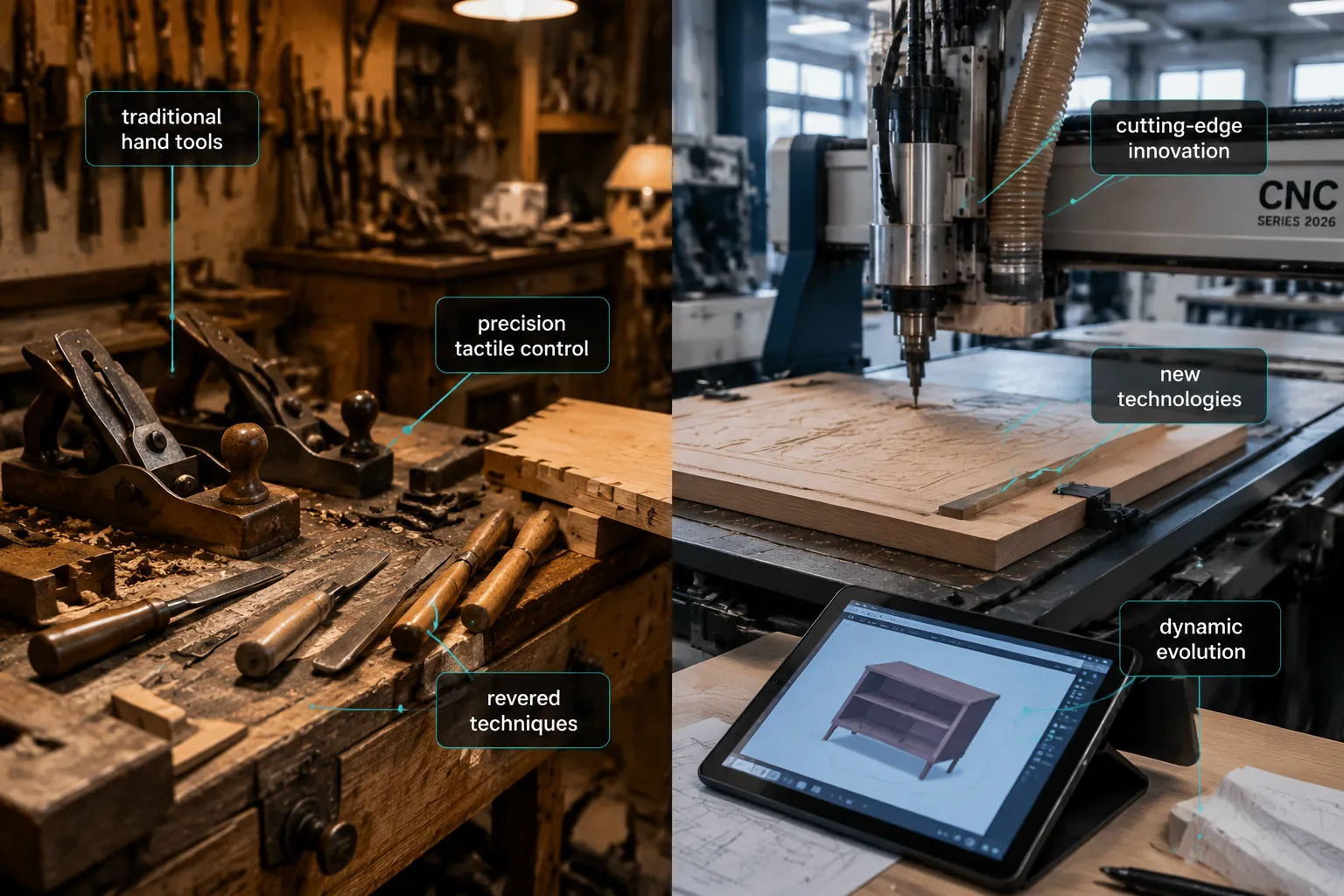
For example, a woodworker might use a CNC router to precisely cut intricate components, then hand-finish and assemble them using time-honored joinery. This hybrid approach allows for greater creative freedom and the ability to produce high-quality, customized pieces efficiently. It challenges the notion that craft must be solely “handmade,” instead focusing on the intentionality, skill, and value embodied in the final product.
The emphasis on thoughtful consumption also plays a significant role. In a world saturated with disposable goods, crafted woodworking offers an antidote, pieces designed to last, to be repaired rather than replaced, and to become cherished heirlooms. This longevity is a testament to the underlying craft, proving that true quality withstands the test of time and trends.
Conclusion
Understanding ‘craft’ in modern woodworking is to appreciate a synthesis of artistry, functionality, and the vibrant energy of the maker movement. It’s about recognizing the deliberate choices made by the artisan, from selecting the finest timber to executing the most precise joinery, all contributing to a piece that is not only beautiful but also built to endure and serve its purpose effectively. As we move forward in 2026, the demand for authentic, thoughtfully crafted wooden items continues to grow, signifying a broader cultural shift towards valuing quality, sustainability, and the human touch in an increasingly digital world.
For those inspired to explore this world, consider starting with a beginner’s guide to crafting personalized engraved wood gifts, or delve into foundational skills like mastering different wood species for various projects. Embrace the journey of creation, understanding that every piece you make or acquire carries the spirit of true craft.
SEO Meta Title: Understanding Craft: Artistry, Function & Woodworking in 2026 SEO Meta Description: Explore ‘craft’ in modern woodworking, blending artistry, function, and the maker movement in 2026. Discover intentional design, skilled execution, and enduring value.