
The average household in the United States spends over $500 annually on DIY home improvement and craft projects, highlighting a significant interest in hands-on creation. For many, the journey into woodcraft begins with curiosity and a desire to create something tangible and lasting. However, the initial steps, particularly understanding and acquiring the right materials, can seem overwhelming. This Beginner’s Guide to Wood Craft Supplies: Essential Materials, Sourcing, and Storage aims to demystify the process, providing a clear roadmap for aspiring woodworkers in 2026. Whether you’re planning a small decorative piece or a functional item for your home, knowing your materials, where to find them, and how to keep them in prime condition is crucial for success.
Key Takeaways
- Start Simple with Essential Materials: Focus on fundamental wood types like pine or poplar, basic adhesives, and simple finishing supplies before expanding your collection.
- Prioritize Safety Gear: Always include eye protection, gloves, and dust masks in your initial supply purchases.
- Explore Diverse Sourcing Options: Local lumberyards, hardware stores, and online retailers each offer unique benefits for acquiring wood and supplies.
- Invest in Proper Storage: Implement organized, climate-controlled storage to protect your materials from damage and prolong their usability.
- Learn Material Properties: Understanding the characteristics of different wood species and finishes will significantly improve your project outcomes.
Essential Materials for Your Wood Craft Projects
Embarking on a woodcraft journey in 2026 requires understanding the foundational materials that will bring your ideas to life. Beyond just the wood itself, several other supplies are crucial for assembly, finishing, and, most importantly, safety. This section breaks down the core components you’ll need for a successful start.
Wood: The Foundation of Your Craft
Choosing the right type of wood is perhaps the most significant decision a beginner will make. Different woods offer varying aesthetics, workability, and costs.
- Softwoods:
- Pine: Often recommended for beginners due to its affordability, widespread availability, and ease of working. Pine is commonly used for furniture frames, simple shelves, and decorative items. It takes stain well but can dent easily.
- Poplar: A slightly harder softwood that offers a smoother finish than pine. It’s often used for painted projects or as a secondary wood for internal structures.
- Cedar: Known for its distinct aroma and natural resistance to rot and insects, making it suitable for outdoor projects or chests. It’s relatively soft and easy to work with.
- Hardwoods:
- Oak: A popular choice for its distinctive grain pattern, durability, and strength. While more challenging to work with and more expensive than softwoods, it’s excellent for lasting furniture.
- Maple: Hard, dense, and fine-grained, maple is very strong and offers a clean, light appearance. It’s often used for cutting boards, tables, and cabinets.
- Walnut: A premium hardwood prized for its rich, dark color and beautiful grain. It’s durable but also more expensive and requires more skill to work with.
For a deeper dive into wood species, consider exploring “The Essential Guide To Wood Species For Beginner Furniture Makers Selection Properties And Best Uses” – https://woodcraftwiz.com/the-essential-guide-to-wood-species-for-beginner-furniture-makers-selection-properties-and-best-uses/.
- Plywood and Composites:
- Plywood: Consists of thin wood veneers glued together in alternating grain directions for stability and strength. It’s dimensionally stable and available in various grades.
- MDF (Medium-Density Fiberboard): Made from wood fibers pressed with resin, MDF is very stable, smooth, and excellent for painting. However, it’s heavy and susceptible to water damage.
- Particleboard: The cheapest composite, made from wood chips. It’s less dense and durable than MDF but can be suitable for budget-friendly projects where strength isn’t critical.
Adhesives and Fasteners
Securing your wooden components is just as important as selecting them.
- Wood Glue: Essential for strong, lasting joints. The Ultimate Guide To Choosing And Using Wood Glues Types Strengths And Best Practices For Lasting Joints covers various types like PVA (yellow glue), epoxy, and hide glue, each with specific applications. PVA glue is a great all-rounder for beginners.
- Screws: Offer strong, reversible joints. Different types exist for various applications; a general-purpose wood screw is a good starting point.
- Nails: Useful for quick assembly and when visible fasteners are acceptable or desired (e.g., in a rustic look).
- Dowels and Biscuits: Used for reinforcing glue joints and aligning pieces, requiring specialized tools but offering clean, hidden joinery.
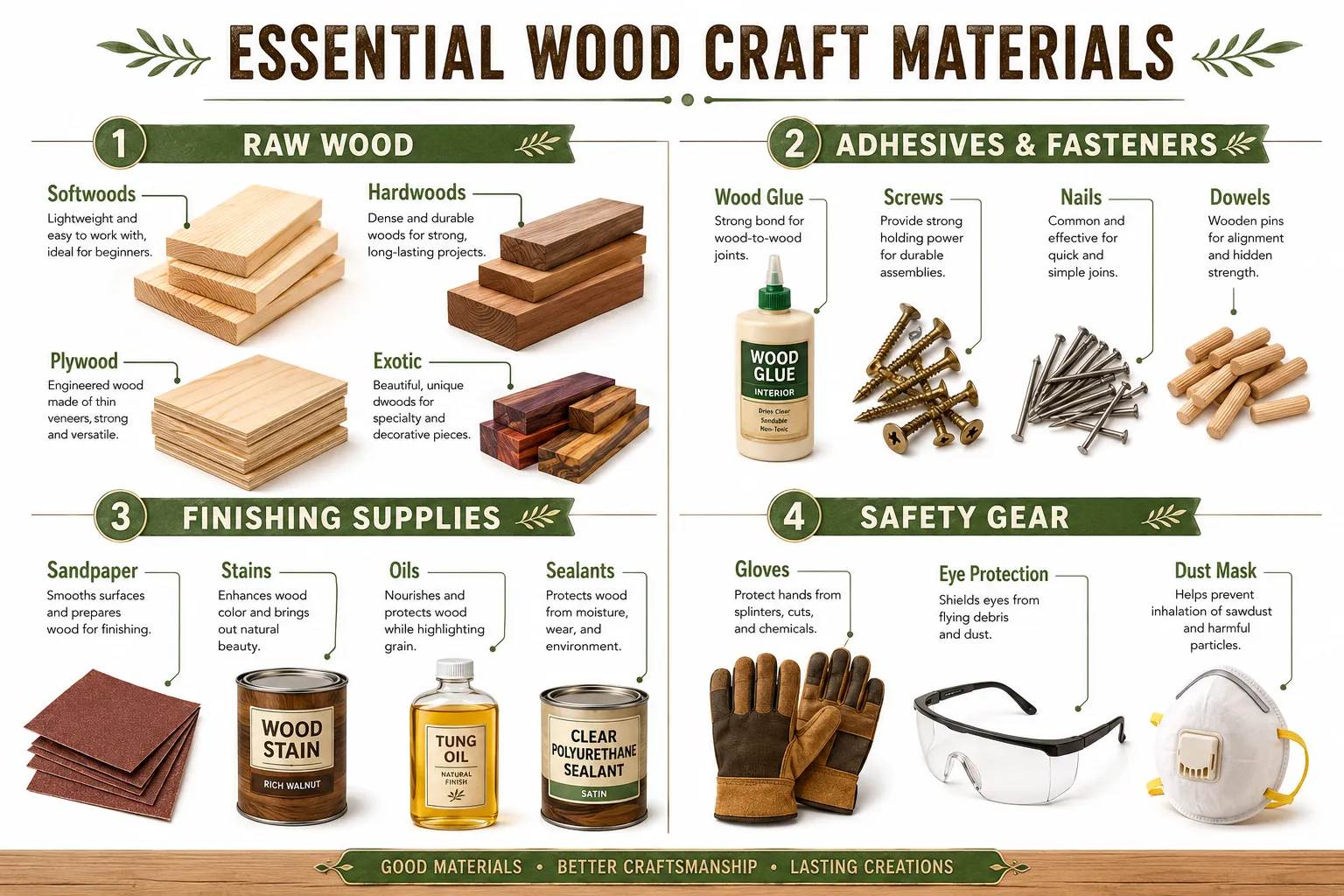
Finishing Supplies
The finish protects your wood and enhances its appearance.
- Sandpaper: Comes in various grits (coarseness). You’ll need a range from coarse (80-100 grit) for shaping and removing imperfections to fine (180-220 grit) for smoothing before finishing.
- Wood Stains: Impart color while allowing the wood grain to show through. For guidance, see “Beginner’s Guide to Wood Staining: Color Selection, Application, and” – https://woodcraftwiz.com/beginners-guide-to-wood-staining-color-selection-application-and-troubleshooting-common-issues/.
- Wood Oils: Penetrate the wood, providing a natural, protective finish that highlights the grain. Tung oil and linseed oil are popular choices.
- Sealants/Topcoats: Polyurethane, lacquer, and shellac provide a durable protective layer against moisture, scratches, and wear.
Safety Gear
Never underestimate the importance of safety.
- Eye Protection: Safety glasses or goggles are non-negotiable when cutting, sanding, or using power tools.
- Gloves: Protect hands from splinters, chemicals, and general wear.
- Dust Masks/Respirators: Crucial for protecting your lungs from wood dust and fumes from finishes.
Sourcing Your Wood Craft Supplies Affordably
Finding quality materials without breaking the bank is a key part of the Beginner’s Guide to Wood Craft Supplies: Essential Materials, Sourcing, and Storage. Many options exist, each with pros and cons, especially for a beginner in 2026.
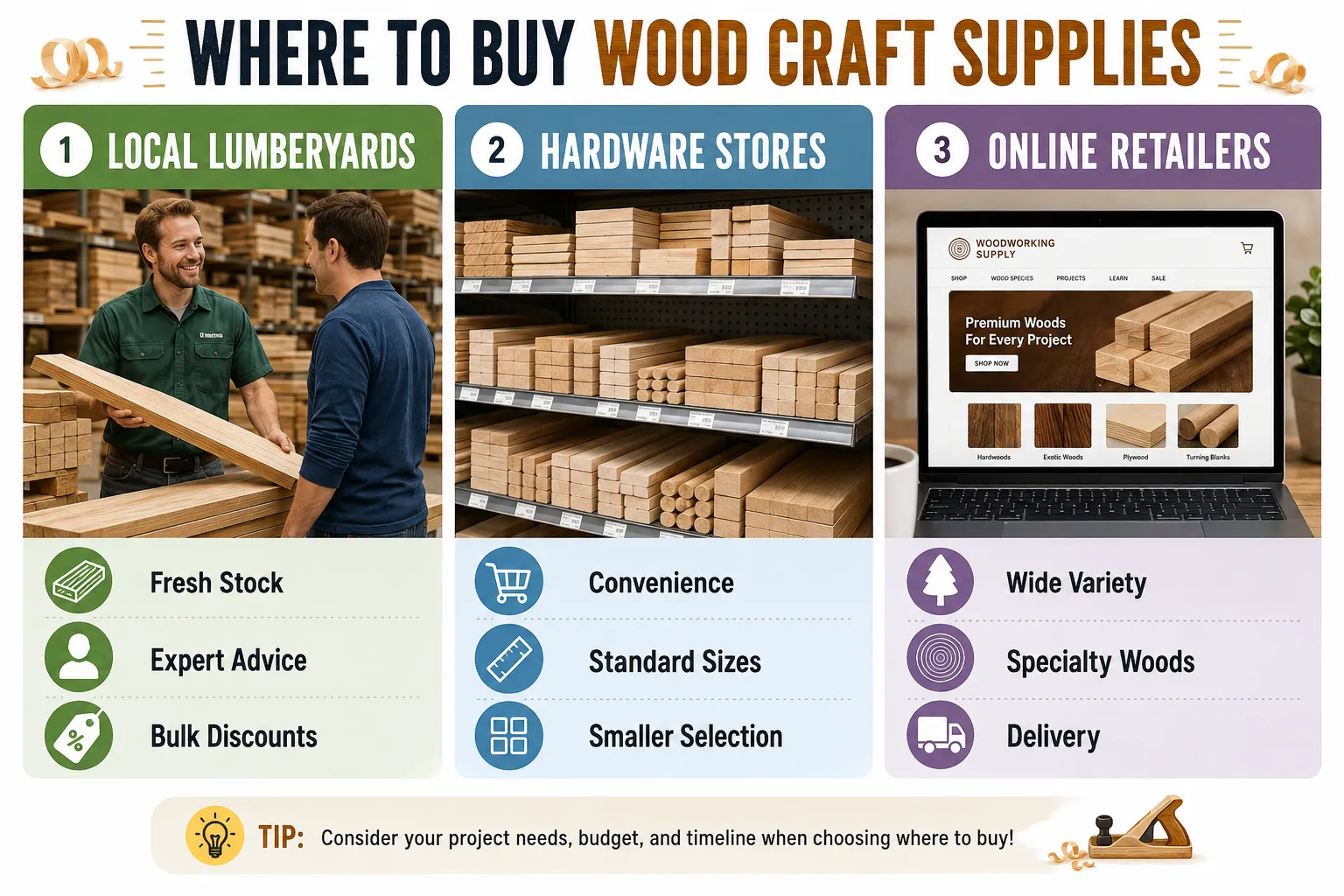
Local Lumberyards and Specialty Wood Stores
These are often the best places for raw wood. Lumberyards offer a wide selection of species, sizes, and grades. The staff can provide expert advice, help you select the right wood for your project, and often mill it to your specifications. While prices might be higher than big box stores, the quality and service are often superior. You can also sometimes find “cut-offs” or “shorts” at a reduced price, perfect for smaller projects.
Hardware Stores and Big Box Retailers
Stores like Home Depot and Lowe’s are convenient and accessible. They typically stock common softwoods (pine, fir), plywood, and some basic hardwoods. The wood is usually pre-cut into standard dimensions, making it easy to pick up what you need. Prices are generally competitive, but the quality can vary, and selection for specialty woods is limited. These stores are excellent for purchasing glues, fasteners, sandpaper, and finishes.
Online Retailers
The internet offers a vast array of specialty wood suppliers. This is particularly useful for finding exotic woods, unique veneers, or specific hardware components that might not be available locally. Websites dedicated to woodworking supplies often have competitive pricing and deliver directly to your door, though shipping costs can add up.
Reclaimed and Salvaged Wood
- Pallets: A fantastic source of free wood, often pine or oak. Ensure pallets are heat-treated (marked “HT”) rather than chemically treated (“MB”). Disassembling them takes effort but yields usable material.
- Construction Sites: With permission, you might find discarded scraps of framing lumber or plywood that are perfect for small projects.
- Furniture Discards: Old wooden furniture, often found at thrift stores or curbside, can be a treasure trove of quality wood. Restoring and repurposing vintage furniture can be a rewarding endeavor. Consider checking out Restoring And Repurposing Vintage Wooden Furniture Techniques For Repair Refinishing And Modernization for more ideas.
- Tree Services: Sometimes offer logs or branches that can be milled into slabs if you have the resources or connections.
- Local Classifieds/Marketplace: Check platforms like Craigslist or Facebook Marketplace for individuals selling wood, often from personal projects or felled trees.
Smart Storage Solutions for Your Wood Craft Supplies
Proper storage is critical for maintaining the quality and longevity of your wood and other supplies. Neglecting storage can lead to warped lumber, degraded finishes, and rusted tools. This final section of our Beginner’s Guide to Wood Craft Supplies: Essential Materials, Sourcing, and Storage provides practical tips for organizing your workshop in 2026.
Wood Storage
Wood is susceptible to changes in humidity and temperature, which can cause warping, cupping, or checking.
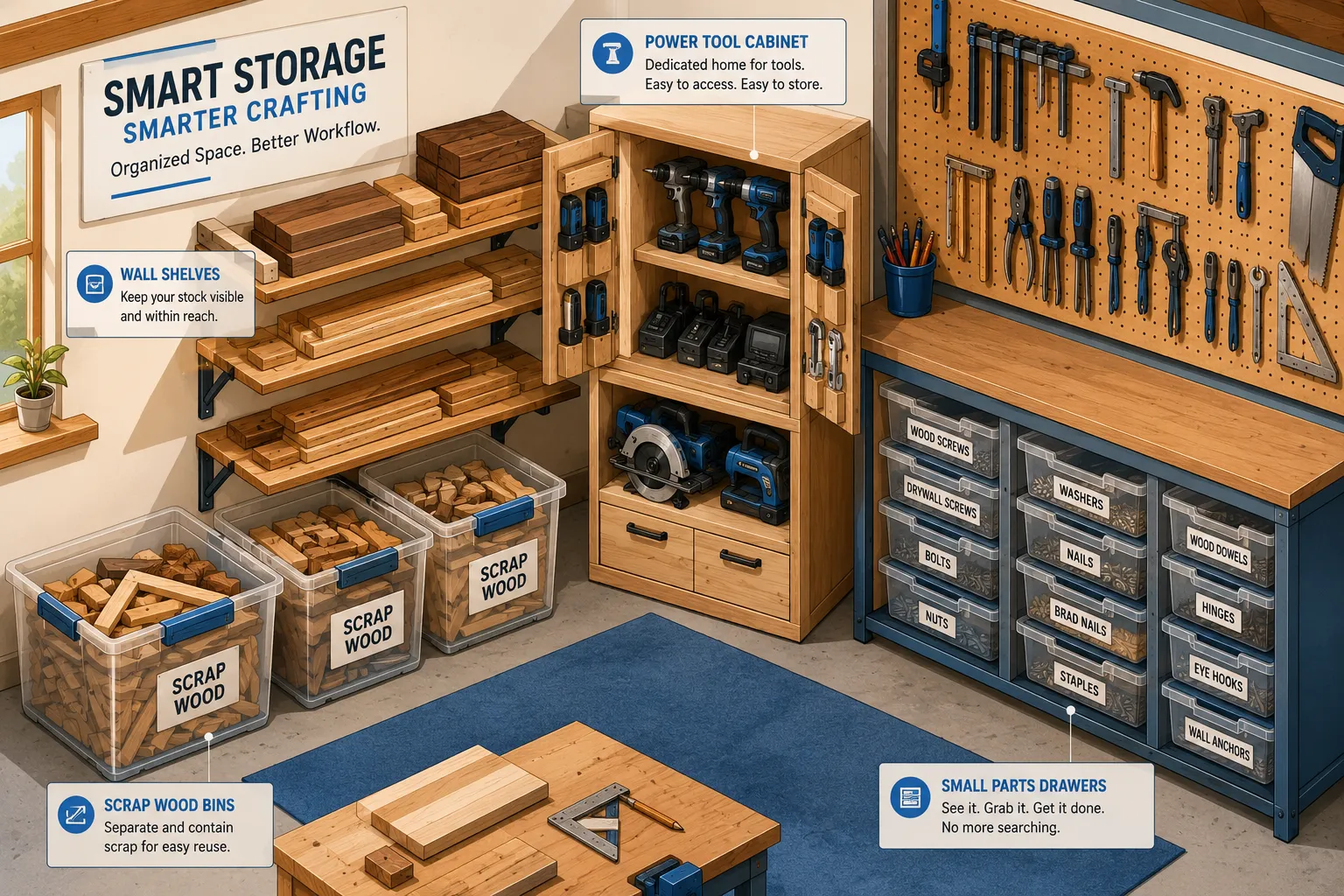
- Keep it Flat and Supported: Store dimensional lumber (2x4s, 1x6s, etc.) flat on sturdy shelving or racks. If storing on edge, ensure consistent support along its length to prevent bowing.
- Stack Horizontally with Spacers: For larger quantities of boards, stack them horizontally with “stickers” (small strips of wood) placed every 12-18 inches between layers. This allows air circulation and prevents moisture buildup, which can lead to mold and warping.
- Control Humidity: Ideally, store wood in a climate-controlled environment, such as a garage or basement with a dehumidifier if needed. Avoid direct sunlight or extreme temperature fluctuations.
- Cut-offs and Scraps: Organize smaller pieces by species and size in clearly labeled bins or on dedicated shelves. This makes it easy to find suitable pieces for future small projects like Tealight Candle Holders And Cross Wall Art Scrap Wood Projects That Sell In Minutes.
Adhesive and Finish Storage
These items require specific conditions to remain effective.
- Temperature Control: Most glues and finishes have optimal storage temperatures, often room temperature. Extreme heat or cold can cause separation, thickening, or premature curing. Read product labels for specific instructions.
- Airtight Seals: Always ensure caps and lids are tightly sealed to prevent air exposure, which can dry out glues and cause finishes to skin over.
- Away from Direct Sunlight: UV light can degrade many finishes and adhesives. Store them in a cool, dark place.
- Flammable Materials: Store solvent-based finishes, thinners, and rags soaked in oil-based finishes in fire-safe cabinets or metal containers, away from heat sources.
Fastener and Hardware Storage
Small items can easily get lost, leading to frustration and wasted time.
- Organized Bins/Drawers: Use clear plastic bins with dividers or multi-drawer organizers for screws, nails, bolts, washers, and other small hardware. Label each compartment clearly.
- Magnetic Strips: For frequently used drill bits, driver bits, or small metal tools, magnetic strips mounted on a wall can be incredibly convenient. Consider “Crafting Custom Magnetic Tool Holders And Organizers Maximizing Vertical Storage In A Small Workshop” – https://woodcraftwiz.com/crafting-custom-magnetic-tool-holders-and-organizers-maximizing-vertical-storage-in-a-small-workshop/ for innovative ideas.
- Original Packaging: Keep items in their original packaging if it’s sturdy and resealable, especially for specialty hardware with specific sizes or uses.
Sandpaper and Abrasive Storage
- Flat and Dry: Store sandpaper sheets flat to prevent creases, which can cause uneven sanding. Keep them in a dry environment to prevent moisture absorption, which reduces effectiveness.
- Labeled Files/Folders: Use accordion files or dedicated drawers to organize sandpaper by grit, making it easy to find the correct abrasive for each stage of your project.
Conclusion
Embarking on the rewarding journey of woodcraft in 2026 is an exciting endeavor, and a solid understanding of your materials, sourcing strategies, and storage methods is your first step towards success. This Beginner’s Guide to Wood Craft Supplies: Essential Materials, Sourcing, and Storage has laid out the fundamental knowledge you need to start confidently. Remember to begin with simple wood types and essential tools, prioritize safety, explore diverse options for acquiring your supplies, and always maintain proper storage to protect your investment. As you gain experience, your collection of wood craft supplies will naturally grow, and a well-organized approach from the outset will serve you well for years to come. Start small, learn as you go, and enjoy the process of bringing your wooden creations to life.
References
- Bureau of Labor Statistics. (2023). Consumer Expenditure Survey, 2022. U.S. Department of Labor.
- The Wood Database. (n.d.). Wood Species Guide. Retrieved from https://www.wood-database.com/ (Accessed January 25, 2026).
- Fine Woodworking Magazine. (n.d.). Tips & Techniques. Retrieved from https://www.finewoodworking.com/ (Accessed January 25, 2026).
SEO Meta Title: Beginner’s Guide: Wood Craft Supplies, Sourcing & Storage 2026 SEO Meta Description: Your 2026 beginner’s guide to wood craft supplies: discover essential materials, learn affordable sourcing, and implement smart storage solutions for your workshop.