
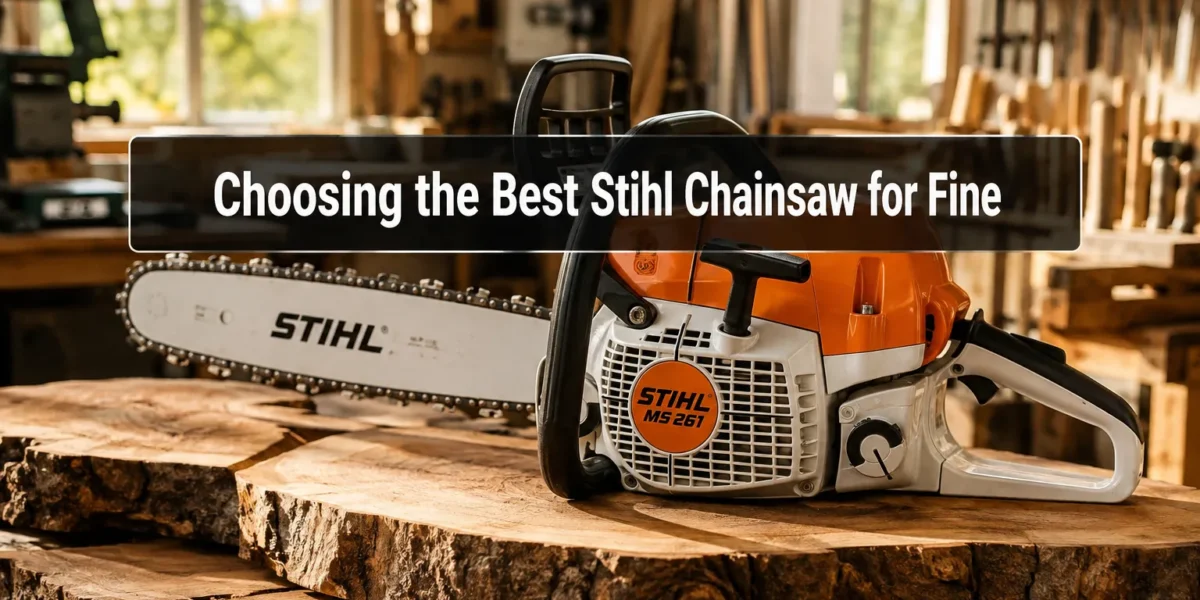
The pursuit of crafting exquisite furniture or transforming raw timber into usable lumber demands precision, power, and reliability. While many chainsaws are built for felling and bucking firewood, selecting the right Stihl model for fine woodworking and portable sawmilling requires a nuanced understanding of their specific features, power output, and ergonomics. It’s a choice that moves beyond brute force, focusing instead on control, cut quality, and sustained performance, even when handling large logs for custom slabs in 2026.
Key Takeaways
- Prioritize Power and Torque: For portable sawmilling, higher engine displacement (cc) and horsepower (HP) are critical for consistent, deep cuts in dense hardwoods.
- Consider Bar Length and Chain Type: Longer bars (25-36 inches) are necessary for milling wider slabs, and specialized ripping chains significantly improve cut quality and efficiency.
- Ergonomics and Anti-Vibration are Key: Long hours of milling or detailed cuts benefit immensely from advanced anti-vibration systems and balanced designs, reducing fatigue and improving control.
- Fuel Efficiency and Durability: Look for professional-grade Stihl models known for their robust construction and fuel efficiency, essential for sustained heavy-duty use.
- Accessories Enhance Versatility: Plan to integrate your chosen chainsaw with milling attachments like Alaskan sawmills or specialized jigs for precision woodworking tasks.
Choosing the Best Stihl Chainsaw for Fine Woodworking and Portable Sawmilling: Model Comparison
Stihl offers a wide range of chainsaws, but only a select few truly excel when the goal shifts from clearing brush to creating smooth, consistent lumber or making intricate cuts for furniture components. The ideal Stihl chainsaw for fine woodworking and portable sawmilling will balance raw power with precision, durability, and user comfort. Let’s delve into specific models suitable for these specialized applications.
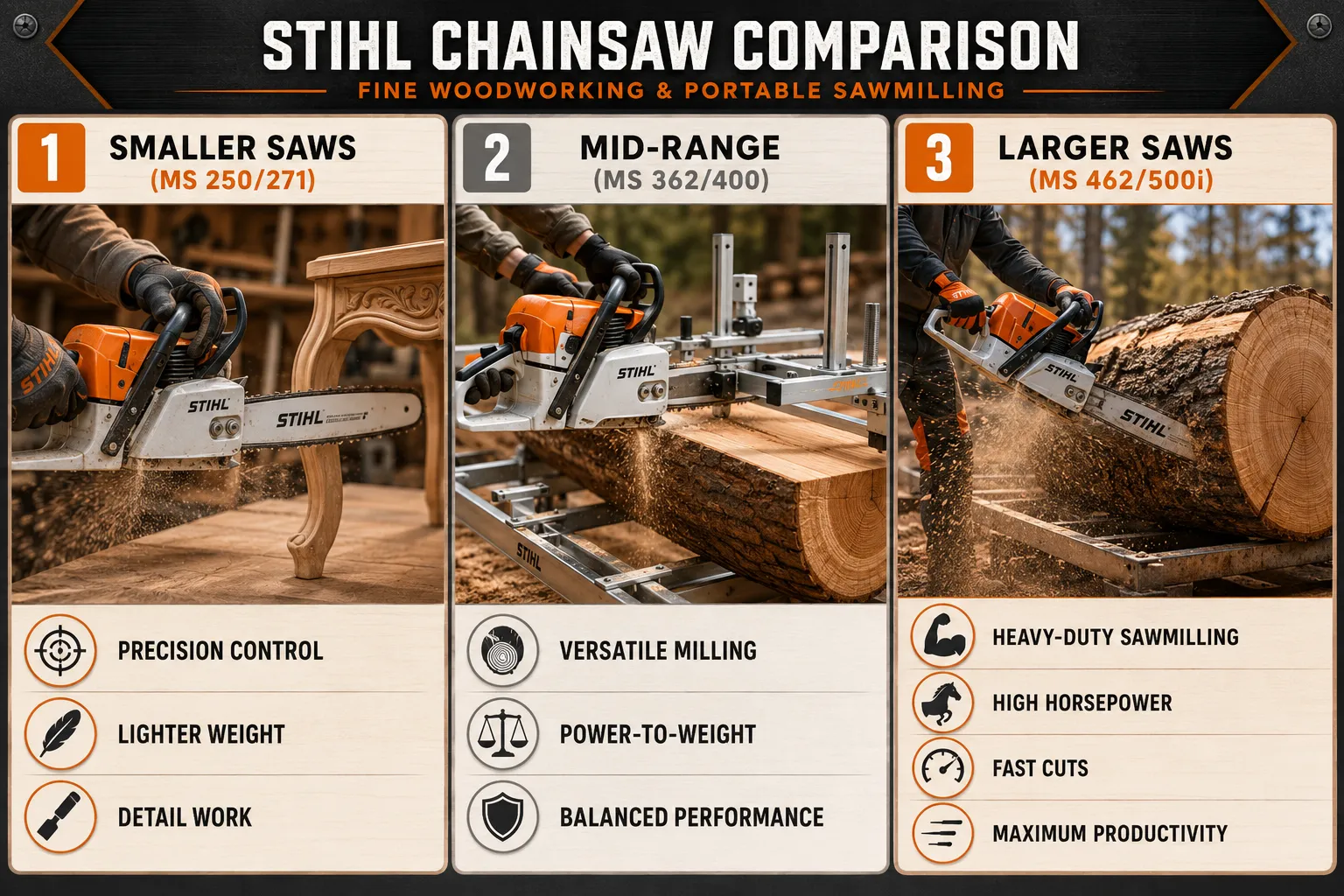
For light-duty slab work, smaller log breakdown, and initial shaping of large timbers for furniture, models like the Stihl MS 250 or MS 271 Farm Boss might initially seem appealing due to their lower cost and decent power. However, their limitations quickly become apparent when milling logs over 18-20 inches in diameter or attempting prolonged ripping cuts in hardwoods. These saws are generally designed for cross-cutting and limbing, not the sustained, high-torque demands of portable sawmilling.
Moving into the professional series, the Stihl MS 362 C-M is a strong contender. With a 59.0 cc engine and good horsepower, it offers a commendable power-to-weight ratio. The “C-M” designation indicates M-Tronic™ engine management, which electronically monitors and adjusts fuel delivery for optimal performance, a significant advantage for varying loads and fuel conditions encountered during milling. It can comfortably handle guide bars up to 25 inches, making it suitable for milling medium-sized logs and providing excellent control for finer, more precise cuts on larger stock. Its robust construction and advanced anti-vibration system also contribute to operator comfort during extended use.
For serious portable sawmilling, where handling larger diameter logs (24 inches and up) is common, or for those seeking faster production, models with higher displacement and horsepower are necessary. The Stihl MS 462 R C-M is often considered a benchmark for professional milling operations. Its 72.2 cc engine delivers substantial power, capable of running guide bars up to 32 inches or even 36 inches with proper technique and a good ripping chain. The MS 462’s optimized power-to-weight ratio makes it manageable despite its immense power, and its M-Tronic™ system ensures consistent performance. This saw is a workhorse, designed for demanding applications and offering the torque needed to pull long ripping chains through dense wood without bogging down.
A newer and increasingly popular option for heavy-duty sawmilling is the Stihl MS 500i. This saw features a revolutionary electronically controlled fuel injection system, making it the world’s first professional chainsaw with such technology. The 79.2 cc engine provides incredible power and acceleration. The MS 500i offers instant throttle response, optimized torque, and lighter weight compared to other saws in its class. This combination of raw power, advanced technology, and reduced weight makes it exceptionally well-suited for large-scale portable sawmilling, where fatigue management and consistent power delivery are paramount. It can easily handle guide bars of 32 inches and beyond, making it ideal for processing substantial timbers into usable slabs for furniture or construction.
When considering internal links, for those interested in expanding their woodworking toolkit, exploring Choosing The Right Dewalt Power Tools For Your Woodworking Workshop A Comprehensive Guide can provide insights into other essential equipment.
Key Features for Fine Woodworking and Portable Sawmilling
Beyond raw engine size, specific features differentiate a good general-purpose chainsaw from one optimized for precision and sawmilling. Understanding these elements is crucial when making your selection.
Engine Displacement and Horsepower
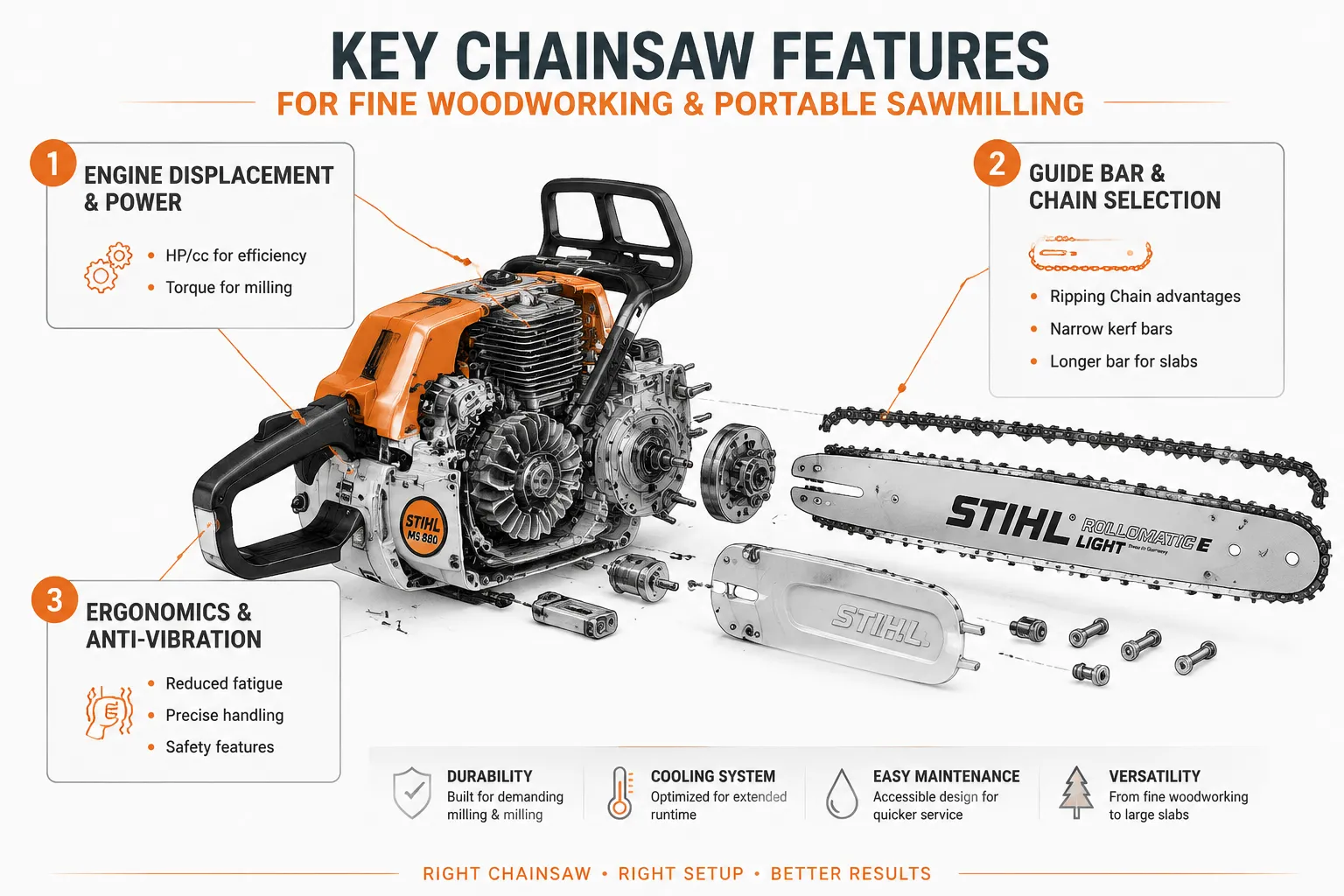
For portable sawmilling, engine displacement (measured in cubic centimeters, cc) and horsepower (HP) are paramount. Higher numbers generally equate to more power and torque. When a chainsaw is used with a milling attachment, it’s essentially performing a continuous rip cut, which is far more demanding than a crosscut. A larger engine will maintain RPMs better under load, preventing the chain from slowing down and ensuring a smoother, more consistent cut. For anything beyond occasional small log milling, aim for chainsaws in the 70cc+ range, like the Stihl MS 462 R C-M or MS 500i. For hobbyists milling smaller logs, a 60cc class saw like the MS 362 C-M might suffice.
Guide Bar and Chain Selection
The choice of guide bar and chain is as important as the chainsaw itself.
- Bar Length: For portable sawmilling, you need a bar long enough to span the widest log you intend to mill. A 25-inch bar is a good starting point for medium logs, while 32-inch or 36-inch bars are common for larger diameter timber. Ensure your chosen chainsaw can adequately power the desired bar length without undue strain or performance loss.
- Ripping Chain: This is perhaps the single most critical accessory for sawmilling. Unlike standard cross-cut chains that have alternating left and right cutters designed to shear wood fibers, ripping chains feature a shallower cutting angle (typically 10 degrees instead of 25-30 degrees) and often skip teeth, making them highly efficient at cutting along the grain. This results in smoother cuts, less effort, and reduces the likelihood of burning the wood or bogging down the saw. Always use a ripping chain for sawmilling.
- Narrow Kerf Bars: Some milling setups can utilize narrow kerf (thin cut) bars and chains, which remove less material, resulting in less sawdust and slightly more efficient cutting. However, these often require less powerful saws and might not be suitable for the largest, densest logs.
Anti-Vibration and Ergonomics
Milling logs is physically demanding, often requiring prolonged periods of operation. Stihl’s advanced anti-vibration systems, which isolate the handles from the engine, are invaluable. They reduce fatigue, improve control, and minimize the risk of hand-arm vibration syndrome (HAVS). A well-balanced saw also contributes to better control and less strain, particularly when mounted on a milling jig. For those interested in Advanced Wood Joinery for Fine Furniture: Beyond Basic Dovetails for Strength and Aesthetics, the precision gained from a comfortable saw is a direct benefit.
Chain Tensioning and Oiling Systems
Reliable chain tensioning and an efficient automatic oiler are vital. Chains heat up significantly during milling, and proper lubrication is essential to prevent premature wear on the bar and chain. Look for models with easily adjustable chain tensioners, preferably side-access, for quick adjustments. A high-output oil pump, often adjustable, is also beneficial for ensuring adequate lubrication during heavy use.
For woodworkers considering alternative tools, our article on Husqvarna Chainsaws for Fine Woodworking: Beyond Milling Logs for Furniture Slabs offers a comparative perspective on another leading brand.
Practical Considerations for Using Stihl Chainsaws in Woodworking
Beyond the technical specifications, real-world application requires attention to several practical aspects to ensure safety, efficiency, and quality results when choosing the best Stihl chainsaw for fine woodworking and portable sawmilling.
Safety First
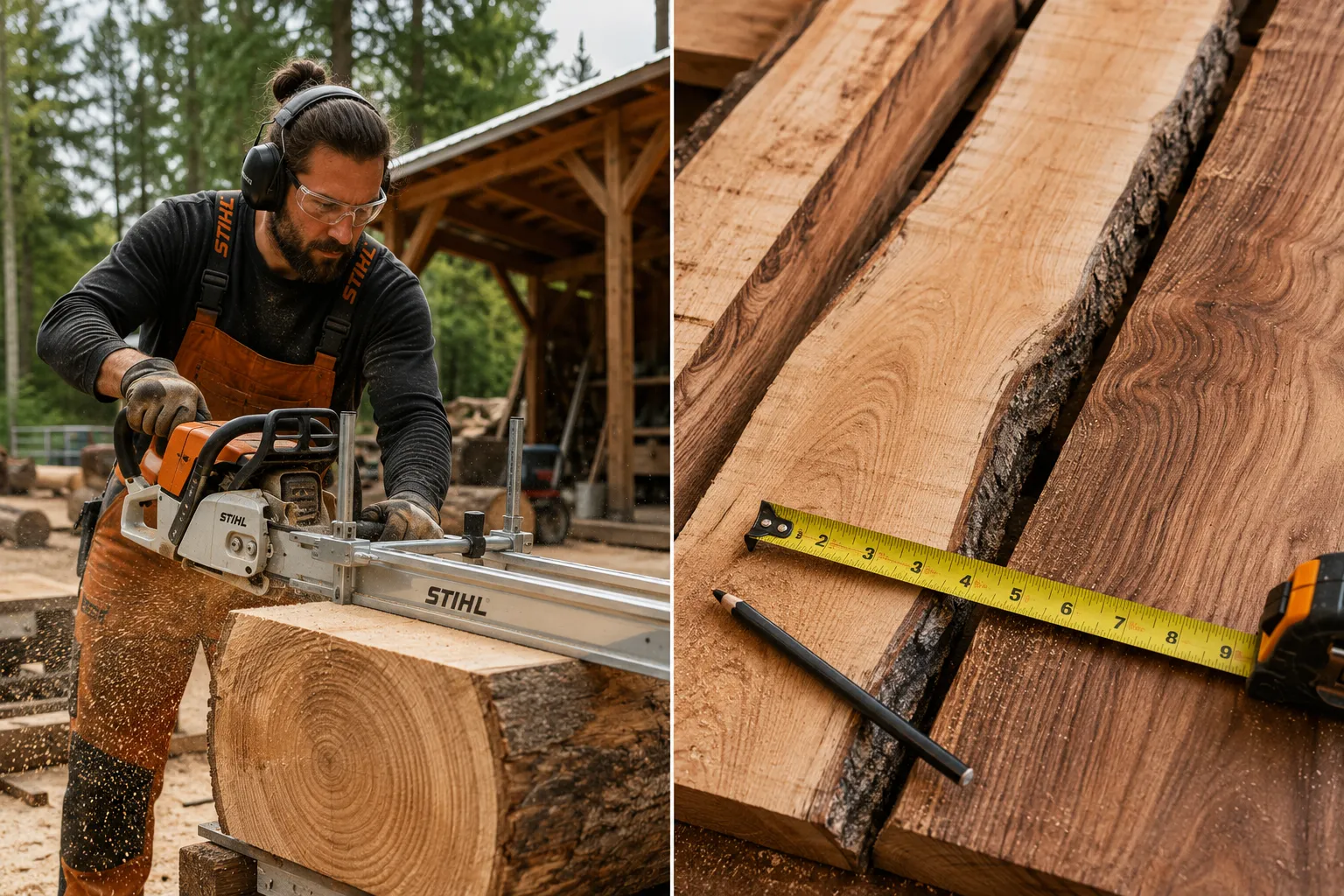
Operating a powerful chainsaw, especially when milling, carries significant risks. Always wear appropriate personal protective equipment (PPE):
- Head Protection: Hard hat with face screen and hearing protection.
- Eye Protection: Safety glasses or goggles underneath the face screen.
- Hearing Protection: Ear muffs or earplugs.
- Hand Protection: Cut-resistant gloves.
- Leg Protection: Chainsaw chaps or pants with cut-resistant material.
- Foot Protection: Steel-toe boots.
Ensure a clear work area, understand kickback risks, and never operate a chainsaw when fatigued or distracted. Regular maintenance of your chainsaw is also a safety critical.
Milling Attachments and Jigs
For portable sawmilling, a specialized attachment is essential. The most common is the Alaskan sawmill, a jig that clamps onto the guide bar, allowing you to cut consistent slabs. These vary in size and complexity, but all rely on a flat surface (often created by a guide rail or a first cut with a small jig) to establish the initial cut. Precision woodworking often involves custom jigs for specific cuts, allowing the chainsaw to act as a powerful, albeit rough, joinery tool for large timbers. For inspiration on creating your own workspace, you might want to look at a DIY Woodworking Workbench: Complete Build Guide with Tool Storage.
Maintenance and Fuel
Regular maintenance is crucial for optimal performance and longevity. This includes:
- Sharpening the Chain: A dull chain significantly reduces cutting efficiency, increases fuel consumption, and can lead to dangerous kickback. Sharpen frequently, especially when milling. Consider investing in a good electric sharpener for ripping chains.
- Cleaning: Keep the air filter, cooling fins, and guide bar groove clean to prevent overheating and ensure proper lubrication.
- Fuel Mix: Always use fresh, high-quality gasoline mixed with Stihl’s recommended two-stroke oil at the correct ratio. Stale fuel can cause engine damage.
- Bar Maintenance: Flip your guide bar regularly to ensure even wear, and clean the groove to remove sawdust and debris.
Understanding Wood Species Selection Guide Hardwoods Vs Softwoods Cost Workability And Finishing For Every Project Type can help you anticipate the demands on your chainsaw based on the timber you’re working with.
Post-Milling Processing
Remember that chainsaw-milled lumber will require further processing for fine woodworking. The surface will be rough and typically needs planing, jointing, and sanding to achieve the smooth, flat surfaces required for furniture. Portable sawmilling is the first step in transforming a log into usable stock; the subsequent steps refine it to woodworking standards. For techniques on refining raw wood, consider our guide on Advanced Wood Finishing: Professional Polishing, Staining, and Protective Coating Techniques for Premium Results.
For those sourcing material, Urban Lumber Sourcing For Woodworkers How To Find Inspect And Mill Salvaged City Hardwoods offers valuable information on finding suitable logs. Also, learning about The Ultimate Guide To Wood Glue Choosing The Right Adhesive For Every Woodworking Joint And Project is essential for subsequent assembly.
Conclusion
Choosing the best Stihl chainsaw for fine woodworking and portable sawmilling in 2026 is a strategic investment that pays dividends in capability and quality. For serious milling and breaking down large timbers, professional-grade models like the Stihl MS 462 R C-M or the revolutionary MS 500i are superior choices due to their power, advanced features, and durability. While smaller saws might handle light tasks, they quickly become limiting for the sustained, high-torque demands of ripping through dense logs.
Always prioritize safety by wearing appropriate PPE and maintaining your equipment diligently. Equip your chosen chainsaw with a suitable guide bar and, critically, a dedicated ripping chain for the smoothest and most efficient cuts. With the right Stihl chainsaw and proper technique, you can unlock the potential to transform raw logs into beautiful, custom lumber, opening new avenues for your fine woodworking projects.
References
- STIHL. (n.d.). Chainsaws. Retrieved from https://www.stihlusa.com/products/chain-saws/
- Plewa, J. (2018). The Chainsaw Book: A Complete Guide to the Proper Use of the Chainsaw. Skyhorse Publishing.
SEO Meta Title: Choosing the Best Stihl Chainsaw for Fine Woodworking SEO Meta Description: Master fine woodworking and portable sawmilling. Discover top Stihl chainsaw models, essential features, and expert tips for precision cuts and log breakdown in 2026.