

Fewer than one percent of woodworkers outside Japan fully grasp the profound differences and superior precision offered by traditional Japanese hand tools. Often dismissed as merely ‘different,’ these tools represent a centuries-old philosophy of craftsmanship that prioritizes unparalleled accuracy and an intimate connection between artisan and material. For those truly dedicated to precision joinery in 2026, understanding and mastering these instruments – especially chisels, saws, and planes – is not just an alternative method; it is a transformative journey into the very heart of woodworking excellence. This article, “The Art of Japanese Woodworking Hand Tools: Introduction to Chisels, Saws, and Planes for Precision Joinery,” delves into the unique characteristics, proper usage, and advantages of these remarkable tools.
Key Takeaways
- Japanese woodworking hand tools operate on a different fundamental principle (pull-stroke cutting) compared to their Western counterparts.
- Japanese chisels (nomi) excel in paring and mortising, designed for exceptional sharpness and edge retention crucial for intricate joinery.
- Japanese saws (nokogiri) offer superior control and thinner kerfs due to their pull-stroke action, making precise cuts easier and more efficient.
- Japanese planes (kanna) produce incredibly thin, smooth shavings, resulting in exceptionally flat and finely finished surfaces without sanding.
- Mastering these tools requires dedication to sharpening and a shift in technique, but rewards with unparalleled precision and a deeper understanding of woodworking.
The Art of Japanese Woodworking Hand Tools: The Precision of Japanese Chisels (Nomi)
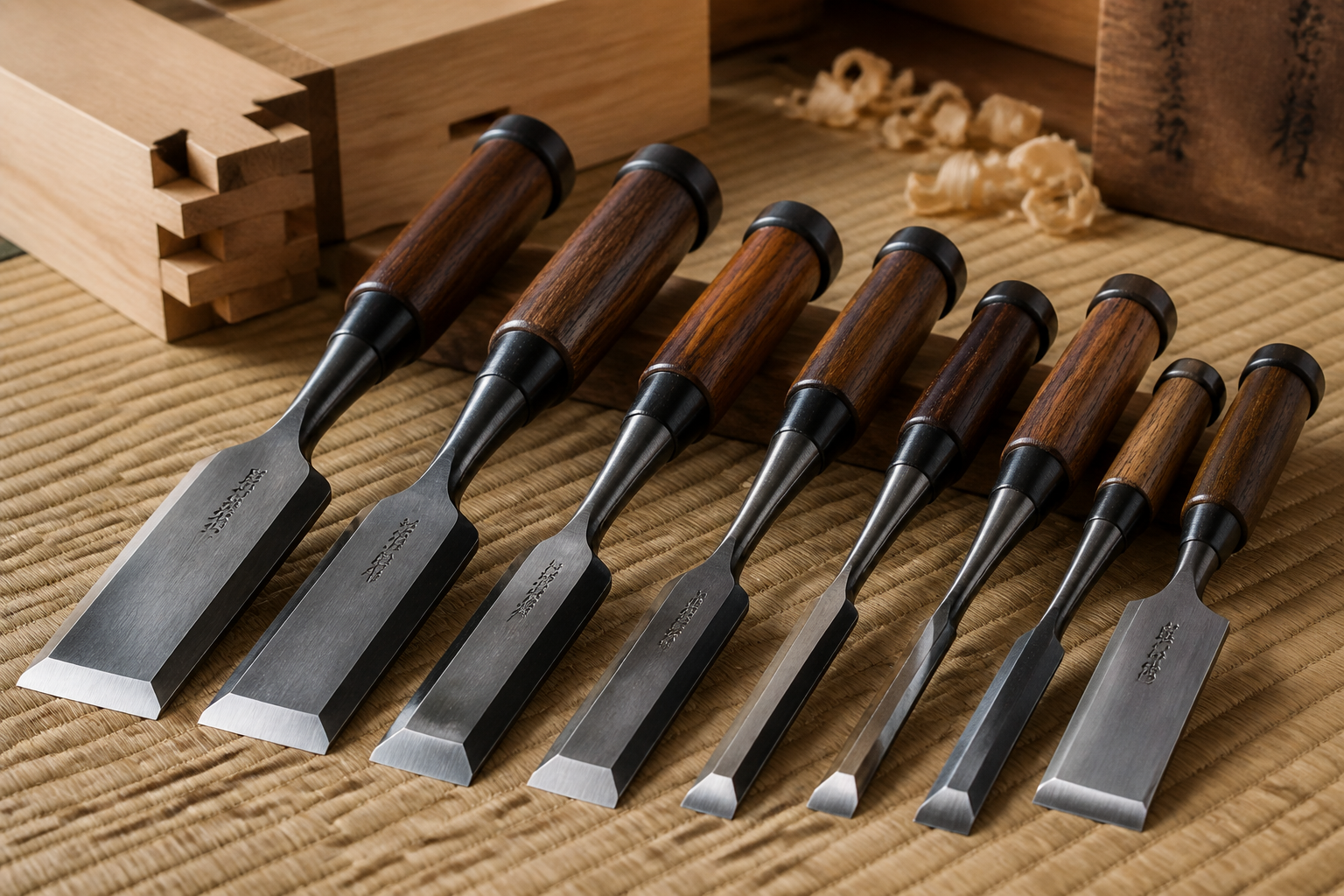
Japanese chisels, known as nomi, are foundational to precision joinery and stand apart from Western chisels in several key aspects. While both serve to remove wood, the design and metallurgy of nomi are optimized for extreme sharpness, edge retention, and the nuanced control required for intricate, tight-fitting joints.
One of the most striking differences lies in their construction. Japanese chisels are typically made with a laminated steel blade, featuring a very hard, high-carbon steel cutting edge forge-welded to a softer steel body. This creates a blade that holds an incredibly sharp edge for a long time, while the softer steel provides shock absorption and makes the tool easier to sharpen. Western chisels, often made of a single piece of steel, prioritize durability and ease of manufacture, sometimes at the expense of ultimate edge performance.
Types and Applications of Nomi
There is a diverse range of nomi, each designed for specific tasks:
- Oire Nomi (Bench Chisels): These are the general-purpose chisels, essential for most woodworking tasks. They are robust enough for striking with a mallet but also finely ground for delicate paring.
- Usuba Nomi (Paring Chisels): Characterized by longer, thinner blades, these are used for fine, controlled shaving and fitting of joints where precision is paramount. They are not designed for mallet work.
- Ouchi Nomi (Mortise Chisels): Thicker and heavier, mortise chisels are built to withstand heavy mallet blows for chopping out deep mortises. Their strength prevents bending or breakage under strain.
- Tsuki Nomi (Pry Chisels): Featuring a long, narrow blade, these are used for reaching into deep recesses and prying out waste material.
For woodworkers aiming to achieve seamless joints, the nomi‘s ability to take and hold a razor-sharp edge is indispensable. This sharpness allows for clean, tear-out-free cuts, even across tricky grain, which is critical for joints like dovetails and mortise-and-tenon. The subtle hollow grind on the back of many Japanese chisels, known as ura-sukagi, further aids in sharpening and reduces friction during cuts.
A common beginner mistake is to use a Japanese chisel like a Western one, attempting to lever or twist the blade. Japanese chisels thrive on direct, controlled force. When cutting a mortise, for example, the woodworker typically chops straight down, then levers out the waste, always maintaining a clean, sharp edge. Proper sharpening woodworking chisels and planes is not just a maintenance task; it’s a fundamental skill that directly impacts the quality of your joinery.
The Art of Japanese Woodworking Hand Tools: Unraveling Japanese Saws (Nokogiri)
Perhaps the most immediately recognizable difference between Japanese and Western woodworking hand tools lies in their saws, or nokogiri. While Western saws cut on the push stroke, Japanese saws cut on the pull stroke. This fundamental difference leads to significant advantages in precision, efficiency, and user experience, making them a cornerstone of The Art of Japanese Woodworking Hand Tools: Introduction to Chisels, Saws, and Planes for Precision Joinery.
The pull-stroke action means the saw blade is always in tension during the cut. This allows for much thinner blades to be used without buckling, which in turn creates a narrower kerf (the width of the cut). A thinner kerf means less wood waste and less effort required to make the cut. More importantly, it provides exceptional control and accuracy, as the blade is being pulled towards the user, making it easier to follow a precise line.
Key Types of Nokogiri
Japanese saws are categorized by their specific tooth patterns and blade designs, each optimized for different cuts:
- Ryoba Nokogiri (Double-Edged Saw): This versatile saw has two distinct sets of teeth: rip teeth on one edge for cutting with the grain and crosscut teeth on the other for cutting across the grain. It’s often the first Japanese saw a beginner acquires due to its dual functionality.
- Dozuki Nokogiri (Dovetail Saw): Featuring a thin blade with very fine teeth and a rigid back (a spine along the top of the blade), the dozuki is designed for extremely precise crosscuts, particularly for fine joinery like dovetails. The rigid back prevents the thin blade from flexing, ensuring perfectly straight cuts. Learn more about mastering dovetail joinery.
- Kataba Nokogiri (Single-Edged Saw): Similar to a Western handsaw in having only one cutting edge, but still operating on the pull stroke. Kataba saws come in various tooth configurations for general-purpose cutting, often with a thicker blade than dozuki saws, and without a rigid back, allowing for deeper cuts.
- Azebiki Nokogiri (Keyhole Saw): A short, double-edged saw with a rounded tip, used for cutting curves and starting cuts in the middle of a panel, often for mortises or decorative elements.
For detailed guidance on their use, a beginner’s guide to Japanese hand saws offers valuable insights. When using a nokogiri, the technique is smooth and rhythmic. Let the saw’s sharpness do the work, guiding it with a light touch. Avoid forcing the cut; instead, allow the pull stroke to effortlessly slice through the wood.
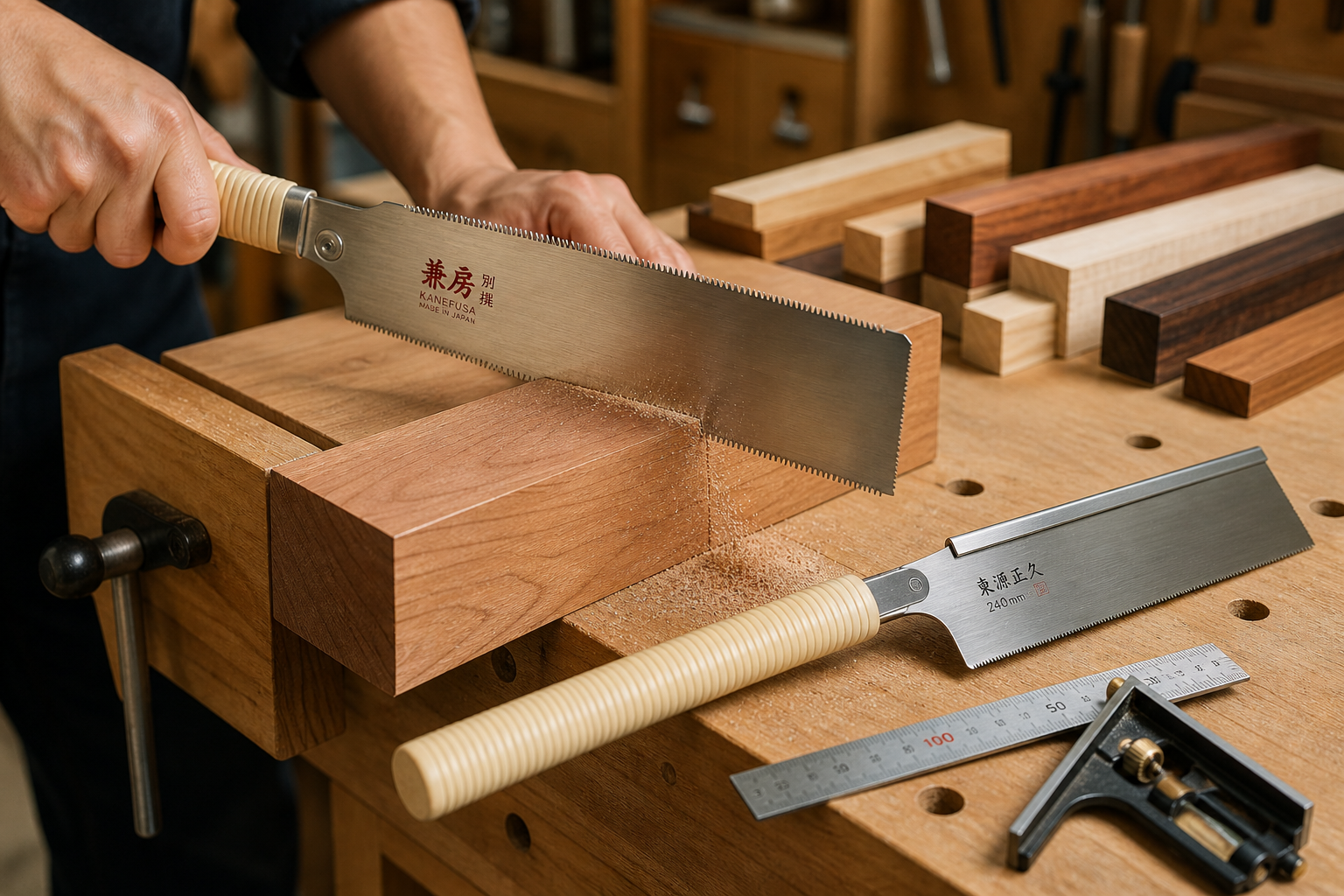
Table: Japanese vs. Western Saw Characteristics
| Feature | Japanese Saw (Nokogiri) | Western Saw |
|---|---|---|
| Cutting Action | Pull-stroke (tension) | Push-stroke (compression) |
| Blade Thickness | Thinner | Thicker |
| Kerf | Narrower | Wider |
| Control | Superior, easier to track | Requires more effort to track |
| Blade Rigidity | Achieved through tension | Relies on blade thickness |
| Effort | Less physical effort | More physical effort |
| Primary Use | Precision joinery, fine work | General construction, rough cuts |
The Art of Japanese Woodworking Hand Tools: The Efficiency of Japanese Planes (Kanna)
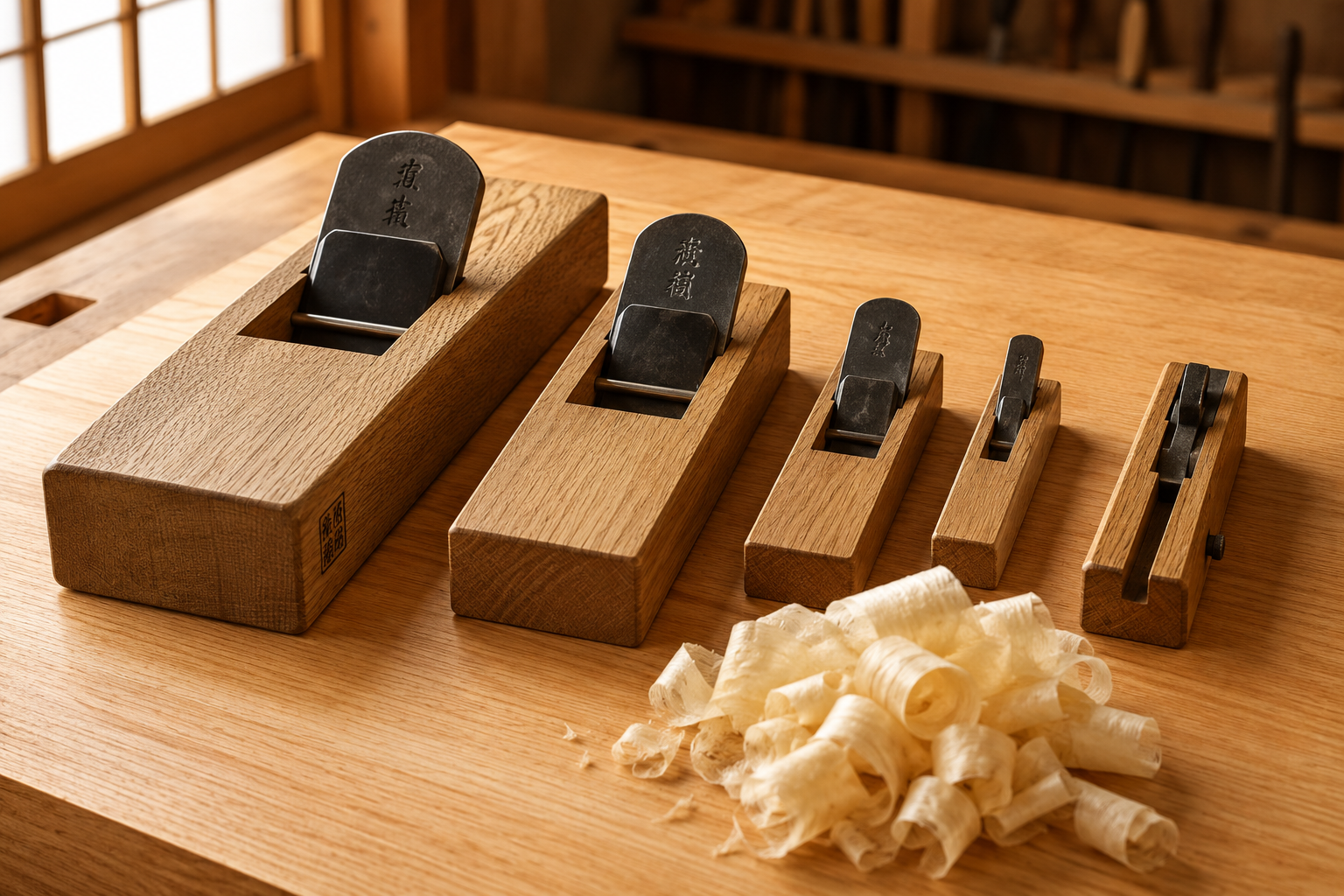
Japanese planes, or kanna, are marvels of woodworking design, capable of producing surfaces so smooth and flat that sanding becomes largely unnecessary. They are integral to “The Art of Japanese Woodworking Hand Tools: Introduction to Chisels, Saws, and Planes for Precision Joinery” because of their unparalleled ability to refine wood surfaces for perfect joint fit-up and aesthetic finish. Like Japanese chisels, kanna feature laminated steel blades for superior edge retention and are used with a pull-stroke action.
Unlike Western planes, where the blade is typically fixed at a set angle, Japanese planes often allow for slight adjustments by tapping the blade in or out of its wooden body (dai). The iron itself is bevel-down, and the sole of the dai is often relieved (slightly hollowed) behind the mouth to reduce friction. This design, combined with the incredibly sharp, thin blade, allows the kanna to take gossamer-thin shavings, sometimes as fine as tissue paper.
Essential Kanna Types and Their Use
The world of kanna is vast, but a few types are fundamental for precision woodworking:
- Hira Kanna (Smoothing Plane): The most common type, used for general planing, flattening surfaces, and achieving a final smooth finish. They come in various sizes, with longer ones for flattening and shorter ones for finer work.
- Chouna Kanna (Roughing Plane): Used for removing large amounts of material quickly, similar to a scrub plane. Often has a convex cutting edge.
- Sokoban Kanna (Grooving Plane): Specialized planes for cutting grooves or rebates, essential for fitting panels into frames or creating housing joints.
- Kaku-mentori Kanna (Chamfer Plane): Designed for quickly and accurately cutting chamfers or bevels along an edge.
The pull-stroke action of the kanna offers distinct advantages. By pulling the plane towards the body, the woodworker can use their body weight to assist the cut, leading to greater control and less fatigue. This action also allows for better visibility of the cutting edge and the shaving being produced, enabling precise adjustments on the fly. Achieving such fine finishes is crucial for the aesthetic appeal and structural integrity of traditional Japanese joinery, where joints are often exposed.
Mastering the kanna requires practice, especially in setting the blade and achieving a consistent shaving. Proper setup involves not just the blade depth but also the balance of the blade within the dai. It’s a skill that rewards patience and attention to detail. Just as with chisels, the sharpness of the plane iron is paramount, and regular honing is essential for optimum performance. Our guide on sharpening woodworking chisels and planes provides comprehensive techniques applicable to kanna.
To truly appreciate the precision they afford, consider applications like creating a perfectly flat surface for a tabletop or preparing stock for DIY wooden birdhouses with advanced designs and precision joinery. The smooth, unblemished surface left by a well-tuned kanna eliminates the need for sandpaper, preserving the wood’s natural luster and saving considerable time.
Conclusion
The journey into “The Art of Japanese Woodworking Hand Tools: Introduction to Chisels, Saws, and Planes for Precision Joinery” is one of discovery and refinement. These tools are not merely alternatives to Western implements; they represent a distinct philosophy of woodworking, emphasizing precision, control, and an intimate understanding of the material. By embracing the pull-stroke design of nokogiri and kanna, and the laminated steel excellence of nomi, woodworkers in 2026 can unlock new levels of craftsmanship, producing joinery that is not only robust but also exquisitely beautiful.
While the initial learning curve may require patience and a departure from familiar techniques, the rewards are immense. The unparalleled sharpness of Japanese chisels allows for surgical accuracy, the efficiency of pull-stroke saws delivers clean, effortless cuts, and the whisper-thin shavings from a well-tuned Japanese plane transform rough lumber into glass-smooth surfaces. Integrating these tools into your workshop is more than just acquiring new implements; it’s an investment in a woodworking tradition that champions the highest standards of precision and artistry.
Actionable Next Steps:
- Invest in Quality: Begin with a high-quality ryoba saw, an oire nomi (bench chisel), and a hira kanna (smoothing plane). Avoid cheap imitations.
- Master Sharpening: Dedicate time to learning and practicing the correct sharpening techniques for Japanese chisels and plane irons. A dull tool is dangerous and ineffective. Refer to our guide on The Ultimate Guide to Sharpening Woodworking Chisels and Planes.
- Practice Techniques: Start with simple projects that allow you to practice the pull-stroke action of saws and planes. Focus on consistent, controlled movements. For specific saw techniques, consult the Beginner’s Guide to Japanese Hand Saws.
- Embrace Patience: Traditional Japanese woodworking emphasizes patience and attention to detail. Allow yourself to learn at a comfortable pace, enjoying the process of mastering these elegant tools.
- Explore Joinery: Once comfortable with basic cuts and planing, delve into traditional Japanese joinery techniques. The precision offered by these tools is perfectly suited for complex, glue-less joints.
Meta Title: Japanese Woodworking Hand Tools: Chisels, Saws, Planes & Precision Joinery Meta Description: Explore The Art of Japanese Woodworking Hand Tools: introduction to chisels, saws, and planes for unparalleled precision joinery. Master traditional techniques in 2026.