

The average home workshop, often relegated to a corner of a garage or a spare room, presents a perennial challenge for woodworkers: how to maximize functionality within limited square footage. For many, the phrase “EPL table” doesn’t immediately bring to mind woodworking. In commercial settings, EPL typically refers to “employment practices liability,” a legal term. However, in the context of woodworking, when woodworkers search for “What Is an EPL Table? A Woodworker’s Guide to Folding, Expandable, and Space-Saving Work Surfaces,” they are almost universally referring to a specific category of highly versatile work surfaces: Expandable, Portable, or Lightweight tables, often incorporating folding mechanisms. This article will demystify this common search query, guiding woodworkers through the world of compact, adaptable work surfaces that are essential for efficient space management in 2026.
Key Takeaways
- “EPL Table” in woodworking refers to Expandable, Portable, or Lightweight work surfaces designed for space efficiency.
- These tables offer versatility through folding legs, extendable leaves, and modular designs, ideal for small workshops.
- Key benefits include maximizing limited space, providing stable work surfaces when needed, and easy storage.
- Woodworkers can either purchase these tables or build custom versions to perfectly fit their specific needs and tools.
- Choosing or building an EPL table involves considering stability, materials, ease of deployment, and integrated features like storage.
Understanding the “EPL Table” in a Woodworking Context
When a woodworker searches for “What Is an EPL Table? A Woodworker’s Guide to Folding, Expandable, and Space-Saving Work Surfaces,” they are looking for practical solutions to a universal problem: limited workshop space. Traditional, large, stationary workbenches are the ideal for many, offering unwavering stability and ample surface area. However, not every woodworker has the luxury of a dedicated, expansive workshop. This is where the concept of an EPL table, encompassing Expandable, Portable, and Lightweight designs, becomes invaluable. These tables are engineered to deliver robust functionality during use while minimizing their footprint when not in operation.
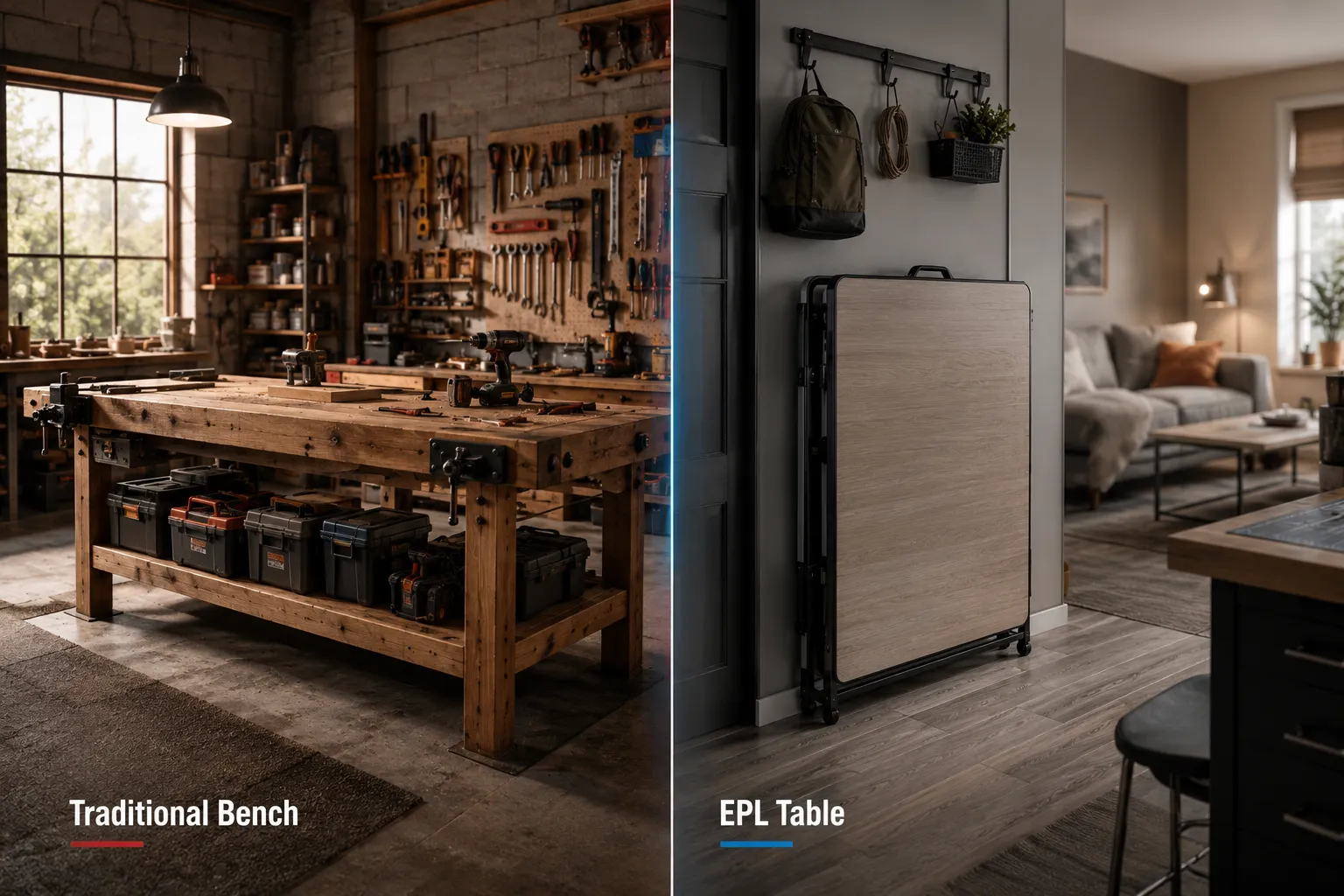
The core idea behind these space-saving work surfaces is adaptability. An expandable table might feature drop leaves or slide-out extensions that transform a compact surface into a much larger one. A portable table is typically lightweight and often designed to fold down into a compact unit, complete with handles for easy transport. Lightweight tables, while not always folding or expanding, are easy to move around a small shop to suit different project needs. Often, a single table design incorporates elements of all three: it might be lightweight enough to be portable, yet capable of expanding and folding for ultimate versatility.
For the modern woodworker operating in a garage, a basement corner, or a shared multi-purpose room, an EPL table provides a critical solution. It allows for the performance of essential tasks that require a stable, flat surface, such as assembly, finishing, or even light cutting, without permanently sacrificing floor space. When the work is done, the table can be folded, collapsed, or rolled away, restoring the area for other uses. This flexibility is a game-changer for many hobbyists and even professional woodworkers who value efficiency and smart workshop design. You can explore similar concepts in building a portable folding workbench with integrated storage.
Types and Mechanisms of Space-Saving Work Surfaces
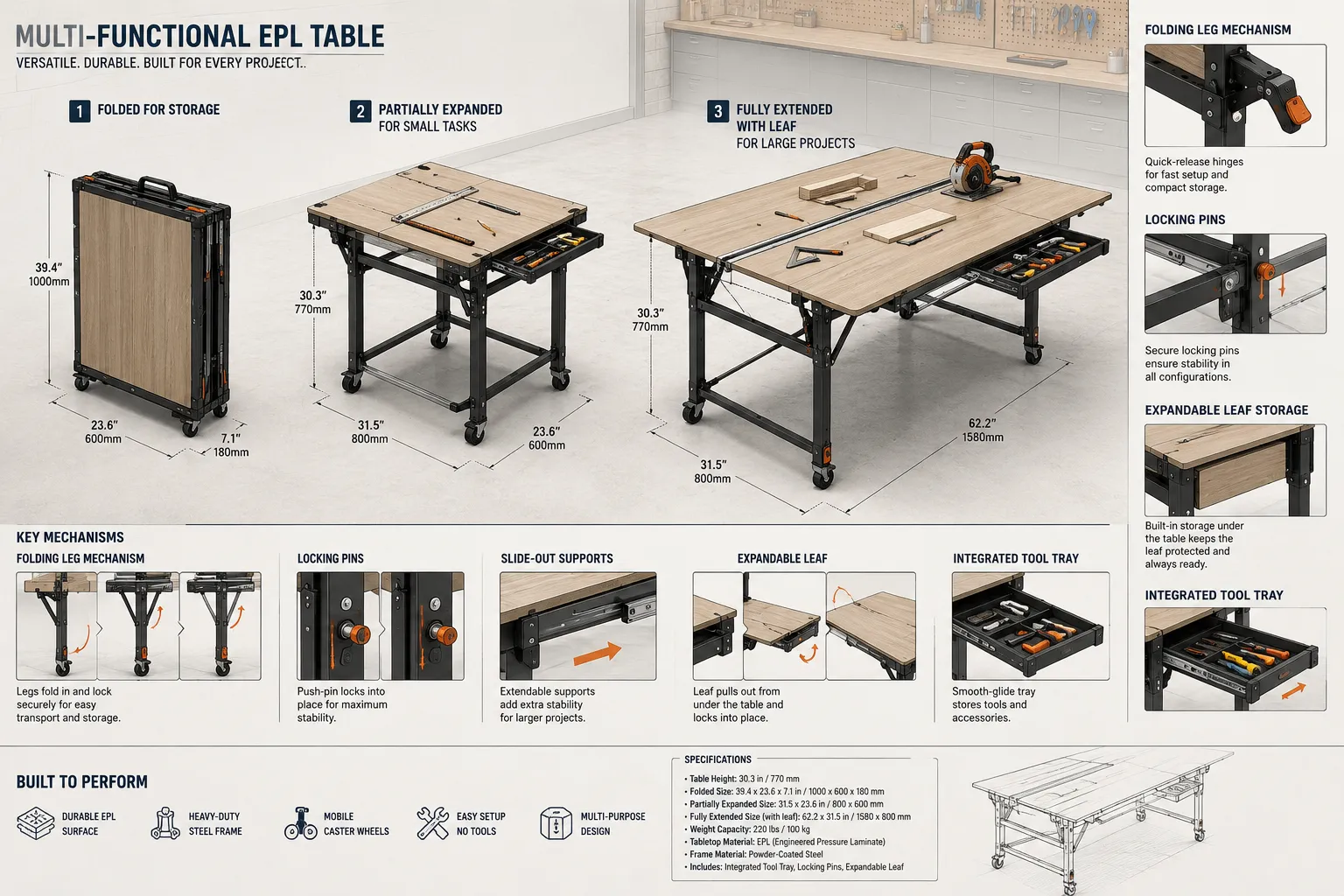
The world of space-saving work surfaces offers a diverse array of designs, each with unique mechanisms to achieve compactness, expandability, or portability. Understanding these types is crucial for any woodworker looking to integrate an EPL table into their setup.
Folding Tables
Folding tables are perhaps the most common category of space-saving work surfaces. They typically feature legs that fold flat against the tabletop, allowing the entire unit to be stored upright or stacked.
- Folding Leg Workbenches: These often have sturdy, locking legs that fold under a solid top. They are quick to set up and take down, making them excellent for temporary workstations. Some even come with built-in clamps or dog holes.
- Sawhorses with Tops: While not a table in itself, using two folding sawhorses with a sheet of plywood or MDF creates an instant, sturdy workbench that can be disassembled and stored flat.
Expandable Tables
Expandable tables are designed to offer variable work surface area, growing or shrinking to meet project demands.
- Drop-Leaf Tables: Similar to dining tables, these work surfaces have hinged leaves that can be raised and supported by swing-out arms or pull-out supports. They provide a compact base when leaves are down and a generous surface when extended.
- Slide-Out Extension Tables: These tables feature sections that slide out from under the main tabletop, often supported by integrated rails. They can significantly increase surface area without requiring additional storage space for separate leaves. For inspiration on designing custom pieces, consider building a custom fold-down crafting table with storage.
- Gated-Leg Tables: These designs use legs that swing out from a central support to accommodate expanding leaves, often used in larger dining table contexts but adaptable for workshop use.
Wall-Mounted Fold-Down Tables
These are fixed to a wall and fold down when needed, providing excellent stability without occupying any floor space when stowed.
- Hinged Tabletops: A simple design where a robust top is hinged to a wall cleat, dropping down to a horizontal working position and supported by folding brackets or legs. When not in use, it folds up flat against the wall. These are particularly useful for tasks like glue-ups or finishing that don’t require heavy machinery. Learn more about joinery for these types of projects in Pocket Hole Mastery: Fast Joinery for Cabinets, Tables, and Chairs in tight workshops.
Mobile and Modular Work Surfaces
While not always folding or expanding, mobile and modular tables offer flexibility crucial for space-conscious workshops.
- Caster-Equipped Workbenches: Adding heavy-duty locking casters to a workbench allows it to be easily moved around the shop, tucked into a corner, or brought into the center for larger projects.
- Modular Systems: These involve individual units that can be combined in various ways to form larger work surfaces or separated for specific tasks. They offer unparalleled flexibility in workshop layout.
| Table Type | Primary Benefit | Mechanism Examples | Ideal Use Case |
|---|---|---|---|
| Folding Leg Workbench | Portability, Easy Storage | Collapsible legs, interlocking frame | Temporary assembly, outdoor projects |
| Drop-Leaf Table | Expandability | Hinged leaves, swing-out supports | Finishing large panels, multi-stage projects |
| Wall-Mounted Fold-Down | Zero Floor Footprint | Wall-mounted hinge, folding brackets | Dedicated assembly station, small finishing area |
| Mobile Workbench | Shop Flexibility | Heavy-duty locking casters | Dynamic workshop layouts, moving heavy projects |
Designing and Building Your Own EPL Table
For many woodworkers, the ultimate space-saving solution is not to buy off-the-shelf, but to design and build their own EPL table. This approach allows for complete customization, ensuring the table perfectly meets specific workshop needs, tool integration, and available space. The process involves careful planning, material selection, and robust joinery.
Planning and Design Considerations
Before cutting a single board, thorough planning is essential.
Assess Your Space: Measure the maximum available footprint for the table when in use and the minimum footprint when stored. Consider vertical storage options if space is extremely limited.
Define Primary Use: Will it be for assembly, finishing, light machining, or a combination? This dictates the required stability, surface material, and features.
Determine Desired Features:
- Folding Legs: What type of hinges or mechanisms will ensure stability and ease of folding?
- Expandable Leaves: How will the leaves be supported? Slide-out rails, drop-leaf supports, or gate legs?
- Integrated Storage: Can tool trays, shelves, or drawers be incorporated? Consider features like those in custom wood charging stations and desk organizers for inspiration.
- Mobility: Will it need casters?
- Tool Integration: Can it accommodate bench dogs, clamps, or even a small vise?
Material Selection:
- Top: Plywood (Baltic Birch for durability), MDF (for flatness and cost-effectiveness), or solid wood for specific needs. A sacrificial top of hardboard or melamine can protect your primary surface.
- Frame/Legs: Hardwood (oak, maple) for strength and durability, or strong construction-grade lumber (fir, pine) for lighter-duty or budget-conscious builds. Aluminum profiles can also be used for lightweight, strong frames.
- Hardware: Heavy-duty hinges, locking casters, durable slides for extensions, and strong fasteners are critical. Do not skimp on hardware, as it directly impacts the table’s longevity and functionality.
Construction Techniques and Tips
Building a custom EPL table requires attention to detail and sound woodworking practices.
- Stability is Paramount: Regardless of folding or expanding features, the table must be rock-solid during use. Employ robust joinery like mortise and tenon, through-dovetails, or heavy-duty pocket screws. Reinforce critical joints with gussets or steel brackets where appropriate. The principles found in The ultimate guide to designing and building a custom dining table are applicable for sturdy construction.
- Accurate Cuts: Precision in cutting components, especially for folding and expanding mechanisms, ensures smooth operation and a professional finish. Use measuring and marking tools carefully, as detailed in The ultimate guide to measuring and marking tools.
- Hinge and Mechanism Selection: Choose hinges appropriate for the weight and stress they will endure. Ball-bearing slides are excellent for smooth-extending leaves. Ensure all locking mechanisms are reliable and easy to operate.
- Surface Protection: Consider a durable finish for your tabletop. A few coats of polyurethane or epoxy can protect against spills, glue, and general wear and tear. For ideas on finishing techniques, refer to Mastering Wood Finishing with Oil-Based Products.
- Ergonomics: Design the table height to be comfortable for your primary tasks. Standard workbench height is often around 34-36 inches, but adjust it to suit your stature and typical work.
Popular DIY EPL Table Ideas
- Folding Assembly Table: A simple, sturdy plywood top with folding legs made from 2x4s or 2x6s, connected with robust hinges and latching mechanisms.
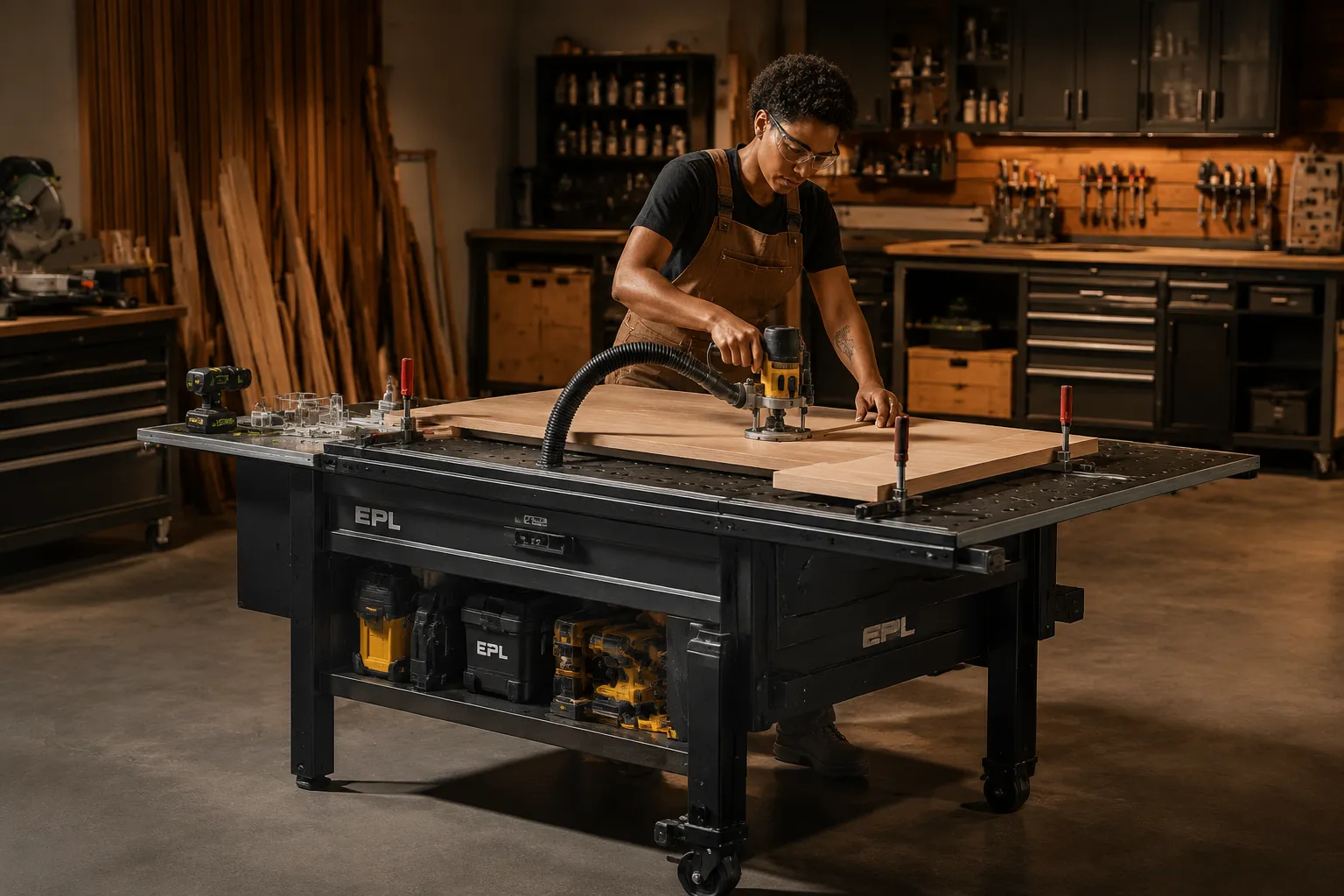
- Wall-Mounted Router Table: A compact router table that folds flat against the wall when not in use, saving significant floor space. This can be combined with principles from Mastering the Router Table: Beyond Edge Profiling for Advanced Joinery and Precision Cuts.
- Expandable Outfeed Table: A table designed to serve as both an assembly surface and an outfeed support for a table saw, featuring drop leaves or slide-out extensions to match the saw’s capacity. This is an advanced project that maximizes utility.
- Multi-Purpose Cart with Fold-Down Wings: A mobile base on casters with integrated storage, featuring fold-down wings to create a larger work surface when needed.
Building your own EPL table not only provides a customized solution but also enhances your woodworking skills. It’s a project that delivers tangible benefits every time you use your newly optimized workshop space.
Conclusion
The term “EPL Table” in woodworking, while not a standard industry acronym, effectively captures the essence of what countless woodworkers seek: Expandable, Portable, and Lightweight work surfaces that enable efficient use of limited space. In 2026, as workshops continue to adapt to smaller footprints, these versatile tables are more relevant than ever. Whether you choose to invest in a commercially available solution or embark on the rewarding journey of building your own, understanding the different types and mechanisms available is key to optimizing your woodworking environment.
By integrating an EPL table, woodworkers can transform a cramped corner into a highly functional workspace, ensuring that every square foot serves a purpose. This adaptability allows for the pursuit of ambitious projects without the constraint of a permanent, oversized workbench, making woodworking accessible and enjoyable for all, regardless of the size of their shop. Investing in or crafting an EPL table is an investment in your efficiency, your space, and your passion for woodworking.
SEO Meta Title: EPL Table Guide: Folding, Expandable Work Surfaces for Woodworkers SEO Meta Description: Maximize your workshop space in 2026 with an EPL table. Learn about folding, expandable, and portable work surfaces for efficient woodworking.