
The journey into woodworking, whether for functional projects or artistic expression, begins with a fundamental understanding of your primary material: wood. Far from being a monolithic entity, wood encompasses an astonishing variety of species, each with unique characteristics that dictate its suitability for different applications. This comprehensive guide, “Beginner’s Guide to Wood Species: Hardwoods vs. Softwoods, Workability, and Best Uses for DIY Projects,” aims to demystify this essential aspect of woodworking, equipping you with the knowledge to select the perfect wood for your next endeavor in 2026.
Key Takeaways
- Hardwood vs. Softwood is Botanical, Not Hardness: The classification distinguishes trees that produce seeds with a covering (hardwoods like oak) from those that produce exposed seeds (softwoods like pine). While hardwoods are generally denser, exceptions exist.
- Workability Varies Greatly: Wood species differ significantly in how easily they can be cut, planed, sanded, carved, and fastened. Understanding this is crucial for project success and tool longevity.
- Density and Grain Impact Durability: Denser woods often offer greater strength and resistance to dents, while grain patterns influence both aesthetics and structural integrity.
- Consider Moisture and Stability: Different woods react to humidity changes in varying ways. Selecting stable wood is key for projects meant to last, especially when considering understanding wood movement.
- Cost and Availability Are Practical Factors: The price and accessibility of a wood species can significantly influence project choices, especially for beginners.
Demystifying Wood Species: Hardwoods vs. Softwoods, Workability, and Best Uses for DIY Projects
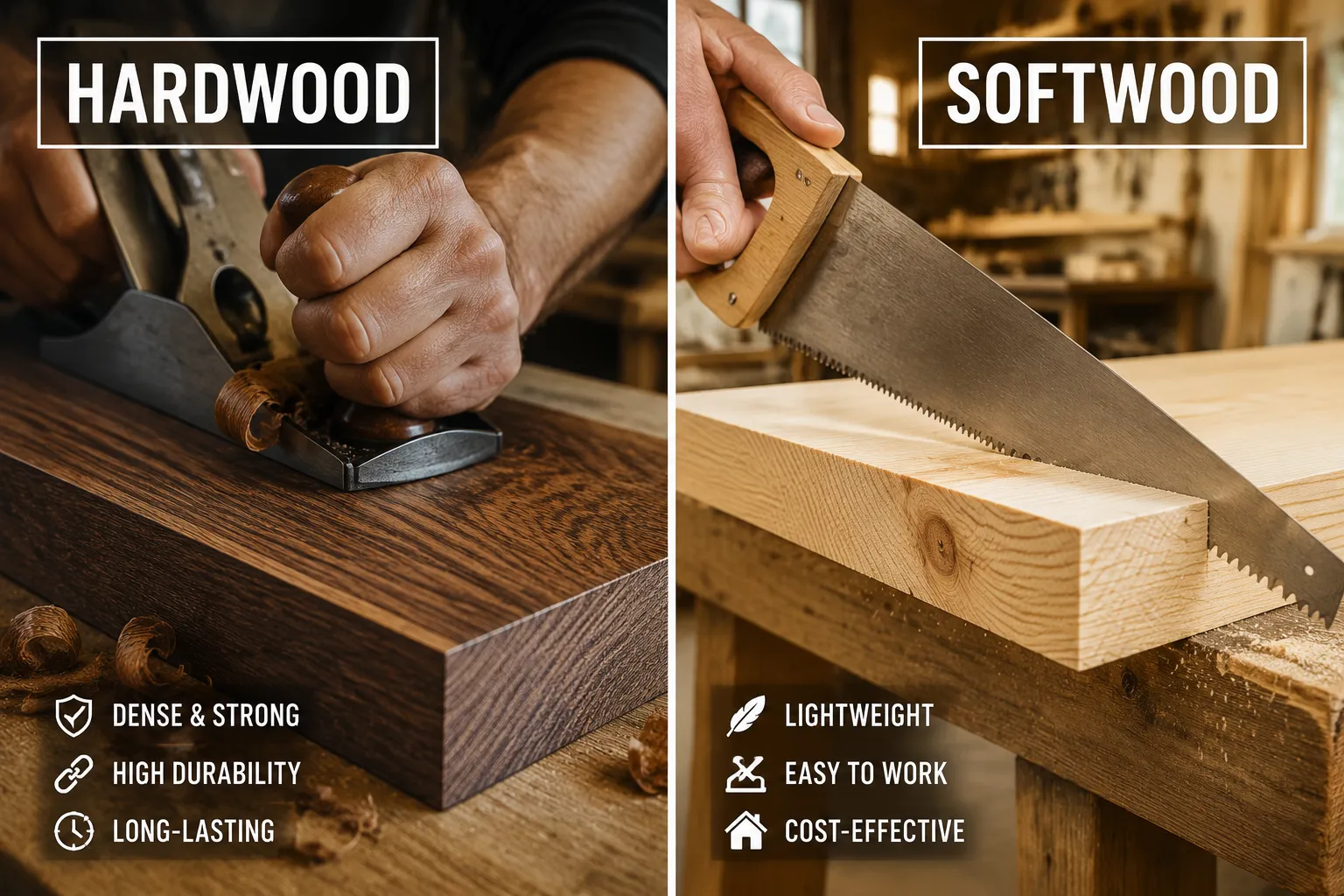
Understanding the basic distinctions between hardwoods and softwoods is the cornerstone of successful woodworking. This isn’t just about hardness, though that’s often a contributing factor. The classification is primarily botanical, rooted in the trees’ reproductive structures and growth patterns.
Hardwoods: Strength, Durability, and Fine Detail
Hardwoods originate from deciduous trees, which typically shed their leaves annually. These trees are generally slower-growing, resulting in denser cellular structures. This density contributes to their hallmark characteristics: strength, durability, and often, beautiful, intricate grain patterns. Hardwoods are dicot trees, producing seeds with a covering, like an acorn from an oak tree.
Common Hardwood Examples:
- Oak (Red and White): A classic choice for furniture, flooring, and cabinetry due to its strength, durability, and distinctive open grain. Red oak has a reddish hue, while white oak is slightly darker and more resistant to moisture.
- Maple (Hard and Soft): Hard maple is incredibly dense and resistant to dents, making it ideal for butcher blocks, cutting boards, and high-traffic flooring. Soft maple, while still a hardwood, is less dense and easier to work. It’s often used for furniture and painted projects.
- Cherry: Known for its rich, reddish-brown color that darkens beautifully with age and exposure to light. It has a fine, even grain, making it excellent for fine furniture, cabinetry, and decorative items.
- Walnut: A premium hardwood with a stunning dark brown color, often with purple or gray undertones. Its workability and aesthetic appeal make it a favorite for high-end furniture, carvings, and gunstocks.
- Poplar: A softer, lighter hardwood that is relatively inexpensive and easy to work with. It’s often used for painted furniture, interior trim, and as a secondary wood in joinery where strength is less critical. Its even texture takes paint and stain well.
Characteristics of Hardwoods:
- Density: Generally denser and heavier than softwoods, making them more durable and resistant to impact.
- Durability: Excellent resistance to wear and tear, dents, and scratches.
- Appearance: Often possess complex and attractive grain patterns, making them desirable for exposed finishes.
- Cost: Typically more expensive due to slower growth rates and higher demand for fine woodworking.
- Workability: Can be more challenging to cut, shape, and sand due to their density. Sharp tools are essential.
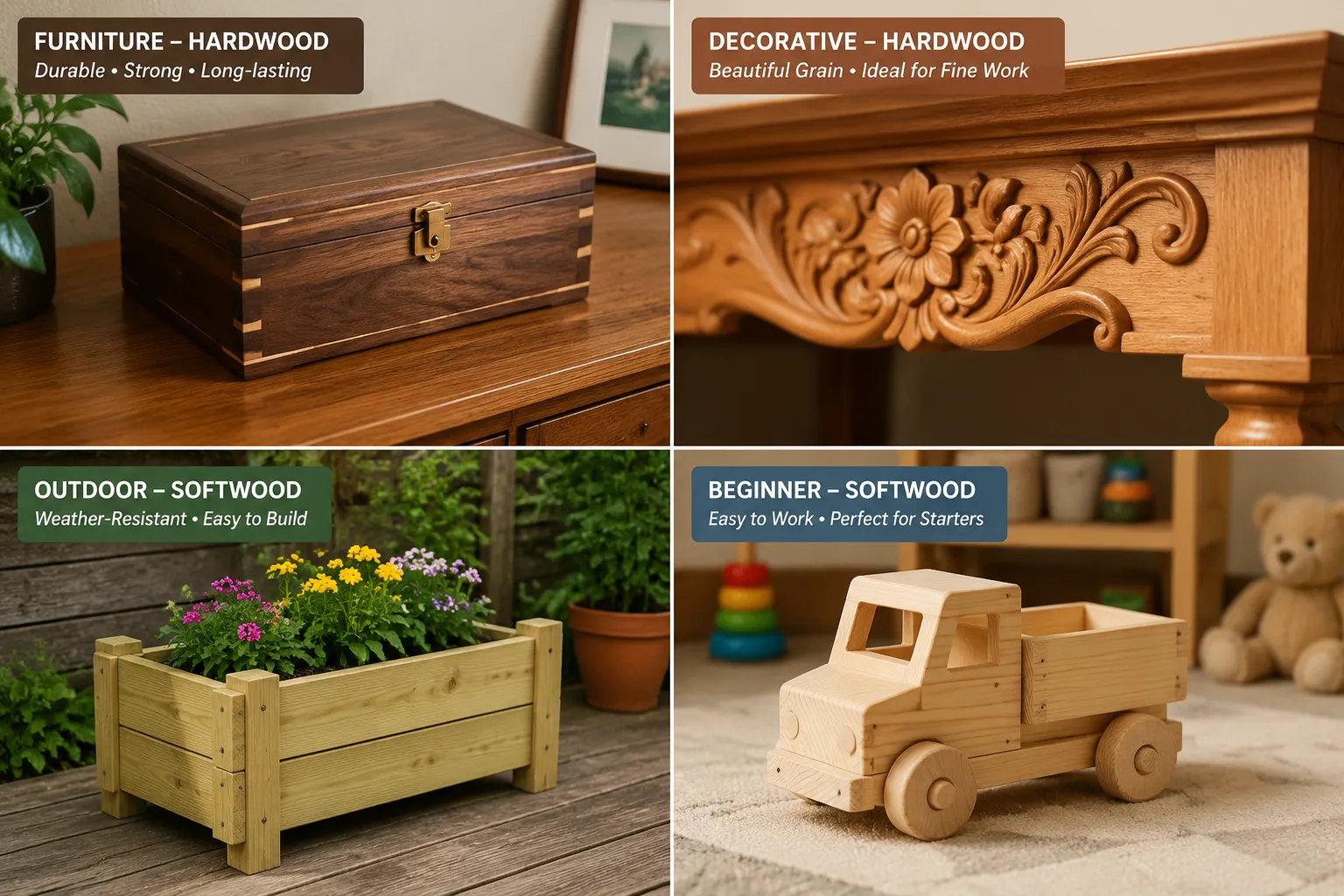
Hardwoods are generally preferred for projects requiring structural integrity, heirloom quality, or a premium aesthetic. Think dining tables, chairs, bespoke cabinetry, and fine decorative pieces.
Softwoods: Affordability, Workability, and Versatility for Beginners
Softwoods come from coniferous trees, which are evergreen and typically grow faster than hardwoods. These trees are gymnosperms, meaning they produce seeds that are not enclosed, like the cones of a pine tree. While generally softer and less dense than hardwoods, the term “softwood” refers to their botanical classification, not necessarily their actual physical hardness, though many are indeed softer.
Common Softwood Examples:
- Pine (White, Yellow, Ponderosa): One of the most common and affordable softwoods. It’s easy to work with, readily available, and often used for construction, furniture, shelving, and simple DIY projects like string trimmer racks and outdoor tool holders. It has a distinctive knotty appearance that can be charming for rustic designs.
- Cedar (Red and White): Known for its aromatic qualities, natural resistance to rot and insects, and pleasing reddish hue. Ideal for outdoor projects such as deck furniture, raised garden beds, and fences. It’s relatively soft but durable outdoors.
- Fir (Douglas, Balsam): Douglas fir is a strong and stiff softwood often used in construction for framing, but also finds use in furniture and interior trim. Balsam fir is softer and more commonly used for pulp and Christmas trees.
- Spruce: Similar to pine in terms of affordability and workability. Often used for framing, crates, and general construction. It has a light color and minimal grain pattern.
- Redwood: Highly prized for its natural resistance to decay and insects, as well as its beautiful reddish-brown color. Primarily used for outdoor applications like decks, fences, and outdoor furniture where longevity is key.
Characteristics of Softwoods:
- Density: Generally less dense and lighter than hardwoods.
- Durability: Less resistant to dents and scratches than most hardwoods, though some, like cedar and redwood, have excellent weather resistance.
- Appearance: Often have simpler, straighter grain patterns, and can be knotty.
- Cost: More economical due to faster growth rates and abundant supply.
- Workability: Easier to cut, nail, glue, and sand, making them ideal for beginners and projects where speed and ease of manipulation are priorities.
Softwoods are excellent for construction, outdoor projects, rustic furniture, and any project where budget and ease of working are primary considerations. They are also perfect for beginners tackling their first woodworking projects. You can explore more about choosing the right wood for your project for further insights.
Workability and Best Uses for DIY Projects: A Practical Guide
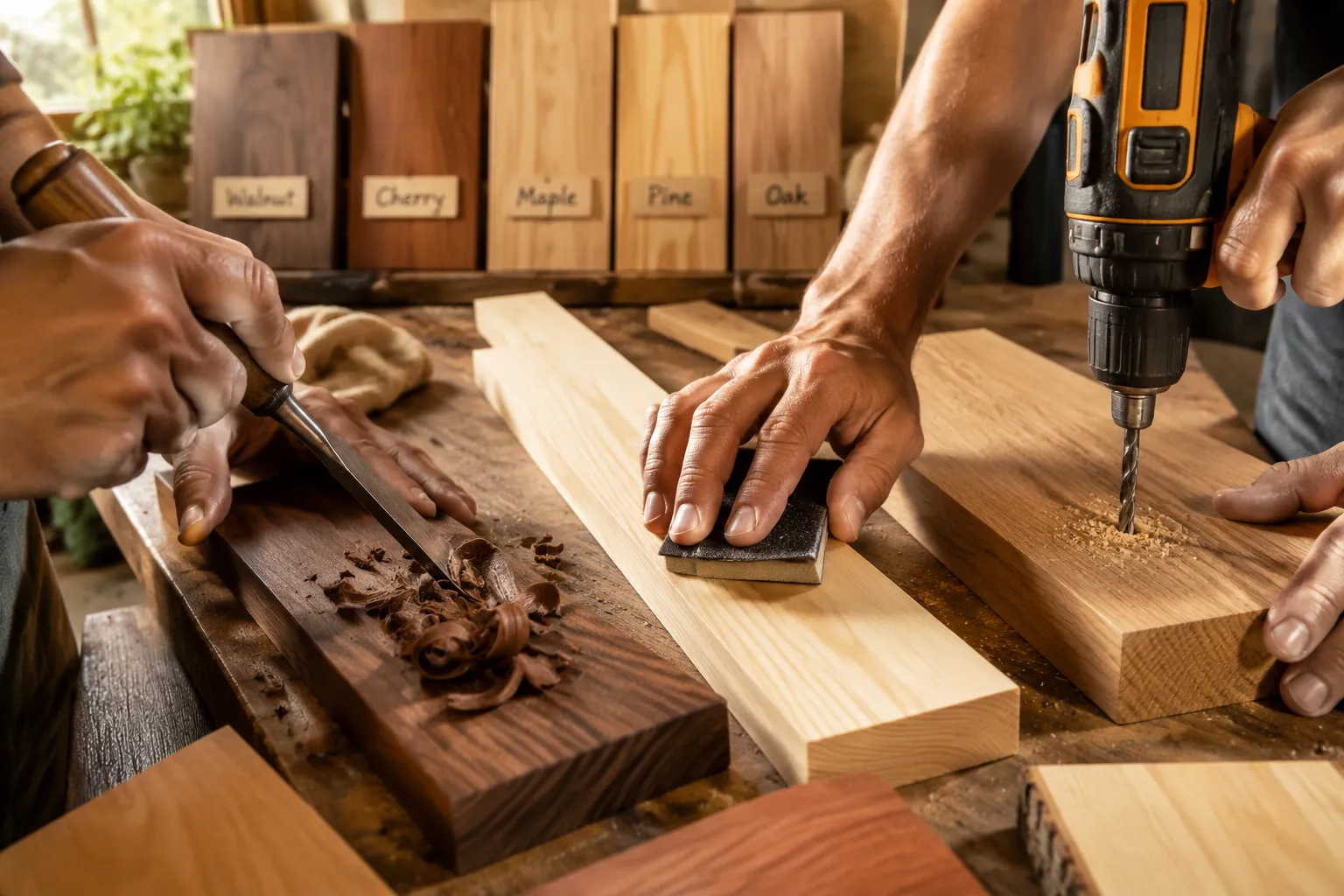
Beyond the hardwood/softwood classification, understanding a wood’s workability is paramount for any DIY enthusiast. Workability describes how easily a wood can be manipulated by hand or power tools. This includes factors like cutting, planing, sanding, carving, nailing, screwing, and finishing.
Factors Affecting Workability
- Grain Structure: Woods with a straight, open grain (like pine) are generally easier to work than those with interlocked or highly figured grain (like some oak or highly figured maple).
- Density: Denser woods require more effort and sharper tools. They also hold fasteners better but are more prone to splitting if not pre-drilled.
- Hardness: Directly impacts how easily the wood can be cut, carved, and dented. Measured by the Janka hardness test, which indicates the force required to embed a steel ball halfway into a piece of wood.
- Resin/Sap Content: Some softwoods, particularly pine, can have high resin content, which can gum up saw blades and sandpaper.
- Allergens: Certain woods, like some exotic species, can cause skin or respiratory irritation. Always wear appropriate personal protective equipment (PPE).
| Wood Species | Hardness (Janka, lbf) | Workability | Best DIY Uses |
|---|---|---|---|
| Hardwoods | |||
| Oak (Red) | 1290 | Moderate | Furniture, cabinetry, flooring, DIY coffee table building guide |
| Maple (Hard) | 1450 | Challenging | Butcher blocks, cutting boards, high-wear furniture |
| Cherry | 950 | Easy-Moderate | Fine furniture, decorative boxes, turned items |
| Walnut | 1010 | Easy-Moderate | High-end furniture, carvings, decorative accents |
| Poplar | 540 | Easy | Painted furniture, interior trim, hidden frames |
| Softwoods | |||
| Pine | 380-690 | Easy | Shelving, rustic furniture, outdoor projects, simple utility items like DIY pencil holders |
| Cedar | 350 | Easy | Outdoor furniture, planters, raised garden beds |
| Douglas Fir | 660 | Moderate | Framing, outdoor structures, sturdy workbenches |
| Spruce | 460 | Easy | Crates, framing, general construction, budget projects |
| Redwood | 450 | Easy | Decks, fences, outdoor furniture, siding |
Note: Janka hardness values are approximate and can vary.
Best Uses for DIY Projects
When planning your next DIY project in 2026, consider these recommendations based on workability and common characteristics:
- Beginner-Friendly Projects: For those just starting out, prioritize softwoods like pine, spruce, and poplar. These woods are forgiving, easier on tools, and more affordable if mistakes happen. Projects like simple shelving, birdhouses, storage boxes, or even a basic DIY folding work table are perfect for these species.
- Outdoor Furniture and Structures: For projects exposed to the elements, choose woods with natural weather and insect resistance. Cedar and redwood are excellent choices, offering durability without excessive hardness. Treated pine is also an option for budget-conscious outdoor builds.
- Fine Furniture and Heirloom Pieces: When durability and aesthetic appeal are paramount, hardwoods like oak, maple, cherry, and walnut are the go-to. These woods create sturdy, beautiful pieces that can last for generations. However, they require more precise tools and techniques, making them better suited for intermediate to advanced woodworkers. Consider projects like dining tables, chairs, or detailed cabinetry. For those interested in adding intricate details, learning introduction to marquetry and inlay can elevate a project made with hardwoods.
- Carving and Turning: Softwoods like basswood and white pine are excellent for beginners in carving due to their fine, even grain and softness. For more intricate and durable carvings or turned items, hardwoods like walnut, cherry, and maple (especially figured maple) offer stunning results, albeit with more effort.
- Painted Projects: Poplar is an outstanding choice for painted furniture or trim work. Its smooth, even grain takes paint exceptionally well, leading to a professional-looking finish. Soft maple is also a good option.
- Workbenches and Shop Furniture: For robust work surfaces and shop fixtures, strong softwoods like Douglas fir or construction-grade pine are economical and sturdy. Hardwoods like oak or maple are ideal for workbench tops that will endure significant impact. Consider building a modular wood storage system with pine for practicality.
Ultimately, the best wood for your DIY project depends on a balance of factors: the project’s intended use, your skill level, desired aesthetic, and budget. Experimenting with different species will help you develop a deeper understanding of their unique properties. For a deeper dive into woodworking techniques, consider our essential safety practices for power tools in the home workshop to ensure a safe and productive crafting experience.
Sourcing Wood and Sustainability Considerations
As you delve deeper into woodworking, understanding how to source your wood responsibly and sustainably becomes increasingly important. Many wood species are harvested from sustainably managed forests, which helps preserve biodiversity and ensure future supply. Look for certifications like those from the Forest Stewardship Council (FSC) when purchasing lumber, especially for exotic or high-demand species.
Local lumberyards often offer a wider selection and better pricing than big box stores, particularly for hardwoods. They can also provide expert advice on specific species and their applications. For budget-conscious or environmentally minded DIYers, exploring reclaimed wood from old barns, pallets, or demolition sites can be a rewarding endeavor, offering unique character and reducing waste.
When working with any wood, proper storage is crucial. Keeping lumber flat and elevated in a stable environment prevents warping and ensures it’s ready for your next project.
Conclusion
Embarking on a woodworking journey in 2026 is an exciting prospect, and a solid understanding of wood species is your most valuable asset. The “Beginner’s Guide to Wood Species: Hardwoods vs. Softwoods, Workability, and Best Uses for DIY Projects” has laid out the fundamental differences, practical considerations, and ideal applications for common wood types. Remember, hardwoods offer durability and aesthetic richness for lasting projects, while softwoods provide affordability and ease of work, perfect for beginners and utility builds.
Start simple, choose a wood that matches your skill level and project requirements, and don’t be afraid to experiment. With each project, you’ll gain hands-on experience, learn the nuances of different grains, and develop a keen eye for selecting the perfect material. The world of wood is vast and rewarding, happy crafting!
SEO Meta Title: Beginner’s Guide to Wood Species: Hardwoods, Softwoods, & DIY Uses SEO Meta Description: Demystify wood types with our beginner’s guide. Learn the differences between hardwoods vs. softwoods, their workability, and best uses for your 2026 DIY projects.