

The thriving market for handmade goods in 2026 presents a significant opportunity for skilled woodworkers. Data from recent industry reports indicates a consistent annual growth of over 10% in consumer demand for unique, artisan-crafted home decor and personal accessories. This surge isn’t just a fleeting trend; it reflects a deeper appreciation for quality, personalization, and sustainability that mass-produced items often lack. For those looking to start or expand a woodworking business, focusing on high-margin, manageable projects such as jewelry boxes, picture frames, and serving trays offers a clear path to success. Mastering the design variations, strategic wood selection, and impeccable finishing touches for these items can transform a passion into a genuinely profitable small-scale woodworking enterprise, ensuring your products become bestsellers at craft shows, online marketplaces, and local boutiques.
Key Takeaways
- High-Demand Niches: Jewelry boxes, picture frames, and serving trays are consistently popular, offering excellent profit margins for small-scale woodworkers.
- Skill Mastery for Profit: Focus on refining design variations, precise joinery, and superior finishing to elevate product value and appeal.
- Strategic Wood Selection: Choosing the right wood, considering aesthetics, durability, and cost, is crucial for both craftsmanship and profitability.
- Effective Marketing: Success hinges on professional photography, clear product descriptions, and targeted sales channels like craft shows and online platforms.
- Continuous Improvement: Embrace feedback, explore advanced techniques like inlay and wood bending, and optimize workflow for sustained business growth.
The Foundation of Profitable Small-Scale Woodworking: Project Selection and Design
Choosing the right projects is paramount for a profitable small-scale woodworking venture. Unlike large furniture pieces that demand significant space, time, and capital, items like jewelry boxes, picture frames, and serving trays offer a sweet spot. They are compact, allow for creative variations, and have a broad market appeal. This allows for efficient production, reduced material waste, and quicker turnaround times, all critical for maximizing profitability.
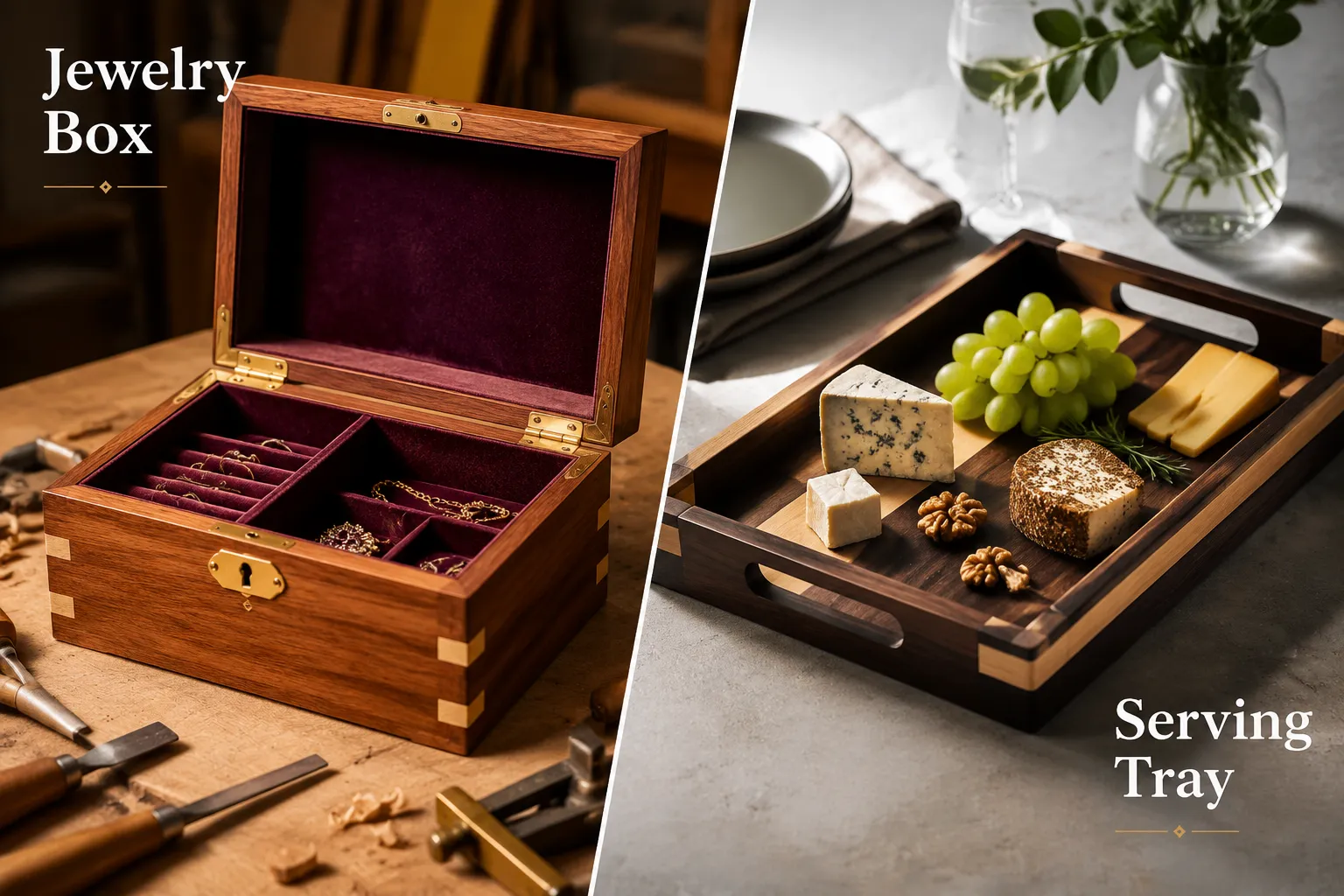
Why Jewelry Boxes, Picture Frames, and Serving Trays?
These three categories stand out for several reasons:
- High Perceived Value: Even with modest material costs, a well-crafted jewelry box or serving tray can command premium prices due to its artisanal quality and functional elegance.
- Manageable Size: Small projects fit perfectly into efficient small workshop layouts for 2026 and reduce storage challenges.
- Versatility in Design: Each category allows for immense creative freedom, from rustic to modern, intricate to minimalist, appealing to diverse customer tastes.
- Low Material Waste: Often, these projects can be made from offcuts or smaller pieces of expensive hardwoods, contributing to a zero-waste design strategy.
- Skill Development: They offer excellent opportunities to hone precision joinery, sanding, and finishing techniques without the commitment of a large-scale build.
Mastering Jewelry Boxes: Elegance and Function
Jewelry boxes are personal treasures, demanding attention to detail and a sense of luxury.
- Design Variations:
- Classic Single-Tier: A simple hinged lid with a velvet-lined interior. Focus on elegant proportions and seamless joinery.
- Multi-Drawer Designs: Incorporate small, dovetailed drawers for increased storage. This adds complexity and perceived value.
- Segmented Interiors: Custom-fit dividers for rings, earrings, and necklaces. Consider removable trays for modularity.
- Secret Compartments: A unique selling point, often achieved through false bottoms or hidden mechanisms.
- Watch Winders: For higher-end boxes, integrating a watch winding mechanism appeals to a niche market.
- Wood Selection:
- Exotic Hardwoods: Walnut, cherry, mahogany, and maple are popular for their rich colors and fine grain. Burls and highly figured woods can add significant value.
- Aromatic Woods: Cedar linings for a pleasant scent and moth-repelling properties.
- Contrasting Woods: Combining light and dark woods, or using inlay techniques to create decorative patterns.
- Hardware and Linings:
- Hinges: Quadrant hinges, barrel hinges, or continuous piano hinges for a smooth operation. Choose high-quality brass or nickel.
- Lining: Velvet, suede, or felt in contrasting colors to protect jewelry and enhance the luxurious feel.
Crafting Picture Frames: Displaying Memories
Picture frames are essential home decor items, making them a consistent seller. The key is offering a range of styles and sizes.
- Design Variations:
- Traditional Mitered Frames: The classic approach, focusing on perfectly cut and joined corners.
- Shadow Box Frames: Create depth for displaying objects alongside photos.
- Floating Frames: A modern aesthetic where the art appears to float within the frame, often with a gap around the edges.
- Multi-Opening Frames: Designed to hold several photos, either in a grid or an asymmetrical arrangement.
- Distressed or Reclaimed Wood: Appeals to rustic or farmhouse decor trends.
- Wood Selection:
- Pine/Poplar: Economical for larger frames or those intended for painting.
- Oak/Ash: Strong, distinct grain, suitable for mission or rustic styles.
- Maple/Cherry: Smooth grain, takes stains well, good for contemporary designs.
- Exotic Veneers: For a high-end look without the cost of solid exotic lumber.
- Finishing Touches: Consider different profiles for the frame edges, from simple chamfers to more elaborate routered designs. Explore various stains, paints, and protective clear coats. For more on the art of framing, explore mastering the art of picture framing.
Designing Serving Trays: Practical Elegance
Serving trays are functional pieces that can also double as decorative accents, making them popular gifts and home accessories.
- Design Variations:
- Simple Flat Trays: Emphasize the beauty of the wood grain.
- Trays with Handles: Integrate elegant wooden or metal handles for easy carrying.
- Trays with Raised Edges: Prevents items from sliding off, often achieved with mitered sides or a routed lip.
- Inlaid Designs: Mastering the art of wood inlay with a router can transform a simple tray into a piece of art.
- Live-Edge Trays: For a natural, rustic appeal, especially with interesting wood slabs.
- Wood Selection:
- Hardwoods: Walnut, cherry, maple, and oak are durable and food-safe (when properly finished).
- Exotic Woods: Teak or acacia for unique patterns and natural water resistance.
- Contrasting Strips: Laminating different wood species for a striking visual effect, similar to inlay cutting boards.
- Food-Safe Finishes: Crucial for serving trays. Options include mineral oil, beeswax, or certain FDA-approved varnishes.
Production and Marketing Strategies for Profitable Small-Scale Woodworking
Once your designs are refined, focus shifts to efficient production and effective marketing. These two pillars are crucial for transforming your woodworking passion into a sustainable income stream.

Efficient Production Workflow
A streamlined workflow minimizes waste, saves time, and ensures consistent quality.
- Batch Processing: Instead of making one item from start to finish, cut all similar pieces (e.g., all sides for 10 jewelry boxes) at once. This maximizes efficiency on your table saw, router, and sanders.
- Jigs and Fixtures: Invest time in building specialized jigs for repetitive tasks like cutting identical miters, routing dados, or sanding small parts. This ensures accuracy and speed. For inspiration, explore beyond the workbench: building specialized jigs and fixtures.
- Tool Organization: A well-organized workshop reduces time spent searching for tools. Consider a DIY folding work table or a DIY portable AC enclosure and tool storage cabinet to maximize space.
- Material Sourcing: Establish relationships with local lumber yards or sawmills for consistent access to quality wood. Explore salvaged or reclaimed wood sources for unique character and cost savings.
- Quality Control: Implement checkpoints at each stage (cutting, assembly, sanding, finishing) to identify and correct imperfections early.
Photography and Branding
High-quality visuals are non-negotiable for selling handmade goods online or in marketing materials.
- Professional Photography:
- Lighting: Use natural, diffused light whenever possible. Avoid harsh shadows.
- Background: Simple, uncluttered backgrounds (e.g., plain white, light wood, or a subtly textured fabric) allow your product to shine.
- Angles: Capture multiple angles, close-ups of details (joinery, grain, finish), and lifestyle shots (e.g., a serving tray with food, a jewelry box on a dresser).
- Consistency: Maintain a consistent photographic style across all your products for a cohesive brand image.
- Storytelling and Branding:
- Product Descriptions: Go beyond dimensions. Describe the wood, the inspiration, the craftsmanship, and the intended use. Highlight unique features.
- Brand Narrative: Share your story as a woodworker. What inspires you? What’s your philosophy? This builds a connection with customers.
- Packaging: Thoughtful, professional packaging enhances the unboxing experience and protects your products during shipping.
Sales Channels
Diverse sales channels increase your reach and revenue potential.
- Craft Fairs and Markets:
- Direct Customer Interaction: invaluable for feedback and building relationships.
- Immediate Sales: Customers can see, touch, and purchase on the spot.
- Local Exposure: Builds brand recognition within your community.
- Booth Presentation: Invest in an attractive, professional display that highlights your craftsmanship.
- Online Marketplaces:
- Etsy: Ideal for handmade goods, with a large existing customer base.
- Shopify/Custom Website: Offers greater control over branding and customer data, but requires more effort to drive traffic.
- Social Media: Instagram and Pinterest are highly visual platforms perfect for showcasing woodworking projects. Use compelling images and relevant hashtags.
- Local Retailers/Consignment:
- Boutiques and Gift Shops: Can carry your items on consignment or wholesale, providing passive income and broader local reach.
- Galleries: For particularly artistic or high-end pieces, a local gallery might be an option.
- Custom Orders: Offer personalization options (e.g., engravings, specific wood choices) to cater to individual customer needs and command higher prices. Engraved American flags in wood is one example of a profitable custom offering.
Essential Techniques and Finishing for Maximizing Profitability
The difference between a good woodworking project and a great, highly profitable one often lies in the precision of the techniques and the quality of the finish. Mastering these aspects elevates your work from hobbyist level to professional artisan.
Precision Joinery and Assembly
Flawless joints are the hallmark of quality craftsmanship.
- Miter Joints: For picture frames and box corners, perfect 45-degree cuts are essential. Use a high-quality miter saw or a sled on your table saw. Reinforce with splines or biscuits for strength.
- Dovetail Joints: A classic choice for jewelry box drawers and corners, offering exceptional strength and aesthetic appeal. Requires careful marking and cutting.
- Box Joints/Finger Joints: Simpler than dovetails but still strong and decorative, often used for larger boxes or chests.
- Glue-Ups: Use the appropriate wood glue, apply even pressure with clamps, and ensure surfaces are clean and flat. For guidance, refer to the ultimate guide to choosing and using wood glues.
- Squaring and Flattening: Ensure all components are perfectly square and flat before assembly. This prevents gaps and twists in the final product.
The Art of Sanding
Sanding is often underestimated but is critical for a smooth, professional finish.
- Progressive Grits: Always start with a coarser grit (e.g., 80-120) to remove tool marks and progressively move to finer grits (up to 220-320 for most hardwoods). Avoid skipping grits.
- Even Pressure: Apply consistent, even pressure to avoid divots or uneven spots.
- Direction: Sand with the grain to prevent scratches. For orbital sanders, ensure overlapping passes.
- Dust Removal: Thoroughly remove all sanding dust between grits to prevent coarser particles from scratching the surface when moving to a finer grit. A shop vacuum and tack cloth are indispensable.
- Hand Sanding: For intricate details, curved surfaces, and final prep, hand sanding is often necessary for precision. More on this can be found in advanced sanding and finishing for a flawless surface.
Finishing for Longevity and Appeal
The finish protects the wood and enhances its natural beauty, significantly impacting perceived value.
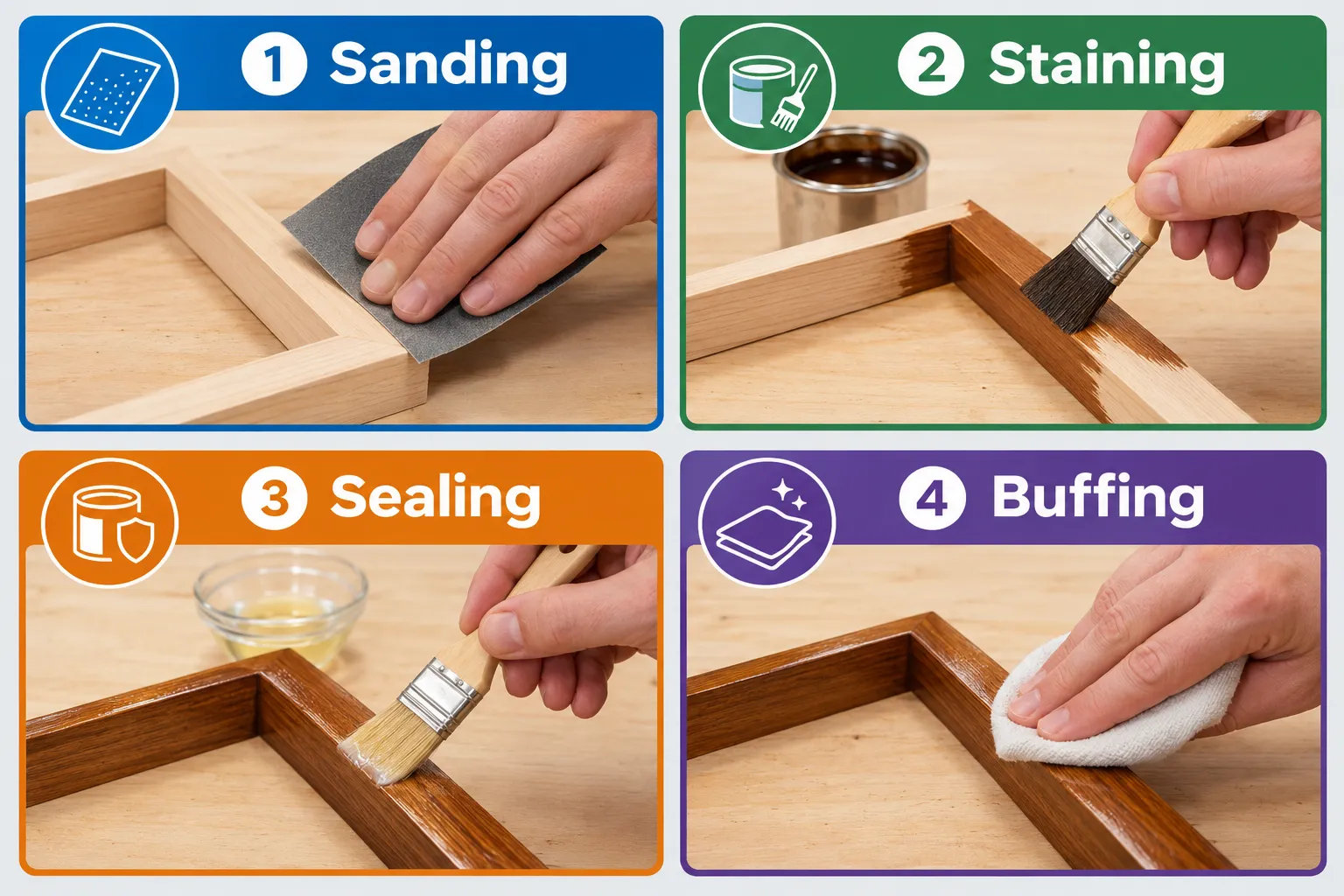
- Staining and Dyeing:
- Purpose: To alter or enhance the wood’s color.
- Application: Apply evenly, working with the grain. Wipe off excess thoroughly to avoid blotchiness.
- Test Pieces: Always test stains on scrap pieces of the same wood species to predict the final color.
- Sealing and Topcoats:
- Purpose: To protect the wood from moisture, scratches, and UV damage.
- Types:
- Oils (Tung Oil, Linseed Oil): Penetrate the wood, offering a natural, hand-rubbed look. Requires multiple coats. Tung oil vs polyurethane offers a good comparison.
- Varnishes (Polyurethane, Lacquer): Form a protective film on the surface, offering high durability. Available in various sheens (matte, satin, gloss).
- Shellac: A natural, fast-drying finish that provides a good base coat and a warm amber tone.
- Waxes: Often used over oil or shellac for added protection and a soft luster.
- Application: Apply thin, even coats. Allow adequate drying time between coats. Lightly sand with very fine grit (400-600) between coats for a smoother final result.
- Buffing and Polishing:
- For the ultimate smooth, lustrous finish, especially on fine furniture pieces like jewelry boxes, buffing with a fine abrasive compound can elevate the surface to a mirror-like shine.
- Use soft cloths or buffing pads for a final polish.
Safety in the Small Workshop
Regardless of project size, safety is paramount. Always wear appropriate personal protective equipment (PPE), including eye protection, hearing protection, and a dust mask. Understand and follow all safety guidelines for your power tools. Regular maintenance of tools, including sharp blades and bits, also contributes to a safer working environment. Refer to essential safety practices for power tools in the home workshop for a comprehensive overview.
Conclusion
Embarking on a journey into Profitable Small-Scale Woodworking by mastering jewelry boxes, picture frames, and serving trays offers a rewarding path for artisans in 2026. By strategically selecting high-demand projects, focusing on meticulous craftsmanship, and implementing effective marketing strategies, you can transform your woodworking passion into a thriving business. The key lies in understanding market needs, refining your skills in design and execution, and consistently delivering products that boast both aesthetic appeal and superior quality.
To begin, prioritize developing strong foundational skills in precision joinery and expert finishing. Experiment with different wood species and design variations to carve out your unique style. Establish a streamlined production workflow to maximize efficiency, and invest in professional photography to showcase your work effectively. Leverage both local craft shows and online platforms to reach a broad audience. Continuously seek feedback, adapt your designs, and explore new techniques like decorative inlays or natural wood finishes to keep your offerings fresh and desirable. With dedication and strategic planning, your small-scale woodworking enterprise can flourish, bringing beautifully handcrafted items to appreciative customers.